
Airbnb Costa Rica: The Complete Guide to Short-Term Rentals
Airbnb has grown rapidly in Costa Rica and now offers thousands of properties across the country, from urban apartments in San José to beachfront villas in Guanacaste and off-grid jungle treehouses in the Osa Peninsula. Short-term rentals through Airbnb and similar platforms provide an alternative to traditional hotels that often delivers more space, kitchen facilities, and local character at competitive prices. Understanding how the Costa Rica Airbnb market works helps travelers find the right property and avoid common pitfalls.
Airbnb vs. Hotels in Costa Rica: Key Differences
Choosing between Airbnb and a hotel in Costa Rica involves weighing several practical considerations. Airbnb properties typically offer more living space, kitchen facilities for self-catering, and a more residential neighborhood experience than hotels. For families, groups of friends, or travelers staying a week or longer, the additional space and ability to prepare some meals can yield significant cost savings over comparable hotel rooms.
The trade-off is that Airbnb properties in Costa Rica lack the concierge services, on-site restaurant, organized tours, and security staffing that established hotels provide. In a country where getting oriented requires local knowledge about roads, safety, recommended restaurants, and tour operators, the absence of informed hotel staff can require more self-directed research. However, many Costa Rica Airbnb hosts are exceptionally helpful and responsive, often providing detailed local guides and remaining available via WhatsApp for questions throughout the stay.
Costa Rica's infrastructure also makes some Airbnb rentals challenging. Rural properties may have dirt road access that requires 4WD vehicles, which hosts don't always communicate adequately in listings. Internet connectivity at remote properties can be unreliable. And unlike hotel rooms, Airbnb properties require guests to manage their own security, including proper locking of doors and windows and securing valuables.
When Airbnb Beats Hotels in Costa Rica
Airbnb properties offer the clearest advantage in Costa Rica for stays of five nights or more, for groups of four or more travelers sharing costs, for families needing multiple bedrooms and child-friendly kitchen facilities, and for travelers wanting to experience local neighborhoods rather than resort bubbles. Longer-term stays (28+ days) often qualify for substantial monthly discounts, making Airbnb excellent value for digital nomads and extended vacation travelers.
Best Areas for Airbnb Rentals in Costa Rica
Tamarindo in Guanacaste has one of the largest concentrations of Airbnb listings in Costa Rica, with options ranging from studio apartments near the town center to sprawling beachfront villas on the outskirts. The town's established infrastructure, good supermarkets, diverse restaurants, and surf culture make it an excellent base for independent travelers using a private rental. Similar inventory exists in nearby Playa Flamingo, Playa Conchal, and Playa Langosta.
Santa Teresa and Mal Pais on the southern Nicoya Peninsula have become popular Airbnb destinations among wellness travelers, digital nomads, and surfers. The area has strong Wi-Fi infrastructure relative to its remote location, good local restaurant and smoothie bowl culture, and a relaxed community vibe. Airbnb inventory here ranges from simple surf shacks to well-appointed jungle villas with private pools.
Manuel Antonio and Quepos offer excellent Airbnb options for wildlife-focused travelers. Many properties in this area are positioned on hillsides with ocean views and wildlife regularly appearing on the grounds. San José and its suburban areas (Escazú, Rohrmoser, Sabana) have extensive Airbnb inventory for business travelers and transit passengers, with modern apartments in secure residential buildings typically offering the best value for city stays.
Caribbean Coast Airbnb Options
Puerto Viejo de Talamanca and the surrounding Caribbean coast have a growing Airbnb presence, with colorful wooden cottages, garden bungalows, and beachfront cabins representing the dominant property types. The Caribbean coast's slower pace and lower prices relative to the Pacific make it an excellent value Airbnb destination, particularly for travelers who appreciate reggae culture, Caribbean cuisine, and coral reef snorkeling at Cahuita National Park.
Arenal and Monteverde Rentals
Arenal's La Fortuna town has good Airbnb inventory, with volcano-view properties being particularly popular. Guests can find everything from budget rooms in local family homes to private houses with outdoor hot tubs fed by geothermal springs. Monteverde has fewer Airbnb options given its smaller tourism volume, but several well-regarded private homes and apartments cater to the cloud forest visitor market.
Typical Costs and What to Expect
Airbnb pricing in Costa Rica varies enormously by location, property type, and season. In popular destinations like Tamarindo, Manuel Antonio, and Santa Teresa, a one-bedroom apartment or small house typically runs $80-150 per night in peak season and $50-100 in the green season. Entire villas with pools in prime locations can command $300-800 per night or more during Christmas and New Year periods.
Additional fees are an important consideration when evaluating Costa Rica Airbnb listings. Cleaning fees ($50-200 depending on property size), Airbnb service fees (approximately 14% of the booking subtotal), and sometimes local tax (13% IVA in Costa Rica) can add substantially to the displayed nightly rate. Always check the total price per night including fees before comparing to hotel rates.
Monthly rental discounts of 15-40% are common for stays of 28 days or more, which makes Airbnb particularly attractive for remote workers and extended vacation travelers. Costa Rica has become a popular destination for digital nomads, and many hosts have adapted properties specifically for this market with high-speed internet, dedicated workspaces, and ergonomic seating included.
Hidden Costs to Budget For
Beyond the Airbnb fees, Costa Rica rental guests should budget for groceries (imported products are expensive), drinking water or filtration systems, and potentially car rental for properties not walkable to town. Some properties charge extra for air conditioning usage (electricity is expensive in Costa Rica), additional guests beyond a stated maximum, or pets. Reading the full listing description carefully prevents unpleasant surprises.
Types of Airbnb Properties Available
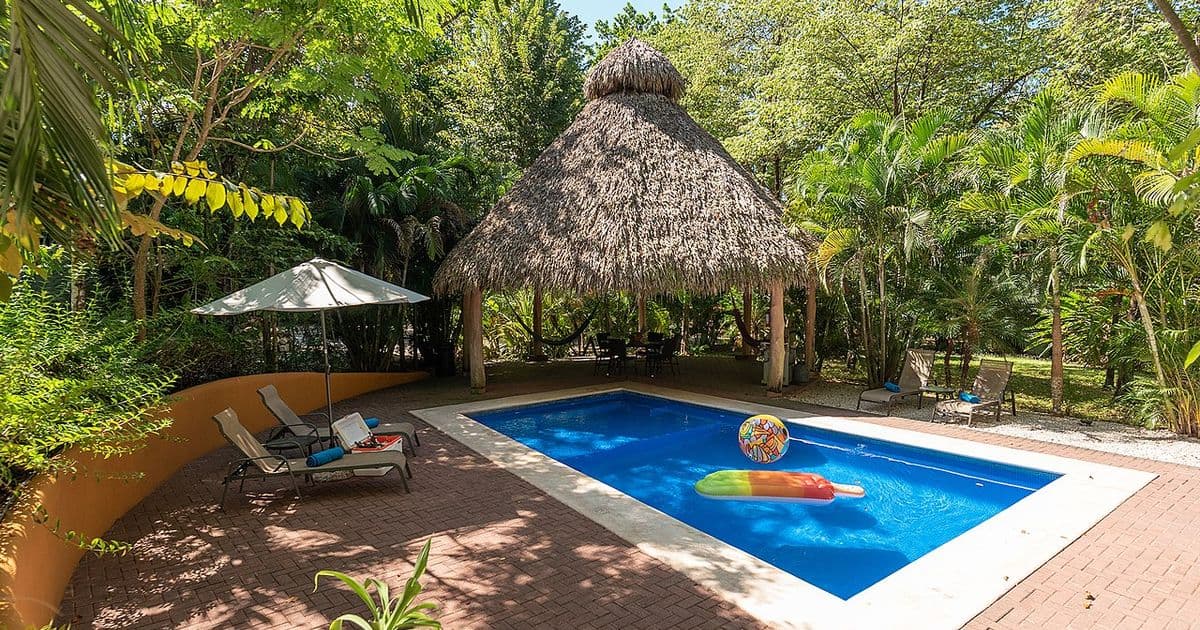
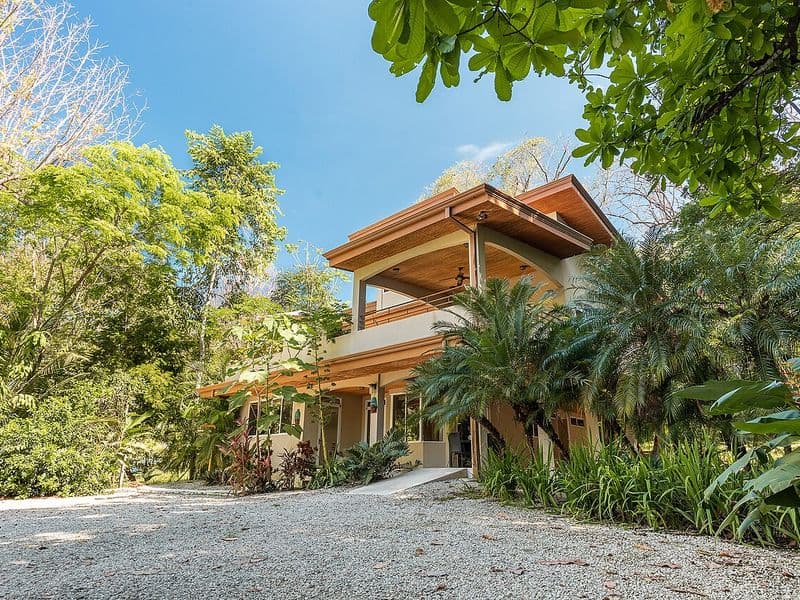
Costa Rica's Airbnb inventory spans an exceptionally wide range of property types. Urban apartments in San José and Escazú are often modern, secure high-rise or gated community units with parking, pools, and gym access. Beach houses range from modest surfer shacks with outdoor showers to multi-million dollar architect-designed villas with infinity pools, full kitchen staff, and ocean views from every room.
Unique property types that Costa Rica Airbnb listings are particularly known for include treehouses deep in rainforest settings, open-air jungle bungalows with wildlife on the doorstep, off-grid farm stays with solar power and organic gardens, and oceanfront properties where waves crash within meters of the front door. These distinctive options are a major draw for adventurous travelers who want accommodation that is itself a memorable part of the experience.
Luxury villa rentals in Costa Rica through Airbnb and platforms like VRBO and HomeAway can include property managers who function similarly to hotel staff, with housekeeping, chef services, and tour coordination available as add-ons. Several established Costa Rica villa rental companies use Airbnb's platform as one of their booking channels, giving these high-end properties the booking protection and review system of the major platform.
Unique and Distinctive Properties
Costa Rica punches well above its weight for unusual Airbnb properties. The combination of extraordinary biodiversity, expat creativity, and strong eco-architecture tradition has produced properties unlike anything available in most other destinations. Glass-walled jungle bathrooms open to rainforest canopy, sleeping platforms above cloud forest, and beachfront geodesic domes are among the distinctive options that draw guests specifically seeking novel accommodation experiences.
Tips for Booking a Costa Rica Airbnb
Scrutinize the access description carefully when booking any Costa Rica Airbnb, particularly rural properties. Ask the host directly about road conditions, whether a 4WD vehicle is required, and what the property is like during heavy rain. Many listings are on unpaved roads that become challenging during Costa Rica's wet season (May-November). A host who is vague or evasive about road conditions may be downplaying significant access challenges.
Check the listing photos critically for context clues about the surrounding environment. Properties photographed entirely indoors or with limited exterior shots may be obscuring a less attractive setting. Look at recent guest reviews mentioning neighbors, noise, mosquitoes, or flooding during wet season, as these factors significantly affect the quality of a Costa Rica rental experience that photos and descriptions often understate.
Confirm internet speed if you plan to work remotely. Ask hosts for a specific Mbps measurement rather than accepting descriptions like "good wifi" or "fast internet," which are relative and subjective. Many popular Airbnb hosts in digital nomad areas like Santa Teresa, Tamarindo, and Uvita now post actual speed test results in their listing descriptions as a selling point.
Communication with Hosts
Costa Rica Airbnb hosts are generally responsive and helpful. Many are bilingual (Spanish/English) or fully English-speaking, particularly in popular tourist areas. Establish communication via the Airbnb platform before switching to WhatsApp for convenience during the stay. A responsive host who answers pre-booking questions thoroughly is typically an indicator of good overall hosting quality throughout the stay.
Legal Status and Safety Considerations
Short-term vacation rentals in Costa Rica operate in a regulatory environment that is still evolving. The government has moved toward requiring rental properties to register with the ICT (Costa Rican Tourism Institute) and to charge and remit the 13% IVA (value added tax) on rental income. Many properties operating through Airbnb are now registered and compliant, and Airbnb collects taxes automatically on behalf of hosts for bookings in Costa Rica.
Staying in an ICT-registered property provides a baseline assurance of meeting certain safety and habitability standards. However, unregistered properties can still be found on the platform, and the regulatory enforcement is not uniformly applied. For safety, prefer properties with significant review histories, high overall ratings, and hosts who are responsive and transparent about the property's specifics.
Standard personal security practices apply for Airbnb stays in Costa Rica. Secure all doors and windows when leaving, use the property safe for passports and electronics, and avoid leaving valuables visible in parked rental cars. In established neighborhoods and resort communities, security is generally very good. Downtown San José and some lower-income urban areas warrant greater caution, and visitors should choose properties in safer neighborhoods for city stays.
Insurance and Protection
Airbnb's Host Protection Insurance and AirCover provide some protections for guests, but these have limitations. Personal travel insurance is strongly recommended for Costa Rica trips regardless of accommodation type, covering medical emergencies, evacuation, trip cancellation, and personal property. Standard homeowners or renters insurance from your home country typically does not cover incidents during international travel, making a dedicated travel policy important.
Frequently Asked Questions
Is Airbnb legal in Costa Rica?
Yes, short-term vacation rentals are legal in Costa Rica. The government is progressively formalizing regulations requiring registration with ICT and collection of 13% IVA tax. Airbnb automatically collects and remits applicable taxes for Costa Rica bookings. Many properties operate legally and transparently, though compliance varies among individual hosts.
Is Airbnb cheaper than hotels in Costa Rica?
Airbnb can be cheaper than hotels in Costa Rica, particularly for groups and families sharing costs across multiple bedrooms. For solo travelers or couples comparing a single Airbnb to a mid-range hotel room, the difference after cleaning fees and service fees is often minimal. The primary Airbnb advantage is typically space and kitchen access rather than pure cost savings.
Do I need a car for a Costa Rica Airbnb stay?
It depends on the location. Urban properties in San José, Escazú, and town-center locations in beach destinations are accessible without a car via Uber and taxis. Rural and semi-rural properties, which include many of the most appealing Costa Rica Airbnbs, typically require a rental car, often a 4WD vehicle. Always ask your host directly about transportation requirements before booking.
What should I look for in a Costa Rica Airbnb listing?
Key factors to evaluate include: road and access conditions (paved or dirt, 4WD required?), Wi-Fi speed if working remotely, air conditioning vs. fans in hot coastal areas, proximity to supermarkets and restaurants, pet-friendliness if applicable, and recent guest reviews mentioning any seasonal issues like flooding, noise, or insect activity.
Can I find luxury villas on Airbnb in Costa Rica?
Yes, Costa Rica has an excellent selection of luxury villas on Airbnb, particularly in Guanacaste's Tamarindo, Flamingo, and Papagayo areas, and on the Nicoya Peninsula. High-end properties often include private pools, ocean views, full kitchen facilities, and optional add-on services like private chefs and daily housekeeping. Rates range from $300 to $2,000+ per night for premium villa properties.