
Bandera de Costa Rica: The National Flag and Its Meaning
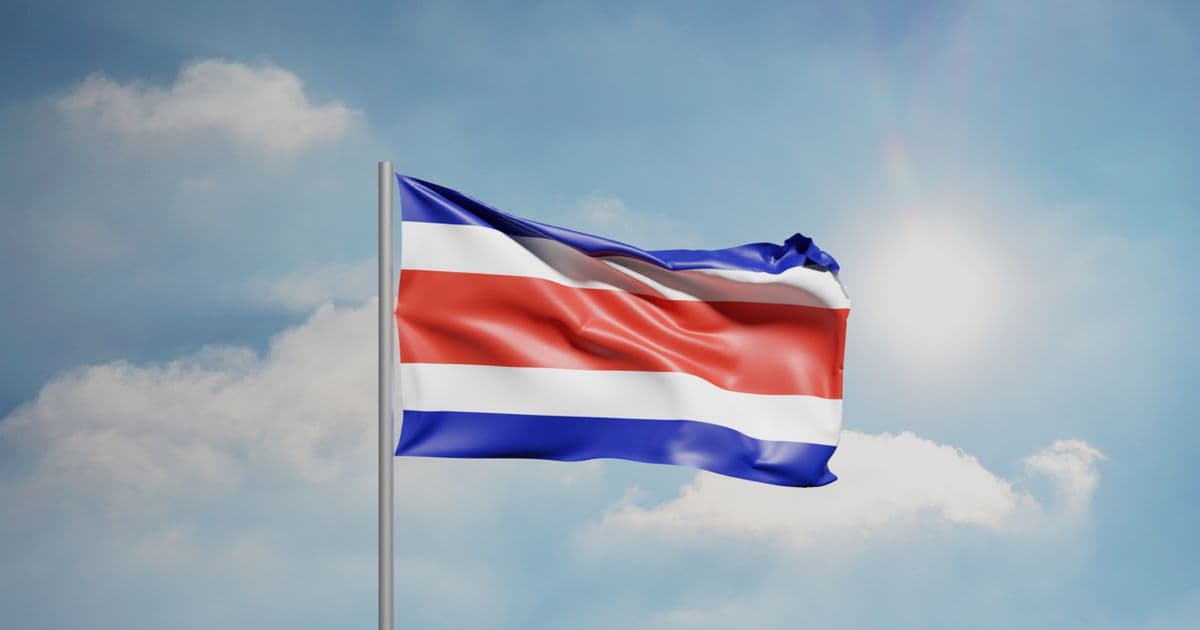
The bandera de Costa Rica is one of the most recognizable national symbols in Central America, featuring five horizontal stripes of blue, white, and red adopted in 1848. Its colors and coat of arms carry deep historical and cultural meaning that Ticos carry with pride. Understanding the flag gives visitors a window into Costa Rican identity and values.
History of the Costa Rican Flag
The bandera de Costa Rica was officially adopted on September 29, 1848, when President José María Castro Madriz issued a decree establishing the current design. Before this date, Costa Rica used a tricolor flag similar to those of other newly independent Central American states, reflecting the region's shared history under the Federal Republic of Central America.
The decisive change came largely at the instigation of First Lady Pacífica Fernández Oreamuno, who is credited with redesigning the flag by adding the distinctive red stripe to the center, drawing inspiration from the French tricolor flag of the 1848 revolution. This addition gave the flag its modern identity and distinguished it visually from neighboring Nicaragua, which retains a nearly identical blue-white-blue scheme without the red stripe.
Over the decades, the coat of arms displayed on the flag's red stripe has been updated several times, with the most recent revision occurring in 1998. Despite these refinements, the fundamental five-stripe design has remained unchanged for over 175 years, making it one of the most stable national flag designs in the Western Hemisphere.
Pre-Independence Flags
Before 1848, Costa Rica used several transitional flags tied to Spanish colonial rule and the short-lived Federal Republic of Central America (1823–1838). These early banners shared regional designs and did not reflect a distinct Costa Rican national identity, which only began to crystallize after full independence was firmly established.
Colors and Their Symbolism
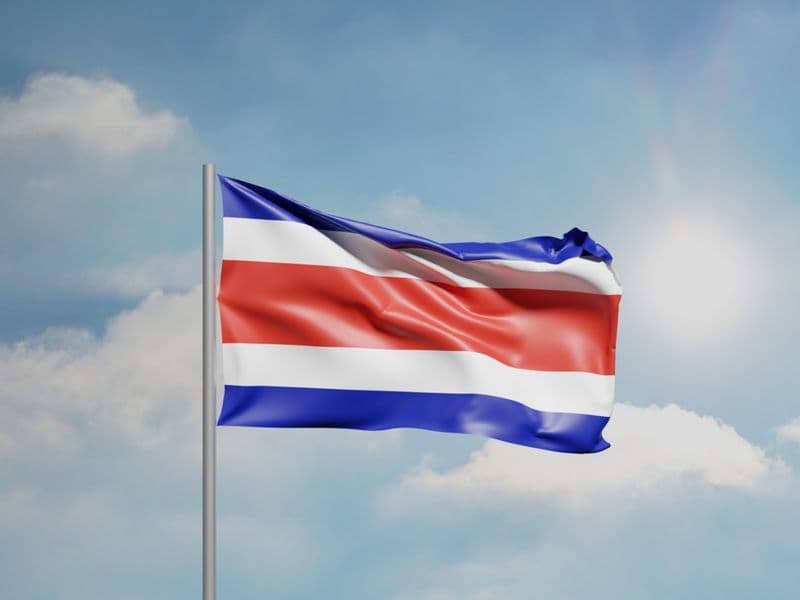
The bandera de Costa Rica consists of five horizontal stripes arranged from top to bottom: blue, white, red (twice as wide as the others), white, and blue. Each color carries official symbolic meaning enshrined in national tradition.
Blue represents the sky, the opportunities that await Costa Ricans, intellectual pursuits, and the idealism of the nation. White symbolizes peace, wisdom, and happiness — values central to Costa Rica's self-image as a peaceful country that abolished its military in 1948. Red stands for the warmth of the Costa Rican people, their love of life, and the blood shed by those who defended the nation's sovereignty.
The proportional width of the red stripe — exactly double that of each other stripe — emphasizes the primacy of these virtues of courage and vitality in the national character. Together, the three colors create a visual statement of a nation that values peace, intellectual development, and spirited humanity in equal measure.
Why the Red Stripe Is Wider
The red central stripe is twice the width of each blue or white stripe, giving the flag its distinctive bold look. This proportion was specified in the original 1848 decree and has never changed. The wider stripe visually anchors the flag and ensures the red — symbolizing the people's vitality — remains dominant at a glance.
The Coat of Arms
Centered on the red stripe of the bandera de Costa Rica is the national coat of arms, which appears only on the civil and state versions of the flag rather than the simple civil ensign used by citizens. The coat of arms is one of the most detailed in the Americas and contains a wealth of national symbolism.
The shield depicts three volcanoes rising from the Pacific Ocean on one side and the Caribbean Sea on the other, representing Costa Rica's geographic position between two oceans. Two merchant ships sail on the seas, symbolizing commerce and the country's connection to international trade. Above the volcanoes rises a blue sky with a golden star for each of Costa Rica's seven provinces, and above all this is a rising sun.
The shield is bordered by a gold and blue ribbon inscribed with the words "República de Costa Rica" and "América Central," and is surrounded by laurel branches. The entire design communicates a vision of a prosperous, geographically blessed, and peacefully governed republic.
Seven Stars for Seven Provinces
The seven gold stars on the coat of arms represent Costa Rica's seven provinces: San José, Alajuela, Cartago, Heredia, Guanacaste, Puntarenas, and Limón. This inclusion ensures every region of the country is honored in the national emblem, reflecting Costa Rica's federal character and the importance of provincial identity to Ticos.
Updates to the Coat of Arms
The coat of arms has been revised several times since the flag's adoption. The 1998 reform was the most recent significant update, standardizing the design and adjusting certain artistic elements to create a cleaner, more reproducible version suitable for modern use on government documents, currency, and official communications.
The Flag in Costa Rican Culture
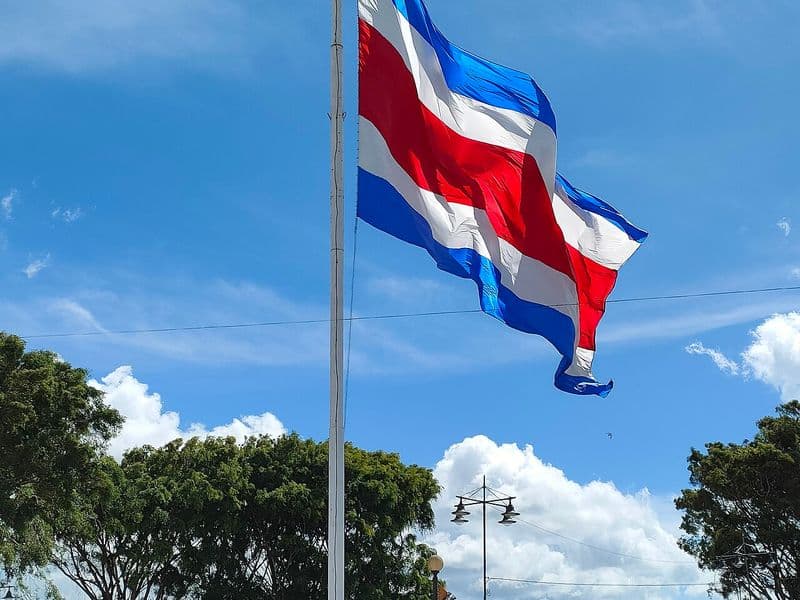
The bandera de Costa Rica is a ubiquitous symbol of national pride. It flies prominently on government buildings, schools, and public plazas year-round, and its presence intensifies dramatically during national holidays, particularly the September 15th Independence Day celebrations when streets, homes, and vehicles across the country are decorated with flags of all sizes.
For Ticos, the flag is not merely a government symbol but a genuine expression of national identity. Costa Ricans tend to have a strong, peaceful sense of patriotism, and the flag embodies values — peace, democracy, and environmental stewardship — that the country has long promoted internationally. Schoolchildren learn about the flag's history and meaning from an early age as part of civic education curricula.
The flag also appears frequently in sporting contexts. When the Costa Rican national football (soccer) team competes internationally, particularly in FIFA World Cup tournaments, the flag is waved enthusiastically by fans and painted on faces across the country. The 2014 World Cup, when Costa Rica reached the quarterfinals, produced an especially memorable outpouring of flag-bearing national pride.
Independence Day and Flag Ceremonies
Each year on September 15th, Costa Rica holds formal flag ceremonies in schools and public spaces as part of Independence Day. Students participate in marching bands, lantern parades called "desfiles de faroles," and flag-raising ceremonies. The night before, a symbolic torch is passed from Guatemala through Central America, arriving in Costa Rica to light ceremonial flames alongside the national flag.
Official Use and Flag Etiquette
Costa Rica distinguishes between several versions of the national flag for different official purposes. The civil flag, used by ordinary citizens, features the five-stripe design without any coat of arms. The state flag, flown by government institutions, includes the full coat of arms on the red stripe. The naval and civil ensign variants follow international maritime conventions.
Costa Rican law governs respectful treatment of the national flag. It should not be allowed to touch the ground, should be displayed in good condition without tears or fading, and should be raised and lowered with ceremony. Government buildings are required to fly the flag on designated national holidays and during official events.
During periods of national mourning, the flag may be flown at half-mast as a sign of respect. The specific protocols for flag use are outlined in national legislation and are taught in schools as part of civic education, ensuring that proper respect for the bandera de Costa Rica is maintained across generations.
Commercial and Decorative Use
Costa Rican law permits the use of flag colors and imagery in commercial contexts within certain limits. The image of the coat of arms on official documents is protected, but stylized flag designs appear widely on tourist merchandise, food packaging, and sports apparel. This commercial ubiquity has made the blue-white-red color scheme instantly recognizable internationally as a marker of Costa Rican identity.
The Flag Compared to Other Central American Flags
The bandera de Costa Rica shares its blue-white-red palette with several other Central American nations because all of these countries trace their flag designs to the tricolor of the former Federal Republic of Central America. Honduras, El Salvador, Guatemala, and Nicaragua all use blue and white as primary colors, reflecting this shared heritage.
Costa Rica's flag is most frequently confused with that of Nicaragua, which also uses blue-white-blue horizontal stripes. The key differences are Costa Rica's additional red stripe in the center and, on the state version, the distinct coat of arms. Costa Rica's design is also sometimes compared to the Thai flag, which uses the same five-stripe blue-white-red pattern, though the two countries arrived at their designs independently.
The distinctiveness of the red stripe has made the Costa Rican flag more visually memorable than some of its Central American counterparts, contributing to its strong recognition in international contexts. Vexillologists — flag scholars — frequently cite the Costa Rican flag as a well-designed national symbol that successfully balances regional heritage with national distinction.
The Federal Republic of Central America Legacy
When the Federal Republic of Central America dissolved in 1838–1840, each successor state adapted the shared blue-white-blue tricolor into its own national identity. Costa Rica's 1848 decision to add a red stripe was one of the more dramatic departures from this shared template, giving the country a visually unique flag while retaining the common blue and white heritage of the region.
Frequently Asked Questions
What do the colors on the bandera de Costa Rica mean?
Blue represents the sky and idealism, white symbolizes peace and happiness, and red stands for the warmth of the Costa Rican people and the blood of those who defended the nation. Red is also the widest stripe, emphasizing the centrality of these values.
Who designed the current Costa Rican flag?
First Lady Pacífica Fernández Oreamuno is credited with redesigning the flag in 1848 by adding the red center stripe, drawing inspiration from the French tricolor. The decree was signed by President José María Castro Madriz on September 29, 1848.
What is the difference between the civil flag and the state flag of Costa Rica?
The civil flag used by ordinary citizens features just the five horizontal stripes without any emblem. The state flag, flown by government institutions, includes the full national coat of arms centered on the red stripe.
Why is the Costa Rican flag similar to the Nicaraguan flag?
Both flags descend from the tricolor of the Federal Republic of Central America (1823–1838). Nicaragua retained the original blue-white-blue design, while Costa Rica added a red center stripe in 1848, distinguishing the two flags from each other.
How many stars are on the coat of arms of the bandera de Costa Rica?
There are seven gold stars on the coat of arms, one representing each of Costa Rica's seven provinces: San José, Alajuela, Cartago, Heredia, Guanacaste, Puntarenas, and Limón.