
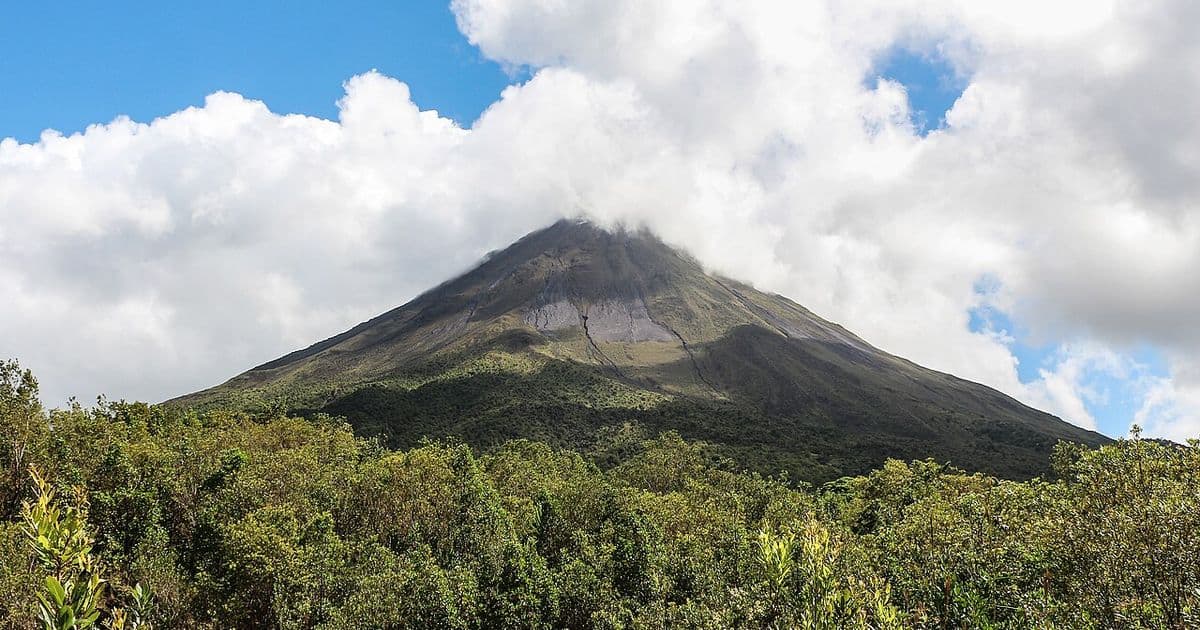
Costa Rica Volcano Guide: Active Peaks, Hikes, and What to Expect
Costa Rica sits on the Pacific Ring of Fire and is home to more than 60 volcanic formations, of which five are considered active by geological standards. These volcanoes have shaped the country's dramatic landscapes, enriched its fertile soils, and created extraordinary ecosystems ranging from steaming craters and bubbling mud pots to lush cloud forests and therapeutic hot springs. Visiting a Costa Rica volcano is one of the most memorable experiences the country has to offer, combining raw geological power with stunning natural beauty.
Overview of Costa Rica's Active Volcanoes
Costa Rica's volcanoes are the product of the subduction of the Cocos tectonic plate beneath the Caribbean plate. This geological process has built a chain of volcanic peaks running through the center of the country from northwest to southeast, part of a broader volcanic arc that extends from Guatemala through Panama. The volcanoes vary considerably in character: some feature dramatic lava flows and towering plumes, while others are defined by fumarolic fields, acidic crater lakes, and hydrothermal activity.
The five volcanoes most actively monitored by Costa Rica's National Seismological Network and OVSICORI-UNA observatory are Arenal, Poás, Rincón de la Vieja, Irazú, and Turrialba. Turrialba is the most currently active of the group, having undergone a series of significant eruptions since 2014 that periodically close airspace over San José and deposit ash on surrounding communities. The other volcanoes exhibit varying levels of ongoing hydrothermal and fumarolic activity.
Costa Rica's volcanic heritage extends beyond active peaks. The country's central plateau, the Meseta Central, owes its famously fertile soils to centuries of volcanic ash deposits. The coffee-growing highlands surrounding San José and the agricultural lands of the Cartago and Alajuela provinces produce exceptionally rich harvests partly because of the volcanic minerals that have accumulated in the soil over millennia. In this sense, Costa Rica's volcanoes are not just tourist attractions but fundamental to the country's agricultural economy and food security.
Turrialba Volcano: The Most Currently Active
Turrialba Volcano, located east of Cartago near the Caribbean watershed, has been in a near-continuous state of eruption since 2014. Its frequent ash and gas emissions have forced repeated evacuations of nearby farms and communities and have periodically closed Juan Santamaría International Airport in San José when ash plumes drift west. The summit is currently closed to visitors due to ongoing activity. Scientists monitor Turrialba closely as a key example of a volcano in an active eruptive phase.
Arenal Volcano: The Country's Most Famous Peak
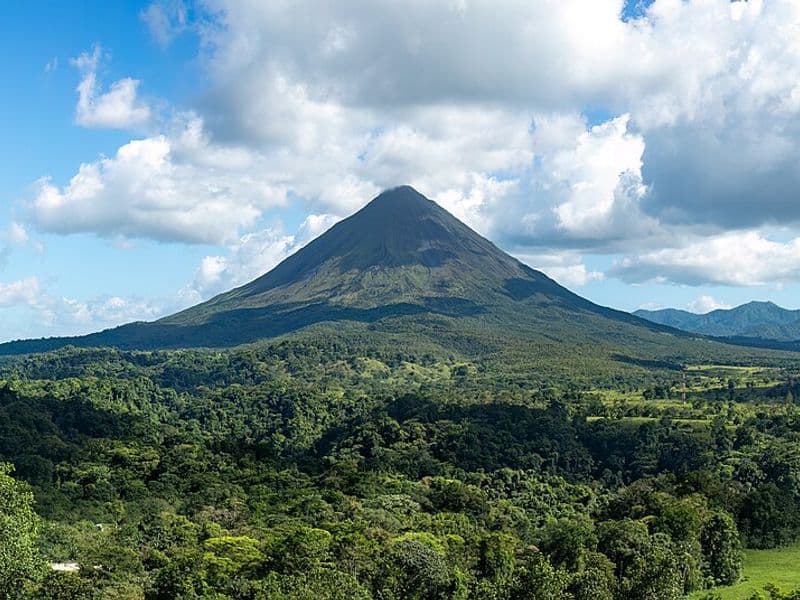
Arenal Volcano is Costa Rica's most iconic natural landmark and one of the most perfectly symmetrical volcanoes in the world. Rising 1,670 meters above the Arenal Lake and surrounding rainforest in the northern lowlands of Alajuela province, its near-perfect conical shape has made it one of the most photographed volcanoes in the Americas. Between 1968 and 2010, Arenal was one of the most continuously active volcanoes in the world, regularly producing lava flows, pyroclastic surges, and ash clouds visible from the town of La Fortuna at its base.
On July 29, 1968, a catastrophic flank eruption killed 87 people and destroyed the towns of Tabacón, Pueblo Nuevo, and San Luis. This disaster fundamentally changed how Costa Rica approaches volcanic monitoring and community preparedness. Following the 1968 eruption, Arenal entered a prolonged period of continuous activity that lasted until approximately 2010, when scientists declared the volcano had entered a new resting phase.
Today, Arenal does not produce regular lava flows, but the volcano is not considered extinct. Fumarolic activity continues on the summit, and geologists note that reactivation is possible. For visitors, the main experience of Arenal is the dramatic silhouette of the cone against the sky, the surrounding national park with excellent wildlife watching, the hanging bridges through the rainforest canopy, and the famous hot springs fed by geothermal heat from deep beneath the volcano — most notably at Tabacón and Baldi hot spring resorts.
Arenal Volcano National Park Hiking
Arenal Volcano National Park offers several well-maintained trails that provide spectacular views of the volcano and pass through lava fields from the 1968 eruption. The Lava Sendero trail crosses hardened aa lava fields that demonstrate the destructive power of the 1968 eruption. The Heliconias and Ceibo trails wind through secondary forest recovering from lava and ash deposition. No hiking to the summit is permitted. The park entrance is located a few kilometers west of La Fortuna and opens at 8 a.m.
Hot Springs Near Arenal Volcano
The geothermal activity beneath Arenal heats underground water that emerges as natural hot springs along the Tabacón River corridor. Several developed hot spring resorts, including Tabacón Grand Spa Thermal Resort, Baldi Hot Springs, and Ecotermales, channel this thermal water into landscaped pools at temperatures ranging from 35°C to 42°C. These resorts are among the most popular attractions in Costa Rica for visitors seeking relaxation combined with the dramatic backdrop of the volcano. Day passes and night passes are available at each resort.
Poás Volcano: Turquoise Crater Lake and Active Fumaroles
Poás Volcano, located in the highlands of Alajuela province about 57 kilometers north of San José, features one of the most dramatic active craters in the world. The main crater is approximately 1.5 kilometers in diameter and contains Laguna Caliente, an intensely acidic crater lake with a pH that can approach zero during periods of high hydrothermal activity. The lake is one of the most acidic natural bodies of water on Earth, sustained by sulfuric acid generated by volcanic gases dissolving into the water.
The summit of Poás reaches 2,708 meters above sea level, placing the crater viewpoint above the cloud layer on clear mornings. When visibility is good, the sight of the turquoise lake steaming within the enormous crater bowl is one of the most spectacular views in all of Central America. However, cloud cover often obscures the crater by mid-morning, making early arrival essential for clear views.
In April 2017, Poás underwent its most significant eruption in decades, sending ash and acidic tephra several kilometers into the air and forcing the closure of the national park for over a year. The volcano has since returned to a calmer but still active state, with regular phreatic eruptions and high gas emissions continuing. The park now operates with a timed entry ticket system and a maximum stay of 20 to 40 minutes at the crater viewpoint for safety. Gas masks are available at the park entrance.
The Botos Extinct Crater and Cloud Forest
Adjacent to the main active crater, Poás Volcano National Park contains a second, extinct crater called Botos, which holds a peaceful freshwater lagoon surrounded by pristine cloud forest. The trail connecting the two craters passes through elfin forest — a stunted, moss-draped woodland community found only at high elevations in foggy volcanic environments. Resplendent quetzals are sometimes spotted along this trail, making the Botos hike an excellent wildlife experience in addition to the geological spectacle.
Rincón de la Vieja: Mud Pots and Dry Forest Adventures
Rincón de la Vieja Volcano anchors the northern Pacific region of Costa Rica in the province of Guanacaste, rising to 1,916 meters in the Guanacaste Conservation Area. Unlike the lush green landscapes surrounding Arenal or Poás, Rincón de la Vieja is bordered by tropical dry forest — a seasonally deciduous woodland that takes on a golden hue during the January-to-April dry season. The contrast between the arid, sun-scorched landscape and the steaming hydrothermal features at the volcano's base creates a uniquely dramatic setting.
The volcano's most accessible and spectacular features are the hydrothermal fields at its base, where boiling mud pots, steaming fumaroles, and sulfurous hot springs bubble and hiss from the earth. Las Pailas sector — the main visitor area — has a well-marked loop trail that passes through all of these features over a distance of about 3 kilometers. The sight and sound of boiling gray mud gurgling in circular pools is one of the most otherworldly natural experiences in Costa Rica.
The summit of Rincón de la Vieja is reachable by a strenuous 8-kilometer trail from the Las Pailas station, with an elevation gain of approximately 1,600 meters. The active summit crater is occasionally closed when volcanic activity increases. The park also offers access to several waterfalls, including the spectacular Catarata Escondida and the Cangreja waterfall, which plunges into a vivid turquoise pool. Adventure tourism is a major draw in the area, with numerous haciendas near the volcano offering zip lining, white-water tubing, horseback riding, and canopy walks.
Las Pailas Sector: Mud Pots and Thermal Features
Las Pailas, meaning 'the cauldrons' in Spanish, is the most visited sector of Rincón de la Vieja National Park. The loop trail is suitable for most fitness levels and passes boiling mud pools, fumarolic vents belching sulfurous steam, small volcanic craters, and a cold-water river that can be forded during the dry season. Wildlife is plentiful along the trail, including white-faced capuchins, coatis, and many bird species adapted to the dry forest environment. Arriving at park opening — 7 a.m. — is recommended for cooler temperatures and better wildlife activity.
Irazú Volcano: The Highest and Most Accessible
Irazú Volcano is the highest active volcano in Costa Rica, with its main crater reaching 3,432 meters above sea level. Located just 50 kilometers east of San José on the boundary between Cartago and Limón provinces, it is also the most easily accessible volcano in the country — the road to the summit crater is paved all the way to the parking area adjacent to the crater rim. The relatively short and easy access has made Irazú one of Costa Rica's most visited national parks since the road was improved in the 1960s.
The summit environment of Irazú is stark and dramatic. The crater floor is barren volcanic rock and ash, and the main crater contains a shallow green lake that varies in depth and color depending on rainfall and volcanic activity. Secondary craters, including the Diego de la Haya crater, flank the main summit. On exceptionally clear days — primarily during the dry season between December and April — it is claimed that both the Pacific Ocean and the Caribbean Sea can be seen simultaneously from the crater rim, though this requires truly exceptional visibility.
Irazú's most famous modern eruption began in March 1963, coinciding with a state visit to Costa Rica by U.S. President John F. Kennedy. The eruption, which continued intermittently until 1965, buried San José and the Meseta Central under heavy deposits of volcanic ash and caused significant agricultural damage throughout the central highlands. Agricultural land surrounding Irazú, particularly the Cartago valley, remains among the most productive in Costa Rica due to the mineral-rich volcanic soils deposited by centuries of such eruptions.
Agriculture and the Legacy of Irazú's Eruptions
The fertile agricultural belt surrounding Irazú Volcano is famous for producing some of Costa Rica's finest vegetables, including potatoes, onions, carrots, and chayote squash. The Cartago province, which lies in the shadow of Irazú, has been a major food-producing region for centuries. Volcanic ash from historical eruptions has continually refreshed the soil with minerals, contributing to the exceptional productivity of the land. Visitors driving from San José to Irazú pass through this agricultural landscape, which provides an interesting contrast to the barren volcanic summit.
Visiting Volcanoes: Safety Tips and Practical Information
Visiting active volcanoes requires an understanding of the risks involved and the safety measures in place to protect visitors. All of Costa Rica's open volcanic parks are monitored continuously by OVSICORI-UNA, which maintains a real-time alert system and can trigger park closures at any time if activity increases. Travelers should always check current alert levels before heading to a volcanic area and should have flexible itinerary plans that can accommodate a closure.
Altitude is an important consideration at Irazú (3,432 m) and Poás (2,708 m). Visitors who have recently arrived from sea level may experience mild altitude-related symptoms including headache, dizziness, and shortness of breath. Staying hydrated, ascending slowly, and avoiding strenuous exertion immediately upon arrival at high elevation reduces these effects. Rincón de la Vieja at roughly 1,900 meters presents fewer altitude concerns for most visitors.
Clothing for volcanic park visits should prioritize warmth and waterproofing, especially at Irazú and Poás where temperatures can be dramatically lower than at sea level and rainfall is frequent year-round. Temperatures at the Irazú crater can be below 10°C even in dry season, and winds can be strong. At Poás, warm layers, rain gear, and a gas mask for sulfur dioxide protection are all advisable. At Rincón de la Vieja, the dry forest climate means lighter clothing is appropriate for the lowland sections, but sun protection and plenty of water are essential.
What to Pack for a Volcano Visit
For Poás and Irazú: warm waterproof jacket, hat, gloves in cool season, rain pants, sturdy closed-toe shoes, sunscreen for high-altitude UV exposure, and a gas mask (rentable at Poás). For Rincón de la Vieja: lightweight moisture-wicking clothing, sun hat, strong sunscreen, at least 2 liters of water per person, and sturdy hiking boots. For all volcanoes: advance ticket booking (required for Poás, recommended for others), cash for entrance fees, and a fully charged phone for emergency contact.
Guided Tours vs. Self-Drive
All of Costa Rica's major volcanoes are reachable by private vehicle, but guided tours offer significant advantages. Guides provide geological and ecological context that dramatically enriches the experience, monitor real-time conditions and alerts, and can reroute to alternative attractions if a volcano is unexpectedly closed. Day tours from San José to Poás, Irazú, and Rincón de la Vieja are widely available from tour operators, with costs typically including transport, a bilingual guide, and sometimes lunch at a local restaurant.
Frequently Asked Questions
Which Costa Rica volcano is best to visit?
The best volcano to visit depends on your interests. Arenal offers dramatic scenery, excellent wildlife watching, and world-class hot springs. Poás has the most spectacular crater lake. Rincón de la Vieja offers boiling mud pots and adventure tourism. Irazú is the easiest to access from San José. For most first-time visitors, Arenal combined with the La Fortuna hot springs provides the most complete volcanic experience.
Can you see lava in Costa Rica?
Active lava flows are not currently visible at any of Costa Rica's open volcanic parks. Arenal had regular lava flows until around 2010 but is currently in a resting phase. Occasional incandescent rockfalls were visible at night during Arenal's active period. For active lava, travelers need to visit locations such as Hawaii or Iceland. In Costa Rica, volcanic activity is best observed through hydrothermal features — fumaroles, mud pots, and crater lakes.
Are Costa Rica volcanoes dangerous to visit?
When parks are open, visiting Costa Rica's volcanoes is considered safe for the general public. OVSICORI continuously monitors all active volcanoes and parks are closed immediately when activity increases. The main risks are from volcanic gas inhalation at Poás, altitude-related symptoms at Irazú and Poás, and the general unpredictability of volcanic environments. Following park rules, staying on marked trails, and checking current alert levels before visiting minimizes all these risks significantly.
Do I need to book volcano tours in advance?
Poás Volcano requires advance online booking through the SINAC system — walk-ins are not permitted. Other volcanoes including Arenal, Irazú, and Rincón de la Vieja generally allow walk-in entry, though advance booking is increasingly recommended during peak travel season from December through April. Guided tours from San José and the main resort areas can typically be booked through hotels or tour operators with 24 to 48 hours notice.
What is the best time of year to visit Costa Rica's volcanoes?
The dry season from December through April generally offers better crater visibility at Poás and Irazú, which are frequently cloud-covered year-round. For Arenal, the volcano is often shrouded in clouds regardless of season, but rainfall is heaviest from September through November. Rincón de la Vieja in Guanacaste has a pronounced dry season from December to April when trail conditions are much better and the dry forest landscape is particularly scenic.