
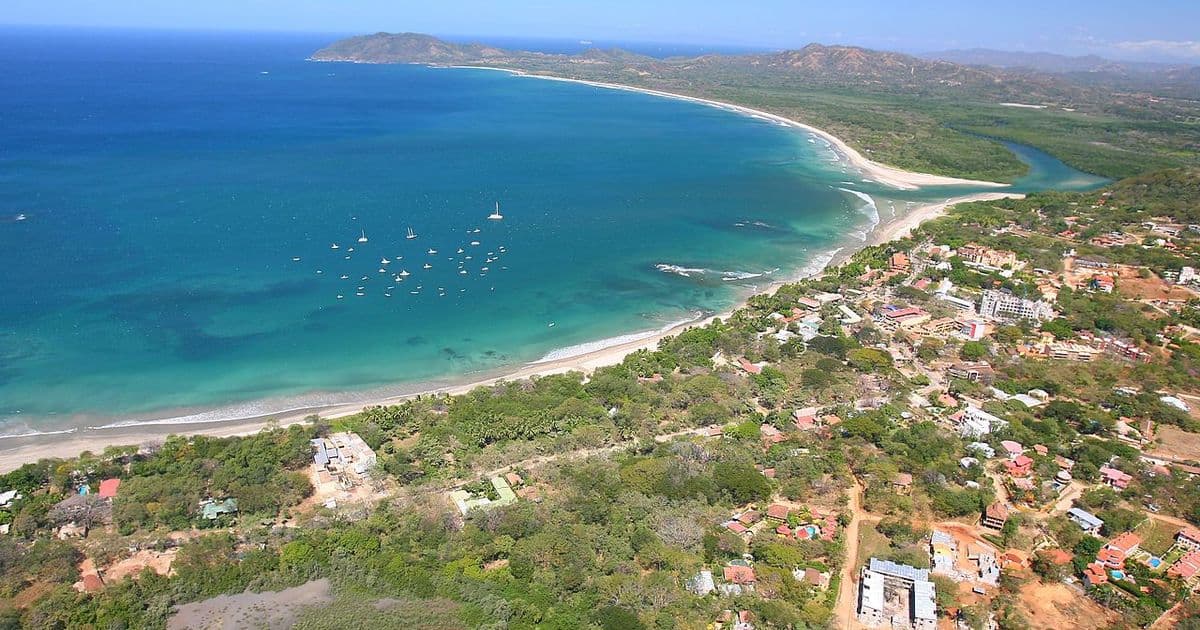
Costa Rica Beaches: The Ultimate Guide to Both Coasts
Costa Rica is home to over 800 kilometers of coastline along two dramatically different coasts — the Pacific Ocean to the west and the Caribbean Sea to the east. With more than 300 beaches ranging from remote wildlife refuges to world-class surf breaks and luxury resort destinations, Costa Rica offers beach experiences unlike anywhere else in the world. Whether you seek thundering surf, calm snorkeling bays, turtle nesting grounds, or pristine wilderness, Costa Rica's beaches deliver.
Pacific Coast vs Caribbean Coast Beaches
Costa Rica's two coastlines offer strikingly different beach experiences, shaped by their respective geography, climate patterns, and ocean systems. Understanding the differences is essential for planning the right beach vacation.
The Pacific coast is the longer and more developed of the two coastlines, stretching from the Nicaraguan border in the northwest to Panama in the south. Pacific beaches vary enormously from region to region — the Guanacaste province in the northwest is dominated by wide, golden-sand beaches backed by tropical dry forest, while the Central Pacific coast around Jacó and Manuel Antonio offers darker volcanic sand and lush rainforest right to the shoreline. The South Pacific, including the Osa Peninsula and Golfo Dulce, contains some of the most remote and ecologically rich beaches in the country.
The Caribbean coast is shorter, less developed, and receives significantly more rainfall than the Pacific side. Caribbean beaches are typified by dark sand, swaying coconut palms, and a distinctly laid-back Afro-Caribbean cultural atmosphere. The water is calmer than the open Pacific in the south (around Puerto Viejo and Cahuita) and rougher in the north near Tortuguero. The Caribbean offers the country's best coral reef snorkeling at Cahuita National Park and is internationally important for sea turtle conservation, particularly at Tortuguero, where Green turtles nest in massive numbers from July through October.
Pacific Coast Climate
The Pacific coast experiences a classic dry season from December through April and a rainy season from May through November. Guanacaste in particular is one of the driest regions of Costa Rica, receiving less than 1,500 mm of rain annually in most areas. The Central and South Pacific receive more rainfall overall, with even the dry season seeing occasional showers. During the dry season, Pacific beaches offer near-guaranteed sunshine and calm seas, making them ideal for families and resort vacations.
Caribbean Coast Climate
The Caribbean coast operates on a different rainfall pattern than the Pacific. The driest months on the Caribbean are typically February, March, September, and October — almost the inverse of the Pacific dry season. This makes the Caribbean an excellent destination during months when the Pacific is at its rainiest. The town of Puerto Viejo de Talamanca and surrounding beaches enjoy their best weather from mid-January through April and again briefly in September and October.
Top Beaches in Guanacaste
Guanacaste province in northwestern Costa Rica is the country's beach tourism heartland, home to dozens of beautiful beaches ranging from secluded coves to sprawling resort destinations. The region's proximity to Liberia's international airport makes it one of the most accessible beach areas in the country, especially for visitors flying from North America.
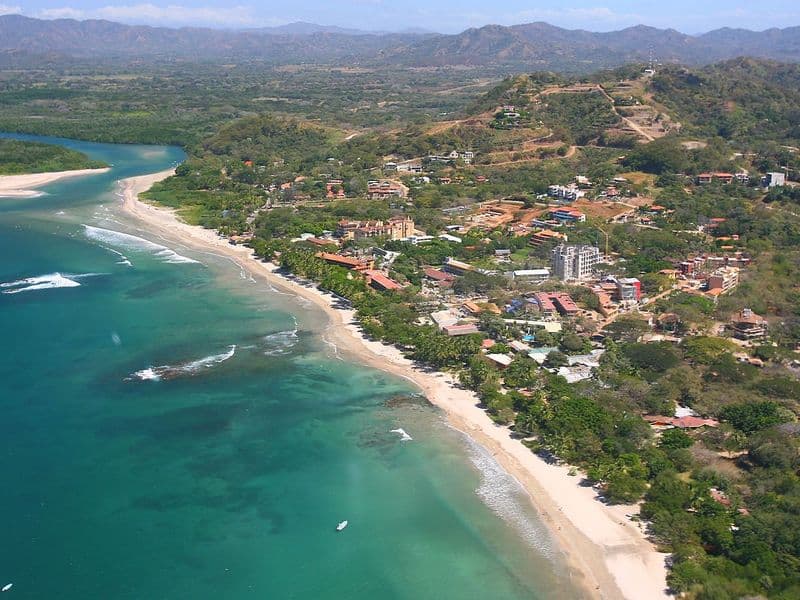
Playa Conchal, near the village of Brasilito, is perhaps Guanacaste's most distinctive beach — its shoreline is composed entirely of crushed shells rather than sand, and the water is exceptionally clear and turquoise, making it a premier snorkeling destination. Nearby Playa Flamingo is an elegant, low-key resort town with a large marina and excellent sport fishing. Playa Tamarindo is the most developed beach destination in Guanacaste, with a lively surf scene, international restaurants, a vibrant nightlife, and a wide range of accommodations.
Playa Grande, adjacent to Tamarindo, is a long, dramatic beach and critical nesting habitat for Leatherback sea turtles — the world's largest sea turtle species. Access is regulated during nesting season (October through February) to protect the turtles, and nighttime turtle-watching tours are a major draw. Playa Avellanas and Playa Negra, south of Tamarindo, are favorite surfing beaches known for consistent reef breaks. Playa Nosara and Playa Guiones, further south in the Nicoya Peninsula, offer world-class surfing and a tranquil, wellness-focused atmosphere.
Nicoya Peninsula Beaches
The Nicoya Peninsula, which juts southward from Guanacaste, is home to some of Costa Rica's most beloved beaches. Santa Teresa and Mal País on the peninsula's southern tip are internationally recognized surf destinations with a bohemian atmosphere and excellent yoga and wellness retreats. Montezuma, on the southeastern coast of the peninsula, is a quirky, artistic beach town popular with backpackers and those seeking a counterculture vibe. Playa Samara is a calm, family-friendly crescent beach renowned for its safe swimming conditions and laid-back atmosphere.
Top Beaches on the Central Pacific Coast
The Central Pacific coast, accessible from San José by a scenic mountain highway, is home to some of Costa Rica's most visited beaches. This region is notable for its combination of lush tropical rainforest and wide Pacific beaches, and it supports remarkable wildlife even within its most developed beach towns.
Jacó is the closest major beach resort to San José, located about 110 kilometers west of the capital via the Caldera Highway. Despite its reputation as a party destination, Jacó is also a legitimate surf beach with consistent waves suitable for beginners and intermediate surfers, and it serves as a convenient base for exploring the surrounding region. Playa Hermosa, just south of Jacó, is one of Central America's premier surf beaches, hosting international surf competitions annually thanks to its powerful, consistent beach break.
Manuel Antonio, about 180 kilometers south of San José, is one of the most famous destinations in all of Costa Rica, combining stunning beaches with one of the country's most wildlife-rich national parks. Manuel Antonio National Park contains four beaches within its protected boundaries, including the spectacular Playa Espadilla Sur and Playa Manuel Antonio, where white-faced capuchin monkeys, sloths, raccoons, and iguanas share the beach with visitors. The park is one of the most biodiverse protected areas in the world relative to its small size.
Manuel Antonio National Park Beaches
Manuel Antonio National Park protects four distinct beaches within its 1,625-hectare area. Playa Espadilla Sur is a wide, beautiful beach with moderate surf, while Playa Manuel Antonio offers calmer conditions in a sheltered cove perfect for families. Playa Biesanz is a tiny, secluded beach accessible only by a short hike and is excellent for snorkeling. The park charges an entrance fee and limits daily visitor numbers to protect both wildlife and the beach environment. Advance online booking is required.
Top Beaches on the South Pacific Coast
The South Pacific region of Costa Rica — encompassing the Osa Peninsula, Golfo Dulce, and the coastal areas around Dominical and Uvita — contains the country's most wild and ecologically significant beaches. This region receives the highest rainfall in Costa Rica, keeping the forests intensely green year-round and supporting extraordinary biodiversity.
Dominical is a small surf town about 45 kilometers south of Manuel Antonio, known for its powerful beach break and as a base for exploring the surrounding mountains and national parks. The beach at Dominical is long and dramatic but has strong rip currents, making it better suited for experienced swimmers and surfers than for casual beach-goers. The famous Marino Ballena National Park, a 15-minute drive south of Dominical near Uvita, protects a remarkable whale-tail-shaped sandbar that appears at low tide, as well as offshore coral reefs and an important Humpback whale sanctuary — one of only a few places in the world where both Northern and Southern Hemisphere Humpback whales gather to breed.
The Osa Peninsula, considered one of the most biologically intense places on Earth by National Geographic, is home to Corcovado National Park and several wild, remote beaches including Playa Corcovado, Playa Sirena, and Playa San Josecito. These beaches are accessible only by boat or on foot through the jungle, and they offer unparalleled wildlife encounters including Scarlet macaws, Tapirs, Jaguars, and all four species of Costa Rican monkeys.
Marino Ballena National Park
Marino Ballena National Park near Uvita protects both terrestrial and marine ecosystems, including the famous whale-tail sandbar visible at low tide. The park is one of the most important breeding grounds for Humpback whales on the Pacific coast of the Americas, with whale-watching season running from approximately July through March, when both Northern and Southern Hemisphere populations are present at different times. The park also protects coral reefs, mangroves, and several nesting beaches for Hawksbill, Leatherback, and Olive Ridley sea turtles.
Caribbean Coast Beaches
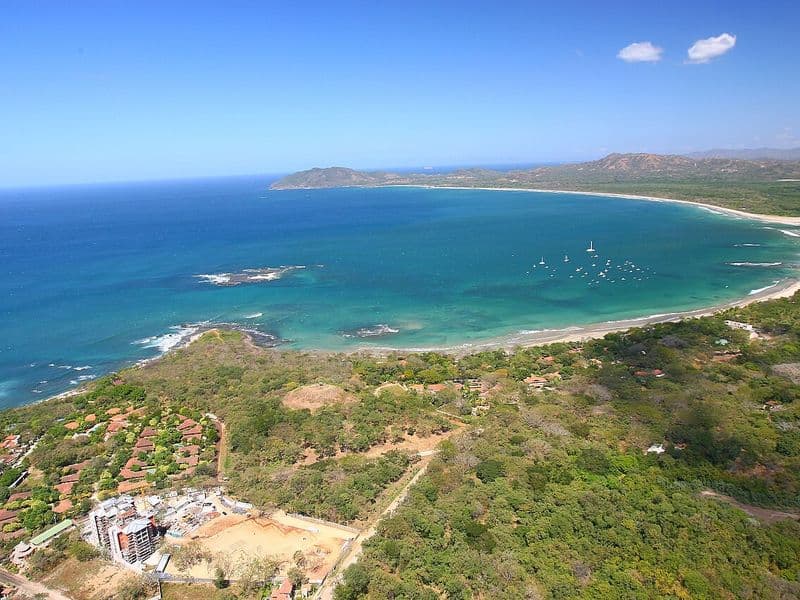
Costa Rica's Caribbean coast offers a dramatically different beach experience from the Pacific side, with a unique cultural blend of Afro-Caribbean, indigenous, and mestizo influences shaping the food, music, and lifestyle of the coastal communities. The beaches here are typically darker, lined with coconut palms, and backed by dense rainforest rather than the dry forests of the Pacific northwest.
Tortuguero, accessible only by boat or small plane from Limón or San José, is one of the world's most important nesting sites for the Green sea turtle. The beach at Tortuguero is a wild, gray-sand shore fronted by the Caribbean Sea and backed by the canals and rainforest of Tortuguero National Park. During nesting season (July through October), thousands of female Green turtles come ashore to lay eggs, and organized nighttime tours allow visitors to witness this extraordinary event under the guidance of trained naturalist guides.
Puerto Viejo de Talamanca, in the far south of the Caribbean coast near the Panamanian border, is the most visited destination on the Caribbean side. The town has a lively reggae-infused atmosphere and serves as a base for exploring nearby beaches including Playa Cocles, Playa Chiquita, and the stunning Playa Manzanillo within Gandoca-Manzanillo Wildlife Refuge. Cahuita National Park, just north of Puerto Viejo, protects the largest coral reef in Costa Rica and offers excellent snorkeling in calm, protected waters.
Cahuita National Park
Cahuita National Park protects over 22,000 hectares of both land and sea, including Costa Rica's most accessible coral reef. The reef shelters over 35 species of coral and more than 140 species of fish, as well as lobsters, moray eels, and sea turtles. Entry to the Puerto Vargas sector of the park requires a fee, while the Cahuita town sector operates on a donation basis. The hiking trail through the park parallels one of the most scenic and wildlife-rich beaches in the country, passing through jungle inhabited by howler monkeys, sloths, and numerous bird species.
Best Beaches for Different Activities
Costa Rica's diverse coastline means that different beaches excel for different activities. Choosing the right beach depends heavily on your priorities, whether that is surfing, snorkeling, wildlife watching, family-friendly swimming, or simply finding a remote escape.
For surfing, the top spots include Playa Tamarindo and Playa Grande in Guanacaste for beginners and intermediate surfers, Playa Hermosa near Jacó for powerful beach breaks popular with advanced surfers, and Santa Teresa on the Nicoya Peninsula for consistent waves and a vibrant surf culture. Pavones, near the Panamanian border on the South Pacific, is legendary for one of the longest left-hand point breaks in the world.
For snorkeling and marine wildlife, Playa Conchal offers the clearest water and best visibility in Guanacaste, while Cahuita National Park provides the most accessible coral reef experience in Costa Rica. The Bat Islands off the Guanacaste coast are world-famous for bull shark diving. For sea turtle watching, Tortuguero (Green turtles, July-October), Playa Grande (Leatherbacks, October-February), and Ostional (Olive Ridley mass nesting, rainy season) are the premier destinations.
Best Beaches for Families
Families with young children benefit most from calm, lifeguarded beaches with gentle surf. Playa Samara on the Nicoya Peninsula is widely regarded as the best family beach in Costa Rica due to its protective reef that calms the surf, its wide sandy beach, and its relaxed atmosphere. Playa Hermosa (Guanacaste), not to be confused with Playa Hermosa near Jacó, is another excellent family option with calm, blue water in a sheltered bay. Manuel Antonio National Park combines wildlife watching with safe swimming beaches, making it a perennial favorite for families.
Best Remote Beaches
For travelers seeking isolation and pristine nature, Costa Rica's remote beaches rival anything in the world. Playa Sirena inside Corcovado National Park on the Osa Peninsula is reachable only by boat or a multi-day jungle hike, but rewards the effort with extraordinary wildlife and a completely undeveloped shoreline. Playa San Josecito near Drake Bay offers calm snorkeling in a protected cove surrounded by primary rainforest. On the Caribbean, Playa Manzanillo within the Gandoca-Manzanillo Wildlife Refuge sees relatively few visitors despite its remarkable beauty and biodiversity.
Planning Your Costa Rica Beach Trip
Planning a successful Costa Rica beach vacation requires understanding the country's geography and climate patterns. Costa Rica is a small country — about the size of West Virginia — but the mountains, two coasts, and microclimates create significant variation in weather conditions from one beach to the next. It is entirely possible to experience sunshine on the Pacific coast while the Caribbean is experiencing heavy rain, and vice versa.
Most international visitors arrive at one of two airports: Juan Santamaría International Airport (SJO) in San José, which serves the widest range of international airlines and destinations, or Daniel Oduber Quirós International Airport (LIR) in Liberia, which is the preferred choice for travelers heading directly to Guanacaste beaches. Liberia has seen significant growth in international flights in recent years, with direct service from dozens of North American cities.
A rental car is the most flexible and recommended way to explore Costa Rica's beaches, though public buses serve most major beach destinations from San José at very low cost. Shuttle services operated by companies such as Interbus, Gray Line, and Monkey Ride provide a comfortable middle ground between public buses and private transfers. Road conditions vary significantly — major routes are well-paved, but many beach access roads require a four-wheel-drive vehicle, particularly in the rainy season. Domestic flights operated by Sansa and Skyway serve destinations including Tamarindo, Nosara, Quepos (for Manuel Antonio), Drake Bay, and Puerto Jiménez on the Osa Peninsula.
Beach Safety in Costa Rica
Costa Rican beaches are generally not lifeguarded except at major resort beaches during peak hours. Rip currents are a serious hazard at many Pacific beaches, particularly those with strong surf. Swimmers should always check with locals about current conditions before entering the water and should avoid swimming alone in remote areas. The Cruz Roja (Red Cross) operates an emergency line at 911 throughout Costa Rica. Petty theft is a concern at popular beaches — never leave valuables visible in a parked car, and avoid bringing expensive items to the beach.
Frequently Asked Questions
Which coast has better beaches in Costa Rica — Pacific or Caribbean?
Neither coast is objectively better — they offer different experiences. The Pacific coast has more beaches, more infrastructure, more consistent dry-season weather, and better surf overall. The Caribbean coast offers unique Afro-Caribbean culture, Costa Rica's best coral reef snorkeling at Cahuita, and some of the world's most important sea turtle nesting sites. Most visitors to Costa Rica prefer the Pacific for general beach vacations, while nature and culture enthusiasts often prefer the Caribbean.
What is the best month to visit Costa Rica beaches?
For Pacific coast beaches, the best months are December through April, when rainfall is minimal and sunshine is nearly guaranteed. January through March represent the peak dry season. For Caribbean coast beaches, February, March, September, and October tend to have the driest conditions. If visiting during the rainy season (May-November on the Pacific), mornings are usually sunny and rain typically arrives in the afternoon or evening.
Are Costa Rica beaches safe to swim at?
Many Costa Rica beaches are safe for swimming, but rip currents are a serious hazard at Pacific beaches with heavy surf. Beaches like Playa Samara, Playa Conchal, and the coves at Manuel Antonio are known for calmer, safer swimming conditions. Always check with locals or beach vendors about current conditions, avoid swimming alone at remote beaches, and heed any warning flags posted. Very few beaches have lifeguards.
What beaches in Costa Rica are best for beginners to surf?
Playa Tamarindo in Guanacaste is the top destination for beginner surfers, with gentle beach break waves, numerous surf schools, and a supportive surf community. Playa Dominical, Playa Jacó, and Playa Sámara also offer surf schools catering to beginners. Santa Teresa on the Nicoya Peninsula is excellent for intermediate surfers looking to improve. All of these locations have established surf instruction businesses with qualified instructors and rental equipment.
Do I need a car to visit Costa Rica beaches?
A rental car provides the most flexibility and access to remote beaches, but is not strictly required for visiting the most popular destinations. Public buses from San José reach major beach towns including Jacó, Manuel Antonio, Tamarindo, and Puerto Viejo. Shared shuttle services are a comfortable and affordable alternative to private rentals for point-to-point travel between major destinations. For exploring multiple beaches in a region or accessing remote spots, a 4WD rental vehicle is highly recommended.