
Costa Rica Birds: A Complete Guide to 900+ Species and Where to Find Them
Costa Rica is one of the world's premier birdwatching destinations, with over 900 recorded bird species packed into a country roughly the size of West Virginia. This extraordinary avian diversity is driven by Costa Rica's position as a land bridge between North and South America, its range of habitats from tropical beaches to cloud forests above 3,000 meters, and a national commitment to conservation that has protected over 26% of the country's land area. From the dazzling resplendent quetzal to the thundering scarlet macaw, the birds of Costa Rica captivate beginners and expert birders alike.
Most Iconic Birds of Costa Rica
Costa Rica's national bird is the clay-colored thrush, known locally as the yiguirro. While unremarkable in appearance — it resembles a plain brown robin — the yiguirro is celebrated for its rich, melodious song and was designated the national bird because its calls are said to call forth the rains at the start of the wet season each May. It is found in every corner of the country, from urban gardens to forest edges, and is often the first bird that new visitors identify during a trip.
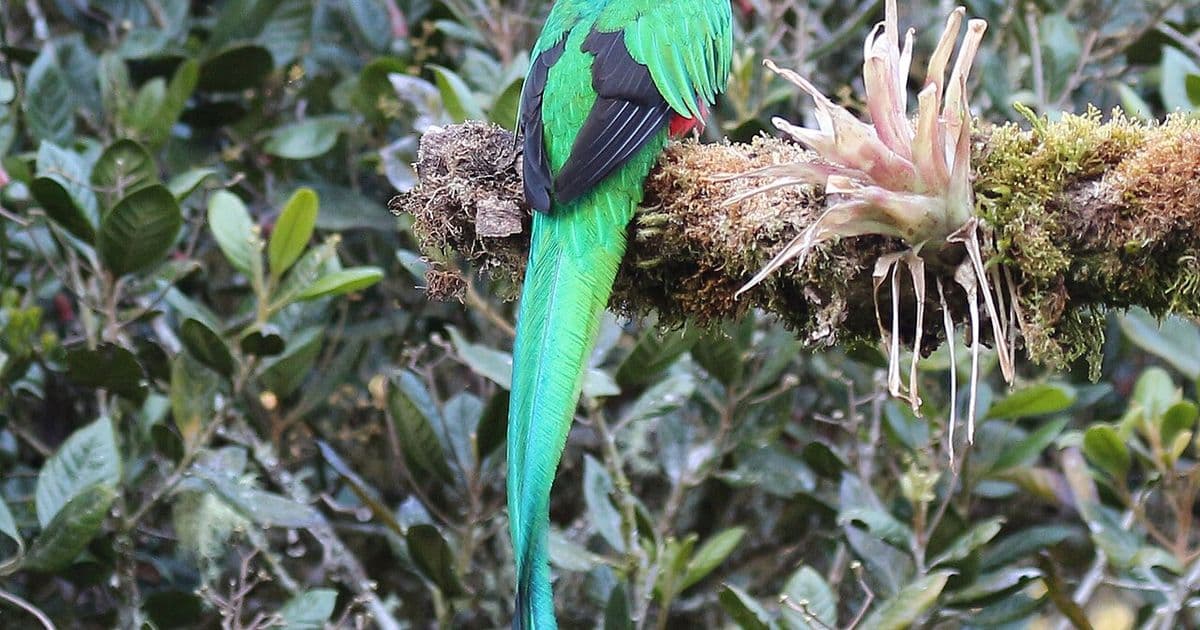
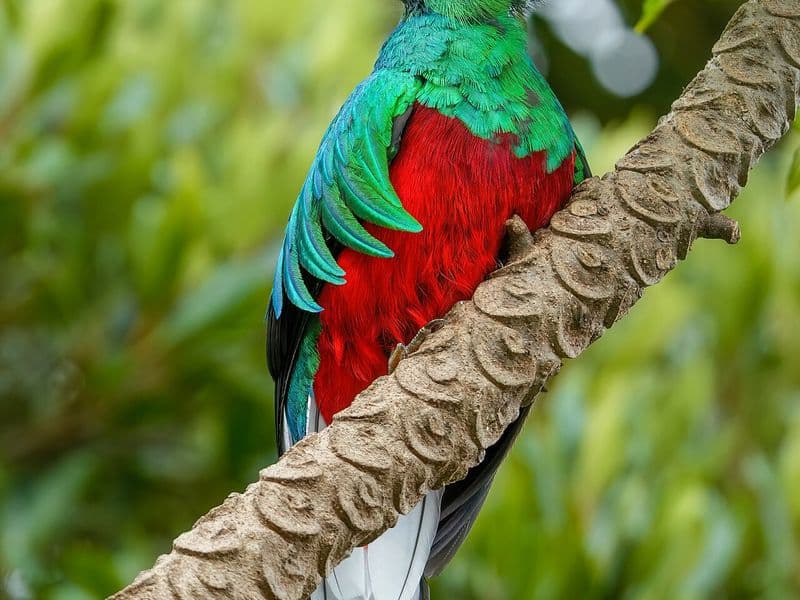
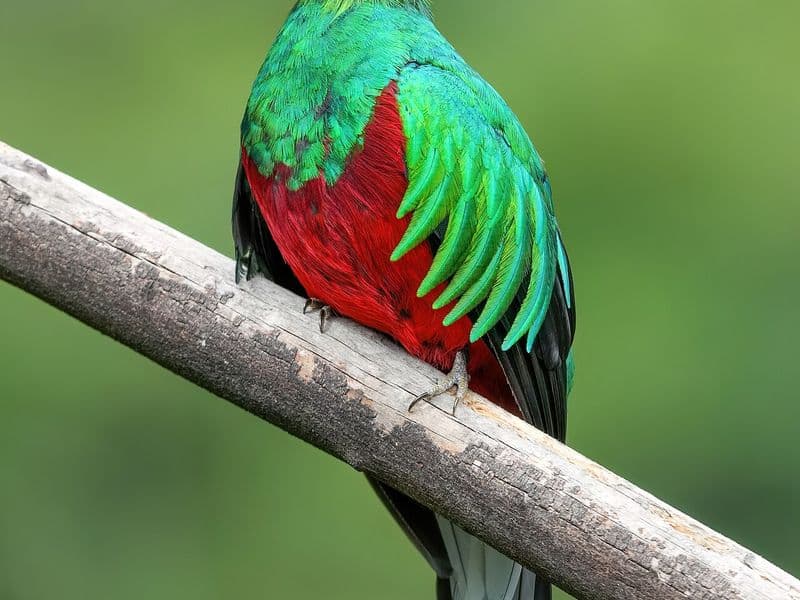
The resplendent quetzal is the most sought-after species for visiting birders. A member of the trogon family, the male quetzal has iridescent emerald-green body plumage, a crimson belly, and extraordinary tail feathers that can extend up to one meter in length. Once sacred to both the Maya and the Aztec civilizations, the quetzal remains a symbol of beauty and freedom throughout Mesoamerica. In Costa Rica, quetzals are found in highland cloud forests, particularly around Monteverde, Cerro de la Muerte, and the San Gerardo de Dota valley.
Scarlet macaws are among the most visually dramatic birds in the country. These large parrots, with vivid red, yellow, and blue plumage, are found along both coasts and are particularly abundant in the central Pacific region near Carara National Park and on the Osa Peninsula. Their raucous calls and habit of flying in pairs or flocks at sunrise and sunset make them one of the most memorable wildlife encounters in Costa Rica, even for non-birders.
Toucans and Toucanets: Colorful Canopy Birds
Costa Rica is home to six species of toucans and toucanets. The keel-billed toucan, with its enormous rainbow-colored bill, is found in the Caribbean lowlands and is one of the most photographed birds in Central America. The chestnut-mandibled toucan, the largest in Costa Rica, inhabits lowland forests on both coasts. Smaller emerald and yellow-eared toucanets favor the cloud forest zone. Toucans are highly social and are frequently seen in noisy groups moving through the canopy, feeding on fruit and occasionally raiding other birds' nests for eggs.
Cloud Forest Birds: Quetzals and Beyond
Costa Rica's cloud forests — found between approximately 1,500 and 3,000 meters elevation — support some of the most specialized bird communities in the country. These forests, perpetually cloaked in mist and draped with mosses, epiphytes, and bromeliads, provide food and shelter for species found nowhere else in the world. The cool, humid conditions favor frugivorous birds that feed on the abundant small fruits produced by cloud forest trees, particularly laurels of the genus Ocotea, which are the primary food source of the resplendent quetzal.
In addition to quetzals, Monteverde and similar cloud forests harbor three-wattled bellbirds — large, white-and-chestnut colored birds whose males produce one of the loudest calls in the avian world, a resonant metallic clang audible from more than a kilometer away. The bare-necked umbrellabird, with its remarkable crest and wattle, is another cloud forest specialty. Prong-billed barbets, golden-browed chlorophonias, and a remarkable diversity of flycatchers, warblers, and tanagers round out the cloud forest community.
The San Gerardo de Dota valley in the Talamanca Mountains is widely considered the most reliable quetzal-watching site in Costa Rica. The valley sits at approximately 2,100 to 2,600 meters elevation in the Chirripó National Park buffer zone and contains extensive primary cloud forest where quetzals feed on wild avocados. Several small lodges in the valley offer guided quetzal walks, and sightings of multiple males with full tail plumes are common between January and May, the nesting season.
Hummingbirds of the Cloud Forest
Costa Rica harbors more than 50 hummingbird species, and cloud forests hold the greatest concentration of them. The fiery-throated hummingbird, found only in the high-altitude cloud forests of Costa Rica and western Panama, is considered one of the most beautiful hummingbirds in the world — its throat patch glitters with iridescent orange, blue, and green that shifts dramatically depending on the angle of light. Violet sabrewings, the largest hummingbird in Costa Rica, and the long-tailed sylph are also spectacular cloud forest species. Hummingbird feeders at cloud forest lodges attract extraordinary diversity and offer close-up viewing opportunities.
Cerro de la Muerte: Páramo Birds
The highest reaches of the Talamanca Mountains, accessible via the Pan-American Highway at Cerro de la Muerte (3,491 m), contain a unique habitat called páramo — open, high-altitude grassland and shrubland resembling tundra. Birds here include the volcano junco, a sparrow endemic to the highest elevations of Costa Rica and western Panama, as well as black-and-yellow silky-flycatchers and volcano hummingbirds. Early morning stops along the highway at pullouts between kilometer markers 70 and 90 are reliable for these high-altitude specialists.
Lowland Rainforest and Caribbean Coast Birds
The Caribbean lowlands of Costa Rica support a distinct bird community influenced by the proximity of South American species that entered Central America after the formation of the Isthmus of Panama approximately 3 million years ago. The forests around La Selva Biological Station in the Sarapiquí region, Tortuguero National Park, and the Braulio Carrillo National Park buffer zone are among the most productive birdwatching areas for lowland forest species in all of Central America.
La Selva Biological Station, operated by the Organization for Tropical Studies, has recorded over 460 bird species on its 1,600-hectare property — one of the highest densities of bird diversity ever recorded for a single site. Key species include the snowy cotinga, great green macaw (critically endangered), sunbittern, white-whiskered puffbird, and numerous antbird species that follow army ant swarms to feed on the insects and lizards flushed by the ants. Visiting La Selva with an experienced guide dramatically increases the number of species identified.
Great green macaws, closely related to military macaws but larger and more endangered, are found primarily in the Caribbean lowlands where they depend on mountain almond trees for nesting and feeding. The Sarapiquí region and the forests around Tortuguero are among the best places to see this endangered species in Costa Rica. Conservation organizations have worked intensively to protect mountain almond forest corridors specifically to support the great green macaw's remaining population, which numbers only in the hundreds in Costa Rica.
Tortuguero National Park Birding
Tortuguero's network of canals and lagoons creates a mosaic of habitats — open water, flooded forest, mangrove, and terra firma rainforest — that supports over 320 bird species. Boat tours through the canals provide eye-level views of kingfishers, anhingas, herons, and the spectacular sungrebe. The flooded forests shelter boat-billed herons, agami herons, and Montezuma oropendolas, whose enormous woven nests hang in conspicuous colonies from tall trees at the forest edge. The national park is particularly rewarding for waterbird enthusiasts.
Pacific Coast and Wetland Birds
The Pacific coast of Costa Rica, from the dry forests of Guanacaste in the north to the humid Osa Peninsula in the south, supports a remarkably different bird community from the Caribbean side. The dry season concentration of water in seasonal wetlands creates extraordinary spectacles of waterbird aggregations during January through April, when thousands of wood storks, ibis, herons, and egrets crowd drying pools and rivers in the Tempisque basin of Guanacaste.
Palo Verde National Park in Guanacaste protects the most important freshwater wetlands in the Pacific region. From December through March, the park's lakes and marshes attract over 50,000 waterbirds, including black-bellied whistling ducks, roseate spoonbills, jabiru storks, and enormous flocks of various heron species. The jabiru, the largest flying bird in the Americas with a wingspan exceeding 2.5 meters, has one of its last remaining Central American breeding populations in the Palo Verde area.
Carara National Park, at the boundary between the dry and humid Pacific zones, is particularly celebrated for its accessibility from San José and its remarkable bird diversity. The primary forest along the Tárcoles River trail shelters scarlet macaws, trogons, motmots, and numerous raptor species. The riverbank below the highway bridge over the Tárcoles River is famous for American crocodiles and is also an excellent area for observing wading birds and shorebirds along the Pacific estuary. A short stretch of about 2 kilometers between this bridge and the park entrance is one of the most productive birdwatching walks in the country.
Shorebirds and Seabirds Along the Pacific
Costa Rica's Pacific coast is an important staging area for migratory shorebirds traveling between North and South America along the Pacific flyway. The tidal flats at the Gulf of Nicoya attract Wilson's phalaropes, western sandpipers, dunlins, and dowitchers by the thousands during migration peaks in April and September. Seabirds including brown pelicans, magnificent frigatebirds, and brown boobies are year-round residents along the Pacific coast. Boobies nest on rocky offshore islands, some of which can be visited on boat tours from Playas del Coco and Tamarindo.
Best Birdwatching Destinations in Costa Rica
The Monteverde Cloud Forest Reserve and its surroundings on the continental divide above the Nicoya Peninsula are considered among the finest birdwatching destinations in the Americas. The reserve and the adjacent Santa Elena reserve together protect over 10,500 hectares of primary and secondary cloud forest. Over 400 bird species have been recorded in the Monteverde zone, including 30 species of hummingbirds. The quetzal, three-wattled bellbird, and bare-necked umbrellabird are the three flagship species that draw birding tour groups to the area year after year.
The Osa Peninsula in the far south of Costa Rica contains some of the most intact lowland tropical forest remaining in Central America, protected within Corcovado National Park. The park's 13 ecosystems and 400-plus bird species include virtually all of the country's most sought-after Pacific lowland species: scarlet macaws in large flocks, harpy eagles (extremely rare), crested caracaras, and the endemic black-cheeked ant-tanager, found only in the Osa Peninsula. Access requires either a flight to Drake Bay or Puerto Jiménez followed by a park entry via authorized guide.
The Sarapiquí region of the northern Caribbean lowlands, centered on the town of La Virgen and the Sarapiquí River, combines easy accessibility from San José with excellent lowland birding. La Selva Biological Station, the Tirimbina Biological Reserve, and the Rara Avis reserve offer guided birding walks at well-maintained research stations with experienced guides and birding infrastructure including spotting scopes and reference libraries. This region is accessible by direct shuttle from San José in about 2 hours.
Wilson Botanical Garden for Specialty Birding
The Wilson Botanical Garden near San Vito in the south Pacific region is operated by the Organization for Tropical Studies and contains one of the most important plant collections in the Americas. The garden and surrounding Las Cruces Biological Reserve shelter over 330 bird species, including several foothill and highland species characteristic of the Talamanca Mountains. The garden is particularly renowned for its hummingbird activity around flowering plants, with up to 20 species recorded in a single morning. Day visits and overnight stays at the research station are available by reservation.
Birdwatching Tips and Seasonal Guide
The most productive birdwatching hours in Costa Rica are the first two to three hours after dawn, when bird activity peaks. Most species are most active in the early morning for feeding, singing, and territorial display. By mid-morning, activity drops significantly — especially during the hot midday hours in lowland forests. A second, shorter activity peak occurs in the late afternoon before sunset, particularly for raptors and frugivores. Planning birdwatching activities for 5:30 to 8:30 a.m. and 4:00 to 6:00 p.m. maximizes productive observation time.
Binoculars are indispensable for birding in Costa Rica. A pair with 8x magnification and 42mm objective lenses (8x42) offers an excellent balance between magnification and brightness suitable for both open habitat and dark forest understory. A field guide to Costa Rican birds is equally important. Garrigues and Dean's 'The Birds of Costa Rica' and Stiles and Skutch's classic 'A Guide to the Birds of Costa Rica' are the two primary references, with the Garrigues and Dean guide being more practical for field use due to its compact size and updated taxonomy.
Seasonally, the resplendent quetzal is best observed between January and May during the nesting period. Waterbirds at Palo Verde and the Tempisque wetlands peak from December through March. Migratory shorebirds concentrate in April and September. Sea turtles arrive on beaches from July through October on the Caribbean, attracting associated wildlife activity. For overall bird diversity, the transition months of November and December and the early dry season from December through February offer a combination of resident breeding activity and the arrival of North American migrants wintering in Costa Rica.
Hiring a Local Bird Guide
Costa Rica has a well-established community of certified birding guides who have invested years learning the species, songs, and behavior patterns of the local avifauna. Hiring a local guide — rather than relying solely on a lodge naturalist — dramatically increases the number and quality of species observed. Local guides often know the exact trees where quetzals are currently nesting, the ant swarms where rare antbirds are following, and the forest pools where rare waterbirds gather. Guide directories are available through the Costa Rican Bird Observing Network (CORBONA) and through many birding lodges.
Recording and Reporting Bird Sightings
Contributing bird sightings to eBird — the Cornell Lab of Ornithology's global bird observation database — is encouraged among visiting birders and helps Costa Rican ornithologists track population trends and distribution changes. eBird also functions as a real-time resource for finding productive birdwatching sites, with thousands of checklists submitted from Costa Rica annually. The Merlin Bird ID app, also from Cornell Lab, uses AI-powered photo and sound identification to help visitors identify unfamiliar species in real time.
Frequently Asked Questions
When is the best time to go birdwatching in Costa Rica?
Birdwatching is rewarding year-round in Costa Rica, but January through May is generally considered the best period. This season coincides with the dry season, reducing rain during morning walks, and is also the peak nesting period for many species including the resplendent quetzal. North American migratory species that winter in Costa Rica are also present from October through April, adding significantly to the total species count.
Do I need a guide to go birdwatching in Costa Rica?
A guide is not required for casual birdwatching but is strongly recommended for serious birders. Experienced local guides dramatically increase both the number of species seen and the quality of views by locating cryptic species, interpreting bird vocalizations, and anticipating bird behavior. For birding in Corcovado National Park, a licensed guide is legally required. Most birding lodges can arrange certified guides for half or full-day walks.
Where is the best place to see quetzals in Costa Rica?
The San Gerardo de Dota valley in the Talamanca Mountains is widely considered the most reliable quetzal-watching destination in Costa Rica. Quetzals are also regularly seen in Monteverde, Cerro de la Muerte, and the Boquete highlands just across the border in Panama. The best time is during the nesting season from January through May when males display their full tail plumage and pairs are territorial and more visible.
How many bird species can I realistically see in a week in Costa Rica?
A focused birder visiting two or three distinct habitats — such as Caribbean lowlands, Pacific slope, and cloud forest — can realistically record 200 to 350 species in a week with good guides and effort. Casual observers visiting a single area typically see 50 to 100 species. Big Day records in Costa Rica by expert birding teams have exceeded 500 species in a single 24-hour period within a limited geographic area, demonstrating the extraordinary diversity available.
Are there any endemic bird species in Costa Rica?
Costa Rica has a small number of species that are endemic to the country or shared only with adjacent Panama. True endemics to Costa Rica alone include the mangrove hummingbird, found only in Pacific mangroves and critically endangered. Near-endemics shared with Panama include the black-cheeked ant-tanager (Osa Peninsula), fiery-throated hummingbird, and coppery-headed emerald. The highlands of the Talamanca range hold the greatest concentration of regional endemics.