
La Fortuna Costa Rica Weather: Arenal Volcano Climate Guide
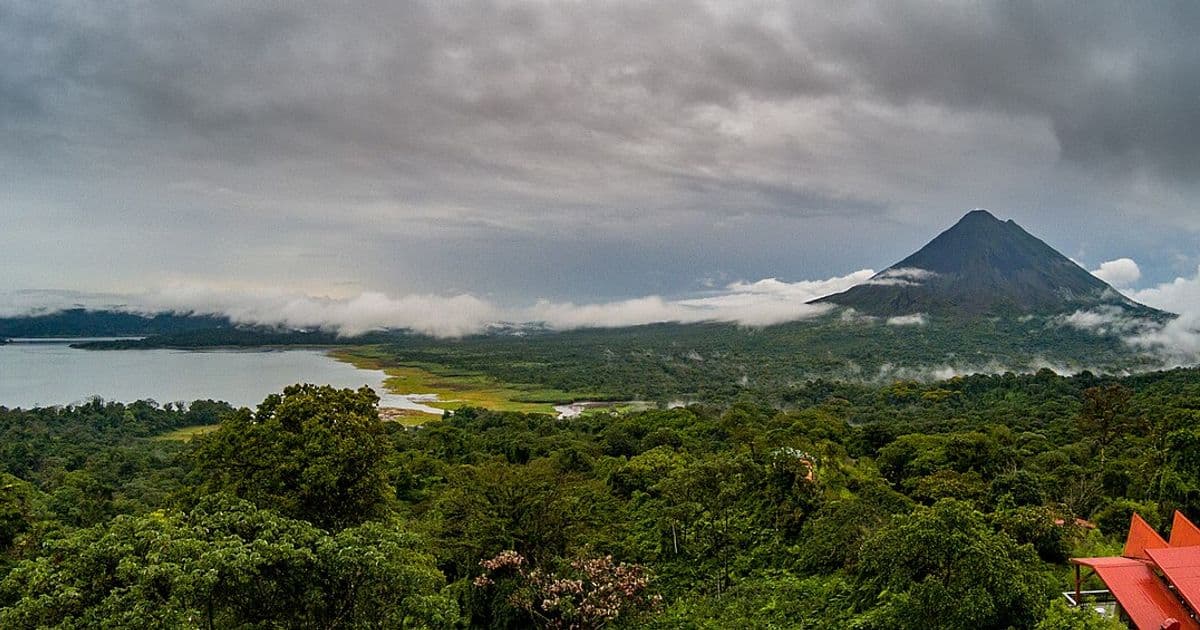
La Fortuna, the gateway town to Arenal Volcano, sits at about 1,640 feet (500 meters) elevation in a region that receives rainfall year-round. The area is warm and humid, with temperatures typically ranging from 68–86°F (20–30°C). Weather here is famously unpredictable—Arenal Volcano is often shrouded in clouds even during the dry season, making flexibility a key virtue for visiting visitors.
La Fortuna Climate Overview
La Fortuna de San Carlos sits in the Arenal basin on the lower slopes of Costa Rica's Central Volcanic Cordillera. Unlike Guanacaste to the northwest, La Fortuna does not have a true dry season—it receives significant rainfall in every month of the year due to its position between the Pacific and Caribbean moisture systems.
Annual rainfall in La Fortuna averages 100–130 inches (2,540–3,300 mm), making it considerably wetter than San José or Guanacaste beach towns. The relative 'dry season' from December through April brings reduced—but not absent—rainfall, while the peak rainy season of September and October can see extraordinary amounts of precipitation.
Despite the rain, La Fortuna is one of Costa Rica's most popular destinations year-round. The La Fortuna Waterfall, Arenal Volcano, and numerous hot springs are all accessible regardless of season. Smart travelers plan morning activities and embrace the afternoon rains as part of the experience.
Elevation and Temperature
At approximately 1,640 feet (500 meters) elevation, La Fortuna is warmer than the Central Valley but cooler than sea-level coastal destinations. Average daytime temperatures range from 77–86°F (25–30°C), dropping to a comfortable 68–72°F (20–22°C) at night. The humidity is noticeably higher than San José due to proximity to both Pacific and Caribbean moisture patterns.
Dry Season in La Fortuna
The dry season in La Fortuna runs roughly from December through April, though it's a relative term. Even during the driest months, La Fortuna typically receives 4–7 inches (100–178 mm) of rain per month—compared to Guanacaste which may get under 1 inch in February. The key difference during dry season is that rains become more predictable afternoon events rather than all-day affairs.
January and February offer the best conditions for seeing Arenal Volcano. Clear mornings occur more frequently, and while clouds often build by midday, the chance of getting a clear volcano view is highest during these months. Sunrise is often the best time, when the volcano stands crisp against the blue morning sky.
The dry season also brings more comfortable hiking conditions on forest trails around the Arenal area. Muddy paths are less challenging, and the slightly lower humidity makes physical activity more comfortable. Hanging bridges walks, lava fields exploration, and the hike to the La Fortuna Waterfall are all more comfortable in the dry season.
December and January
December and January represent the best overall conditions in La Fortuna. Rainfall is at its lowest (3–5 inches/76–127 mm per month), mornings are frequently clear, and the hot springs are particularly enjoyable during the cooler dry season evenings. This is also the peak tourist season, so book accommodations well in advance.
Rainy Season in La Fortuna
The rainy season (May through November) brings daily afternoon and evening rains to La Fortuna, with September and October being the wettest months. Monthly rainfall can exceed 20 inches (508 mm) during peak months. The La Fortuna Waterfall reaches its most spectacular levels during the rainy season, swelling dramatically with the increased flow.
Despite heavier rainfall, the rainy season in La Fortuna is highly rewarding for nature lovers. The surrounding Arenal Volcano National Park and Monteverde Cloud Forest (about 2 hours away) are intensely green and lush. Bird activity is heightened, particularly for species like toucans, tanagers, and resplendent quetzals in the higher elevation forests.
Hot springs are particularly enjoyable during the rainy season—the warm pools feel wonderful when afternoon rains cool the air, and the combination of steam rising from the springs with tropical rain creates an atmospheric experience. The hot springs remain at consistent temperatures (95–104°F/35–40°C) regardless of season.
September and October
These are the wettest months in La Fortuna. Multi-day rain events can occur, and the roads around the Arenal basin can become flooded. Volcano views are rare—Arenal may stay cloud-covered for days at a time. However, the La Fortuna Waterfall is at its most thunderous and dramatic. Prices drop significantly, and the area has a wonderfully authentic feel without peak-season crowds.
Monthly Temperature and Rainfall
January: High 82°F (28°C), Low 68°F (20°C), Rainfall 4.5 in (114 mm). Driest and clearest month. Best volcano viewing chances.
February: High 83°F (28°C), Low 68°F (20°C), Rainfall 3.5 in (89 mm). Excellent conditions. Very dry by La Fortuna standards.
March: High 85°F (29°C), Low 70°F (21°C), Rainfall 4.8 in (122 mm). Warmest month. Still relatively dry with good morning clarity.
April: High 85°F (29°C), Low 71°F (22°C), Rainfall 7.2 in (183 mm). Rains increasing. Still good conditions, especially early in the month.
May: High 83°F (28°C), Low 70°F (21°C), Rainfall 11.8 in (300 mm). Rainy season arrives. Morning activities still excellent.
June: High 82°F (28°C), Low 70°F (21°C), Rainfall 13.4 in (340 mm). Consistently rainy afternoons. Lush vegetation peaks.
July: High 81°F (27°C), Low 70°F (21°C), Rainfall 12.6 in (320 mm). Waterfall at high flow. Fewer tourists than dry season.
August: High 81°F (27°C), Low 70°F (21°C), Rainfall 14.0 in (356 mm). Similar to July. Good hot springs weather.
September: High 80°F (27°C), Low 69°F (21°C), Rainfall 18.5 in (470 mm). Wettest month. Deepest discounts. Limited volcano visibility.
October: High 80°F (27°C), Low 69°F (21°C), Rainfall 20.2 in (513 mm). Very wet. Spectacular waterfall flow. Best for budget travelers.
November: High 80°F (27°C), Low 69°F (21°C), Rainfall 12.8 in (325 mm). Rains tapering. Improving conditions through month.
December: High 81°F (27°C), Low 68°F (20°C), Rainfall 6.8 in (173 mm). Dry season returning. Good volcano views begin returning.
Annual Weather Summary
La Fortuna receives approximately 130 inches (3,300 mm) of rain annually, distributed across all 12 months. The average annual temperature is about 77°F (25°C). Even in the 'dry season,' La Fortuna is significantly wetter than Guanacaste or San José. Rain gear is useful year-round.
Seeing Arenal Volcano in Clear Weather
Arenal Volcano's iconic cone is notoriously cloud-covered, and seeing it clearly is never guaranteed—even in the dry season. The best strategy is to arrange your itinerary so you have multiple mornings in La Fortuna, maximizing your chances of catching a clear view. Sunrise and early morning offer the highest probability of clear skies before clouds build.
The west side of the lake (from La Fortuna town and most hotels) and the east side (Lake Arenal area) offer different viewing angles. Some hotels are positioned specifically to offer volcano views from private terraces or infinity pools. January and February have the highest frequency of clear mornings.
Arenal erupted actively from 1968 through 2010. Since then, it has been in a resting phase with no major lava flows. The volcano is still geologically active—it emits steam and occasional small tremors—but the dramatic lava flows of the active period are not currently visible. The cone itself remains spectacular when visible.
Tips for Catching Clear Views
Stay multiple nights to improve your odds. Book a hotel or tour with volcano-facing exposure. Set an alarm for sunrise—early morning is your best window. Check weather forecasts, but know they're imperfect for microclimates. Consider the Arenal Observatory Lodge, which sits on a ridge with excellent historical visibility. Join a local guide who knows the best vantage points and conditions.
Hot Springs and Waterfalls by Season
La Fortuna's volcanic hot springs are a major attraction and are enjoyable year-round. The springs are fed by geothermal activity unrelated to surface weather conditions, maintaining consistent temperatures of 95–104°F (35–40°C) regardless of season. On rainy season evenings after afternoon storms, the contrast between the warm spring water and cool air is particularly magical.
The La Fortuna Waterfall, accessed via a 500-step staircase descent into a canyon, is dramatic in any season but reaches its most spectacular volumes during the rainy season (June–October). The turquoise-green pool at the base is accessible for swimming in both seasons, though the current is stronger and swimming is more limited during peak flow.
Hot Springs Options
La Fortuna offers both luxury resort hot springs (Tabacón, Baldi, Titoku) and public springs (Termales del Bosque). Luxury resorts range from $50–$100+ per person for day passes. The public springs offer a more local experience at lower prices. All options operate year-round and are especially popular on rainy afternoons when guests soak in warm water while rain falls around them.
Best Time to Visit La Fortuna
January and February offer the best overall conditions for visiting La Fortuna—the highest probability of clear Arenal views, the most comfortable hiking conditions, and reasonable (if peak-season) prices. December is also excellent, particularly for travelers who enjoy the festive holiday atmosphere.
For budget-conscious travelers willing to accept more rain, May through August offer a good compromise: prices are 20–30% lower than peak season, mornings are usually clear, the La Fortuna Waterfall is spectacular, and the hot springs are enjoyable. September and October offer the deepest discounts but come with the heaviest rains and least frequent volcano views.
Combining La Fortuna with Other Destinations
La Fortuna is typically visited as part of a larger Costa Rica itinerary. Common combinations include San José–Arenal–Guanacaste for a classic two-week loop, or San José–Arenal–Monteverde–Manuel Antonio for a nature-focused circuit. The drive from San José to La Fortuna takes about 2.5–3 hours via the Ciudad Quesada route. The Jeep-Boat-Jeep route to Monteverde (3–3.5 hours) is scenic and popular.
Frequently Asked Questions
What is the weather like in La Fortuna, Costa Rica?
La Fortuna is warm and humid year-round with temperatures of 80–85°F (27–29°C) in the daytime and 68–72°F (20–22°C) at night. It receives rain year-round (about 130 inches/year), with the dry season (December–April) bringing fewer but still regular afternoon showers.
When is the best time to visit La Fortuna?
January and February offer the best conditions, with the highest probability of seeing Arenal Volcano clearly and the most comfortable hiking weather. December is also excellent. For budget travelers, May through August offers 20–30% savings with manageable rain and spectacular waterfalls.
Can you see Arenal Volcano from La Fortuna?
Yes, on clear days. Arenal is famously cloud-covered much of the time—even in the dry season. Your best chance is early morning (before 8 AM) in January or February. Staying multiple nights significantly improves your odds. Many visitors never see the full volcano clearly; others enjoy perfect views.
Are the hot springs worth visiting in rainy season?
Absolutely. The hot springs are geothermally heated and maintain 95–104°F temperatures year-round regardless of weather. Soaking in warm springs while tropical rain falls around you is a uniquely memorable experience. Rainy season prices are also lower at most hot spring resorts.
How far is La Fortuna from San José?
La Fortuna is approximately 85 miles (137 km) from San José, but the drive takes 2.5–3 hours due to winding mountain roads. The most common route goes through Ciudad Quesada (San Carlos). A faster but more expensive option is a 30-minute charter flight from San José.