
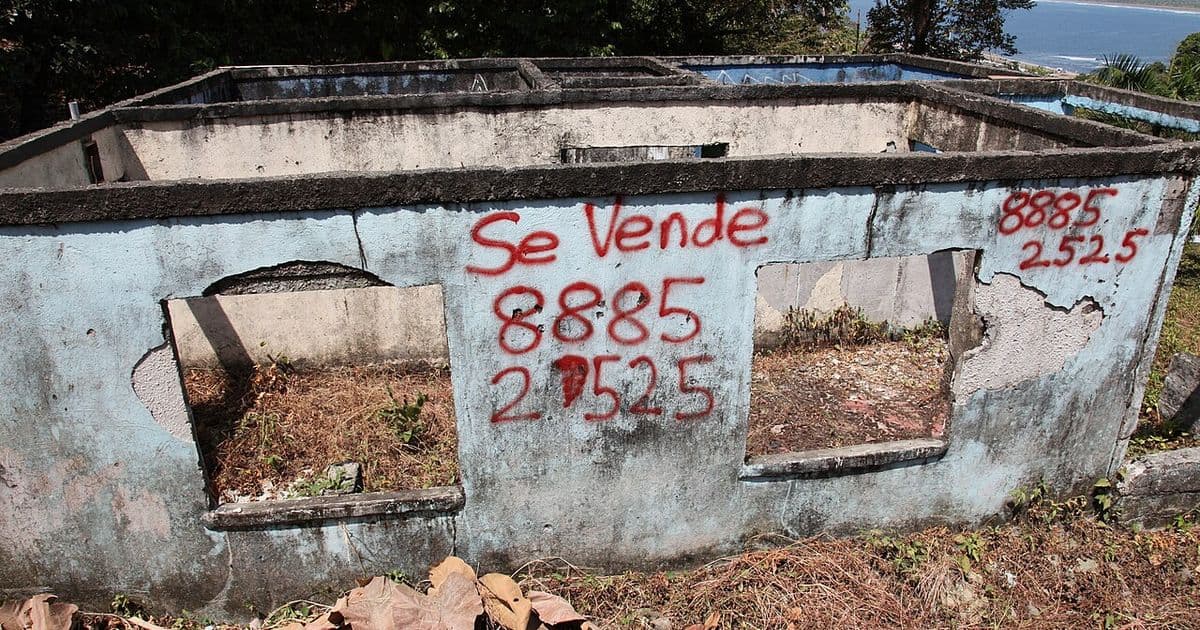
Costa Rica Land for Sale: Types, Prices, Regions, and Buying Tips
Purchasing land in Costa Rica gives buyers the flexibility to build a custom home, develop an eco-lodge, farm organically, or hold a parcel as a long-term investment in a country with constitutionally guaranteed property rights for foreigners. The land market spans ocean-view ridge lots in Guanacaste, jungle parcels in the Southern Zone, agricultural fincas in the Central Valley highlands, and river-valley farms in the Caribbean lowlands. Understanding the different categories of land ownership, environmental constraints, and due diligence requirements is essential before making any purchase.
Types of Land Available in Costa Rica
Land in Costa Rica falls into several legal categories that determine ownership rights, development potential, and the risks a buyer assumes. Fully titled land (terreno escriturado) with a registered deed in the National Registry is the most secure form of land ownership, equivalent to fee simple title in North American terminology. All material facts about the parcel — ownership history, dimensions, mortgages, and encumbrances — are searchable in the public registry using the property's folio real identification number.
Rights of possession (derechos posesorios or derecho posesorio) are found in rural areas where formal titling has not been completed. These informal land rights recognize a person's long-term occupation and use of a piece of land without a formal registered title. Possessory rights can be formalized into full title through a legal process called titulación, but this takes time and carries uncertainty. Maritime Terrestrial Zone land, found within 200 meters of the Pacific and Caribbean high-tide lines, cannot be privately titled and instead is administered as municipal concessions granted for 20-year renewable terms. Each category carries distinct legal considerations that buyers and their attorneys must carefully evaluate.
Condominium and Subdivision Lots
Many newer land listings in Costa Rica are registered condominium lots (filiales de condominio) within master-planned communities. These parcels share a common infrastructure maintained through homeowners association fees and benefit from shared utilities, road access, and sometimes community amenities like pools or club houses. Condominium lot ownership is generally simpler and more secure than rural raw land purchases, as developers typically complete the titling, subdivision approvals, and utility connections before selling individual parcels.
Regional Land Markets and Price Benchmarks
Guanacaste is the most active land market for foreign buyers in Costa Rica, particularly for lots with Pacific Ocean views or proximity to beach resort communities. Ocean-view lots of 1,000 to 3,000 square meters in established Guanacaste communities such as Playa Flamingo, Tamarindo hills, or the Papagayo area range from $150,000 to over $600,000. Larger parcels of 5 to 20 hectares with agriculture or eco-development potential in the Guanacaste interior can be found for $100,000 to $400,000 depending on access and water availability.
In the Central Valley, residential lots in suburban neighborhoods of Escazú, Santa Ana, and Alajuela range from $80,000 to $250,000 for standard parcels of 500 to 1,500 square meters. Agricultural land in the highland coffee-producing regions of Tarrazú and Naranjo commands premiums for established coffee plantations with processing infrastructure. In the Southern Pacific Zone near Uvita, Dominical, and Ojochal, jungle-view lots of 2,000 to 10,000 square meters can still be found for $30,000 to $150,000, making the region one of the most accessible coastal land markets remaining in Costa Rica.
Caribbean Lowlands Land Prices
The Caribbean side of Costa Rica offers the most affordable land prices in the country. Agricultural parcels in the Sarapiquí and Limón regions with direct highway access can be purchased for $5,000 to $30,000 per hectare. Beach-adjacent land near Puerto Viejo, while subject to Maritime Zone restrictions on the oceanfront strip, starts significantly lower than comparable Pacific Coast inventory, with lots accessible from $40,000 to $150,000 depending on proximity to amenities and infrastructure quality.

Environmental and Zoning Restrictions on Land
Costa Rica's commitment to environmental protection means that a significant portion of land is subject to use restrictions that buyers must understand before purchasing. The national System of Conservation Areas (SINAC) administers national parks, biological reserves, wildlife refuges, wetlands, and buffer zones, in which private development is restricted or prohibited. Properties bordering or within these protected areas may not be buildable regardless of ownership status.
River and stream buffer zones impose mandatory set-backs from waterways under the Water Law, restricting construction within 10 to 100 meters of water bodies depending on whether the stream is seasonal or permanent and whether it serves as a public water source. Steep terrain regulations in some municipalities limit construction on slopes above 30 percent grade. Forest law protection applies to trees on any private property that meet certain height, diameter, or species criteria, requiring a forestry permit before clearing. Municipal development plans (planes reguladores), where they exist, designate areas as residential, commercial, agricultural, tourism, or conservation zones with specific permitted uses for each category.
SETENA and Environmental Permits
Larger development projects in Costa Rica require an environmental impact assessment reviewed by the Secretaría Técnica Nacional Ambiental (SETENA). Projects above Category D1 complexity — generally anything involving significant land clearing, commercial construction near water bodies, or tourism developments with more than a certain number of units — must obtain a SETENA viability certificate before construction permits can be issued. Buyers of raw land intended for development should budget for SETENA assessment costs and timelines, which can range from several months to over a year.
Checking the Property's Zoning Status
Before purchasing any land in Costa Rica, verify the property's zoning classification with the relevant municipality. Not all municipalities have adopted formal development plans, but where they exist, the zoning designation directly determines what structures, businesses, and land uses are legally permitted. Some parcels sold as 'residential lots' may be zoned agricultural or conservation, severely limiting building options. Your attorney can request a zoning certificate (certificado de uso del suelo) from the municipality as part of due diligence.
Legal Due Diligence for Land Purchases
Purchasing land in Costa Rica requires more extensive due diligence than buying an existing home, because raw land carries additional risks related to boundary accuracy, legal access, utility availability, and development potential. The foundational step is a full title search in the National Registry to confirm ownership, identify any mortgages or liens, and verify the property's folio real registration number. Simultaneously, the cadastral map (plano catastrado) must be reviewed and if possible physically verified against the National Registry's geographic information system to confirm that the parcel boundaries match what is represented on the ground.
Confirming legal access to the property is critical. Some land parcels appear to have road access but are actually landlocked, with access dependent on informal agreements with neighbors rather than registered easements. Your attorney must verify that the property has a registered right-of-way (servidumbre de paso) or direct access to a public road. Water rights for land intended for agriculture or development should also be confirmed through SENARA (National Groundwater, Irrigation and Avenamiento Service), particularly for parcels that will depend on wells or streams for water supply.
Topographic and Soil Surveys
For land intended for construction, a professional topographic survey by a licensed Costa Rican engineer (ingeniero) is essential to understand slope, drainage patterns, buildable area, and potential engineering challenges. Soil studies may also be required by SETENA or local municipalities for certain project categories. In areas with high rainfall or seismic activity, geological assessments can identify landslide risk zones or unstable substrates that would significantly increase construction costs or preclude development entirely.
Building on Land in Costa Rica
Once you own land in Costa Rica and have confirmed its development potential, building a home or structure requires a formal construction permit (permiso de construcción) from the local municipality. Construction plans must be drawn and stamped by licensed Costa Rican architects and engineers registered with the Colegio Federado de Ingenieros y de Arquitectos (CFIA). The CFIA registration system ensures that all professionals involved meet national standards. Plans submitted for permitting must comply with the National Construction Code, municipal zoning regulations, and any applicable SETENA conditions.
Permit timelines vary considerably by municipality. Some urban municipalities can process straightforward residential permits in 60 to 90 days, while rural or complex projects may take 6 to 12 months or longer. Construction costs for mid-range residential quality in Costa Rica range from approximately $600 to $1,200 per square meter, depending on materials, finishes, location, and site access difficulty. Luxury or high-specification construction can exceed $1,500 per square meter. Remote locations with limited road access, steep terrain, or long utility runs significantly increase building costs compared to urban or suburban sites.
Hiring a Contractor and Managing Construction
Costa Rica does not have a general contractor licensing requirement equivalent to North American systems, so verifying a builder's reputation through references, site visits to completed projects, and confirmation of registered professional affiliations is important. A written construction contract in Spanish detailing scope, materials specifications, payment schedule, penalty clauses for delays, and warranty provisions protects buyers during the build process. Many foreign land owners hire a local project manager or architect to supervise construction, particularly if they cannot be present full time in Costa Rica during the building phase.
Agricultural and Farm Land Opportunities
Costa Rica's agricultural sector produces coffee, pineapple, banana, palm oil, cacao, hearts of palm, ornamental plants, and tropical hardwoods for domestic consumption and export. Farm land (finca) purchases offer buyers the opportunity to generate income from established crop operations, develop agro-tourism facilities, pursue subsistence or organic farming, or simply own a large rural property with exceptional nature and privacy. Agricultural land parcels are generally measured in hectares in Costa Rica, with one hectare equivalent to approximately 2.47 acres.
Coffee farm acquisitions in regions such as Tarrazú, Naranjo, and Dota offer the potential for premium specialty coffee production, with growing international demand for high-altitude Costa Rican beans. Cacao farms in the Caribbean and Southern Zone have attracted buyers interested in artisanal chocolate production. Reforestation projects on degraded pasture land can qualify for government payment for environmental services (Pago de Servicios Ambientales, or PSA) through FONAFIFO, the National Forest Financing Fund, providing periodic income while restoring forest cover. The PSA program pays registered landowners for the ecosystem services provided by standing forest and active reforestation.
Water Rights and Agricultural Land
For agricultural land, confirming water rights is as important as verifying title. Costa Rica's Water Law establishes that all water resources belong to the state, and agricultural users must hold a registered water concession (concesión de aguas) from SENARA or the relevant local water administration authority to legally divert or use water from rivers, streams, or wells for irrigation. Parcels with existing registered water concessions command significant premiums over those where buyers must apply for new water rights, which can take several years to obtain.
Key Risks and How to Avoid Them
Land purchases in Costa Rica carry specific risks that differ from buying a completed home. The most significant is purchasing land that is unbuildable due to environmental, zoning, or access constraints that were not disclosed or discovered during due diligence. This is particularly common with rural land marketed informally or properties near national park boundaries, rivers, or wetland areas. Insisting on a comprehensive due diligence package from your attorney before releasing any deposit is non-negotiable.
Squatter rights (derechos de posesión) present another risk with rural properties that have been unoccupied or inadequately monitored. Under Costa Rican law, individuals who openly, continuously, and peacefully occupy uncultivated land for ten years may acquire possessory rights that can complicate the owner's title or make the property difficult to develop or resell. Maintaining physical markers on land boundaries, periodic site visits, and posting the property as private land (propiedad privada) helps establish that the land is actively managed and not abandoned. Using a local caretaker (cuidador) for remote rural parcels is a common and effective strategy to prevent unauthorized occupation.
Utility Access Verification
Before purchasing raw land, confirm independently that utilities — electricity, potable water, and internet connectivity — are legally and practically available to the parcel. Electrical service from ICE or CNFL serving nearby areas does not guarantee connection to a specific parcel, particularly if the land is beyond the existing distribution grid. ASADAS (rural water administration associations) serve potable water to many rural communities but may not have capacity to connect new development. Verifying utility availability in writing with the relevant service provider before closing prevents costly post-purchase surprises.
Frequently Asked Questions
Can a foreigner buy land in Costa Rica?
Yes. Foreign nationals have the same constitutional right to own titled land in Costa Rica as citizens. There are no restrictions on acreage, location (with the exception of Maritime Zone concession land), or number of parcels owned.
What is the difference between titled land and possessory rights in Costa Rica?
Titled land has a registered deed in the National Registry and provides the highest level of legal security. Possessory rights (derechos posesorios) represent informal claims to unregistered land based on long-term occupation, which carry more legal uncertainty and risk for buyers.
Can I build a house on any land I buy in Costa Rica?
Not necessarily. Land near rivers, national parks, wetlands, or steep slopes may have restrictions that prevent or limit construction. Zoning classifications, environmental set-backs, and SETENA requirements all affect buildability. Always verify development potential before purchasing.
How do I prevent squatters from occupying my Costa Rica land?
Maintain visible boundary markers, post the property as private land, conduct regular site visits, and hire a local caretaker for remote parcels. Absentee ownership of rural land without active management creates squatter risk under Costa Rican law.
What is the government's Payment for Environmental Services program?
FONAFIFO's Pago de Servicios Ambientales (PSA) program pays registered landowners for maintaining or actively restoring forest cover on their property. It provides periodic income while incentivizing conservation and reforestation of degraded agricultural land.