Costa Rica Holidays: National, Religious, and Cultural Celebrations
Costa Rica observes a rich calendar of national holidays that blend civic pride, Catholic tradition, and indigenous heritage into a year of meaningful celebrations. From the solemn processions of Semana Santa to the flag-waving exuberance of Independence Day on September 15th, Costa Rican holidays offer visitors a window into the values and history that shape the national character. Understanding these dates helps travelers plan their visit and participate in local culture.
Official Public Holidays in Costa Rica
Costa Rica recognizes eleven official public holidays (días feriados nacionales) per year, during which government offices, schools, banks, and most businesses are closed. These holidays are established by law and include a mix of civic, religious, and commemorative dates. In addition to mandatory closures, some holidays are designated as "non-mandatory" feriados, meaning employees may be required to work but are entitled to double pay.
The official mandatory public holidays are: January 1 (New Year's Day), April 11 (Juan Santamaría Day), Maundy Thursday and Good Friday (Semana Santa — dates vary), May 1 (International Labor Day), July 25 (Annexation of Guanacaste), August 2 (Our Lady of the Angels / Patroness of Costa Rica), August 15 (Mother's Day and Assumption of Mary), September 15 (Independence Day), December 25 (Christmas Day).
Non-mandatory feriados include October 12 (Día de las Culturas, formerly Columbus Day) and December 8 (Feast of the Immaculate Conception). When a holiday falls on a Thursday or Tuesday, Costa Ricans often take the bridging Friday or Monday off as well, creating long weekends known as "puentes" (bridges) that result in heavy traffic and fully booked hotels near beaches and tourist areas.
Understanding Mandatory vs. Non-Mandatory Holidays
Costa Rican labor law distinguishes between mandatory holidays, when employees cannot be required to work without double pay, and non-mandatory holidays, when employers may require attendance but must pay a premium. For travelers, the practical difference is that mandatory holidays result in nearly universal business closures, while non-mandatory feriados may see some commercial activity continuing, particularly in tourist areas.
Independence Day: September 15
September 15th is the most celebrated holiday in Costa Rica, marking the day in 1821 when Central America declared independence from Spain. Costa Rica, along with Guatemala, El Salvador, Honduras, and Nicaragua, celebrates on this shared date. The actual news of independence took about a month to reach Costa Rica from Guatemala City, but the date of the declaration itself is what is commemorated.
Celebrations begin on the evening of September 14th with a nationwide torch relay. A symbolic flame, representing the independence proclamation carried by messenger, travels from Guatemala City through Central America and arrives in Costa Rica, where students carry it from school to school in a lantern parade (desfile de faroles). Thousands of children walk the streets holding handcrafted paper lanterns while singing the national anthem, creating a magical nighttime spectacle in towns throughout the country.
On September 15th itself, schools hold elaborate patriotic ceremonies, marching band parades (desfiles de marimba y bandas), and civic events. The country is draped in blue, white, and red — the national colors. Government buildings, homes, cars, and businesses display the national flag. In San José, the central plaza hosts official ceremonies with speeches by government officials, and communities across the country hold their own local celebrations reflecting regional traditions.
The Lantern Parade Tradition
The desfile de faroles (lantern parade) on the evening of September 14th is considered one of the most beloved traditions in Costa Rica, particularly for families with children. Students spend days crafting decorative paper lanterns, sometimes in elaborate shapes representing national symbols. The parades, lit by these warm glowing lights, create a uniquely Costa Rican form of patriotic celebration that is simultaneously festive, peaceful, and deeply moving for participants and observers alike.
Semana Santa: Holy Week
Semana Santa — Holy Week, the week leading up to Easter — is the most important religious observance in Costa Rica and functions as a de facto national vacation period. Maundy Thursday and Good Friday are mandatory public holidays, and the entire week sees schools closed, many businesses operating on reduced hours, and a mass exodus from San José toward the beaches and countryside.
The Catholic character of Semana Santa in Costa Rica is expressed through solemn processions through town centers, particularly in older cities like Cartago, San José, and Heredia. Life-size statues of Christ and the Virgin Mary are carried through the streets on wooden platforms by religious brotherhoods, accompanied by incense, music, and large crowds of worshippers. The Good Friday procession in San José along Paseo Colón is one of the largest annual gatherings in the country.
For non-religious aspects of the holiday, Semana Santa is also the peak beach week of the year. Hundreds of thousands of Costa Ricans travel to Guanacaste, Manuel Antonio, the Caribbean coast, and other coastal destinations. Hotels and vacation rentals book out months in advance. Roads, particularly the Ruta 27 to the Pacific and the route to Jacó, experience some of the worst traffic of the year. Travelers planning to visit during Semana Santa should book accommodations very early and expect elevated prices.
Traditional Semana Santa Foods
Catholic tradition during Semana Santa historically restricted the consumption of meat, particularly on Good Friday. Costa Rican families observe this with a focus on seafood — arroz con atún (tuna rice), ceviche, and fried fish are traditional Good Friday meals. Bacalao (salted cod) dishes, derived from Spanish culinary influence, are prepared in some households, and special sweet breads and corn-based desserts appear in bakeries and markets during the week.
Juan Santamaría Day: April 11
April 11th commemorates Juan Santamaría, Costa Rica's national hero, who died in the 1856 Battle of Rivas in Nicaragua while fighting against the American filibuster William Walker, who had seized control of Nicaragua and threatened to expand his regime throughout Central America. According to the patriotic narrative, Santamaría, a young drummer boy from Alajuela, volunteered to set fire to Walker's fortified position and was fatally shot while doing so, but succeeded in burning down the building and turning the tide of the battle.
The holiday is celebrated most intensely in Alajuela, Santamaría's hometown, where the Museo Juan Santamaría is located and where parades, concerts, and civic events honor his memory throughout the week surrounding April 11th. In the rest of the country, the day is acknowledged with official ceremonies and reflection on Costa Rica's successful defense of its sovereignty, but celebrations are less elaborate than in Alajuela.
Santamaría represents something important in Costa Rican national mythology: a common person, not a military general, who sacrificed himself for the collective good. This narrative of civic heroism resonates in a country that abolished its standing army in 1948 and prides itself on peaceful democracy. The image of Santamaría — typically depicted as a young man carrying a torch — appears on public art, textbooks, and monuments throughout the country.
The Battle of Rivas and Its Historical Significance
The 1856 Campaign of National Liberation (Campaña Nacional) against William Walker is considered a defining moment in Costa Rican history. Walker's ambition to establish a slave state in Central America posed an existential threat to the region, and Costa Rica, under President Juan Rafael Mora Porras, was the first country to organize military resistance. The victory at the Battle of Rivas and subsequent battles expelled Walker from Nicaragua and is remembered as the moment Costa Rica truly emerged as an independent, sovereign nation.
Christmas and New Year Celebrations
Christmas (Navidad) in Costa Rica is a festive month-long season that begins in early December and extends through January 2nd. Christmas Eve (Noche Buena) on December 24th is the central family celebration, marked by large multi-generational dinners featuring tamales — the most iconic Christmas food in Costa Rica — along with other traditional foods, music, and the exchange of gifts at midnight. Christmas Day (December 25th) is a mandatory public holiday when virtually everything is closed.
The making of tamales is a cherished family tradition of the Christmas season. Families gather for a full-day "tamalada" — the communal process of preparing, filling, wrapping, and boiling dozens or even hundreds of tamales to share with extended family, neighbors, and friends. Tamales are made with corn masa (dough) filled with pork, rice, vegetables, and olives, then wrapped in plantain leaves and boiled. The act of making them together is considered as important as eating them.
New Year's Eve (Fin de Año) is celebrated with fireworks, parties, and countdown gatherings in public plazas and private homes. Zapote, a neighborhood in San José, hosts the famous Tope Nacional de Caballos on December 26th — the country's largest horse parade — and a festive carnival (Feria de Zapote) that runs through early January, featuring rides, food stalls, live music, and bull-riding events that draw hundreds of thousands of visitors.
The Feria de Zapote
The Feria de Zapote, held in the Zapote neighborhood of San José between Christmas and New Year, is one of Costa Rica's most popular annual events. The fair features traditional bull-riding (corridas de toros), in which amateur participants enter a ring with a bull and attempt to stay near it while professional "toreros" distract the animal — a participatory and chaotic spectacle unlike formal Spanish bullfighting. Live concerts, carnival rides, and enormous quantities of typical food and drink complete the festive atmosphere.
Regional and Cultural Festivals
Beyond national holidays, Costa Rica's regional festivals (fiestas civicas) give each community its own celebratory calendar. Liberia in Guanacaste celebrates July 25th — the Annexation of Guanacaste Day — with particular intensity, as the date marks the 1824 vote by Guanacastecos to join Costa Rica rather than Nicaragua. The week surrounding July 25th features bullfights, horse parades, marimba music, and traditional Guanacaste folk dances that showcase the distinct cultural identity of this drier, cowboy-influenced region.
The Palmares Festival in January is one of the most beloved regional events in the country, held in the town of Palmares in Alajuela province. It runs for twelve days and features bull-riding, concerts by major Latin artists, carnival rides, and an atmosphere of pure Tico celebration. The Costa Rica International Arts Festival (FIA), held biennially in San José, brings theater, dance, and visual arts from across Latin America and the world.
The Día de las Culturas on October 12th (Columbus Day) has been reframed in Costa Rica as a celebration of the country's multicultural heritage, honoring indigenous, Afro-Caribbean, and European contributions to national identity. Indigenous communities throughout the country hold their own ceremonies and cultural events, and there is growing recognition of pre-Columbian heritage in the national consciousness.
Our Lady of the Angels: August 2
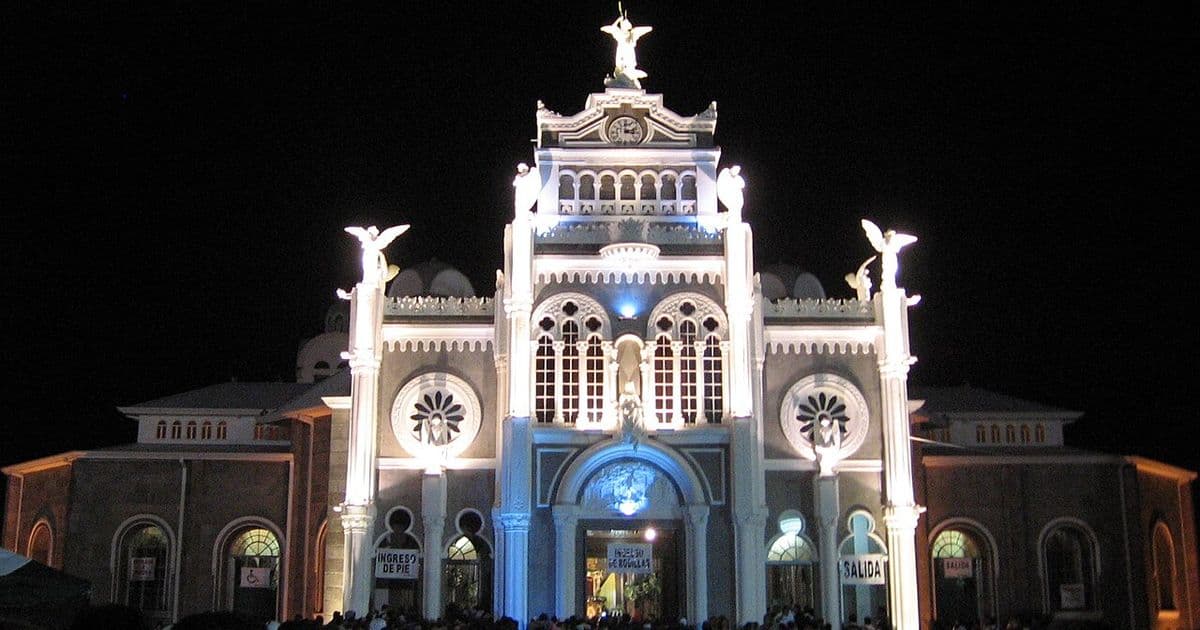
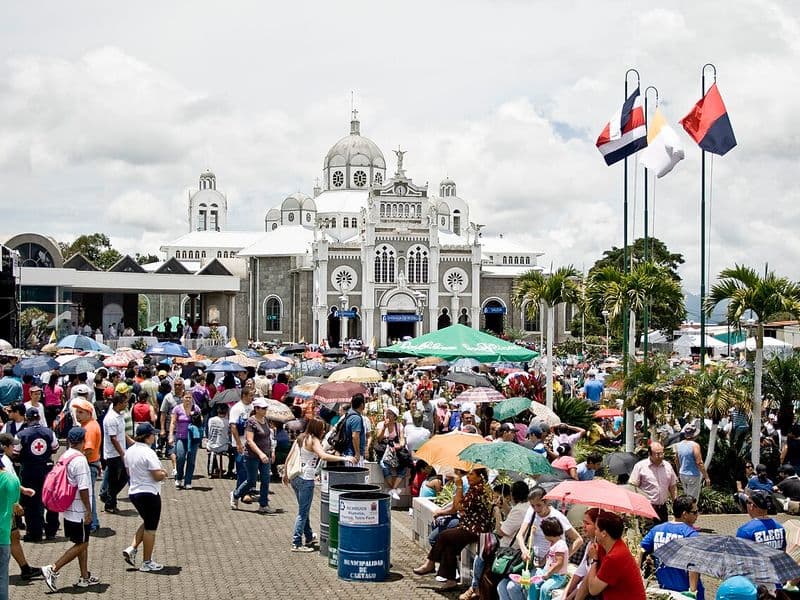
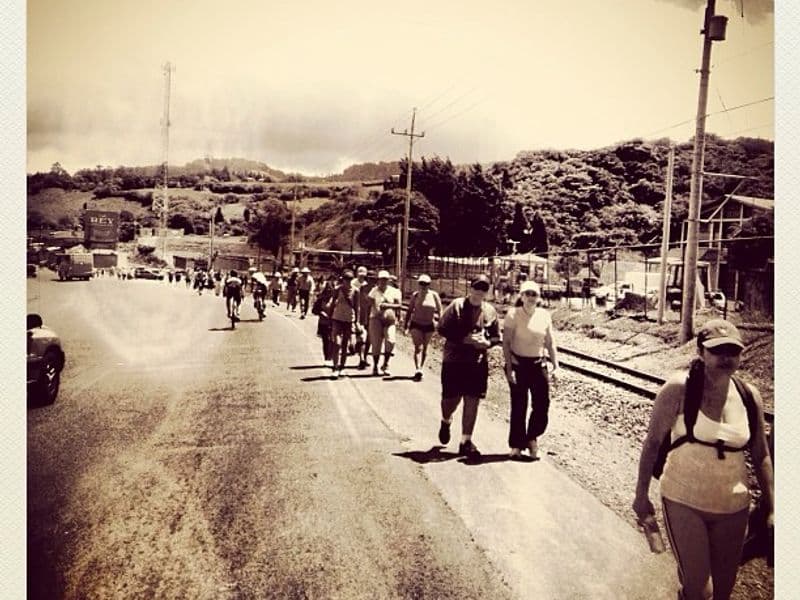
August 2nd honors La Virgen de los Ángeles, the patron saint of Costa Rica, whose black stone image is enshrined in the Basilica de los Ángeles in Cartago. The night before, August 1st through 2nd, hundreds of thousands of Costa Ricans participate in La Romería — a pilgrimage walk from San José (22 km) or other points to the basilica in Cartago. The walk takes many through the night, and upon arrival pilgrims often crawl on their knees across the basilica's floor as an act of devotion. It is the largest annual gathering of people in Costa Rica.
How Holidays Affect Travel in Costa Rica
For visitors planning a trip to Costa Rica, understanding the holiday calendar is essential for setting realistic expectations around transportation, accommodation, and attraction availability. During Semana Santa and the December–January holiday period, domestic travel reaches peak levels and prices for hotels, rental cars, and airline seats within the country rise significantly. Booking well in advance — three to six months — is strongly recommended for travel during these periods.
On mandatory public holidays, banks, government offices, pharmacies, and many restaurants and shops close. Supermarkets, gas stations, and tourist-oriented businesses in beach towns often remain open but with reduced hours. ATMs can run out of cash during long holiday weekends as banks are closed, so travelers should ensure they have adequate cash before a feriado weekend begins.
Beach towns on both coasts become extremely crowded during holiday weekends, particularly Jacó, Manuel Antonio, and Tamarindo on the Pacific, and Cahuita and Puerto Viejo on the Caribbean. This concentration of local tourists alongside international visitors creates a festive but logistically challenging environment. Conversely, visiting popular sites during holidays can also provide a more authentic glimpse of how Costa Ricans enjoy their own country, which is a rewarding experience for culturally curious travelers.
Planning Around Puentes
Puentes — long weekends created when a holiday falls near a weekend — are a recurring feature of Costa Rican life that significantly impacts travel. When a Thursday feriado is declared, many Costa Ricans take Friday off as well, creating a four-day weekend. These puentes trigger mass departures from the Central Valley toward beaches, and return traffic on Sunday evenings and Monday mornings can result in hours-long delays on major highways. Travelers renting cars or taking public buses during puentes should plan departure times carefully to avoid the worst congestion.
Frequently Asked Questions
When is Costa Rica's Independence Day?
Costa Rica celebrates Independence Day on September 15th, the date in 1821 when Central America declared independence from Spain. The evening of September 14th features the beloved lantern parade (desfile de faroles), and September 15th itself is marked by marching band parades, school ceremonies, and nationwide flag displays.
Is Semana Santa a public holiday in Costa Rica?
Yes, Maundy Thursday and Good Friday during Semana Santa (Holy Week) are both mandatory public holidays in Costa Rica. The entire week functions as a national vacation period, with schools closed and heavy travel toward beaches. Hotels book out months in advance, and prices surge during this period.
What are the mandatory public holidays in Costa Rica?
Costa Rica's mandatory public holidays include: January 1 (New Year's), April 11 (Juan Santamaría Day), Maundy Thursday, Good Friday, May 1 (Labor Day), July 25 (Annexation of Guanacaste), August 2 (Our Lady of the Angels), August 15 (Mother's Day), September 15 (Independence Day), and December 25 (Christmas).
What is the Romería in Costa Rica?
La Romería is an annual pilgrimage that takes place on the night of August 1st through August 2nd, when hundreds of thousands of Costa Ricans walk to the Basilica de los Ángeles in Cartago to honor the patron saint, La Virgen de los Ángeles. Many pilgrims walk 22 km from San José overnight, making it the largest single gathering of people in Costa Rica each year.
Are stores and restaurants open on Costa Rica public holidays?
On mandatory public holidays, most government offices, banks, and many local businesses close. Tourist-oriented restaurants, supermarkets, and gas stations in tourist areas often remain open but with reduced hours. During Semana Santa and Christmas–New Year periods, many businesses across the country operate on holiday schedules, so travelers should plan accordingly and carry adequate cash.