

Costa Rica Time Zone: Everything You Need to Know
Costa Rica operates on Central Standard Time (CST), which is UTC-6, year-round. Unlike most of North America, Costa Rica does not observe daylight saving time, which means the time difference between Costa Rica and US cities changes twice a year when the US clocks shift. This simple but important detail affects flight scheduling, calling family back home, coordinating with tour operators, and planning activities — so understanding Costa Rica time before your trip is genuinely useful.
Costa Rica's Time Zone Explained
Costa Rica is permanently on Central Standard Time (CST), which corresponds to UTC-6 (six hours behind Coordinated Universal Time). This is the same time zone used by the United States Central region during winter months (November through March). The key distinction is that Costa Rica never moves its clocks forward or backward — the country opted out of daylight saving time decades ago and has remained on the same fixed offset ever since.
The official time in Costa Rica is governed by the government and kept by the Observatory of Cartago, which is maintained by the Universidad de Costa Rica. Despite being a small country, there are no regional time differences within Costa Rica — the same time applies everywhere from the Pacific beaches of Guanacaste to the Caribbean coast of Limón province. This simplicity is a relief for travelers who don't need to account for time zone changes as they move between destinations within the country.
In practical terms, UTC-6 means that at noon UTC, it is 6:00 AM in Costa Rica. When it is noon in London (UTC+0 in winter), it is 6:00 AM in San José. When it is noon Eastern Standard Time in New York (UTC-5 in winter), it is 11:00 AM in Costa Rica. These calculations shift when North American or European countries change their clocks for daylight saving time while Costa Rica remains fixed.
IANA Time Zone Identifier
For travelers setting up phones, laptops, or scheduling software, Costa Rica's IANA (Internet Assigned Numbers Authority) time zone identifier is "America/Costa_Rica". Selecting this identifier in any modern operating system or app correctly accounts for the country's fixed UTC-6 offset and ensures that calendars, alarms, and meeting scheduling tools display the correct local time in Costa Rica.
Time Differences with Major Cities
Understanding the time difference between Costa Rica and your home city is essential for planning calls, monitoring arrival times, and coordinating with people in different locations. Because Costa Rica stays fixed at UTC-6 while many other countries shift their clocks seasonally, the time difference changes depending on the time of year in those other countries.
During US Eastern Standard Time (EST, November to March): Costa Rica is 1 hour behind New York and Miami (New York: UTC-5, Costa Rica: UTC-6). During US Eastern Daylight Time (EDT, March to November): Costa Rica is 2 hours behind New York and Miami (New York: UTC-4, Costa Rica: UTC-6). During US Central Standard Time (CST, November to March): Costa Rica is at the same time as Chicago, Dallas, and Mexico City. During US Central Daylight Time (CDT, March to November): Costa Rica is 1 hour behind Chicago.
For the US Mountain and Pacific time zones: During Mountain Standard Time (MST): Costa Rica is 1 hour ahead of Denver. During Mountain Daylight Time (MDT): Costa Rica is at the same time as Denver. During Pacific Standard Time (PST): Costa Rica is 2 hours ahead of Los Angeles and Seattle. During Pacific Daylight Time (PDT): Costa Rica is 3 hours ahead of Los Angeles. For Canadian cities, the same rules apply as their US counterparts in the same time zones. Toronto and Montreal follow Eastern time; Vancouver follows Pacific time.
European and International Differences
London (GMT/UTC+0 in winter, BST/UTC+1 in summer) is 6 hours ahead of Costa Rica in winter and 7 hours ahead in summer. Madrid and most of continental Europe (CET/UTC+1 in winter, CEST/UTC+2 in summer) are 7 hours ahead in winter and 8 hours ahead in summer. Toronto, operating on Eastern time, matches New York's difference described above. Tokyo (JST/UTC+9) is 15 hours ahead of Costa Rica year-round. Sydney (AEST/UTC+10 standard, AEDT/UTC+11 daylight) is 16 to 17 hours ahead.
Why Costa Rica Doesn't Use Daylight Saving Time
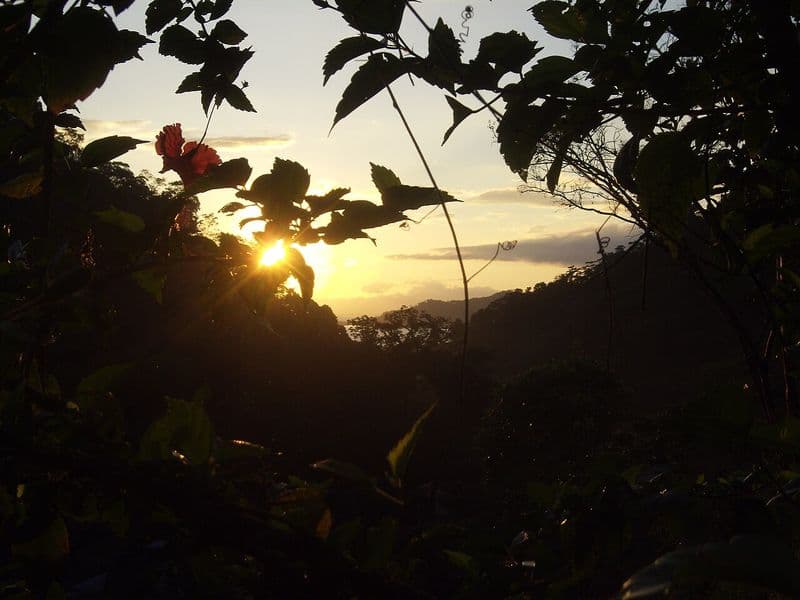
Costa Rica experimented with daylight saving time at various points in its history, most notably during the 1970s and 1980s during global energy crises when many countries adopted DST to reduce evening electricity consumption. The country officially abandoned the practice and returned to a fixed UTC-6 offset. The primary reasons for this decision relate to Costa Rica's geographic position.
Because Costa Rica is located between 8° and 11° North latitude — close to the equator — the variation in daylight hours between summer and winter is much smaller than in temperate countries where DST originated. At these tropical latitudes, sunrise and sunset times vary by less than an hour across the entire year. The energy-saving rationale for DST, which rests on substantially longer summer evenings reducing the need for artificial lighting, simply does not apply with the same force in a country where June days are only about 45 minutes longer than December days.
Additionally, the agricultural sector, which plays a significant role in Costa Rica's economy, traditionally benefits from consistent time standards. Farm workers, livestock, and crop schedules do not adapt easily to clock shifts. The decision to stay on fixed time has been maintained ever since, and there are no current political or legislative discussions about reintroducing daylight saving time in Costa Rica. This means travelers from countries that observe DST must remember that their time difference with Costa Rica changes twice a year even though Costa Rica's clocks never move.
Comparison with Neighboring Countries
Among Central American countries, none currently observe daylight saving time. Guatemala, Belize, Honduras, El Salvador, Nicaragua, Panama, and Costa Rica all maintain fixed UTC offsets year-round. Guatemala, Belize, Honduras, and El Salvador are at UTC-6 (same as Costa Rica). Nicaragua is also at UTC-6. Panama is at UTC-5. This regional consistency means that travelers moving between Central American countries face minimal time zone adjustment, though the difference with Panama (one hour ahead) is worth noting when crossing the border or taking flights.
How Time Affects Daily Life in Costa Rica
The pace of daily life in Costa Rica is shaped by tropical sunrise and sunset patterns as much as by clock time. Because Costa Rica is near the equator, the sun rises between about 5:15 AM and 6:00 AM and sets between about 5:30 PM and 6:15 PM throughout the year. Mornings are extremely active — markets, restaurants, and businesses typically open by 7:00 AM or earlier. The "hora tica" (Tico time) is a good-natured cultural concept acknowledging that social events and casual appointments in Costa Rica often start 15 to 30 minutes later than the officially stated time.
Most commercial businesses operate Monday through Friday from about 8:00 AM to 5:00 PM or 6:00 PM, with many taking a midday break between noon and 1:00 PM in smaller towns and rural areas, though this is less common in San José. Banks generally operate from 9:00 AM to 3:00 PM or 4:00 PM on weekdays only. Government offices follow similar hours. Restaurants typically serve lunch from noon to 3:00 PM and dinner from 6:00 PM to 9:00 or 10:00 PM. Smaller sodas (family restaurants) may close by 7:00 PM.
For tourist activities, the morning hours are generally best. Wildlife is most active in the early morning and late afternoon hours. National parks and reserves are typically open from 8:00 AM to 4:00 PM (though specific parks have different hours). Guided tours like zip-lining and rafting usually depart between 7:00 AM and 9:00 AM. Afternoon thunderstorms during the rainy season typically arrive between 2:00 PM and 4:00 PM, making morning the ideal time for outdoor activities from June through November.
Business Hours and Closures
Holy Week (Semana Santa), the week before Easter, is Costa Rica's most significant national holiday period. Many businesses, government offices, and even some national parks close entirely from Holy Thursday through Easter Sunday. Banks close on national holidays including New Year's Day (January 1), Juan Santamaría Day (April 11), Labor Day (May 1), Annexation of Guanacaste (July 25), Mother's Day (August 15), Independence Day (September 15), and Christmas Day (December 25). Plan banking and important errands around these dates.

Sunrise and Sunset Times in Costa Rica
Costa Rica's tropical location near the equator produces remarkably consistent day length throughout the year compared to temperate countries. The variation between the longest and shortest days is only about 50 minutes, compared to several hours in countries at higher latitudes. This means Costa Rica never has the very long summer evenings or very short winter days that residents of North America or Europe experience.
In San José (approximately 9.9° North latitude), the sun rises between approximately 5:15 AM (in June, the longest days) and 6:05 AM (in December, the shortest days). The sun sets between approximately 5:35 PM (December) and 6:15 PM (June). Astronomical twilight — when the sky brightens enough for outdoor activities without artificial light — begins about 30 minutes before sunrise, meaning usable morning light starts around 5:00 AM year-round. This consistent natural light schedule is one reason Costa Ricans tend to wake early and start activities before 7:00 AM.
Beach destinations on the Pacific coast experience very similar sunrise and sunset times. Tamarindo (Guanacaste) and Jacó (Central Pacific) both receive sunsets over the Pacific Ocean, which are a major attraction in their own right. The Caribbean coast, being on the opposite side of the mountains, has sunrises over the ocean — also spectacular, and a different experience from the Pacific side. Watching sunrise from a Caribbean beach while howler monkeys call in the forest is a uniquely memorable Costa Rican experience.
Best Times for Wildlife Viewing
The consistent sunrise and sunset schedule in Costa Rica directly influences wildlife activity patterns. Most wildlife is most active during the first two hours after sunrise (typically 5:30–7:30 AM) and the last two hours before sunset (approximately 4:00–6:00 PM). Guided early morning bird walks typically depart at 5:30 or 6:00 AM to catch peak bird activity. Night walks in cloud forests and rainforests, typically departing at 6:30–7:00 PM, take advantage of the early tropical sunset to access nocturnal species including poison dart frogs, kinkajous, sleeping birds, and insects.
Tips for Managing Time on Your Trip
One of the most common mistakes first-time visitors to Costa Rica make is underestimating travel times. Road distances on a map look short, but mountainous terrain, unpaved roads, traffic around San José, and river crossings during the rainy season can triple or quadruple expected journey times. Always add a buffer of at least 30 minutes to any GPS-calculated driving time, and consider adding an hour for routes involving mountain roads or unpaved sections.
For flights home, particularly early morning departures from Juan Santamaría Airport, plan to arrive at the airport at least 2.5 to 3 hours before international departure. The road from central San José to the airport can be congested during morning rush hours (6:00–8:00 AM weekdays). If your flight departs before 8:00 AM, strongly consider staying near the airport the previous night or arranging pre-dawn transportation. Hotels in Alajuela (the city where the airport is located) are significantly less expensive than airport hotels and are just 10 minutes from the terminal.
When scheduling calls or video chats with home, remember to account for the seasonal DST shift. The easiest approach is to set your smartphone's world clock feature to display Costa Rica time alongside your home time, so you can see both simultaneously without doing mental arithmetic. When making reservations or booking tours from abroad, confirm whether the tour operator is quoting departure times in Costa Rica local time (CST, UTC-6) to avoid confusion.
Jet Lag and Arrival Planning
Most visitors to Costa Rica travel from North America, and the time difference is modest enough (1 to 3 hours from US time zones) that significant jet lag is rarely a problem. Travelers arriving from Europe face a 6 to 8 hour time difference, which can cause more noticeable adjustment. Arriving in Costa Rica in the late afternoon and going to sleep at the local time helps reset the body clock quickly. Morning light exposure in Costa Rica (which starts before 6:00 AM) is a powerful natural cue for resetting circadian rhythms after trans-Atlantic travel.
Frequently Asked Questions
What time zone is Costa Rica in?
Costa Rica is in the Central Standard Time (CST) zone, which is UTC-6. This is a fixed offset — Costa Rica does not observe daylight saving time and never changes its clocks. The IANA time zone identifier is "America/Costa_Rica".
Is Costa Rica on the same time as the US Central time zone?
During US standard time (roughly November through March), yes — Costa Rica is at the same clock time as US Central Standard Time cities like Chicago, Dallas, and Houston. During US daylight saving time (roughly March through November), those cities move their clocks forward one hour, making them 1 hour ahead of Costa Rica. So the answer changes depending on the time of year.
How many hours is Costa Rica behind the UK?
Costa Rica is 6 hours behind the UK during UK winter (GMT, roughly late October through late March) and 7 hours behind during UK summer (BST, British Summer Time, roughly late March through late October). So if it is noon in London in January, it is 6:00 AM in San José. If it is noon in London in July, it is 5:00 AM in San José.
Does Costa Rica ever change its clocks?
No. Costa Rica permanently observes UTC-6 (Central Standard Time) and does not make any seasonal clock adjustments. The country has not observed daylight saving time since the 1980s. This means that while the time difference between Costa Rica and daylight-saving countries like the US and most of Europe changes twice a year, Costa Rica's own clocks always read the same relative to UTC.
What time does the sun set in Costa Rica?
Costa Rica's equatorial location means sunset times are remarkably consistent year-round. The sun sets between approximately 5:35 PM (around the December solstice) and 6:15 PM (around the June solstice) in the San José area. Beach destinations on the Pacific coast enjoy sunsets directly over the ocean, which are popular gathering events in beach towns like Tamarindo and Nosara.