
Costa Rica Animals: A Complete Guide to Wildlife You Can See
Costa Rica is home to nearly 6% of the world's biodiversity despite covering less than 0.03% of Earth's surface, making it one of the most wildlife-rich countries on the planet. From three-toed sloths hanging in beachside trees to resplendent quetzals gliding through cloud forests, the animals of Costa Rica are endlessly fascinating and remarkably accessible to visitors. Whether you are exploring a national park, a jungle lodge, or simply walking a beach at dusk, encounters with extraordinary wildlife are a defining feature of the Costa Rica experience.
Mammals of Costa Rica
Costa Rica supports more than 230 species of mammals, a remarkable total for a country of its size. Four species of monkey inhabit the country's forests: the mantled howler monkey, the white-faced capuchin, the Central American squirrel monkey, and the Geoffroy's spider monkey. Howler monkeys are the most frequently heard wildlife in Costa Rica — their deep, resonant calls carry for several kilometers through the forest canopy and are often the first wildlife experience visitors have upon waking at a jungle lodge.
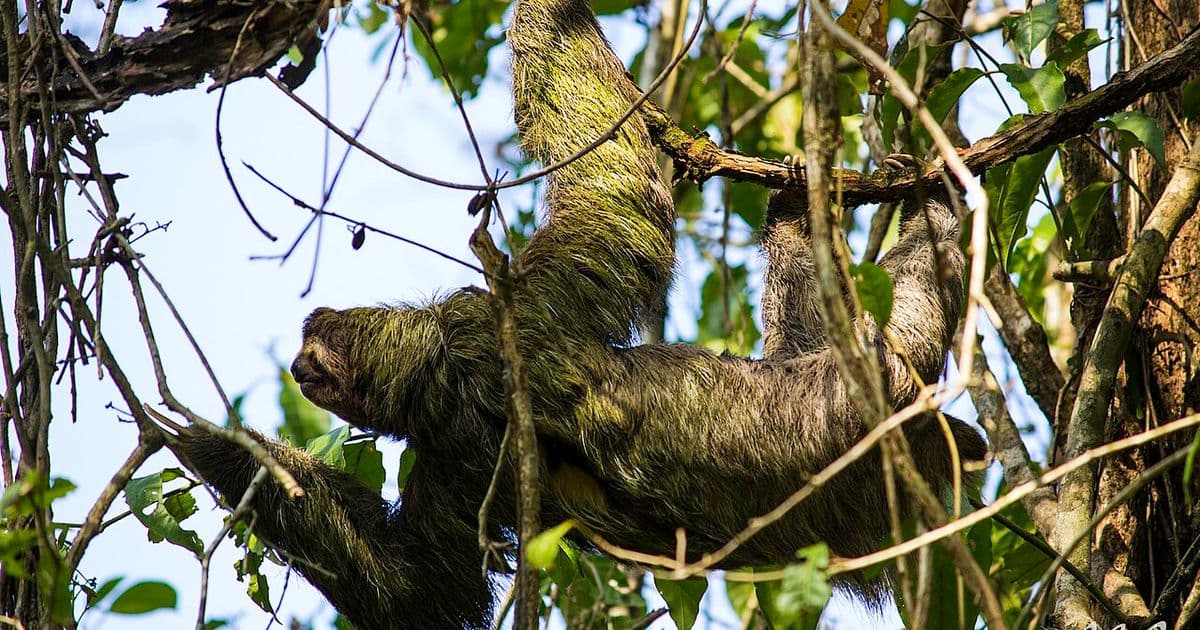
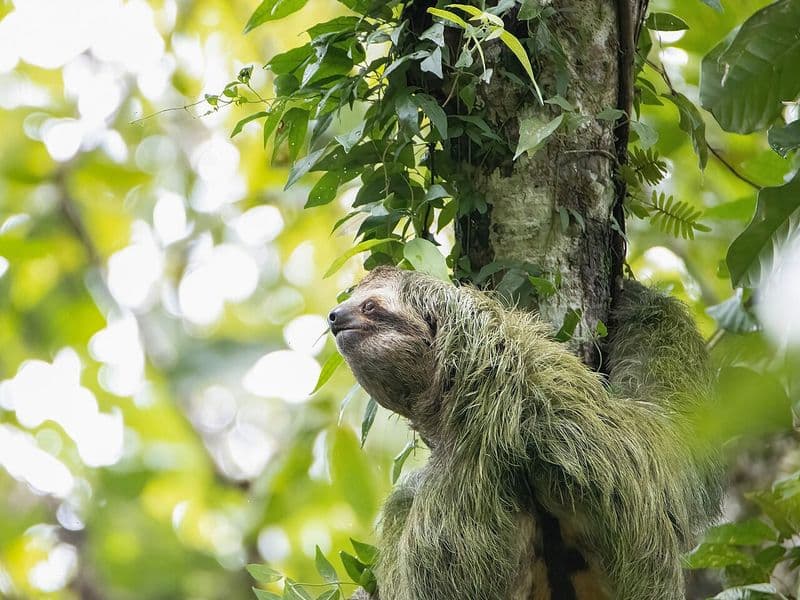
Sloths are perhaps the most beloved of Costa Rica's mammals. Both the three-toed and two-toed sloths are found throughout the country, spending the vast majority of their lives hanging from cecropia and other tropical trees. Their slow metabolism, thick fur, and green algae coating make them well-camouflaged but surprisingly easy to spot with a trained eye. The Manuel Antonio and Tortuguero areas are particularly reliable locations for sloth sightings.
Larger mammals include the Baird's tapir, the largest land animal in Central America, found primarily in Corcovado National Park. White-lipped and collared peccaries roam in groups through lowland forests. Ocelots, pumas, and jaguars are present but rarely seen due to their elusive nature and low population densities. Coatis — raccoon relatives with long striped tails and pointed snouts — are among the boldest mammals in Costa Rica and frequently approach visitors in parks hoping for food, which should be declined to protect their natural behavior.
Sloths: Costa Rica's Most Iconic Mammal
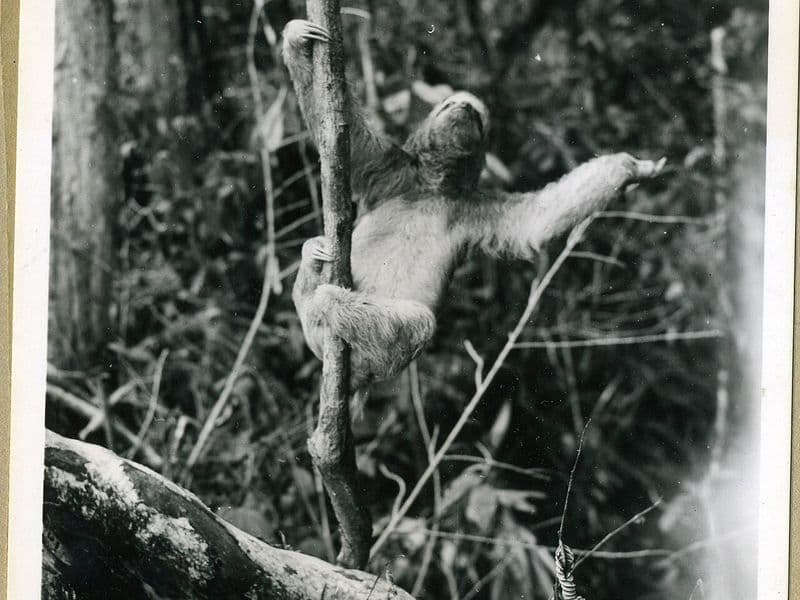
The three-toed sloth is the species most commonly seen in Costa Rica's lowland forests and beach towns. They descend to the ground roughly once a week to defecate and occasionally cross roads or swim between forest patches. The two-toed sloth is slightly larger and more nocturnal. Both species are found throughout the Caribbean and Pacific lowlands, with particularly high densities around Puerto Viejo, Tortuguero, and the Osa Peninsula.
Monkeys and Their Habitat
White-faced capuchins are highly intelligent and adaptable, found in forests from sea level to cloud forest edges. Spider monkeys, which use their prehensile tails as a fifth limb, require large tracts of undisturbed forest and are best seen in Corcovado and Tortuguero. Squirrel monkeys, the smallest of Costa Rica's primates, are endangered and restricted mainly to the Manuel Antonio and Corcovado areas of the Pacific coast.
Birds: A Birdwatcher's Paradise
With over 900 recorded bird species, Costa Rica ranks among the top destinations on Earth for birdwatching. The country's varied geography — including Pacific and Caribbean lowlands, highland cloud forests, mangroves, wetlands, and coral reef systems — creates a staggering diversity of habitats that support resident birds and an enormous number of migratory species passing through each year.
The resplendent quetzal, with its iridescent green and red plumage and spectacular tail feathers, is the most sought-after species for visiting birders. Quetzals are found in the Monteverde cloud forest, the Cerro de la Muerte highlands, and the San Gerardo de Dota valley, particularly between January and May during nesting season. Other iconic species include the scarlet macaw, abundant on the Pacific coast around Carara and Manuel Antonio; toucans and toucanets of several species; and hummingbirds, with more than 50 species recorded in Costa Rica.
Wetland and coastal areas support large wading birds including wood storks, roseate spoonbills, and numerous heron and egret species. The Tárcoles River mouth near Carara National Park is famous for its American crocodile population but also attracts large numbers of shorebirds and waterbirds. Caño Negro Wildlife Refuge in the northern lowlands is exceptional for waterbird concentrations and is one of the best places in the country to see jabiru storks, the largest flying bird in the Americas.
Scarlet Macaws in Costa Rica
Scarlet macaws were once widespread across Costa Rica but habitat loss reduced their range dramatically during the twentieth century. Conservation efforts have led to a significant recovery, particularly along the central Pacific coast. Today, large flocks can be seen flying between their roosting and feeding sites near Carara National Park and the Osa Peninsula. Morning and evening flights of 50 or more birds are a spectacular sight and sound as their raucous calls echo through the forest.
Reptiles and Amphibians
Costa Rica is home to an extraordinary array of reptiles and amphibians, collectively known as herpetofauna. The country supports over 220 species of reptiles and more than 200 species of amphibians — an astonishing diversity concentrated in a small geographic area. Among the most iconic reptiles are the American crocodile, which can reach lengths of 5 meters, and the spectacled caiman, a smaller crocodilian found in rivers, wetlands, and mangroves throughout the country.
Sea turtles are among Costa Rica's most famous reptile residents. Four species nest on Costa Rican beaches: the leatherback, green, loggerhead, and hawksbill. Tortuguero on the Caribbean coast is the most important green sea turtle nesting site in the western hemisphere, with tens of thousands of females coming ashore each year between July and October. Leatherback turtles nest on the Pacific coast at Playa Grande near Tamarindo from October through March. Witnessing a sea turtle nesting under the supervision of a certified local guide is one of the most profound wildlife experiences Costa Rica offers.
Frogs and salamanders represent the bulk of Costa Rica's amphibian diversity. The red-eyed tree frog is perhaps the most photographed amphibian in the world and is commonly found in the Caribbean lowlands. Poison dart frogs in vivid red, blue, and green patterns warn predators of their toxicity and are found throughout humid lowland forests. The glass frog, with its translucent skin through which internal organs are visible, inhabits stream-side vegetation in humid forests on both coasts.
Sea Turtle Nesting in Tortuguero
Tortuguero National Park on Costa Rica's Caribbean coast protects the most significant green sea turtle nesting beach in the Atlantic basin. Females return to the same beach where they hatched, sometimes after journeys of thousands of kilometers across the ocean. During nesting season, guided night tours allow visitors to watch females excavate nests and lay eggs. Strict protocols — no flash photography, red-light flashlights only, and staying behind guide ropes — protect the turtles from disturbance during this vulnerable process.
Red-Eyed Tree Frogs and Poison Dart Frogs
The red-eyed tree frog has become a global symbol of tropical rainforest conservation. Though vivid in photographs, they are nocturnal and spend daylight hours motionless on leaf undersides, camouflaged by their folded posture. Night tours in the Caribbean lowlands, particularly around Tortuguero and La Selva, reliably produce sightings. Poison dart frogs are active during the day and can be spotted walking along the forest floor near streams. The strawberry poison dart frog, also called the blue-jeans frog for its vivid red body and blue legs, is especially common in the Caribbean lowlands.
Marine Animals and Sea Life
The Pacific and Caribbean coasts of Costa Rica each harbor distinct and rich marine ecosystems. The Pacific coast, washed by nutrient-rich upwellings, supports large populations of whales, dolphins, sharks, rays, and sea turtles. Humpback whales visit Costa Rican Pacific waters twice per year: from December through April as northern hemisphere populations pass through, and again from July through October when southern hemisphere humpbacks arrive. The Osa Peninsula and Ballena National Marine Park are prime whale-watching locations.
Bottlenose, spinner, and spotted dolphins are year-round residents in Pacific coastal waters and are frequently encountered on snorkeling and diving trips. Whale sharks, the largest fish in the ocean, visit Cocos Island — a UNESCO World Heritage Site located 550 kilometers off the Pacific coast — in large numbers. Cocos Island is considered one of the top scuba diving destinations in the world, attracting divers who come specifically for encounters with hammerhead sharks, manta rays, and whale sharks in extraordinary concentrations.
The Caribbean coast, though less dramatic in terms of large marine megafauna encounters, protects the most extensive coral reef system in Costa Rica within Cahuita National Park. The reef shelters parrotfish, angelfish, moray eels, lobsters, and a diversity of coral species. Snorkeling at Cahuita is accessible and suitable for all skill levels, making it one of the most popular marine wildlife experiences in the Caribbean region of the country.
Whale Watching off the Osa Peninsula
The waters surrounding the Osa Peninsula and Drake Bay see some of the highest humpback whale activity in the Eastern Pacific. Because both northern and southern hemisphere populations visit at different times of year, the whale-watching season at the Osa is longer than almost anywhere else on Earth. Tour operators in Drake Bay and Puerto Jiménez offer morning and afternoon whale-watching departures, with sightings of mothers and calves being particularly common during the southern hemisphere season in late July through October.
Insects and Invertebrates
Insects and invertebrates represent the vast majority of Costa Rica's animal diversity, with an estimated 90,000 or more species present in the country. Among the most spectacular are the morpho butterflies, whose brilliant metallic blue wings flash like mirrors as they glide through shaded forest understories. Over 1,200 butterfly species have been recorded in Costa Rica — more than in all of North America north of Mexico combined.
Leaf-cutter ants are one of the most commonly observed insects in Costa Rica and one of the most ecologically important. Columns of ants carrying cut leaf fragments many times their body weight march between forest trees and underground fungus gardens 24 hours a day. Their trails, which can be meters wide in well-established colonies, are a routine sight on forest paths throughout the country. The fungus grown on decomposed leaf material is the ants' sole food source, making leaf-cutter ant colonies among the most sophisticated agricultural systems in nature.
Hercules beetles, rhinoceros beetles, and other large scarab beetles inhabit forest floor litter. Walking sticks and mantises are masters of camouflage in the forest understory. Tarantulas and wandering spiders — including the phoneutria species, which should not be handled — occupy a range of habitats from beach driftwood to cloud forest leaf litter. Firefly displays light up forest edges and fields during the rainy season, creating magical evening experiences for visitors staying at jungle lodges.
Butterfly Gardens and Insect Exhibits
Several established butterfly gardens throughout Costa Rica allow visitors to observe tropical lepidoptera at close range in enclosed, walk-through enclosures. The Monteverde Butterfly Garden and the La Paz Waterfall Gardens near Poás Volcano are two of the best-known facilities, where blue morphos, owl butterflies, and dozens of other species can be photographed and observed through their life cycles. These facilities also provide a reliable butterfly encounter on days when weather limits outdoor exploration.
Best Places to See Wildlife in Costa Rica
Corcovado National Park on the Osa Peninsula is consistently rated among the top wildlife destinations in the world. Its remote location and lack of roads have preserved an intact lowland rainforest ecosystem where tapirs, jaguars, scarlet macaws, and all four monkey species can all potentially be encountered on a single guided hike. Access requires either a flight to Drake Bay or Puerto Jiménez, followed by a boat or hike to one of the park's ranger stations.
Tortuguero National Park is accessible only by boat or small plane and protects an extensive canal and lagoon system along the Caribbean coast. The waterways can be explored by boat, kayak, or canoe, offering close-up views of caimans, river turtles, kingfishers, and a remarkable density of water-loving wildlife. The park is the primary sea turtle nesting destination in Costa Rica and draws visitors from around the world during the nesting season.
Monteverde Cloud Forest Reserve and the adjacent Santa Elena reserve protect one of the most celebrated cloud forest ecosystems in the Americas. Though the forest is often shrouded in mist — which creates its characteristic atmosphere — wildlife activity remains high year-round. Resplendent quetzals, three-wattled bellbirds, and a bewildering diversity of plants and epiphytes reward visitors who take the time to walk the trails quietly with a knowledgeable guide. Manuel Antonio National Park, despite being the most visited park in Costa Rica, remains excellent for reliable sightings of capuchins, squirrel monkeys, sloths, and shorebirds in a spectacular Pacific coastal setting.
Guided vs. Self-Guided Wildlife Watching
While many animals can be spotted independently, hiring a certified naturalist guide dramatically increases the quantity and quality of wildlife encounters. Guides spot cryptic species that most visitors walk past entirely — a motionless sloth 20 meters up in a tree, a fer-de-lance snake coiled under a root, or a tiny glass frog clinging to a leaf above a stream. In Corcovado and other remote parks, a licensed guide is legally required. Most lodges can arrange guides for half-day or full-day forest walks at competitive rates.
Frequently Asked Questions
What is the most commonly seen animal in Costa Rica?
White-faced capuchin monkeys and white-tailed coatis are among the most reliably encountered mammals in Costa Rica, especially in national parks like Manuel Antonio and Carara. Sloths are also extremely common in lowland forest areas. For birds, the clay-colored thrush — the national bird — is ubiquitous in gardens and forest edges throughout the country.
Are there dangerous animals in Costa Rica?
Yes, Costa Rica has several species that can be dangerous. The fer-de-lance pit viper is responsible for most snakebite incidents in the country. American crocodiles inhabit rivers and estuaries and should be respected from a safe distance. Bullet ants deliver an extremely painful sting. However, fatal attacks on humans are rare, and basic awareness and staying on marked trails significantly reduces any risk.
What is the best time of year to see wildlife in Costa Rica?
Wildlife can be observed year-round in Costa Rica, but specific species have seasonal peaks. Sea turtles nest from July to October on the Caribbean coast and November to March for leatherbacks on the Pacific. Quetzals are most active from January through May. Humpback whales visit twice — December to April and July to October. The dry season (December to April) generally makes wildlife spotting easier as vegetation is less dense.
Can you see jaguars in Costa Rica?
Jaguars are present in Costa Rica but extremely rarely seen by visitors due to their elusive nature and low population numbers. The best chance of a jaguar encounter is in Corcovado National Park on the Osa Peninsula, which has one of the highest jaguar densities in Central America. Camera traps operated by researchers in Corcovado regularly capture jaguar images, but spotting one in person requires significant time in the field and considerable luck.
Do I need vaccinations before seeing wildlife in Costa Rica?
The U.S. CDC recommends routine vaccinations be up to date before traveling to Costa Rica. Hepatitis A and typhoid vaccines are recommended for most travelers. Rabies vaccination is advised for those planning extensive outdoor activities, particularly cave exploration or work with animals. Malaria prophylaxis may be recommended for travel to remote lowland areas including Tortuguero and the Osa Peninsula. Consult a travel medicine physician at least 4 to 6 weeks before departure.