
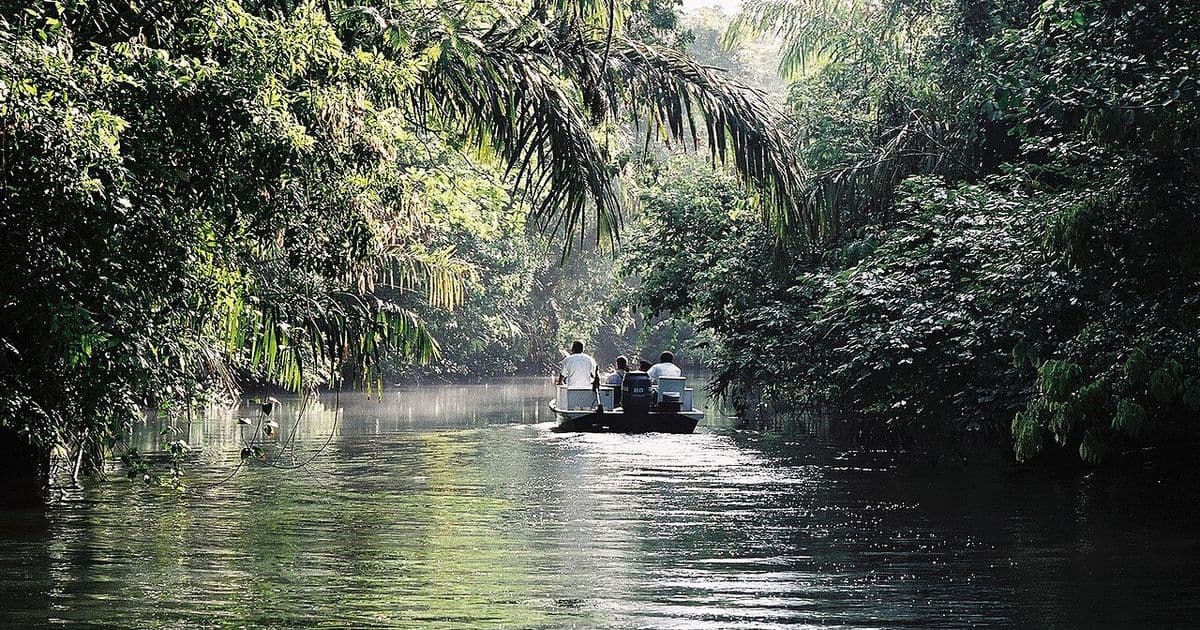
Costa Rica National Parks: The Complete Guide to the Country's Best Protected Areas
Costa Rica protects more than 26% of its national territory within a network of national parks, biological reserves, wildlife refuges, and conservation areas — one of the highest percentages of protected land of any country on Earth. This extraordinary commitment to conservation has made Costa Rica a global model for ecotourism and biodiversity preservation, and the national park system is the backbone of the country's thriving nature tourism industry. With 29 national parks covering ecosystems from dry tropical forest and volcanic craters to mangrove estuaries and coral reefs, visitors to Costa Rica have an unparalleled selection of protected wild places to explore.
Overview of Costa Rica's Park System
Costa Rica began protecting its natural heritage in earnest in the 1970s and 1980s, driven by visionary biologists and conservationists who recognized that the country's extraordinary biodiversity was under severe threat from agricultural expansion and logging. The National System of Conservation Areas, known by its Spanish acronym SINAC, today manages the country's protected areas under a framework of 11 regional conservation areas that encompass national parks, biological reserves, protected zones, and multiple-use management areas.
The protected area network spans the full range of Costa Rica's biodiversity — from dry tropical forests in Guanacaste that receive less than 1,000 millimeters of rain per year to the hyper-humid rainforests of the Osa Peninsula that receive over 5,000 millimeters annually. Cloud forests, wetlands, mangroves, volcanic landscapes, coral reefs, and high-altitude páramo are all represented within the system. This range of ecosystems in a small geographic area is what makes Costa Rica's parks collectively among the most biodiverse destinations on Earth for a trip of any given length.
Marine protected areas are an increasingly important component of the system. Cocos Island National Park, a UNESCO World Heritage Site 550 kilometers off the Pacific coast, protects one of the most biologically rich marine ecosystems in the eastern Pacific, with extraordinary concentrations of hammerhead sharks, manta rays, whale sharks, and dolphins. The Ballena National Marine Park on the Pacific coast protects humpback whale breeding and calving grounds and a significant coral reef system. The two marine protected areas around the Bat Islands in Guanacaste shelter bull sharks and giant manta rays accessible to experienced divers.
SINAC and the Conservation Area System
The 11 conservation areas managed by SINAC divide Costa Rica into administrative regions, each with its own staff, research priorities, and set of protected areas. The Osa Conservation Area manages Corcovado and several adjacent reserves. The Tortuguero Conservation Area oversees the Caribbean coast parks. The Arenal Tempisque Conservation Area includes Arenal Volcano, Caño Negro, and Palo Verde national parks. This regional structure allows management to be tailored to the specific ecological and social context of each area rather than applying a uniform national approach.
Corcovado National Park: The Crown Jewel
Corcovado National Park on the Osa Peninsula in southwestern Costa Rica is consistently rated among the top wildlife destinations in the world. National Geographic has called Corcovado 'the most biologically intense place on Earth.' The park encompasses 424 square kilometers of lowland tropical rainforest, cloud forest, wetlands, mangroves, and 46 kilometers of Pacific coastline — one of the largest intact lowland rainforest blocks remaining in Central America. This intact habitat supports wildlife populations that have been extirpated from much of the rest of the country, including all four of Costa Rica's monkey species, Baird's tapirs, all five cat species present in Costa Rica, harpy eagles, and an extraordinary density of scarlet macaws.
The park is divided into four sectors: San Pedrillo in the north, La Leona in the south, Los Patos in the interior, and Sirena — the main research station and the hub for serious wildlife watching — accessible via boat from Drake Bay or a challenging coastal hike from La Leona. Sirena sits at the confluence of two major rivers and supports the densest concentration of large mammals in the park, including tapirs that are regularly seen on the airstrip at dusk and dawn. Guided overnight hikes to Sirena are among the most extraordinary wildlife experiences available anywhere in Central America.
A licensed guide is legally required to enter Corcovado National Park, and visitor numbers are strictly controlled to limit impact on the ecosystem. Entry permits must be obtained in advance, and overnight stays at the Sirena station require reservations made months ahead during peak season. The remoteness and strict management of the park — combined with the exceptional wildlife — make a visit to Corcovado more logistically demanding than Costa Rica's more accessible parks but exponentially more rewarding for serious nature enthusiasts.
Getting to Corcovado National Park
Access to Corcovado is via the Osa Peninsula, reachable by small plane from San José to Drake Bay or Puerto Jiménez, or by a long bus-ferry-bus journey from San José via the Pacific coast highway. From Drake Bay, boat transfers and guided hikes access the San Pedrillo and Sirena sectors. From Puerto Jiménez on the Golfo Dulce side of the peninsula, collectivo taxis reach Carate near the La Leona entrance, and Los Patos is accessible via Dos Brazos. All of these routes are logistically complex and best arranged through lodges in Drake Bay or Puerto Jiménez.
Tortuguero National Park: Canals and Sea Turtles
Tortuguero National Park on the Caribbean coast is the most important sea turtle nesting site in the western hemisphere. The park's 35-kilometer-long beach serves as the primary nesting ground for the Atlantic green sea turtle population, with tens of thousands of females coming ashore each year between July and October to lay eggs. The green sea turtle's connection to Tortuguero is one of the most significant wildlife stories in conservation history — it was here that pioneering naturalist Archie Carr began the research in the 1950s that eventually led to international sea turtle conservation agreements and the protection of the beach under the national park system.
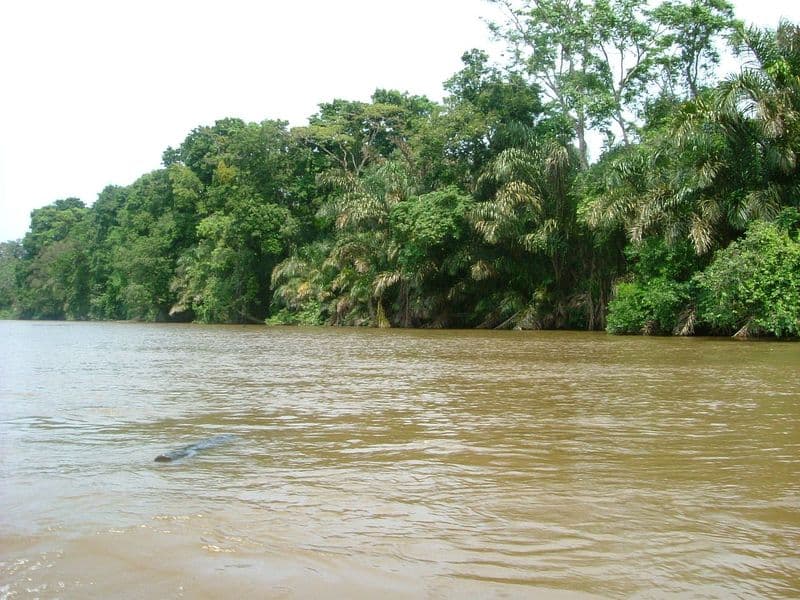
Beyond the legendary turtle nesting, Tortuguero is defined by its extraordinary network of canals and lagoons that run parallel to the Caribbean coast through pristine lowland rainforest. The canals are the park's transportation arteries — there are no roads, and all movement is by boat or on foot on narrow jungle trails. Boat tours through the canals reveal an astonishing parade of wildlife: caimans sunning on logs, river turtles stacked in towers on branches, green iguanas dropping into the water from overhanging vegetation, boat-billed herons roosting motionless in mangroves, and all four of Costa Rica's monkey species in the canopy above.
The village of Tortuguero, accessible only by boat or small plane, sits on a narrow strip of land between the Caribbean Sea and the main canal. It hosts a thriving community of guides, small hotels, restaurants, and conservation organizations. The John H. Phipps Biological Field Station at the north end of the beach conducts ongoing research on sea turtles and welcomes visitors. Guided night turtle tours, conducted only by licensed local guides with strict protocols to minimize disturbance, allow visitors to witness nesting from a respectful distance.
Sea Turtle Nesting Season at Tortuguero
Green sea turtles nest at Tortuguero primarily from July through October, with a smaller nesting season for leatherbacks from February through July. Hawksbill turtles also nest in smaller numbers throughout the year. Peak green turtle nesting is in August and September when the beach can see hundreds of females in a single night during high tide. Guided tours are managed by local naturalist guides certified by the park service and operate in small groups with red-light flashlights, no photography flash, and strict viewing distances to protect nesting females and hatchlings.
Manuel Antonio: Most Visited and Most Beautiful
Manuel Antonio National Park is the most visited national park in Costa Rica, combining spectacular Pacific beaches with accessible and abundant wildlife in a compact area just 3 kilometers from the tourist town of Quepos. The park protects a peninsula of lowland forest, rocky headlands, and several white-sand beaches accessible by foot through the primary forest trail network. Despite its small size — just 1,684 hectares — Manuel Antonio supports an impressive array of wildlife highly visible to casual visitors, making it the best choice for first-time ecotourists who want a guaranteed wildlife experience in a beautiful setting.
The park's four main beaches — Playa Espadilla Sur, Playa Manuel Antonio, Playa Biesanz, and Playa Puerto Escondido — range from wide, surf-washed expanses to sheltered coves with calm water ideal for swimming and snorkeling. All beaches are accessible only through the park, which charges an entry fee and limits the number of visitors per day. Manuel Antonio is one of only three places in the world where the critically endangered Central American squirrel monkey can be observed — the park's population of several hundred individuals is one of the most significant remaining groups of this species.
White-faced capuchin monkeys at Manuel Antonio are extremely habituated to human presence due to decades of tourist interactions. While this makes them extraordinarily easy to photograph and observe, it also means they can be bold enough to steal food and belongings. Signs throughout the park warn against feeding monkeys and leaving bags unattended. Despite this behavioral quirk, the Manuel Antonio capuchins are a genuine wildlife highlight. Sloths are also abundant and regularly spotted in cecropia trees along the main trail, and coatis can be seen foraging on the beach sand at low tide.
Manuel Antonio Entry Fees and Visitor Limits
Manuel Antonio National Park enforces a daily visitor cap of approximately 600 people to limit ecosystem impact. During peak season from December through April and on Costa Rican holidays, this cap fills quickly, and the park may close to additional visitors by midmorning. Advance online booking through SINAC is now available and strongly recommended. The park is closed on Mondays for maintenance. Entry fees for foreign tourists are higher than for Costa Rican nationals, consistent with the dual-pricing system common at national parks throughout the country.
Arenal Volcano and Rincón de la Vieja Parks
Arenal Volcano National Park in the northern lowlands of Alajuela province protects the slopes and lava fields of Costa Rica's most famous volcano. The park encompasses the conical volcano, the surrounding rainforest, and portions of Arenal Lake — one of the largest reservoirs in Central America, created by the flooding of a river valley in 1979 for hydroelectric generation. The park offers a network of hiking trails through secondary forest recovering from the 1968 eruption and across the hardened lava fields that demonstrate the power of that catastrophic event.
Wildlife in Arenal Volcano National Park is excellent, with all four monkey species present, coatis, white-tailed deer, and a diverse bird community including toucans, motmots, and numerous hummingbird species. The hanging bridges tour operated by Místico Arenal Hanging Bridges Park, adjacent to the national park, provides aerial views of the forest canopy on a series of suspension bridges and is one of the most popular activities in the La Fortuna area. The park entrance is located several kilometers west of La Fortuna town and opens at 8 a.m.
Rincón de la Vieja National Park in Guanacaste protects Costa Rica's most dramatic hydrothermal landscape — a volcanic wilderness of boiling mud pots, sulfur fumaroles, hot springs, and volcanic craters set within seasonally dry forest. The park offers two distinct sectors: Las Pailas, the main visitor area with a circular trail past hydrothermal features, and Santa María, a less visited sector with primary forest trails and higher elevation. The volcano summit trail from Las Pailas climbs 1,600 meters over 8 kilometers to the active crater rim, passing through a remarkable sequence of forest types including lowland dry forest, transitional forest, and montane cloud forest near the summit.
Caño Negro Wildlife Refuge
Caño Negro National Wildlife Refuge in the northern lowlands near the Nicaraguan border is one of Costa Rica's most important wetland ecosystems. The reserve encompasses a seasonal lake and extensive river floodplain that floods during the rainy season, creating a mosaic of open water, marsh, and flooded forest. From December through April, the lake attracts enormous concentrations of waterbirds including jabiru storks, roseate spoonbills, Nicaraguan grackles, and up to 300,000 individual birds of various species. Day trips from La Fortuna via the Río Frío are the most common way to experience Caño Negro.
Planning Your Visit: Entry Fees, Permits, and Tips
Costa Rica's national parks use a two-tier pricing system: foreign visitors pay significantly more than Costa Rican nationals, with fees varying by park. Corcovado has the highest entry fee for foreign visitors. Most parks charge between $15 and $20 per person per entry for international visitors. Annual passes are available for Costa Rican residents but not for tourists. Entry fees are collected at park ranger stations and must be paid in cash (U.S. dollars or colones) at parks without online booking systems. SINAC now offers online advance booking for several parks including Poás, Manuel Antonio, and Chirripó, and this is strongly recommended for popular parks during peak season.
Guided hiking is required in Corcovado and is strongly recommended in all other parks for maximum wildlife observation. Licensed naturalist guides are available at all major park entrances for hire on a per-day or per-half-day basis. Quality and experience levels vary, so asking for credentials and recent visitor reviews before hiring is advisable. Most reputable tour operators and lodges can pre-arrange certified guides for specific parks at competitive rates. A good guide is not a luxury — it is the most direct way to dramatically improve the quality and depth of any national park experience in Costa Rica.
The best time to visit most parks is early morning, when wildlife activity is highest and temperatures are cooler. Parks typically open between 7 and 8 a.m. and close between 3:30 and 4 p.m. Arriving at opening and spending the first two to three hours on the trail maximizes wildlife encounters and avoids the midday heat. Rainy season visits, from May through November, reduce visitor numbers significantly at most parks while keeping the forest green and lush. Many wildlife biologists argue that the rainy season offers superior wildlife watching — frogs, insects, and many birds are more active during wet conditions.
What to Bring to a Costa Rica National Park
For any national park hike: sturdy waterproof hiking boots or water-resistant trail shoes, lightweight moisture-wicking clothing in neutral colors, a rain jacket or poncho, at least 2 liters of water per person, insect repellent with DEET or picaridin, sunscreen, binoculars (8x42 recommended), a small daypack, cash for entry fees, and a fully charged phone or camera. For Corcovado overnight: add a sleeping bag liner or lightweight sleeping bag, headlamp with extra batteries, and all food for days away from Sirena station. Leave valuables at the hotel rather than in vehicles at park trailhead parking areas.
Visitor Etiquette in Costa Rica's Parks
Stay on marked trails at all times. Do not feed wildlife under any circumstances — it is illegal within national parks and damages animal behavior and health. Do not remove plants, animals, rocks, or any natural materials from the park. Maintain a respectful distance from all wildlife and never approach or touch animals, even habituated monkeys or coatis. Use reef-safe sunscreen and biodegradable insect repellent when visiting parks with water bodies or coastal ecosystems. Carry out all trash. Park rules are enforced by park rangers and violations can result in fines and removal from the park.
Frequently Asked Questions
Which Costa Rica national park is best for first-time visitors?
Manuel Antonio National Park is the best choice for most first-time visitors — it combines beautiful Pacific beaches with accessible and abundant wildlife including monkeys, sloths, and coatis, all in a compact area easy to explore in a day. For visitors specifically interested in wildlife over beaches, Tortuguero (sea turtles and canal wildlife) and the Arenal area offer exceptional experiences. Corcovado is the best park for serious wildlife enthusiasts willing to invest extra time and logistics.
Do I need to book national park visits in advance?
Advance booking is required for Poás Volcano (online SINAC booking) and strongly recommended for Manuel Antonio and Chirripó (for summit permits). Most other parks accept walk-in visitors, but arriving early is essential at popular parks that enforce daily visitor caps. During Costa Rican holidays (Semana Santa, Christmas, New Year) and peak dry season (December–April), even parks without booking requirements fill up quickly and may close early in the day.
Is it safe to visit Costa Rica's national parks?
Costa Rica's national parks are generally very safe for visitors. Wildlife-related incidents are extremely rare when park rules are followed — the main risks involve venomous snakes on trails, which are avoided by staying on marked paths and watching where you step. Petty theft from vehicles at trailhead parking areas occurs occasionally, so do not leave valuables in cars. Ocean swimming at park beaches carries rip current risks; always swim where there is a lifeguard and heed posted warnings.
Can I visit national parks without a guide?
Most Costa Rica national parks can be visited without a guide. However, a guide is legally required in Corcovado National Park. Even where guides are optional, hiring one dramatically improves wildlife viewing — guides spot and identify species that most independent visitors walk past entirely. A well-trained guide also provides biological and conservation context that enriches the experience far beyond simple species identification. For short visits or first-time ecotourists, a guide is strongly recommended.
What is the best time of year to visit Costa Rica's national parks?
The dry season from December through April offers easier hiking conditions, more predictable weather, and better visibility in parks where vegetation is dense. However, the wet season from May through November brings its own wildlife activity — frogs, insects, and migratory birds are more abundant, and the lush green forest is at its most beautiful. Sea turtle nesting peaks in the wet season at Tortuguero. Many parks are significantly less crowded in the wet season, making wildlife encounters more serene and guide attention more focused.