
Gallo Pinto Costa Rica: The Beloved National Dish
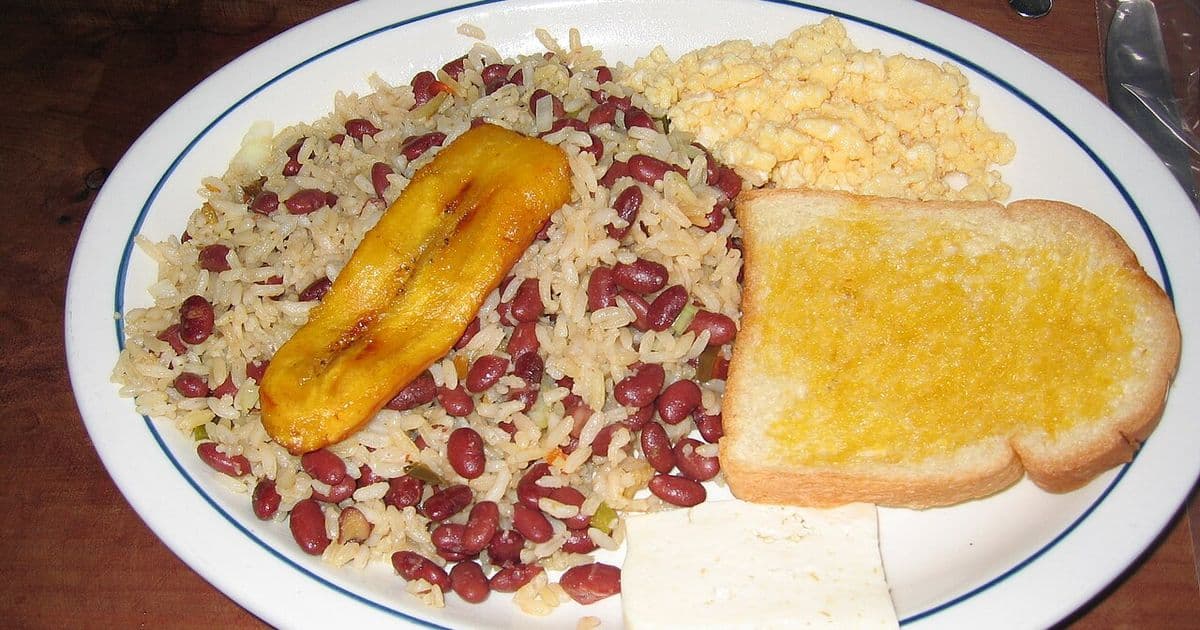
Gallo pinto is Costa Rica's national dish and the cornerstone of the traditional Tico breakfast, combining rice and black beans seasoned with the iconic Lizano sauce, cilantro, and sautéed onions into a simple yet deeply satisfying meal. The name means "spotted rooster" in Spanish, a reference to the speckled black-and-white appearance of the mixed rice and beans. Eaten by millions of Costa Ricans every morning, gallo pinto is as much a cultural institution as it is a meal.
What Is Gallo Pinto?
Gallo pinto is a dish of rice and beans cooked together in a single pan, seasoned with sautéed onions, sweet peppers, cilantro, and the defining ingredient: Salsa Lizano, a mild vegetable-based brown sauce produced in Costa Rica since 1920. The beans used in the Costa Rican version are almost always black beans (frijoles negros), cooked until tender and then mixed with previously cooked white rice and fried together until the rice absorbs the color and flavor of the beans.
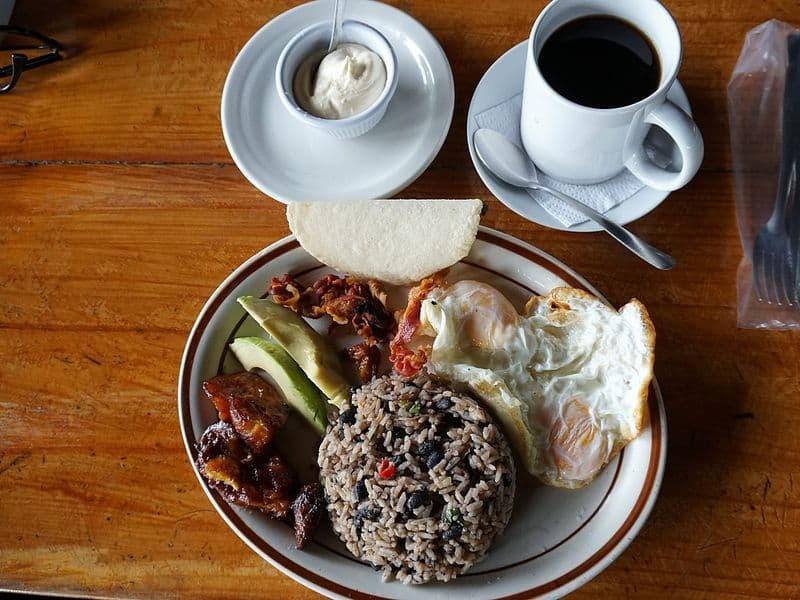
The result is a dish that is savory, slightly sweet from the Lizano, fragrant with cilantro, and satisfying in a deeply nourishing way. It is typically served as the centerpiece of the traditional Costa Rican breakfast (desayuno tipico), alongside fried or scrambled eggs, natilla (Costa Rican sour cream), sweet fried plantains (maduros), fresh white cheese, and a mug of café con leche. This combination, ordered simply as "tipico" at any soda or hotel restaurant, is one of the most beloved breakfasts in Central America.
The name "gallo pinto" — spotted rooster — refers to the speckled appearance of the black beans mixed among the white rice grains, resembling the mottled plumage of a rooster. The dish is recognized as a national symbol of Costa Rican identity and appears in the country's gastronomic heritage in a way that parallels how goulash functions in Hungary or jerk chicken in Jamaica — not just a food, but an expression of national character.
Nutritional Value of Gallo Pinto
Gallo pinto provides a nutritionally complete and well-balanced meal. The combination of rice and black beans creates a complete protein, as the amino acids missing in each food are provided by the other — a dietary principle discovered empirically by generations of subsistence farmers. Black beans are rich in fiber, iron, folate, and antioxidants. The dish is low in fat unless served with eggs and natilla, making it an excellent source of slow-release energy for an active morning. This nutritional profile partly explains why gallo pinto has sustained Costa Rican workers and farmers for generations.
History and Origins of Gallo Pinto
The origins of gallo pinto are debated, and the dispute over the dish's invention is one of the few genuine food rivalries between Costa Rica and Nicaragua, both of which claim it as their national dish. The dish belongs to the broader tradition of rice-and-beans combinations that evolved throughout Latin America and the Caribbean following the Columbian Exchange, when rice introduced by Europeans merged with the indigenous bean cultivation traditions of the Americas.
The earliest documented references to the name "gallo pinto" in Costa Rica appear in the mid-20th century, though rice and beans had been prepared together in the region for much longer. Some food historians suggest the dish became cemented as the national breakfast during the mid-20th century as rice became more affordable and widely available, transforming from a food of scarcity into a beloved comfort meal. The association of gallo pinto with Costa Rican national identity intensified in the second half of the 20th century as the dish became a symbol used in political and cultural discourse about authentic Tico culture.
The addition of Lizano sauce is a distinctly Costa Rican contribution that definitively separates gallo pinto from similar rice-and-bean dishes elsewhere. Lizano was developed and is produced exclusively in Costa Rica, and its incorporation into gallo pinto is so fundamental that many Ticos consider the dish incomplete without it. The sauce's unique flavor profile — mildly sweet, slightly tangy, with a complex vegetable-and-spice base — is irreplaceable in the authentic recipe.
The Costa Rica-Nicaragua Gallo Pinto Rivalry
Both Costa Rica and Nicaragua passionately claim gallo pinto as their national dish, and the dispute has been pursued with considerable seriousness, including Guinness World Record competitions. In 2003, Costa Rica set a record for the largest gallo pinto prepared (half a ton), only for Nicaragua to break it shortly afterward. The two countries' versions differ: Costa Ricans use black beans and Lizano sauce, while Nicaraguans traditionally use red kidney beans and do not use Lizano, resulting in notably different flavors and appearances despite the shared concept.
Traditional Gallo Pinto Recipe and Ingredients
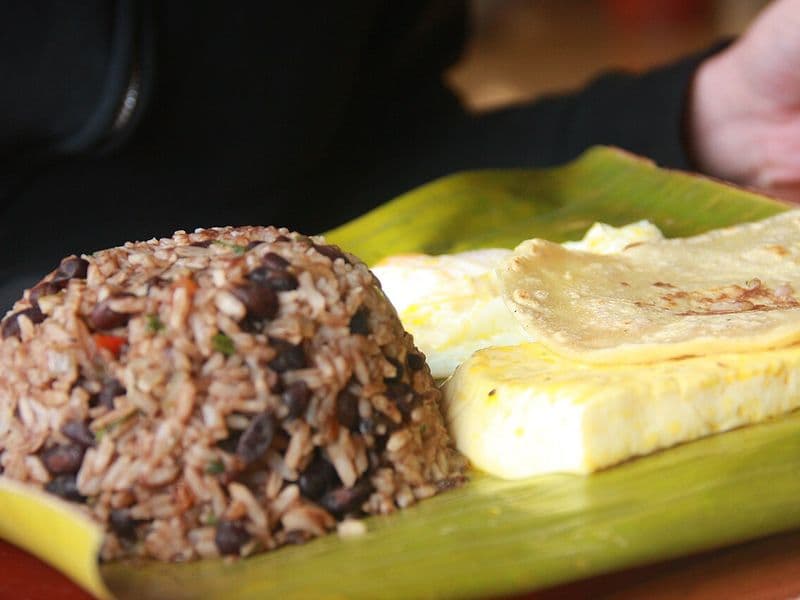
Authentic gallo pinto begins with previously cooked components — it is traditionally made using leftover rice and beans from the previous day, which gives the dish better texture and flavor than freshly cooked ingredients. The rice should be dry and grain-separated, not sticky, and the black beans should be cooked until tender but not mushy, with their cooking liquid reserved.
The cooking process begins with heating oil in a large skillet or wok over medium-high heat, then sautéing finely chopped white onion and sweet red or green pepper until softened and lightly caramelized. The cooked black beans are added with a small amount of their liquid and allowed to heat through, then Lizano sauce (approximately two tablespoons per portion) is stirred in, imparting its characteristic flavor and darkening the beans. The cooked rice is added and folded together with the bean mixture over medium-high heat, allowing the rice to absorb the bean liquid and seasoning while developing a slight crust on the bottom — the coveted "socarrat" effect that gives gallo pinto its best texture.
Fresh cilantro, chopped and stirred in at the last moment, provides brightness and aroma. Salt is adjusted to taste. The finished gallo pinto should be fragrant, slightly firm in texture, uniformly colored a rich brown-black from the beans and Lizano, and generously flavorful without being wet or mushy. Served immediately from the pan, it is at its absolute best.
Essential Ingredients List
The core ingredients for authentic gallo pinto are: cooked white rice (ideally day-old), cooked black beans with some liquid, Salsa Lizano, finely diced white onion, finely diced sweet pepper (red or green), fresh cilantro, vegetable or cooking oil, and salt. Some cooks add garlic, Worcestershire sauce, or a small amount of cumin, but the traditional recipe relies primarily on Lizano for its characteristic flavor. Substituting any other sauce for Lizano produces a different and noticeably less authentic result.
Making Gallo Pinto at Home
Gallo pinto is simple to prepare at home outside Costa Rica, with one significant caveat: Lizano sauce is not widely available in international supermarkets, though it can be ordered online and is found in Latin American grocery stores in many cities with Costa Rican or Central American communities. Without Lizano, some recipes suggest substituting a mixture of Worcestershire sauce, mild hot sauce, and a small amount of molasses, but experienced cooks agree that no substitute fully replicates the authentic flavor. Importing or ordering Lizano is worth the effort for anyone serious about recreating the genuine dish.
Lizano Sauce: The Essential Ingredient
Salsa Lizano is a mild brown sauce produced by the Costa Rican company Lizano (now owned by Unilever) that has been a fixture in Costa Rican kitchens since 1920. It is made from a proprietary blend of vegetables — including carrots, onions, cauliflower, and cucumbers — combined with water, sugar, salt, spices, and a small amount of cumin, turmeric, and mustard. The result is a sauce with a unique flavor profile: mildly sweet, slightly tangy, savory, and subtly spiced, with a smooth, pourable consistency similar to a thin Worcestershire sauce but distinctly different in taste.
Lizano is used throughout Costa Rican cooking beyond gallo pinto. It serves as a table condiment on eggs, meats, and vegetables; as a marinade for chicken and pork; as a flavor base for soups and stews; and as an ingredient in countless home recipes that simply call for a splash of Lizano to add depth and savory character. Its bottle — featuring the distinctive orange-and-brown label — is present on virtually every table in every soda and home kitchen in Costa Rica.
For Costa Ricans abroad, Lizano is one of the most intensely missed tastes of home. Expatriate communities maintain a steady demand for the sauce, and it is frequently included in care packages sent between Costa Rica and Ticos living in the United States, Spain, and elsewhere. The sauce has achieved a cultural significance that transcends its role as a condiment, becoming a tangible symbol of Costa Rican identity and the nostalgia of home cooking.
Lizano Sauce History
Salsa Lizano was created in 1920 in San José by the Lizano family and quickly became a staple of Costa Rican cooking. It was purchased by Unilever in the late 1990s but continues to be produced in Costa Rica using the original recipe. The sauce has been recognized in food heritage discussions as a product of cultural significance, and any proposal to change its recipe or move production outside Costa Rica would likely be met with significant public opposition, such is its status in the national food consciousness.
Gallo Pinto vs. Nicaragua's Version
While both Costa Rica and Nicaragua claim gallo pinto as their national dish, the two versions are distinct enough that knowledgeable eaters can tell them apart immediately. The most important difference is the type of bean: Costa Rican gallo pinto uses black beans, which give the dish a dark, rich color and a creamy texture when mixed with the rice. Nicaraguan gallo pinto traditionally uses red kidney beans, producing a lighter-colored, slightly firmer dish with a different flavor profile.
The second major difference is the use of Lizano sauce, which is specific to the Costa Rican version. Lizano gives the Tico gallo pinto its characteristic mild sweetness and complex savory depth. The Nicaraguan version relies more on onion, garlic, and chili for seasoning, creating a more pungent and spicier character. The proportions of rice to beans also tend to differ, with some regional variations on both sides of the border.
The rivalry over the dish's origin is good-natured but genuine, reflecting the broader sense of friendly competition and distinct national identity between the two neighboring countries. Both dishes are delicious in their own right, and travelers fortunate enough to eat gallo pinto on both sides of the border will appreciate how much two cultures can diverge in their interpretation of what seems like a simple combination of two staple ingredients.
Regional Variations Within Costa Rica
Within Costa Rica itself, minor regional variations in gallo pinto exist. On the Caribbean coast, where Afro-Caribbean culinary traditions are strong, it is common to find gallo pinto made with coconut milk incorporated into the cooking liquid, adding a subtle tropical richness. Some Pacific coast versions include sweet corn or diced vegetables. Home cooks throughout the country have their own family recipes with personal touches, but the fundamental combination of black beans, white rice, Lizano, onion, and cilantro remains the universally recognized template.
Where to Eat Gallo Pinto in Costa Rica
Gallo pinto is available at virtually every soda, hotel breakfast, and traditional restaurant in Costa Rica, making it easy to find and nearly impossible to avoid — which is fortunate, since it is nearly always good. The best versions are found in sodas (family-run traditional restaurants) where the cook has been making the dish the same way for decades, using family-sourced black beans and their own carefully tended Lizano-to-bean ratio developed through years of practice.
For a quintessential gallo pinto experience in San José, the Mercado Central's food stalls serve inexpensive traditional breakfasts. The neighborhood sodas scattered through residential areas of San José, Heredia, Alajuela, and Cartago often serve outstanding versions without tourist markup. In tourist areas like Tamarindo, Manuel Antonio, and La Fortuna, sodas and traditional breakfast spots compete with hotel buffets, but seeking out a local soda invariably produces a more authentic and economical meal.
The true connoisseur's approach to gallo pinto in Costa Rica is to eat it in someone's home. If invited to a Tico household for breakfast, the gallo pinto served will almost certainly be made from scratch with beans cooked the previous day, using family-specific seasoning proportions that have been adjusted and refined over generations. This version, eaten at a family table with the accompanying eggs, plantains, and natilla, represents the dish at its most meaningful and delicious.
Hotel Breakfast Gallo Pinto
Even budget hotels and hostels throughout Costa Rica include gallo pinto in their breakfast offerings, reflecting the dish's status as the expected foundation of the morning meal. Quality varies: large resort buffets may serve a serviceable but mass-produced version, while small B&Bs operated by Costa Rican families often serve excellent homemade versions. When quality matters, asking your host whether the gallo pinto is homemade (hecho en casa) is a good indicator of what to expect.
Gallo Pinto Beyond Breakfast
While gallo pinto is primarily associated with breakfast in Costa Rican culture, it appears in other meal contexts as well. At lunch and dinner, rice and beans may be served separately rather than mixed together, but leftover gallo pinto from breakfast is commonly reheated and eaten alongside other foods at any time of day in home kitchens. The dish keeps well and reheats easily, making it practical for busy households.
Gallo pinto also appears as a component of the full casado lunch plate at many sodas, where it functions as the rice-and-bean side rather than being served as a separate breakfast item. In this context it is usually simpler — the beans and rice mixed together without the full complement of herbs and seasoning used in the breakfast version — and serves as a satisfying starchy base for the protein and vegetables of the main meal.
Creative chefs in San José's upscale restaurant scene have incorporated gallo pinto into fusion dishes, serving it as a base for gourmet preparations or deconstructing it into modern presentations. While these interpretations are interesting, they exist at a considerable cultural distance from the simple, honest, and deeply satisfying bowl of gallo pinto that is set before a hungry Tico at seven in the morning. It is in that humble context that the dish fully reveals its genius.
Gallo Pinto in Costa Rican Identity
The phrase "somos más Ticos que el gallo pinto" (we are more Tico than gallo pinto) is used to express the deepest level of Costa Rican identity and pride. The dish has become a cultural shorthand for authentic Tico-ness in a way that no other food has. Political campaigns reference it, songs are written about it, and Costa Rican emigrants abroad cite it as one of the foods they miss most from home. This level of cultural embedding — a simple rice and bean dish as a national symbol — is a remarkable testament to the power of food in cultural identity formation.
Frequently Asked Questions
What is gallo pinto in Costa Rica?
Gallo pinto is Costa Rica's national dish — a mixture of cooked white rice and black beans sautéed together in a pan with onion, sweet pepper, cilantro, and Lizano sauce. It is the traditional Costa Rican breakfast and is eaten daily by millions of Ticos alongside eggs, natilla, and plantains.
What makes Costa Rica's gallo pinto different from Nicaragua's?
Costa Rican gallo pinto uses black beans and the iconic Lizano sauce, giving it a dark color and mildly sweet, complex flavor. Nicaraguan gallo pinto uses red kidney beans and does not use Lizano, producing a lighter-colored dish with a more pungent, garlicky character. Both countries claim the dish as their national food.
What is Lizano sauce and why is it important for gallo pinto?
Salsa Lizano is a mild brown vegetable-based sauce produced in Costa Rica since 1920. It is the defining ingredient of authentic Costa Rican gallo pinto, imparting a distinctive mildly sweet, savory, and slightly tangy flavor that cannot be replicated with any substitute. Without Lizano, the dish tastes fundamentally different.
Can I make gallo pinto at home outside Costa Rica?
Yes, gallo pinto is straightforward to make at home using cooked black beans, day-old white rice, onion, cilantro, and Lizano sauce. The main challenge is sourcing Lizano, which is not widely available in standard supermarkets outside Latin America but can be ordered online or found in specialty Latin grocery stores.
Is gallo pinto healthy?
Yes, gallo pinto is nutritious. Black beans and rice together form a complete protein, covering all essential amino acids. Black beans are high in fiber, iron, and antioxidants. The dish is low in fat when prepared without added oils or heavy accompaniments. It provides sustained energy and is one reason the traditional Costa Rican breakfast is considered a healthy and filling meal.