
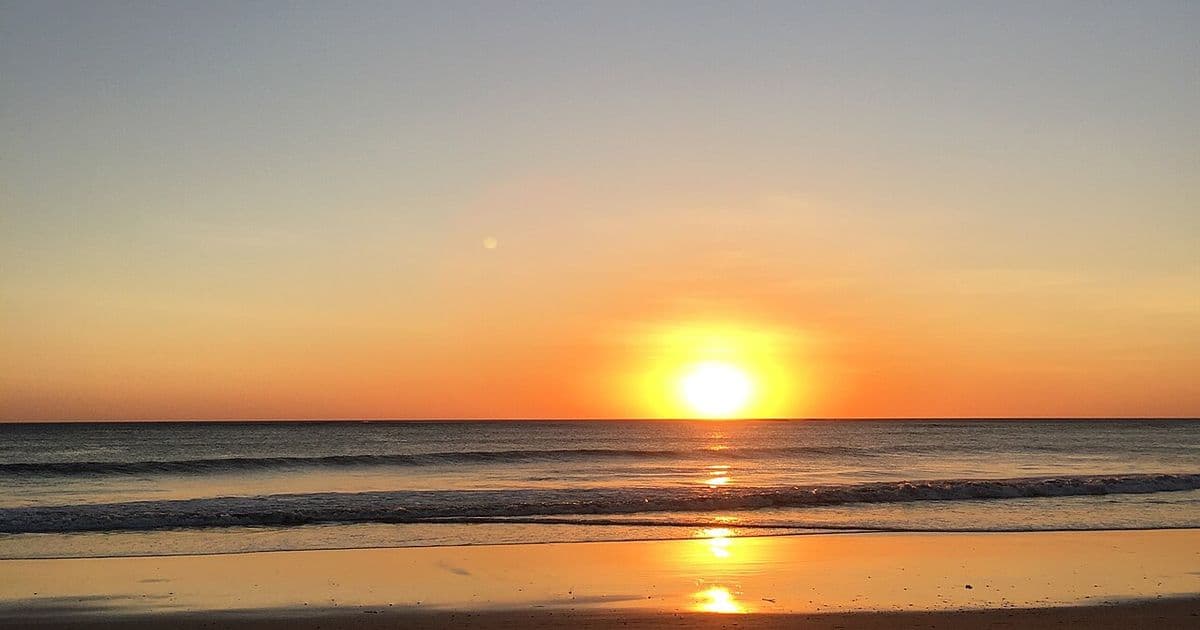
Playa Grande Costa Rica: Leatherback Turtles and Wild Surf in Guanacaste
Playa Grande is a long, dramatic Pacific beach in northern Guanacaste, Costa Rica, best known as one of the most important nesting sites for the critically endangered Leatherback sea turtle in the Eastern Pacific. Protected as part of Las Baulas National Marine Park, the beach stretches approximately 4 kilometers alongside the Tamarindo estuary and receives consistent Pacific surf that makes it a beloved surf destination as well as a world-class ecotourism site. The combination of wild beach, nesting turtles, and reliable surf gives Playa Grande a dual identity that attracts both dedicated surfers and wildlife enthusiasts.
Overview of Playa Grande and Las Baulas National Park
Playa Grande is located just north of Tamarindo in the Santa Cruz canton of Guanacaste, separated from Tamarindo by the Tamarindo Estuary — a biologically rich mangrove estuary that empties into the Pacific Ocean. The beach itself is a wide, exposed stretch of dark-golden sand approximately 4 kilometers long, facing west into the open Pacific and receiving consistent swell year-round. Unlike the relatively calm water at some Guanacaste beaches, Playa Grande is characterized by moderate to heavy surf that makes it unsuitable for casual swimming but excellent for surfing.
The beach and adjacent mangrove estuary are protected as Las Baulas National Marine Park (Parque Nacional Marino Las Baulas), established in 1995 primarily to protect the Leatherback sea turtle nesting habitat. The park encompasses both the beach itself and a significant offshore marine zone, and it is jointly managed by the Costa Rican Ministry of Environment (MINAE) and the Sistema Nacional de Áreas de Conservación (SINAC). Park management involves a careful balance between protecting the critically important turtle nesting environment and allowing sustainable tourism and the small residential community that exists adjacent to the beach.
The village of Playa Grande is tiny — little more than a handful of hotels, restaurants, and surf shops strung along the road behind the beach. This limited development is partly a consequence of the park's protective designation, which restricts new construction in buffer zones around the beach. The result is a pleasingly uncrowded, authentic atmosphere quite different from the busy resort town of Tamarindo just across the estuary.
Las Baulas National Marine Park
Las Baulas National Marine Park was established specifically to protect the Leatherback sea turtle nesting habitat at Playa Grande and the adjacent Playa Langosta and Playa Ventanas. The park also protects the Tamarindo mangrove estuary, one of the most important mangrove systems on the Pacific coast of Costa Rica, and a significant offshore marine zone that includes the sea turtles' feeding and migration corridors. The park's terrestrial area encompasses approximately 445 hectares of beach and adjacent dry forest, while the marine zone covers nearly 22,000 hectares of ocean.
Tamarindo Estuary
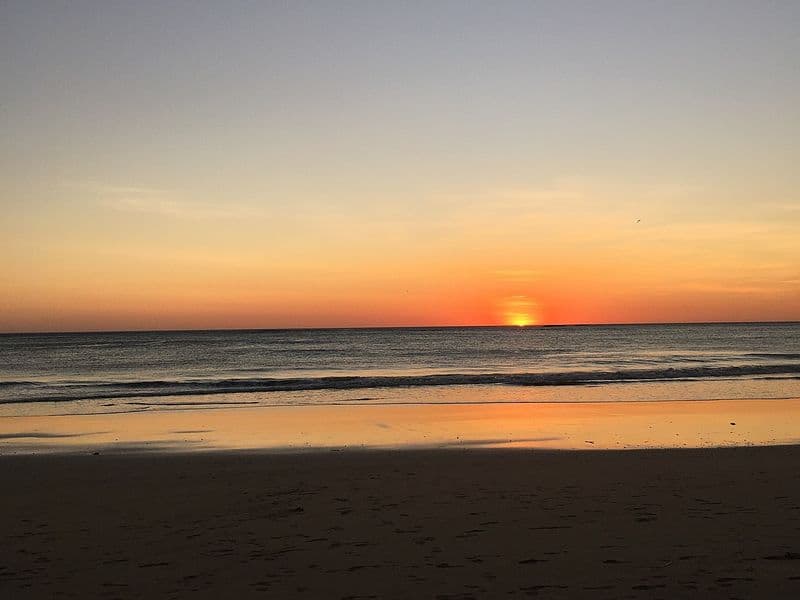
The Tamarindo Estuary, which separates Playa Grande from Tamarindo town, is a significant ecological feature in its own right. The mangrove-lined estuary supports crocodiles, dozens of bird species including various herons, kingfishers, and the Boat-billed heron, and serves as a nursery for numerous fish species. Guided kayak and boat tours through the estuary are available from both Tamarindo and Playa Grande, offering excellent wildlife viewing and a unique perspective on the transition between freshwater and marine ecosystems. The estuary also provides the dramatic sunset views that make the crossing between Tamarindo and Playa Grande by boat such a memorable experience.
Leatherback Sea Turtle Nesting at Playa Grande
The Leatherback sea turtle (Dermochelys coriacea) is the world's largest reptile, with adults regularly reaching 2 meters in length and weighing up to 900 kilograms. Once abundant throughout the world's oceans, the Leatherback has experienced catastrophic population declines in the Eastern Pacific over recent decades, primarily due to egg poaching, bycatch in commercial fishing operations, plastic pollution, and coastal development. Playa Grande has historically been one of the most important Leatherback nesting beaches in the Eastern Pacific, and conservation efforts centered on the beach are considered critical to the species' survival in this ocean basin.
Nesting season at Playa Grande runs from approximately October through February, with peak nesting activity typically occurring in November and December. Female Leatherbacks come ashore at night to excavate nest chambers in the beach sand and lay clutches of approximately 80-100 golf-ball-sized eggs. A single female may nest multiple times during a season, returning to the same beach every 9-10 days. The nesting process takes 1-2 hours from the time the turtle emerges from the surf to when she returns to the ocean, and the entire event is conducted in darkness — Leatherbacks are disturbed by artificial light and noise.
Turtle watching at Playa Grande is strictly regulated by the national park. Access to the nesting beach at night is permitted only with an authorized guide, in small groups, and using only dim red-filtered lights. Visitors must remain behind the turtle at all times and cannot touch, flash photograph, or create noise near nesting animals. The turtle watching program generates revenue that directly funds beach patrols, nest monitoring, and community conservation education. Advance reservations for turtle watching are strongly recommended during the peak November-December nesting season, as demand significantly exceeds availability.
Conservation Status and Population Trends
The Leatherback sea turtle is classified as Vulnerable on the IUCN Red List globally, but the Eastern Pacific subpopulation is considered Critically Endangered. Nesting numbers at Playa Grande have fluctuated dramatically over the decades — at peak in the late 1980s, over 1,000 nests were recorded in a single season. Recent seasons have seen significantly lower numbers, though improved enforcement, reduced egg poaching, and fishing regulation changes have shown some positive signs. Research coordinated through the Leatherback Trust and collaborating institutions monitors nesting at Playa Grande annually, providing crucial long-term population data.
Booking Turtle Watching Tours
Turtle watching tours at Playa Grande are managed by the national park and authorized local operators. Tours begin in the evening, with visitors gathering at the park visitor center to wait for radio or phone confirmation from beach monitors that a turtle has emerged. Wait times are unpredictable — sometimes a turtle comes ashore within an hour of arrival, other times visitors may wait 3-4 hours or not see a turtle at all if none emerge that night. Guaranteed sightings cannot be promised, as the turtles operate on their own schedule. The experience of seeing a massive Leatherback emerge from the night surf to nest is considered by many wildlife watchers to be among the most extraordinary natural history encounters available anywhere in the world.
Surfing at Playa Grande
Playa Grande has been a well-regarded surf destination in Guanacaste for decades, offering beach break waves across its 4-kilometer length that accommodate a range of skill levels. The beach receives consistent south and northwest swell, and the extensive shoreline means that uncrowded peaks are usually available even during busy periods — a significant advantage over the more compact surf breaks at nearby Tamarindo.
The surf at Playa Grande is generally best during the rainy season from May through November, when South Pacific swells push consistent medium-sized waves toward the beach. During the dry season (December through April), the surf can be less consistent but is often cleaner in the mornings when offshore winds create smooth wave faces. Wave size typically ranges from 1-2 meters on average days to 2.5-3 meters during larger swells.
Unlike Tamarindo, where the main surf break is directly in front of the town and subject to both crowds and beginner surf school students, Playa Grande offers a more authentic, less crowded surf experience. The beach has no large hotels or shops directly on the sand, and the limited infrastructure creates a natural filter that keeps the lineups less congested. Local surf operators rent boards and offer lessons in the calmer sections of the beach, but the atmosphere is decidedly lower-key than at Costa Rica's busier surf towns.
Surf Access and Conditions
The surf at Playa Grande can be accessed from multiple points along the beach. The northern end near the park entrance tends to have more consistent peaks, while the central section offers the most beginner-friendly conditions during smaller swells. The southern end, closest to the Tamarindo Estuary, has more powerful and shifty peaks due to the interaction of currents from the estuary mouth. During the October-February turtle nesting season, beach access at night is restricted and regulated, but daytime surfing access remains unrestricted. Surfers should be aware that the park staff actively patrols the beach during nesting season and that any disturbance of nesting turtles carries serious legal penalties.
Getting to Playa Grande
Playa Grande is located in Guanacaste province, approximately 250 kilometers northwest of San José and about 40 kilometers from Liberia's Daniel Oduber Quirós International Airport (LIR). The drive from Liberia takes approximately 45-60 minutes on well-paved roads through the town of Huacas and then south toward Matapalo and the Playa Grande access road.
The most distinctive way to arrive at Playa Grande from Tamarindo is by taking the short boat crossing across the Tamarindo Estuary. This boat service, operated by local boatmen, runs frequently during daylight hours and takes about 5 minutes, depositing passengers directly on the southern end of Playa Grande beach. The crossing costs a few hundred colones and is a memorable way to arrive, offering good views of the mangrove estuary and its wildlife. A longer land route around the estuary via Matapalo and Huacas is also possible but adds considerable driving time from Tamarindo.
From San José, the most convenient access is either driving the Inter-American Highway northwest to Liberia and then south to Playa Grande (approximately 4 hours total), or flying into Liberia's international airport and renting a car or taking a taxi. Domestic flights from San José's Tobías Bolaños Airport to Tamarindo's local airstrip take about 45 minutes, after which the estuary boat crossing provides access to Playa Grande in minutes.
Tamarindo Estuary Boat Crossing
The estuary boat crossing from Tamarindo to Playa Grande is an experience in itself. Small motorized wooden boats operated by local boatmen depart from the dock at the southern end of Tamarindo beach throughout the day, transporting passengers, surfboards, and groceries across the short but scenically rich waterway. The crossing takes 5-10 minutes and passes through the mangrove-lined estuary mouth, with frequent wildlife sightings including crocodiles, herons, and kingfishers. The service is informal — simply show up at the dock and a boat will depart when there are enough passengers. Prices are low and negotiated directly with the boatman.
Where to Stay at Playa Grande
Accommodation at Playa Grande is intentionally limited due to the national park's development restrictions in the buffer zone surrounding the beach. The handful of hotels that exist here have been operating for many years and represent the existing grandfathered properties; new hotel construction directly adjacent to the beach is not permitted under current park regulations. This limited accommodation supply means that properties at Playa Grande are typically booked well in advance during peak turtle-watching season (November-January).
The Hotel Las Tortugas is the longest-established hotel at Playa Grande and is located directly on the beach at the southern end, adjacent to the park entrance. Founded by Louis Wilson, a pioneering advocate for Leatherback turtle conservation who was instrumental in the establishment of Las Baulas National Park, the hotel maintains a strong environmental ethos. Rooms are comfortable and unpretentious, and the hotel's staff can facilitate turtle watching tour reservations and surfboard rentals. The on-site restaurant prepares solid Costa Rican food with an emphasis on fresh local ingredients.
Several other small hotels and bed-and-breakfasts operate in the community behind the beach, offering a range of options from budget rooms to well-appointed boutique properties. For travelers wanting more extensive amenities and services, Tamarindo's numerous hotels are accessible by the short estuary crossing, and many visitors choose to stay in Tamarindo and visit Playa Grande for surfing and turtle watching as day or evening excursions.
Hotel Las Tortugas
Hotel Las Tortugas holds a unique place in the history of conservation at Playa Grande, having been founded by an early champion of Leatherback turtle protection at the beach. The hotel's proximity to the national park entrance and its direct beach access make it the most convenient base for turtle watching tours, and staff are exceptionally knowledgeable about both sea turtle biology and conservation history at the site. The property has a swimming pool, surfboard storage and rental, and a comfortable open-air bar and restaurant. Reservations during November-February nesting season should be made several months in advance.
Wildlife and Ecosystems at Playa Grande
Beyond the Leatherback sea turtles that define Playa Grande's international reputation, the beach and surrounding ecosystems support a diverse array of wildlife year-round. The Tamarindo Estuary to the south is one of the most biologically productive estuaries on the Pacific coast, with dense mangrove forests supporting American crocodiles, numerous heron species, Boat-billed herons, various kingfisher species, ospreys, and Black hawk species. The mangroves also serve as nursery habitat for fish, crustaceans, and invertebrates that support the broader coastal food web.
The tropical dry forest adjacent to the beach and along the access road to Playa Grande is part of the Las Baulas National Park buffer zone and provides habitat for White-faced capuchin monkeys, howler monkeys, coatis, white-tailed deer, iguanas, and numerous bird species. Scarlet macaws, while less common here than at some other Pacific locations, are occasionally seen flying over the area. The dry season transformation of the forest — from bare, skeletal dry-season trees to lush green rainy-season growth — is one of the most visually dramatic natural events in Guanacaste.
In the ocean off Playa Grande, the park's marine zone protects feeding and migration corridors used by sea turtles, as well as reef fish communities on the offshore rock and reef formations. Pacific Bottlenose dolphins are frequently seen in the bay, and Humpback whale sightings are possible during migration periods from January through March and July through October. The park's comprehensive protection of both terrestrial and marine habitats makes it one of the most ecologically complete protected areas on the Pacific coast.
Olive Ridley Turtles at Playa Grande
While Playa Grande is most famous for Leatherback nesting, Olive Ridley sea turtles also nest at the beach in smaller numbers throughout the year. Olive Ridleys are significantly smaller than Leatherbacks — adults typically weigh 35-50 kilograms compared to the Leatherback's 500-900 kilograms — and their nesting behavior differs in that they often participate in synchronized mass nesting events called "arribadas." Olive Ridley nesting at Playa Grande occurs at lower levels than at dedicated Olive Ridley beaches like Ostional and Nancite, but provides additional interest for wildlife observers visiting during non-Leatherback season.
Tips for Visiting Playa Grande
The most important advance preparation for a Playa Grande visit is booking turtle watching tours early if visiting during Leatherback nesting season (October through February, peak November-December). The national park limits the number of visitors permitted on the beach each night to minimize disturbance to nesting turtles, and demand far exceeds this capacity during peak months. Contact the park visitor center directly or book through an authorized local tour operator in Tamarindo or Playa Grande well before arrival.
The turtle watching experience requires patience and flexibility. Tours begin in the early evening with a briefing at the visitor center, and the actual beach walk to observe a turtle happens only when park monitors radio in that a turtle has emerged. Wait times vary from under an hour to 3-4 hours or more, and there is always a possibility of a night with no turtle sightings, particularly at the start and end of the nesting season. Bring warm clothing for the evening (temperatures drop and sea breezes can be cool), insect repellent, water, and snacks for the wait. Do not bring flashlights — park guides provide dim red-filtered lights as needed.
For surfing, check the tide tables before heading to the beach. The best surf conditions at Playa Grande typically occur around mid-tide on an incoming or outgoing tide rather than at dead high or low tide. Early morning sessions take advantage of the calmer winds and fewer crowds. Surf reports for Playa Grande are available through multiple online platforms and apps, and local surf shops near the beach can provide current condition updates. During turtle nesting season, be mindful that certain sections of the beach may have additional overnight restrictions to protect nest sites.
Visiting Las Baulas National Park
The Las Baulas National Park visitor center is located at the southern access point to Playa Grande beach and is open daily. Day visitors can enter the beach area during daylight hours for a nominal entrance fee. The visitor center has informational displays about Leatherback sea turtle biology and conservation, research conducted at the park, and the history of turtle protection efforts at Playa Grande. For nighttime turtle watching, the visitor center coordinates the registration and queuing system for authorized tour groups. The park staff can also provide information about guided nature walks through the adjacent dry forest and kayak tours of the mangrove estuary.
Frequently Asked Questions
Can I see Leatherback sea turtles at Playa Grande?
Yes, but only during the nesting season from October through February, with peak activity in November and December. Nighttime turtle watching is permitted only with an authorized park guide in small groups, using strict no-light protocols. Advance reservations are essential during peak season, as the park limits nightly visitors. Sightings are not guaranteed on any given night, as the turtles nest on their own schedule, but the success rate during peak months is high.
How do I get from Tamarindo to Playa Grande?
The quickest and most scenic route from Tamarindo to Playa Grande is the 5-10 minute boat crossing across the Tamarindo Estuary. Local boatmen operate this service from the dock at the southern end of Tamarindo beach throughout daylight hours. A longer land route via Matapalo and Huacas is also possible by car or taxi and takes 20-30 minutes. Many visitors staying in Tamarindo make the boat crossing as part of day trips for surfing and turtle watching at Playa Grande.
Is Playa Grande good for swimming?
Playa Grande is not ideal for casual swimming due to consistent Pacific surf and variable rip currents. The beach is primarily a surfing destination, and non-surfers typically visit for wildlife watching, the turtle program, and beach walks rather than swimming. Visitors seeking safe swimming should consider the calmer beaches in the Tamarindo and Flamingo areas. The closest safe swimming beach is Playa Tamarindo, accessible by boat across the estuary.
Is there parking at Playa Grande Costa Rica?
Yes, there is a public parking area near the Las Baulas National Park visitor center at the southern access point to Playa Grande. Parking is free or very low cost for day visitors. The road to Playa Grande from the main Guanacaste highway is paved and accessible by standard passenger vehicles in dry season; four-wheel drive is recommended during the rainy season when portions of the access road can be muddy.
What is the best time of year to visit Playa Grande?
For Leatherback turtle watching, November and December are the peak months, combining the best chance of seeing turtles with dry season weather. For surfing, the rainy season months of May through October offer the most consistent and powerful waves. For a general beach visit with reliable sunshine and lower humidity, January through April is the best period, though turtle watching opportunities are diminishing by late January. The shoulder months of October and November offer the unique combination of good weather, peak turtle nesting, and reasonable dry-season conditions.