
Arenal Costa Rica: The Volcano, Hot Springs, and Adventure Capital
Arenal is one of Costa Rica's most iconic and consistently visited destinations, built around the majestic Arenal Volcano that dominates the landscape of the northern lowlands. The region encompasses the town of La Fortuna de San Carlos, Lake Arenal, Arenal Volcano National Park, and a surrounding zone of tropical rainforest, rivers, and world-class thermal hot springs. For travelers seeking a blend of natural wonder, outdoor adventure, and relaxing spa experiences, Arenal delivers an unparalleled combination of attractions in a single destination.
Arenal Volcano: An Overview
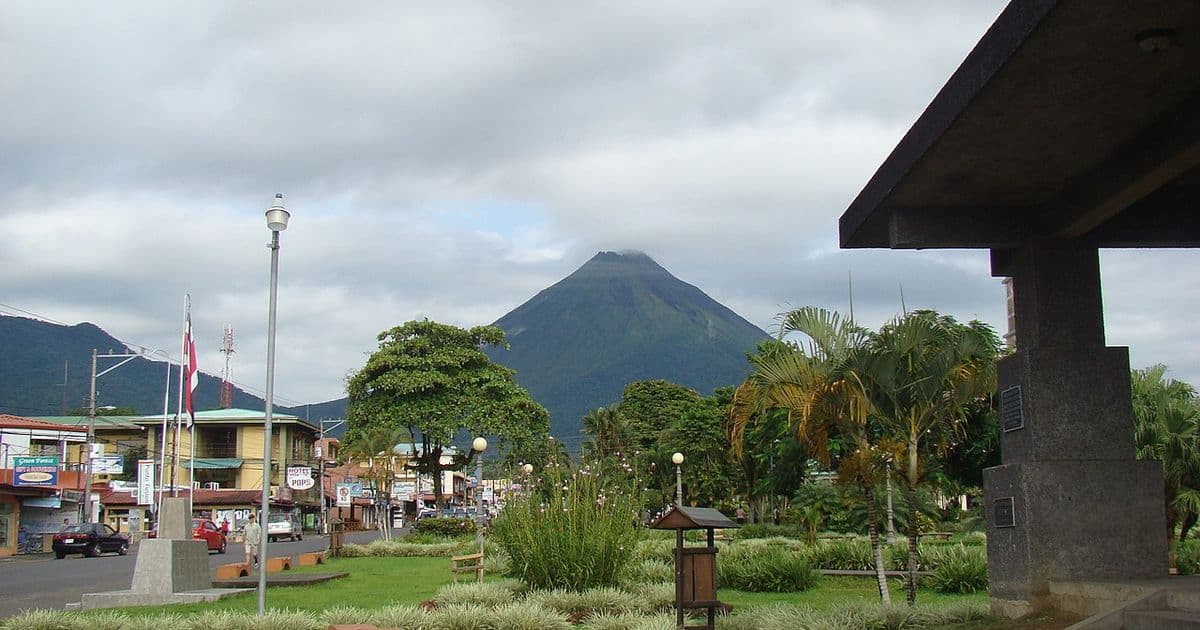
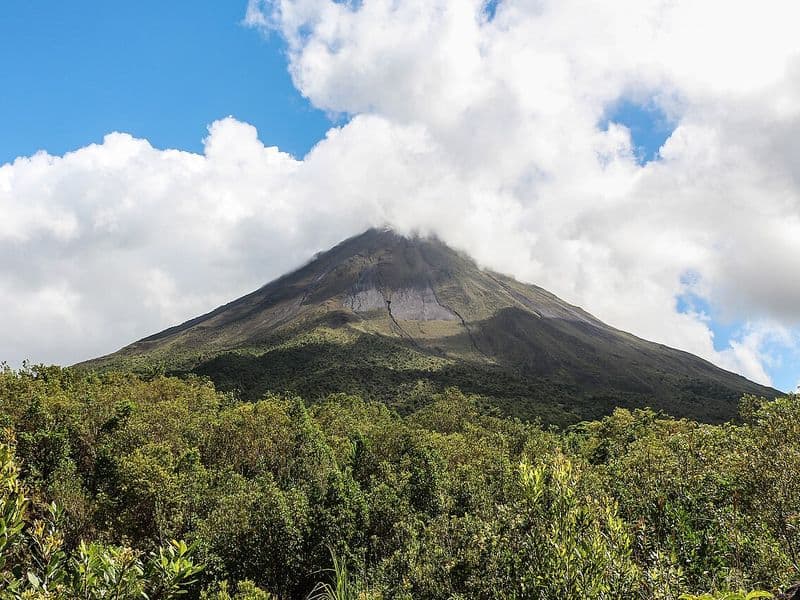
Arenal Volcano is one of Costa Rica's most recognizable landmarks, a near-perfectly conical stratovolcano rising 1,670 meters above sea level in the northern lowlands of Alajuela Province. For nearly 40 years between 1968 and 2010, Arenal was one of the world's most continuously active volcanoes, producing regular lava flows, ash eruptions, and the dramatic glow of hot lava that made it a nighttime spectacle visible from La Fortuna.
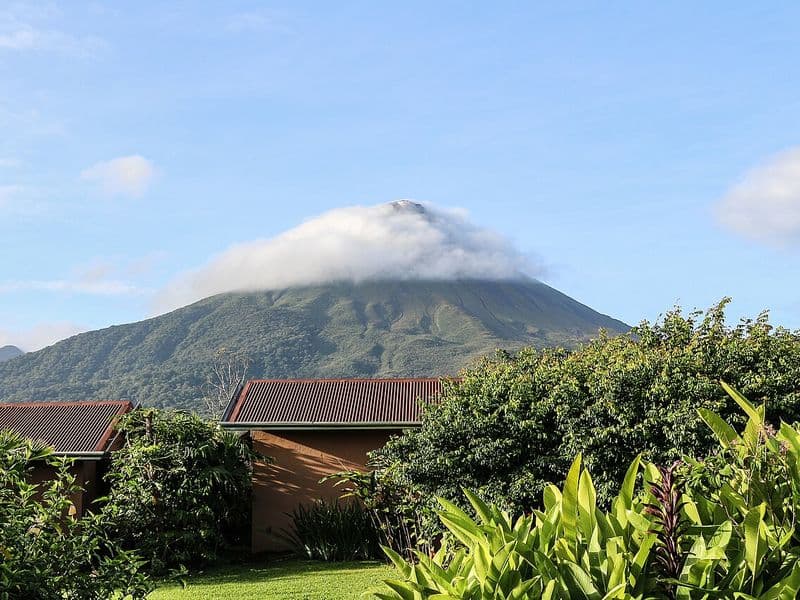
Since entering a period of relative quiet in 2010, Arenal no longer produces visible lava flows, but it remains volcanically active with ongoing seismic activity and occasional steam and gas emissions. On clear days, the symmetrical cone makes an extraordinary backdrop visible from throughout the region, though cloud cover frequently obscures the summit, particularly during afternoon hours and the rainy season.
Arenal Volcano National Park protects 12,016 hectares of rainforest, lava fields from the 1968 eruption, and the volcano's flanks. The park offers hiking trails of varying difficulty, from easy walks through old lava fields to more challenging climbs toward the volcanic cone. A mandatory certified guide accompanies visitors on all trails within the park.
The 1968 Eruption
The 1968 eruption of Arenal was a catastrophic event that killed approximately 87 people in the villages of Tabacon, Pueblo Nuevo, and San Luis. The eruption created a 6-kilometer wide blast zone on the western flank and produced lava flows that buried several communities. The event transformed what had been considered an extinct mountain into an internationally recognized active volcano.
La Fortuna: The Gateway Town
La Fortuna de San Carlos is the main town serving the Arenal region and one of the most visitor-friendly tourist destinations in Costa Rica. Located approximately 12 kilometers from the base of the volcano, La Fortuna has developed from a small farming community into a well-equipped tourist hub with hundreds of hotels, restaurants, tour operators, pharmacies, ATMs, and visitor services.
The town's central park is overlooked by a charming Catholic church with the volcano as a backdrop on clear days, creating one of the most photographed views in Costa Rica. La Fortuna's main street is lined with restaurants serving everything from traditional Costa Rican casados to international cuisine, and the evening atmosphere is lively with travelers sharing stories from the day's adventures.
Despite its tourist development, La Fortuna retains a friendly, small-town character. Local families continue farming the surrounding plains, and the town functions as a commercial center for the broader region as well as a tourist hub. This dual identity gives La Fortuna an authenticity that more resort-oriented destinations sometimes lack.
La Fortuna Waterfall
One of the most spectacular natural attractions near La Fortuna is the Catarata del Rio Fortuna, a 70-meter waterfall surrounded by lush rainforest. Reached via a well-maintained 500-meter trail with steep stairs descending to the plunge pool, the waterfall is swimming-accessible and offers one of the most dramatic natural swimming hole experiences in Costa Rica. The site is managed as a local community project.
Hot Springs in Arenal
The geothermal activity of Arenal Volcano heats underground water that emerges in numerous thermal springs throughout the region, creating one of Costa Rica's signature experiences. Hot springs resorts range from the luxurious Tabacon Grand Spa Thermal Resort, with elaborate landscaped pools amid rainforest gardens, to more affordable public and semi-public springs accessible on smaller budgets.
Tabacon Thermal Resort, located on the Tabacon River flowing from the volcano's flanks, is the most famous hot springs destination in Costa Rica. Its multiple pools of varying temperatures (ranging from tepid to very hot) are landscaped to blend seamlessly with the surrounding rainforest, creating a genuinely spectacular natural spa environment. Guests can book day passes or evening access, which is particularly magical when the lit pools are surrounded by the sounds of the jungle at night.
Baldi Hot Springs is a larger, more resort-style complex with 25 pools, waterslides, restaurants, and swim-up bars. It is the most visited hot springs facility in the area, offering good value for those who prefer a more active, social spa experience. Smaller springs like Eco Termales, The Springs Resort, and Los Lagos offer more intimate environments with caps on visitor numbers for a quieter soak.
Evening Hot Springs Experience
Visiting Arenal's hot springs in the evening is a magical experience, particularly on nights when the volcano is visible with its illuminated steam plume above. The combination of warm thermal waters, jungle sounds, star-filled skies (weather permitting), and the occasional volcanic rumble creates an ambiance unique to this part of Costa Rica. Most hot springs offer evening entry packages that include dinner.
Budget Hot Springs Options
Budget travelers can access thermal waters at lower cost through several options. The Tabacon River itself has free sections accessible from the road, and local tour operators organize visits to smaller, less-marketed springs at competitive prices. Arenal Oasis Eco Lodge and similar smaller properties offer thermal pools to their guests without the crowds of the major resorts.
Adventure Activities Near Arenal
The Arenal region is Costa Rica's most concentrated hub for outdoor adventure activities. Zip-lining through the rainforest canopy is available at multiple operators around La Fortuna, with the Sky Adventures Park offering one of the country's most extensive canopy tour systems with cables ranging up to 750 meters in length suspended above the jungle.
White-water rafting on the Balsa, Toro, and Sarapiqui rivers provides exhilarating Class II through Class IV rapids accessible from La Fortuna. The Sarapiqui River in particular offers a spectacular jungle float through remote rainforest habitat where sightings of howler monkeys, caimans, and toucans from the water are common. Rafting tours from La Fortuna are well-organized and cater to all experience levels.
Canyoneering and waterfall rappelling are specialty adventure activities available near Arenal that involve descending alongside waterfalls using ropes and harnesses. Mountain biking, ATV tours, kayaking on Lake Arenal, stand-up paddleboarding, and horseback riding through the volcanic landscape round out an adventure menu that can fill a week of daily activity without repetition.
Hanging Bridges Walk
The Mistico Arenal Hanging Bridges Park and similar operations offer suspended bridge walks through the rainforest canopy at heights of up to 70 meters. These slow, non-adrenaline experiences are ideal for wildlife observation, as guides identify birds, reptiles, and plants from the elevated perspective of the bridges. They are particularly recommended for families and those who prefer a gentle forest immersion over high-speed adventure.
Lake Arenal and Hanging Bridges
Lake Arenal is Costa Rica's largest lake, a 85-square-kilometer reservoir created in 1979 by the expansion of a hydroelectric dam that supplies a significant portion of Costa Rica's electricity. The lake's western end near the town of Nuevo Arenal and the Tilaran region is known for consistent strong winds that make it one of the world's premier windsurfing and kitesurfing destinations, attracting enthusiasts from across the globe, particularly between December and March.
The lake's shores offer scenic drives, kayaking, fishing for guapote (rainbow bass), and birdwatching. Several small restaurants and hostels along the lake's northern shore between La Fortuna and Nuevo Arenal cater to cyclists, motorcyclists, and road trippers exploring the Arenal loop, one of Costa Rica's most scenic driving routes.
The town of Nuevo Arenal, on the lake's western shore, was itself relocated when the original Arenal was flooded by the reservoir expansion in 1979. It is a pleasant, quiet community popular with North American and European expatriates, offering several good restaurants and a starting point for exploring the Tilaran mountains and the Gulf of Nicoya's north shore.
Windsurfing and Kitesurfing at Lake Arenal
The western end of Lake Arenal near the town of Tilaran generates some of the most consistent wind in the Americas, with average wind speeds of 30 to 50 kilometers per hour during the December to March peak season. Bahia Azul and other lake-side operations provide board rentals and lessons for all skill levels. The combination of warm temperatures, consistent wind, and dramatic volcanic scenery makes this a world-class wind sports destination.
Wildlife and Nature in the Arenal Region
The Arenal region's diverse habitats, which range from lowland rainforest and riparian corridors to the cloud forests of the Monteverde Conservation Area visible on the ridge to the southwest, support exceptional biodiversity. The Children's Eternal Rainforest (Bosque Eterno de los Ninos), the largest private forest reserve in Central America at over 22,000 hectares, borders the Arenal region and protects critical wildlife corridors.
Wildlife commonly seen around La Fortuna and within Arenal Volcano National Park includes all four Costa Rican monkey species (howler, white-faced capuchin, spider, and squirrel monkeys), two-toed and three-toed sloths, tapirs, coatis, agoutis, and an extraordinary range of bird species including toucans, trogons, hummingbirds, and the rare great green macaw. Cano Negro National Wildlife Refuge, about 1.5 hours north of La Fortuna, is one of the best birding destinations in Central America, with over 300 species recorded including migratory species that overwinter there.
Cano Negro Wildlife Refuge
Cano Negro National Wildlife Refuge in the Nicaraguan border region is accessible as a day trip from La Fortuna. Boat tours through the refuge's river and wetland systems provide extraordinary wildlife encounters including caimans, river otters, roseate spoonbills, jabiru storks, and dozens of heron, kingfisher, and duck species. This tour is among the region's best-kept secrets for serious wildlife observers.
Getting to Arenal and When to Visit
La Fortuna is approximately 180 kilometers from San Jose, a journey that takes roughly 3 to 3.5 hours by car via Route 702 through Ciudad Quesada (San Carlos), which is the most direct paved route. The road quality is generally good, though some sections are winding and mountainous. Shuttle services operating between San Jose, Monteverde, and La Fortuna provide comfortable shared transport without the hassle of self-driving.
An alternative and extremely scenic route involves the jeep-boat-jeep transfer from Monteverde to La Fortuna across Lake Arenal, a journey that takes about 3 hours and saves considerable driving time while offering beautiful lake views. This is one of the most popular transport connections in Costa Rica among travelers combining Monteverde and Arenal on the same trip.
Arenal can be visited year-round, but the dry season (December through April) offers the best chance of clear views of the volcano and more reliable weather for outdoor activities. The rainy season (May through November) brings lush vegetation, fewer tourists, lower prices, and continued excellent wildlife activity, but afternoons frequently involve significant rainfall and cloud cover that can obscure the volcano for days at a time.
Jeep-Boat-Jeep Transfer
The jeep-boat-jeep transfer between La Fortuna and Monteverde is an iconic Costa Rican travel experience. A 4WD vehicle carries passengers from La Fortuna to the Lake Arenal dock, a scenic boat crosses the lake with views of the volcano, and another vehicle completes the journey to Monteverde. The entire trip takes about 3 hours and costs approximately $25 to $35 per person, often less than shuttle alternatives.
Frequently Asked Questions
Is Arenal Volcano still active?
Arenal Volcano entered a period of relative quiet in 2010 after nearly 42 years of continuous eruption activity. It no longer produces visible lava flows, but it remains volcanically active with ongoing seismic activity and occasional steam and gas emissions. Scientists classify it as active and monitor it continuously.
What are the best hot springs near Arenal Volcano?
The most renowned hot springs near Arenal are Tabacon Grand Spa Thermal Resort (the most scenic and luxurious), Baldi Hot Springs (largest with waterslides and swim-up bars), Eco Termales (intimate with limited visitor numbers), and The Springs Resort. All are fed by geothermal water heated by the volcano's activity and offer varying price points and atmospheres.
How do I get from San Jose to La Fortuna (Arenal)?
From San Jose, you can drive to La Fortuna in approximately 3 to 3.5 hours via Ciudad Quesada. Shuttle services run daily from San Jose and most major tourist destinations. If combining Arenal with Monteverde, the popular jeep-boat-jeep transfer across Lake Arenal takes about 3 hours and is a scenic alternative to road travel.
What is the best time of year to visit Arenal?
The dry season (December through April) offers the best volcano views and most reliable weather. However, Arenal is excellent year-round. The green season (May-November) brings lower prices, lusher scenery, and continued adventure activities, though cloud cover can obscure the volcano for extended periods. Mornings in any season tend to offer the clearest views.
How many days do you need in Arenal?
Most travelers spend 2 to 4 days in the Arenal region. Two days allows for the volcano and national park, one set of hot springs, and one adventure activity like zip-lining or rafting. Four days provides time for hanging bridges, La Fortuna Waterfall, Cano Negro wildlife refuge, Lake Arenal, and a more relaxed pace with multiple hot springs visits.