
Capital of Costa Rica: A Complete Guide to San José
San José is the capital of Costa Rica and the country's political, economic, and cultural center. Located in the Central Valley at an elevation of approximately 1,170 meters above sea level, San José enjoys a mild, spring-like climate year-round with temperatures ranging from 18 to 24°C (64–75°F). The city is home to approximately 340,000 residents within city limits and over 1.4 million in the greater metropolitan area, making it the largest urban center in Central America by some measures.
History and Background of San José
San José was founded in 1736 under the name Villa Nueva de la Boca del Monte, though it remained a small and relatively insignificant settlement for most of the colonial period. The city grew in importance when Costa Rica declared independence from Spain in 1821 as part of the broader Central American independence movement. After a brief dispute with Cartago over which city would serve as the capital, San José consolidated its status as the national capital in 1823.
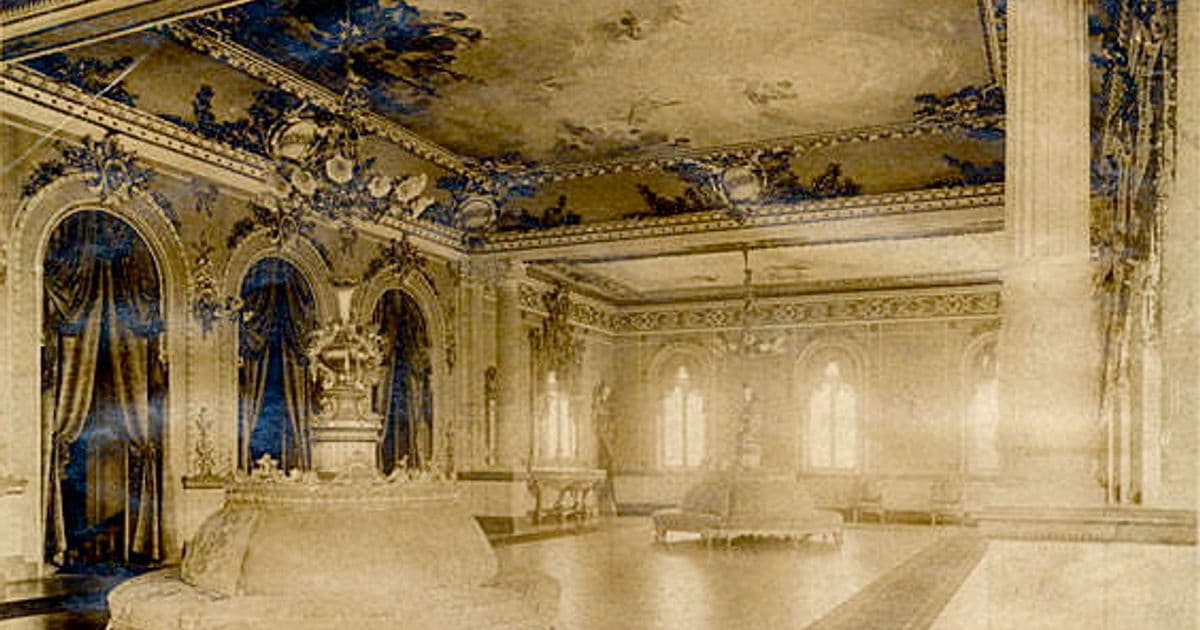
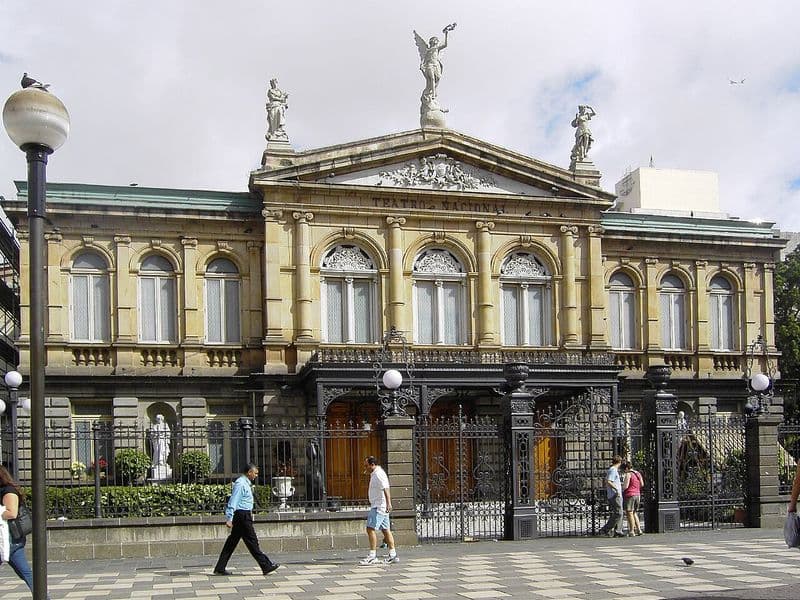
The coffee boom of the mid-19th century dramatically transformed San José. Profits from coffee exports to Europe funded public infrastructure, including the landmark Teatro Nacional (National Theater), inaugurated in 1897. The theater, funded by a voluntary tax on coffee farmers, remains a jewel of neoclassical architecture and a symbol of Costa Rica's cultural aspirations. The coffee era also brought European immigrants and ideas that shaped the city's urban layout and architecture.
The 20th century saw San José grow rapidly, particularly after the 1948 Civil War that abolished the military and established the modern democratic state. The city sprawled into surrounding municipalities, absorbing Escazú, Santa Ana, Desamparados, and other towns into a continuous urban fabric. Today's greater metropolitan area accounts for roughly one-third of the national population.
The 1948 Civil War and Its Legacy
The 1948 Costa Rican Civil War, won by José Figueres Ferrer (known as Don Pepe), lasted only 44 days but had profound long-term consequences. Figueres abolished the army, nationalized the banking system, and granted women and Afro-Costa Ricans the right to vote. The 1949 constitution enshrined these gains and has made Costa Rica an enduring democracy and regional model for political stability.
Neighborhoods and Districts
San José's most historically significant neighborhood for visitors is Barrio Amón, a district of late 19th and early 20th century Victorian and Art Nouveau mansions built by coffee barons and European immigrants. Many have been converted into boutique hotels, cultural centers, embassies, and restaurants. Walking tours of Barrio Amón offer the best architecture in the city and a glimpse of its wealthy past.
Barrio Escalante, adjacent to Barrio Amón, has emerged as San José's premier dining and nightlife district over the past decade. The pedestrianized Calle 33 (locally known as Paseo Gastronómico La Luz) is lined with restaurants, wine bars, craft beer bars, and specialty coffee shops that reflect the city's growing cosmopolitan food culture.
Escazú, technically a separate municipality, functions as the upscale suburb where many expatriates and upper-class Costa Ricans reside. It has the highest concentration of international restaurants, shopping malls (including Multiplaza), and luxury hotels. Santa Ana, further west, is a rapidly developing residential and commercial zone popular with tech company employees drawn by Costa Rica's growing free trade zone sector.
Downtown San José
The historic downtown center around the Parque Central and Avenida Central pedestrian zone is busy and commercially vibrant but less polished than tourist areas in other capital cities. The Mercado Central, a covered market operating since 1880, is a must-visit for authentic local food and the chaotic energy of a true working market. Street vendors, shoe-shiners, and lottery ticket sellers are fixtures of downtown life. Standard urban precautions apply.
Cultural Attractions and Museums
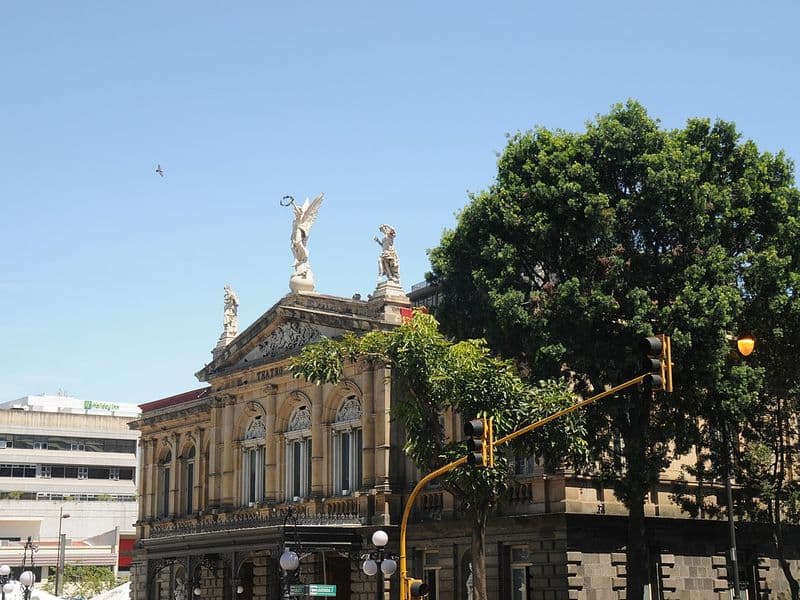
The Teatro Nacional (National Theater) is Costa Rica's most iconic building and an absolute must-visit in San José. The neoclassical facade and ornate interior — with its painted ceilings, marble floors, and gilded balconies — rival European opera houses in grandeur. Guided tours are available when no performance is scheduled. The building appears on the 5-colón banknote and is one of the most photographed structures in the country.
The Museo del Oro Precolombino (Pre-Columbian Gold Museum), located beneath the Plaza de la Cultura in the city center, houses one of the largest collections of pre-Columbian gold artifacts in the Americas. The museum displays over 1,600 gold pieces from indigenous cultures, providing insight into the sophisticated metallurgy of Costa Rica's pre-contact peoples. Admission is included with a combo ticket that also covers the Museo de Numismática.
The Museo del Jade (Jade Museum) reopened in a striking modern building in 2014 and holds the largest collection of pre-Columbian jade artifacts in the world, plus ceramics, stone carvings, and informative exhibits on indigenous Costa Rican cultures. The Museo Nacional de Costa Rica, housed in a former military barracks (Cuartel Bellavista) with bullet holes still visible on its walls from the 1948 civil war, provides comprehensive coverage of the country's natural and cultural history.
Contemporary Arts Scene
San José has a growing contemporary arts and culture scene. The Centro Nacional de Cultura (CENAC) in downtown hosts rotating exhibitions, theater performances, and cultural festivals. La Galería Namu specializes in indigenous and folk art from across Central America. The city's annual FIA (Festival Internacional de las Artes) brings theater, dance, and music from Costa Rica and around the world each April.
Food, Restaurants, and Markets
San José's food scene has undergone a remarkable transformation in the past decade, driven by a young generation of Costa Rican chefs drawing on local ingredients and global techniques. The city now offers a diverse restaurant landscape spanning traditional Tico cuisine, Japanese, Italian, Lebanese, Peruvian, and creative fusion restaurants. Barrio Escalante is the epicenter of this culinary renaissance.
Traditional Costa Rican food (comida típica) is best sampled at local sodas, casual restaurants serving the casado — a plate of rice, black beans, a meat protein, fried plantains, and salad — for $5–$8. Gallo pinto (rice and beans fried together, typically served at breakfast) is the national dish and available everywhere. Arroz con leche (rice pudding), tres leches cake, and Churchill (shaved ice with condensed milk and fruit syrup) are beloved local desserts.
The Mercado Central is the most atmospheric place to eat traditional food in San José, with numerous small comedores (lunch counters) serving soup, casados, and fresh juice at very low prices. The Feria del Agricultor (farmers market) operates on Saturday mornings in various locations throughout the metro area and is where Ticos shop for fresh produce, artisanal cheeses, and homemade prepared foods.
Coffee Culture
Costa Rica produces some of the world's finest arabica coffee, and San José is an excellent place to explore specialty coffee culture. The Café de los Deseos, Cafeoteca, Treintaitres, and Expresso Americano are among the city's specialty coffee destinations. Many roasters offer tastings of beans from different growing regions including Tarrazú, the Naranjo, and Poás. Bringing home quality Costa Rican coffee is one of the best souvenirs available.
Getting Around San José
San José's traffic is notoriously congested, particularly during morning (6–9 AM) and evening (4–7 PM) rush hours. Driving in the city center is stressful due to one-way streets, limited parking, and aggressive driving culture. Most visitors find it more efficient to use taxis or ride-hailing apps for intra-city travel and rent a vehicle only when departing for regional destinations.
Uber operates in Costa Rica and is widely used in San José, generally safer and more transparent than unlicensed taxis. Official red taxis with yellow triangle logos are metered and regulated. TAPPI and InDrive are alternative ride-hailing apps. The public bus network (TUASA and other operators) is extensive and very affordable but can be confusing for newcomers as routes are not always clearly marked.
Juan Santamaría International Airport (SJO), officially in the city of Alajuela, is located about 18 kilometers northwest of central San José. Taxis from the airport to central hotels typically cost $25–$35 and take 30–60 minutes depending on traffic. Uber is also available at the airport. An official RITEVE-regulated taxi from the authorized taxi stand is always the safest option for new arrivals.
Day Trips from San José
San José's central location makes it an excellent base for day trips to surrounding attractions. Poás Volcano (1.5 hours), Irazú Volcano (1.5 hours), the coffee farms of Doka Estate or Café Britt (1 hour), the colonial cities of Cartago and its basilica (45 minutes), and the artisan town of Sarchí (2 hours) are all accessible without an overnight stay. La Paz Waterfall Gardens, north of the capital, is a popular attraction combining a butterfly garden, hummingbird feeder, animal sanctuary, and series of waterfalls.
San José as a Base for Travelers
Most international visitors to Costa Rica arrive at Juan Santamaría International Airport and spend at least one night in San José or Alajuela before moving on to regional destinations. While many travelers are eager to bypass the capital and head directly to beaches or national parks, spending 1–2 nights allows time to recover from jet lag, visit the excellent museums, and enjoy the restaurant scene before heading into more rural areas.
Alajuela, adjacent to the airport, is a convenient alternative base to San José proper, with a quieter atmosphere, lower prices, and easy access to the airport for early departures. Several well-regarded boutique hotels near the airport cater specifically to travelers arriving or departing on early or late flights.
Accommodations in San José range from budget hostels in Barrio Amón for $15–$30 per night to five-star properties like the Hotel Presidente, Gran Hotel Costa Rica, and Marriott Escazú for $150–$300 per night. The Mansion Inn Bed & Breakfast in Barrio Amón and Kap Hotel are among the most atmospheric mid-range options, housed in restored historic buildings.
Safety in San José
San José requires standard big-city precautions. Petty theft (pickpocketing, phone snatching) is the most common crime targeting tourists, particularly in crowded downtown areas, bus terminals, and the Mercado Central. Walking alone at night in downtown areas outside of Barrio Escalante and Barrio Amón is inadvisable. Most tourist-frequented neighborhoods are safe with awareness. The city's tourist police (Policía Turística) patrol major attractions and can assist visitors in English.
Frequently Asked Questions
What is the capital city of Costa Rica?
San José is the capital of Costa Rica. It is the country's largest city and serves as the political, economic, and cultural center of the nation. Located in the Central Valley at 1,170 meters elevation, San José has a mild climate and a metropolitan population of over 1.4 million people.
Is San José worth visiting as a tourist?
Yes, San José merits at least 1–2 days for travelers interested in Costa Rica's history and culture. The Gold Museum, Jade Museum, and National Theater are world-class attractions. The Barrio Escalante restaurant and nightlife scene is vibrant, and the city makes an excellent base for day trips to surrounding volcanoes and coffee farms.
How far is San José from the beach?
The nearest Pacific beach accessible by car is about 1.5–2 hours from San José. Jacó is the closest major beach town at roughly 100 km via the Route 27 highway. Puntarenas city on the Gulf of Nicoya is about 90 km away. Caribbean beaches at Cahuita are about 4 hours by road due to the mountain crossing.
What currency is used in San José?
Costa Rica's official currency is the Costa Rican Colón (CRC). US dollars are widely accepted in hotels, restaurants, and tourist-oriented businesses in San José. ATMs dispensing both currencies are available throughout the city. Credit cards are accepted at most mid-range and upscale establishments.
Is the airport in San José?
Juan Santamaría International Airport (SJO) is technically located in Alajuela, about 18 km northwest of central San José. Despite its Alajuela location, it is universally referred to as San José airport. The drive from the airport to central San José hotels takes 30–60 minutes depending on traffic.