
Río Celeste Costa Rica: The Magical Blue River of Tenorio Volcano
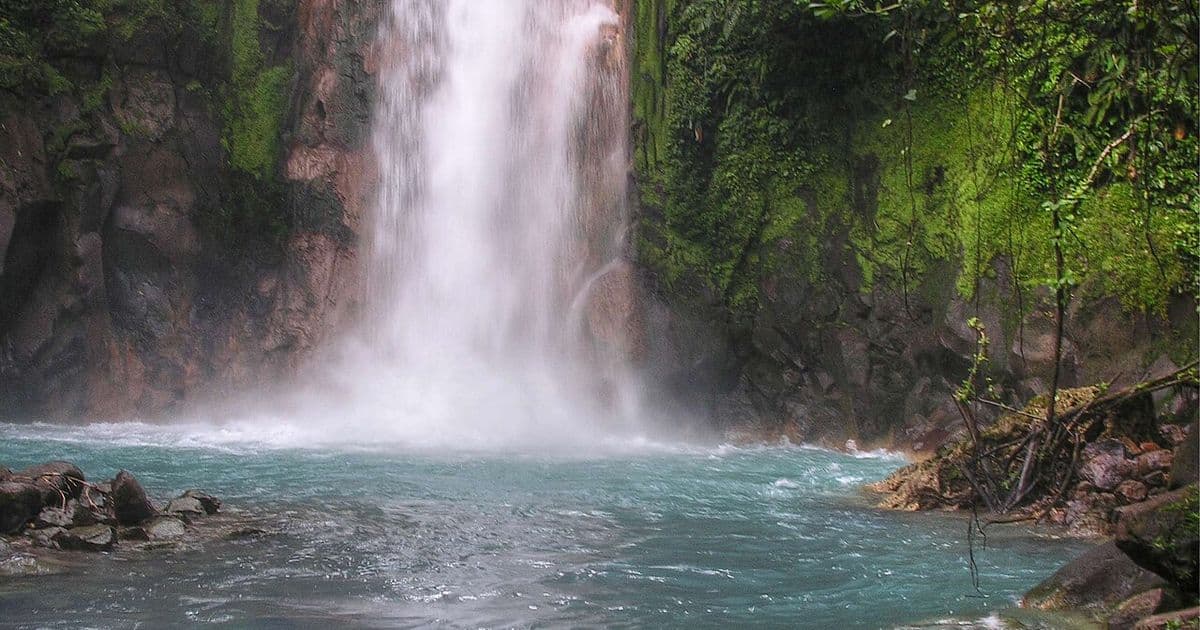
Río Celeste (Celestial River) is one of Costa Rica's most visually dramatic natural wonders — a river that flows an impossible shade of turquoise blue through the rainforest of Tenorio Volcano National Park in the Northern Lowlands. The river's extraordinary color, caused by a natural optical phenomenon at the point where two tributaries meet, has made it famous worldwide through photography and is consistently ranked among the most unique natural attractions in Central America. Visiting Río Celeste is a highlight of any Costa Rican itinerary that includes the northern region.
The Science Behind Río Celeste's Blue Color
The remarkable turquoise color of Río Celeste is the result of a natural phenomenon known as the Mie scattering effect, triggered by specific geochemical conditions. Two tributaries — the Río Buenavista and the Quebrada Agria — flow separately through the rainforest before merging at a point within Tenorio Volcano National Park called Los Teñideros ("the dyeing place"). At this precise confluence, the silica-rich volcanic minerals from Buenavista combine with the slightly acidic sulfur-bearing water from Quebrada Agria.
The resulting chemical interaction produces aluminum hydrosilicate nanoparticles suspended in the water. These microscopic particles scatter blue and green wavelengths of light while absorbing red and yellow wavelengths — the same physical process (Mie scattering) that makes the sky appear blue. The result is a river that appears an impossibly vivid turquoise-blue under daylight. The intensity of the color varies with rainfall, time of day, cloud cover, and seasonal conditions. The color is most vivid on sunny days and during the dry season when water clarity is highest.
Both tributaries above the confluence appear clear and colorless when viewed separately. The color only appears at and below Los Teñideros where the chemical reaction takes place. Interestingly, the same water chemistry that produces the beautiful color also makes the river's water non-potable and not safe for swimming at the colored sections due to the high aluminum and silica content. The river eventually loses its intense blue color several kilometers downstream as the particles disperse, returning to a clearer appearance.
Los Teñideros: Where the Color Begins
The Los Teñideros confluence — where the river's color dramatically transforms from clear to turquoise — is the most scientifically fascinating point along the trail. Visitors can stand on the bank and watch the clear water of one tributary merge with the equally clear water of the other and instantaneously produce the brilliant blue that defines the river. This natural color change is one of the most visually surprising moments in Costa Rican nature tourism and is a major reason why photographs of Río Celeste have been widely shared on social media and travel publications worldwide.
Tenorio Volcano National Park Overview
Tenorio Volcano National Park (Parque Nacional Volcán Tenorio) was established in 1995 and protects approximately 18,400 hectares of primary and secondary rainforest on the slopes of Tenorio Volcano — a dormant stratovolcano reaching 1,916 meters in the Tilarán mountain range. The park straddles the border between Guanacaste and Alajuela provinces and lies in the biological transition zone between the drier Pacific lowlands and the wetter Caribbean watershed, creating exceptional biodiversity conditions.
The park's forests receive abundant rainfall year-round, making it one of the wettest regions in Costa Rica and supporting a dense, cathedral-like rainforest with towering trees, abundant epiphytes (air plants, bromeliads, and orchids), and rich wildlife. The combination of volcanic geology, constant moisture, and protection from development has created an extraordinarily biodiverse ecosystem. The park protects portions of the watershed for the Río Frío and other rivers important for communities downstream in the Nicaraguan border region.
Wildlife in Tenorio Volcano National Park is diverse and often encountered along the trail. Tapirs (Baird's tapirs), the largest land mammals in Central America, inhabit the park and are occasionally seen near water sources. Jaguars and pumas are present but rarely observed. Howler monkeys, spider monkeys, white-faced capuchins, and red-tailed squirrel monkeys all occur in the park. The birdlife includes toucans, trogons, several species of motmots, great green macaws, and the resplendent quetzal at higher elevations. Poison dart frogs — including the red-eyed tree frog and several poison frog species — are regularly seen near the river and wet areas along the trail.
Park Infrastructure and Regulations
Tenorio Volcano National Park has well-maintained visitor infrastructure including a ranger station at the main entrance (portón), restrooms, a small visitor information area, and a network of marked trails. Entry requires payment of the national park entrance fee (approximately $18 USD for foreigners as of 2025). The park is open daily from 8:00 AM to 4:00 PM (last entry at 2:00 PM). Guided tours are not mandatory but are strongly recommended for maximizing wildlife sightings and understanding the ecosystems along the trail. The number of daily visitors is limited to protect the environment.
Hiking the Río Celeste Trail
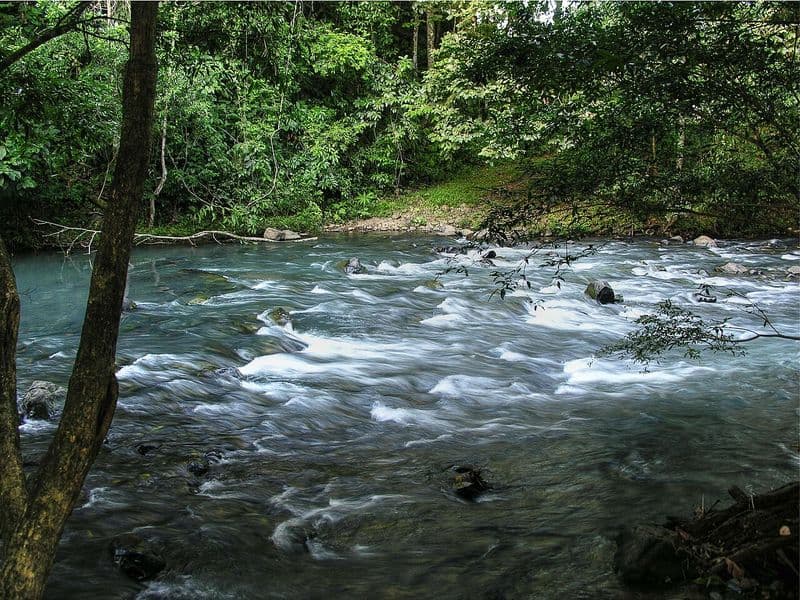
The main hiking trail in Tenorio Volcano National Park begins at the park entrance and follows the Río Celeste through primary rainforest to the principal attractions. The trail is approximately 9 kilometers round-trip (4.5 km each way) with an elevation change of about 200 meters — not technically difficult but moderately strenuous due to the often-muddy conditions, wooden boardwalk sections, and the steep descent to and ascent from the main waterfall viewpoint.
The trail begins in secondary forest near the entrance and quickly transitions to mature primary rainforest. The first major attraction encountered is the Laguna Azul (Blue Lagoon), a small oxbow lake of vivid blue water surrounded by forest — a quieter and less visited highlight. Continuing along the trail, hikers reach Los Teñideros (the color-change confluence), then the Cataratas de Río Celeste (the main waterfall) via a steep wooden staircase. Beyond the waterfall, the trail passes through additional forest with opportunities for wildlife spotting before returning.
Trail conditions require appropriate preparation. Rain is common year-round in the park, and the trail becomes muddy and slippery even in the dry season due to the consistently wet forest microclimate. Rubber boots (botas de hule) are strongly recommended over hiking boots or sandals and are available for rent at lodges near the park entrance. The trail involves significant sections on tree roots, wooden bridges over the river, and steep wooden stairways. Most visitors of average fitness can complete the round trip in three to four hours at a leisurely pace including time at the waterfall.
Wildlife Spotting on the Trail
The Río Celeste trail is excellent for wildlife observation. Poison dart frogs (particularly the granular poison frog, Oophaga granulifera, and the strawberry poison frog in some areas) can be found near the river's edge and on the forest floor. Toucans — particularly the keel-billed toucan and the chestnut-mandibled toucan — are frequently heard and seen in the forest canopy. Moving slowly and quietly, particularly in the early morning when the park opens, dramatically increases wildlife encounter rates. Tapir footprints in the mud near the river are commonly observed even if the animals themselves are elusive.
The Waterfall and Swimming
The Cascata del Río Celeste (Río Celeste Waterfall) is the centerpiece of the park's attractions. The waterfall drops approximately 30 meters over a volcanic rock face into a pool below, surrounded by lush vegetation. The water at the waterfall point is already the striking turquoise color, making the visual impact extraordinary — the combination of the blue waterfall, white mist, and emerald forest framing creates one of the most photographed scenes in Costa Rica.
Access to the waterfall requires descending a steep set of wooden stairs (about 200 steps) to the observation platform below. The descent and ascent are the most physically demanding portions of the hike and can be slippery when wet. Multiple observation decks at different heights along the stairway provide different perspectives of the falls. The pool at the base of the waterfall appears perfectly inviting for swimming, but swimming here is strictly prohibited within the national park boundaries to protect the delicate ecosystem and the water chemistry that produces the river's color.
While swimming in the main Río Celeste is not permitted inside the park, some private lodges and properties along the river outside the park boundaries offer access to natural swimming holes in the clearer water sections upstream of the color-change point. These access points vary — asking your lodge host about current swimming options is the best approach. The overall experience of the waterfall as a visual destination, even without swimming, is considered worth the hike by the vast majority of visitors who make the journey.
Photography Tips
Río Celeste's extraordinary color is best captured in photographs in midday light on sunny days, when the direct overhead light illuminates the water's turquoise tones most vividly. Overcast days reduce the color intensity and can make the river appear more grey-green. Polarizing filters (or the polarizing function in some phone camera apps) help cut surface reflections and intensify the color saturation. The waterfall is best photographed from the lower observation platform. Arriving early (at park opening, 8:00 AM) provides the best conditions before midday crowds and before the forest canopy fills with mist from afternoon heating.
Where to Stay Near Río Celeste
The Río Celeste area has developed a cluster of eco-lodges and small hotels within a few kilometers of the park entrance, particularly in the community of Bijagua. These lodges range from simple family-run guesthouses to well-designed eco-lodges that combine comfortable accommodation with nature immersion. Staying near the park rather than commuting from La Fortuna or Liberia allows for an early morning arrival at the park when wildlife is most active and crowds are thinnest.
Celeste Mountain Lodge is a standout property near Bijagua, featuring well-appointed rooms in a rainforest setting with wildlife corridors directly connecting to the national park. The lodge has a good restaurant, a natural hot spring pool, and organized guided walks on their private forest trails where tapir sightings are not uncommon. Heliconias Rainforest Lodge is another excellent option offering rustic-comfortable bungalows in a garden setting with good bird watching. Río Celeste Hideaway is a premium boutique hotel offering beautiful rooms and a private reserve with guided nature walks and access to natural swimming sections of the river outside the park.
For budget travelers, several simple cabinas (guesthouses) in the town of Bijagua offer clean, basic accommodation at low prices and are walking distance from local sodas and the park access road. Bijagua itself is a small agricultural community that has developed a community tourism initiative, offering locally guided tours, traditional cooking experiences, and access to a less-visited private nature reserve (the Bijagua Community Reserve) as alternatives to the national park visit.
The Bijagua Community Reserve
The Bijagua Community Reserve (Reserva Comunitaria Indígena Maleku-Rama) adjacent to the national park offers an alternative or complementary nature experience operated and guided by members of the local community. Guided hikes on the community's private trails access forest habitats and a section of the Río Celeste upstream of the park, where swimming in clear water is permitted. Choosing community tourism operations supports local families directly and provides a more personalized, less crowded experience than the main national park trail.
Planning Your Visit: Tips and Logistics
Río Celeste and Tenorio Volcano National Park are located in the Northern Lowlands region of Costa Rica, approximately 60 kilometers northeast of Liberia and about 100 kilometers northwest of La Fortuna. From Liberia, the drive takes approximately 1.5 to 2 hours via Cañas and Upala on paved roads. From La Fortuna, the drive is approximately 2 to 2.5 hours via Ciudad Quesada. The roads leading to the park entrance from the Bijagua side are mostly paved, with a short unpaved section near the entrance that is manageable in a standard 2WD vehicle in dry conditions but benefits from 4WD during heavy rain.
Visiting Río Celeste is most commonly done as a multi-destination stop rather than a standalone trip, given its location between Liberia/Guanacaste and La Fortuna/Arenal. A natural itinerary might include flying into Liberia, spending time at Guanacaste beaches, driving inland to spend a night near Río Celeste, then continuing to La Fortuna and Arenal before returning to San José. This routing avoids backtracking and combines multiple major attractions efficiently.
Several important practical considerations apply. Bring rain gear regardless of the season — the park's microclimate ensures frequent showers. Rent rubber boots from your lodge; they dramatically improve the hiking experience on the muddy trail. Bring snacks and water, as food options inside the park are nonexistent (vendors sometimes operate outside the entrance). Insect repellent is essential. The park limits daily visitor numbers, so arriving early is doubly beneficial — for wildlife, for light, and for avoiding potential queue times at the entrance during peak season weekends.
Best Time to Visit
Río Celeste is a year-round destination, but the timing affects the experience significantly. The dry season (December–April) generally offers the clearest water and most vivid color, easier trail conditions, and more comfortable hiking weather. The rainy season (May–November) brings higher water levels (which can intensify the waterfall's drama), higher humidity, and more mud on the trail, but also lushest forest greenery and the lowest tourist numbers. December weekends and Costa Rican holidays see the heaviest crowds; mid-week visits during the green season offer the most peaceful experience.
Frequently Asked Questions
Why is Río Celeste blue?
Río Celeste's brilliant turquoise-blue color is caused by the Mie scattering effect. Where two clear tributaries merge at Los Teñideros, volcanic minerals (primarily aluminum silicates from the Tenorio Volcano) react with the slightly acidic water, forming microscopic nanoparticles suspended in the water. These particles scatter blue and green light wavelengths while absorbing red and yellow wavelengths, making the water appear an intense turquoise-blue. The color is purely a physical optical phenomenon — no dyes, algae, or artificial substances are involved.
Can you swim in Río Celeste?
Swimming is prohibited inside Tenorio Volcano National Park to protect the ecosystem and the water chemistry that produces the river's color. Additionally, the high aluminum and silica content of the colored sections makes the water unsuitable for swimming. However, some private properties and lodges located on the river outside the park boundaries offer access to natural swimming holes in clear water sections upstream of the color change point. Ask your lodge or tour operator about current swimming options near the park.
How hard is the hike to Río Celeste waterfall?
The hike is classified as moderate. The 9-kilometer round trip (4.5 km each way) takes most visitors 3–4 hours at a comfortable pace. The trail is not technically difficult but involves muddy sections, tree roots, and a steep wooden staircase (about 200 steps) descending to and ascending from the waterfall. The consistently wet conditions make rubber boots (rentable at lodges near the entrance) strongly preferable to regular hiking boots. People of average fitness who are comfortable walking in challenging conditions can complete the hike without special training.
Is Río Celeste worth visiting?
Yes, overwhelmingly. The combination of the turquoise waterfall, the Los Teñideros color-change confluence, the surrounding primary rainforest, and the wildlife encountered along the trail makes Río Celeste one of the most memorable experiences in Costa Rica. The hike requires more effort than some attractions, but the visual impact of the blue river and waterfall is unlike anything else in the country. It is particularly well-suited as part of a northern Costa Rica itinerary combining Arenal, Monteverde, and Guanacaste.
Do I need a guide for the Río Celeste hike?
A guide is not mandatory — the trail is well-marked and signposted, and many independent visitors complete it without a guide. However, a certified park guide significantly improves the experience by identifying wildlife that untrained eyes miss, explaining the science behind the river's color, providing ecological context, and knowing the best spots for wildlife observation along the trail. Guides can be hired at the park entrance or pre-arranged through lodges in Bijagua. For solo travelers or those with a strong interest in natural history, a guided tour is well worth the additional cost.