

Costa Rica Cost of Living: A Complete Guide for Expats and Long-Term Visitors
Costa Rica's cost of living attracts tens of thousands of expats and retirees each year seeking a high quality of life at a fraction of North American or Western European costs. While Costa Rica is the most expensive country in Central America, it remains significantly more affordable than the United States, Canada, and most of Western Europe, particularly for housing, healthcare, and locally produced food. This guide breaks down the real cost of living in Costa Rica across all major expense categories.
Overview: Is Costa Rica Affordable?
Costa Rica occupies a middle ground in global cost-of-living rankings. It is considerably cheaper than the United States, Canada, the United Kingdom, and Western European countries, but more expensive than neighboring countries like Nicaragua, Honduras, Guatemala, and even Panama for many expenses. For North American and European retirees and expats, it typically offers 30-50% lower living costs than their home countries while maintaining a high standard of infrastructure, safety, and quality of life.
The country's relative affordability depends heavily on your lifestyle choices and preferred location. Living like a local—eating at sodas (traditional Costa Rican restaurants), using public buses, shopping at farmers' markets, and renting a modest apartment outside tourist zones—can be done comfortably for $1,200-1,800 USD per month for an individual. A more North American-style lifestyle with a car, imported foods, private health insurance, and a comfortable apartment in an expat-heavy area can cost $2,500-4,000 per month or more.
Costs have risen significantly over the past decade, driven by increased foreign demand for housing in expat communities, general inflation, and growth in the tourism economy. The Central Valley (San José, Heredia, Alajuela, Cartago) and established expat beach communities (Tamarindo, Nosara, Uvita, Manuel Antonio) have experienced the most pronounced price increases. More rural and less-visited areas remain considerably cheaper.
Costa Rica vs. US Cost of Living Comparison
According to cost-of-living databases, consumer prices in Costa Rica are approximately 30-45% lower than in the United States overall. Rent is often 50-70% cheaper than equivalent US housing in metropolitan areas. Healthcare costs are dramatically lower: a specialist doctor visit that might cost $200-400 in the US with insurance typically runs $50-100 at a private clinic in Costa Rica. Groceries and dining out at local establishments are significantly cheaper, though imported goods often approach or exceed US prices due to import taxes.
Housing Costs in Costa Rica
Housing is typically the largest monthly expense for expats and long-term residents in Costa Rica. Rental prices vary enormously based on location, size, amenities, and whether the property is in a tourist-oriented or local neighborhood. In the Central Valley (San José metro area), a modern one-bedroom apartment in an expat-friendly neighborhood like Escazú, Santa Ana, or Rohrmoser typically rents for $600-1,200 USD per month. More modest options in quieter neighborhoods can be found for $400-700.
Beach community rentals command significant premiums due to tourist demand and the desirability of the lifestyle. In Tamarindo, a two-bedroom house or condo typically rents for $900-2,000 per month. Manuel Antonio, Nosara, and Dominical have similar pricing. Less-touristed beach areas like Sámara, Malpais, or the southern Caribbean coast can offer better value, with two-bedroom properties in the $600-1,200 range.
For those considering purchasing property in Costa Rica, prices have appreciated substantially in popular areas. Condos in Escazú or upscale Santa Ana neighborhoods sell for $150,000-400,000 USD. Beachfront or ocean-view properties in prime Pacific coast locations can reach $300,000-1,000,000 or more. Property in rural areas and less-trafficked regions remains much more affordable, with livable homes available for $80,000-150,000 USD.
Utilities Included vs. Excluded
Unlike some markets, Costa Rican rental listings often exclude utilities from the listed price. Before signing a lease, confirm which utilities are included and request recent utility bills to understand typical monthly costs. In the hot Pacific lowlands, air conditioning can add $80-150 USD monthly to electricity bills. In the Central Valley's milder climate, no air conditioning is needed and electricity bills for a modest home run $30-70 per month.
Rental Market Tips
The Costa Rican rental market moves quickly in popular expat areas. Quality properties at fair prices are often filled through word of mouth or within days of listing. Facebook groups specific to expats in your target region (e.g., Expats in Costa Rica, Tamarindo Expats) are valuable resources for finding rental listings and getting advice from current residents. Working with a local real estate agent can also be valuable, particularly for multi-year leases where negotiating terms is important.
Food and Grocery Costs
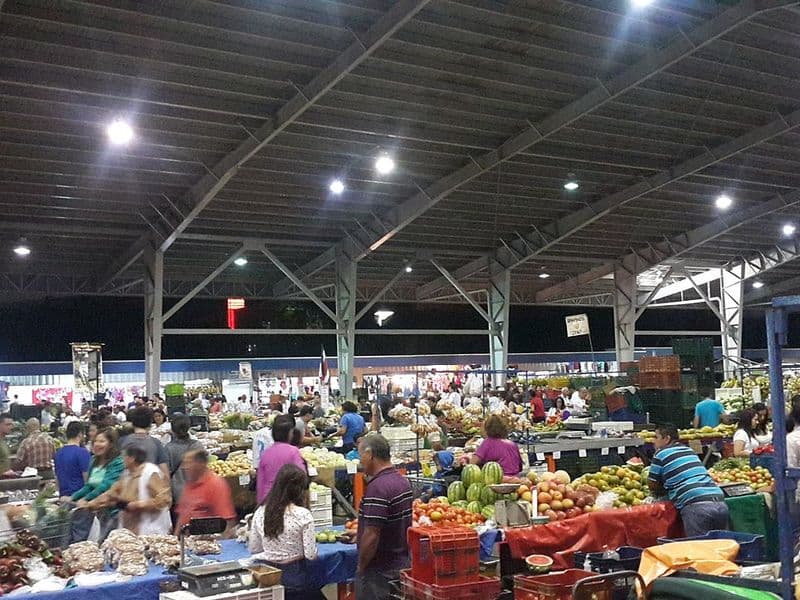
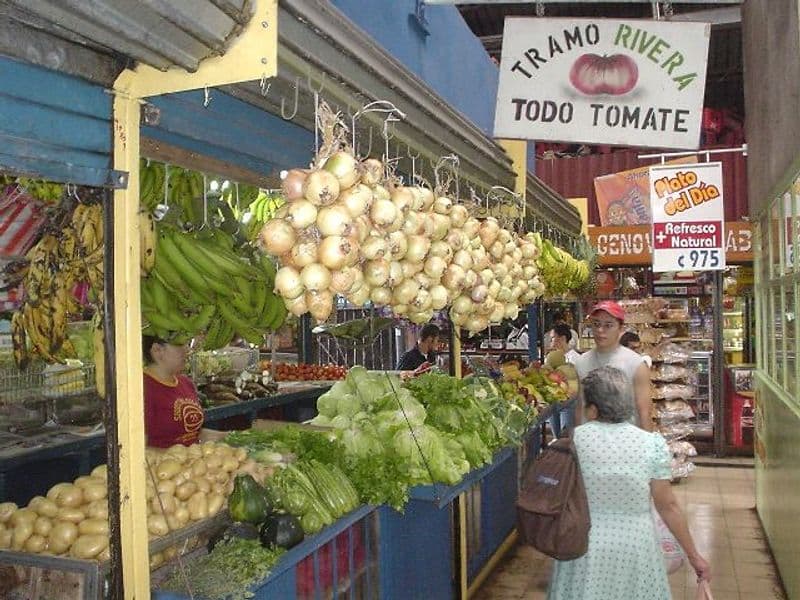
Food costs in Costa Rica depend significantly on whether you eat locally or seek imported and North American-style products. Local food is genuinely affordable: a traditional gallo pinto breakfast (rice, beans, eggs, coffee) at a local soda costs ₡2,500-4,000 ($4.70-7.50 USD). A full lunch plate (casado: rice, beans, salad, protein, plantains) at a soda runs ₡3,500-6,000 ($6.60-11.30 USD). Fresh fruits, vegetables, and local staples at farmers' markets (ferias del agricultor, held on weekends throughout the country) are very inexpensive by North American standards.
Supermarket shopping reveals the dual nature of Costa Rican food costs. Locally produced items like rice, beans, eggs, tropical fruits, vegetables, chicken, and fresh fish are affordable. Imported products—breakfast cereals, specialty cheeses, wines, imported meats, packaged snacks, and North American or European brand products—are significantly more expensive than at home, often 20-50% higher, due to import tariffs and distribution costs.
A single person eating mostly local food, cooking at home with local ingredients, and occasionally eating out at sodas can maintain a monthly food budget of $200-350 USD. A couple living similarly can feed themselves for $400-600 monthly. A household that regularly shops at upscale supermarkets like Automercado, eats at international restaurants, and buys imported products can easily spend $700-1,200 monthly on food.
Feria del Agricultor: Costa Rica's Farmers' Markets
The feria del agricultor (farmer's market) is a beloved Costa Rican institution held in virtually every community on Saturday and/or Sunday mornings. These markets offer fresh local produce, tropical fruits, vegetables, herbs, cheeses, honey, and prepared foods at prices far below supermarket levels. For expats and long-term residents, incorporating weekly market shopping into your routine dramatically reduces food costs while connecting you with the local community and maximizing freshness and quality.
Transportation Expenses
Transportation is an area where Costa Rica's costs can vary dramatically based on lifestyle choices. Public bus service in Costa Rica is remarkably affordable and extensive. Buses connect virtually all major towns and tourist destinations, with fares typically ranging from ₡400 ($0.75) for a short urban route to ₡3,000-8,000 ($5.65-15 USD) for longer intercity journeys. The Empresa buses from San José to Manuel Antonio, Liberia, or Puerto Viejo cost $5-15 USD one way. Living without a car using public buses is entirely feasible and very economical.
Owning a car in Costa Rica is expensive relative to many countries. Import taxes on new vehicles are extremely high (often 50-80% of the vehicle's base value), making new cars significantly more expensive than in North America. A new mid-range sedan can cost $25,000-40,000 USD. Used cars within Costa Rica are correspondingly expensive but avoid the import tax impact. Monthly car ownership costs (insurance, fuel, maintenance, parking) typically run $300-600 USD depending on vehicle age and use.
Gasoline prices in Costa Rica are regulated by the government and tend to be higher than in the US due to taxes and import costs. Fuel prices have historically run $1.00-1.40 USD per liter (approximately $3.80-5.30 per gallon US equivalent). Taxis (both regular red cabs and the Uber platform, which operates in Costa Rica) are affordable for occasional use, with typical urban trips costing $3-8 USD.
Car Rental for Visitors
For visitors rather than residents, car rental is often the most practical way to explore Costa Rica beyond organized tours and shuttle services. Daily rates for a basic 4WD vehicle (recommended due to road conditions in many areas) run $40-80 USD per day from reputable agencies, not including mandatory insurance which adds $10-25 per day. Booking in advance through international platforms and understanding the insurance requirements in Costa Rica is essential before arriving.
Healthcare Costs in Costa Rica
Costa Rica has one of the best healthcare systems in Latin America and healthcare costs are a major draw for expat retirees and long-term residents. The country's public healthcare system, the Caja Costarricense de Seguro Social (CAJA), provides universal healthcare to all legal residents and citizens who contribute monthly premiums based on income. Monthly CAJA contributions for legal residents typically range from $70-200 USD depending on declared income level.
Private healthcare in Costa Rica is also excellent and dramatically cheaper than in the United States. A consultation with a specialist at a private clinic typically costs $50-120 USD. Basic laboratory tests run $15-50 USD for common panels. Dental care is exceptionally affordable: a routine cleaning and examination costs $40-80; a crown or complex procedure that might cost $1,000-2,000 in the US typically runs $200-500 in Costa Rica. Many visitors combine tourism with dental tourism specifically to take advantage of these savings.
Private health insurance for expats in Costa Rica typically costs $150-400 USD per month depending on age, health status, and coverage level. Many expats use a combination of CAJA for routine and ongoing care and a private supplemental plan for access to private hospitals and specialists. San José's Hospital CIMA and Clínica Bíblica are private hospitals with international-standard facilities widely used by expats and medical tourists.
CAJA for Expat Residents
Legal residents of Costa Rica (those with pensionado, rentista, or permanent resident status) are required and entitled to enroll in the CAJA system. Enrollment provides access to public hospitals, clinics, specialist care, prescription medications, emergency services, and preventive care at low or no direct cost. Wait times for non-urgent procedures can be long in the public system, which is why many expats maintain private insurance as a supplement for timely access to specialty care.
Utilities and Internet Costs
Utility costs in Costa Rica are generally moderate and reflect the country's infrastructure quality. Electricity (serviced by ICE or JASEC/COOPELESCA depending on region) typically costs $30-80 USD per month for a modest apartment without air conditioning in the Central Valley. Homes in hotter coastal areas with air conditioning can see electricity bills of $100-200 or more monthly. ICE offers tiered pricing that rewards conservation with lower rates for lower consumption.
Water and sewage costs are very low by international standards, typically $5-20 USD per month for a household. Drinking tap water quality varies by municipality; San José and Central Valley water is generally safe and palatable. Some coastal areas or rural regions have lower-quality tap water where filtered or bottled water is preferred.
Internet service in Costa Rica has improved dramatically in recent years. Fiber optic service is now available in most urban and suburban areas, with plans offering 100-300 Mbps download speeds costing $35-60 USD per month. Mobile data plans from providers like Kölbi (ICE), Movistar, and Claro are competitive; a monthly prepaid plan with ample data typically costs $20-35 USD. Remote workers and digital nomads generally find connectivity adequate in cities and major tourist zones, though rural and coastal areas can still have slow or unreliable connections.
Other Monthly Utilities and Services
Additional regular monthly costs for residents include cell phone service ($20-50 USD depending on plan), cable or streaming services ($10-50 USD), home security monitoring ($20-40 USD), and domestic cleaning help ($10-15 USD per hour, often $80-150 monthly for once or twice weekly service). Household domestic employees (trabajadoras domésticas) are governed by specific Costa Rican labor laws including mandatory CAJA enrollment, aguinaldo (Christmas bonus), and vacation pay requirements.
Monthly Budget Estimates by Lifestyle
To give practical context, here are approximate monthly budget totals for different lifestyle scenarios in Costa Rica. These figures are for an individual living alone; couples can often reduce per-person costs by 25-35% through shared fixed expenses.
Budget lifestyle (local orientation): $1,200-1,800 USD per month. Includes a modest apartment in a local neighborhood ($400-600), local food and market shopping ($200-300), public transportation ($30-50), CAJA health coverage ($70-120), basic utilities ($50-80), and modest discretionary spending. This is the lifestyle of a Costa Rican middle-class professional or a budget-conscious expat fully adapted to local ways.
Mid-range comfortable lifestyle: $2,000-3,000 USD per month. Includes a comfortable apartment in an expat-friendly area ($700-1,200), mixed local and restaurant dining ($400-600), a used car or combination of taxis and buses ($200-300), private health insurance ($150-250), reliable internet and utilities ($100-150), and a social and leisure budget. This represents the most common lifestyle among expat retirees drawing modest US Social Security or pension income.
Upper-middle lifestyle (North American standard): $3,500-5,000+ USD per month. Includes a quality home in a desirable area ($1,200-2,000), frequent restaurant dining and imported foods ($700-1,000), newer car with full expenses ($400-600), premium health coverage ($300-500), and comfortable leisure spending. For couples at this level, life in Costa Rica can offer a genuinely high standard of living well below equivalent costs in the US.
Best Value Locations in Costa Rica
The best value locations for long-term living tend to be cities and towns in the Central Valley outside central San José: Alajuela, Grecia, Atenas, San Ramón, and Cartago offer comfortable urban amenities with lower rents than Escazú or Santa Ana. For beach living, less-touristed areas like Sámara, Malpais, Peñas Blancas, and the southern Caribbean coast (near Puerto Viejo) offer lower costs than the increasingly pricey established expat beach communities. The Chirripó highlands around San Isidro de El General and the cooler mountain regions also offer excellent value for those who prefer a temperate climate.
Frequently Asked Questions
Is Costa Rica cheap to live in?
Relative to North America and Western Europe, yes. Costa Rica is 30-50% cheaper overall than the US or Canada, with especially significant savings on healthcare, housing, domestic services, and local food. However, it is the most expensive country in Central America and has become more expensive in recent years, particularly in established expat communities.
How much money do you need to live comfortably in Costa Rica?
A comfortable mid-range lifestyle for one person in Costa Rica costs approximately $2,000-3,000 USD per month, covering a nice apartment, reliable transportation, good food (mix of cooking at home and eating out), private health insurance, utilities, internet, and a reasonable social and leisure budget. Couples can often live well on $2,500-3,500 combined.
Can you live in Costa Rica on Social Security income?
Many US retirees do live in Costa Rica on Social Security income alone, particularly those adapting to a local lifestyle outside expensive tourist areas. The average US Social Security benefit ($1,500-2,000/month) covers basic comfortable living in many parts of Costa Rica, especially in smaller towns and cities of the Central Valley. Those receiving higher benefits or with additional retirement income can live very comfortably.
What is the pensionado visa and how does it relate to cost of living?
The pensionado visa is a Costa Rican residency category for retirees who receive a guaranteed pension income of at least $1,000 USD per month from a government or private pension source. Pensionados receive certain benefits including discounts on healthcare, entertainment, dining, and some government services. This residency status is popular among US and European retirees and allows indefinite legal residence in Costa Rica.
Are imported goods expensive in Costa Rica?
Yes. Costa Rica imposes significant import tariffs on many goods, making imported products—particularly processed foods, electronics, vehicles, appliances, and clothing brands—considerably more expensive than in North America. A bottle of imported wine that costs $10 in the US may cost $15-20 in Costa Rica. Electronics can cost 20-40% more than equivalent US prices. Buying locally produced goods and adapting to what Costa Rica produces efficiently keeps costs manageable.