
Costa Rica Government: Democracy, Institutions, and Political Structure
Costa Rica's government is widely regarded as the most stable and democratic in Central America, built on a constitutional framework established in 1949 that abolished the military, guaranteed universal suffrage, and created independent branches of government designed to resist authoritarian consolidation. The country has maintained uninterrupted democratic governance for over 75 years, making it a regional and global model for democratic stability. Understanding Costa Rica's government structure illuminates how this small nation has achieved prosperity, high human development, and environmental leadership in a historically turbulent region.
Overview of Costa Rica's Democratic System
Costa Rica is a unitary presidential constitutional republic, meaning the national government holds primary authority over the states, executive power is vested in an elected president, and the system operates under a written constitution. The current constitution, adopted on November 7, 1949, followed a brief civil war (the 1948 Costa Rican Civil War) and was established by the constituent assembly convened under José Figueres Ferrer, who made the landmark decision to abolish the military and redirect defense funds to education and healthcare.
The abolition of the military — enshrined in Article 12 of the constitution — remains Costa Rica's most internationally recognized governmental characteristic. The country maintains a police force and border patrol but has no standing army, making it one of only a handful of nations worldwide constitutionally prohibited from maintaining a military. This choice has freed resources for social investment while reducing the risk of military coups that destabilized many of Costa Rica's neighbors during the 20th century.
Costa Rica's government is organized into three branches — executive, legislative, and judicial — with an additional independent electoral authority. Separation of powers is taken seriously, and the judiciary's constitutional chamber (Sala IV) has established itself as a genuine check on executive and legislative overreach. The country regularly scores among the top nations in Latin America on democracy indices published by Freedom House, The Economist Intelligence Unit, and Transparency International.
The 1949 Constitution
The 1949 Political Constitution of Costa Rica is one of the most progressive constitutions of its era. Beyond abolishing the army, it established universal suffrage including women's right to vote (before many European nations), guaranteed access to education through the secondary level, created the independent Supreme Electoral Tribunal, nationalized the banking system, and established the principles of a welfare state including universal access to health care and social security.
The Executive Branch: President and Cabinet
Executive power in Costa Rica is exercised by the President of the Republic, who serves a four-year term and is constitutionally prohibited from immediate re-election. A president may serve a second term after sitting out at least one term, though this has been relatively uncommon. The president is both head of state and head of government, combining roles that are separated in many other democratic systems. The president is elected by popular vote in a two-round system.
The cabinet (Consejo de Gobierno) consists of the president, two vice presidents, and the ministers of state. Cabinet ministers are appointed by the president without requiring legislative confirmation, though they can be questioned and censured by the Legislative Assembly. Key ministries include the Ministry of Finance (Hacienda), Ministry of Foreign Affairs (Relaciones Exteriores), Ministry of Health (Salud), Ministry of Environment and Energy (MINAE), and the Ministry of Public Education (MEP).
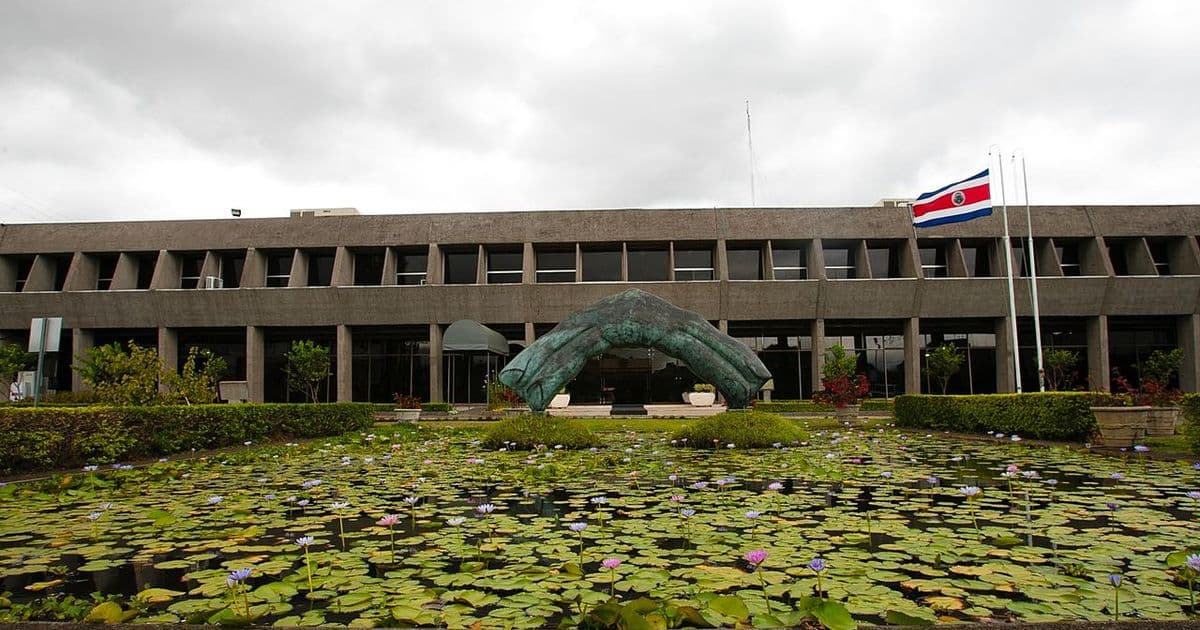
The Casa Presidencial (Presidential House) in Zapote, San José, serves as the official working residence and office of the president. Major policy decisions, decree signings, and press conferences take place at this location. The president's daily schedule, policy announcements, and executive orders are published through official government channels including the Presidency website and La Gaceta (the official government gazette).
Recent Presidents of Costa Rica
Recent presidents include Laura Chinchilla Miranda (2010–2014, first woman president), Luis Guillermo Solís (2014–2018, PAC party), Carlos Alvarado Quesada (2018–2022, PAC), and Rodrigo Chaves Robles (2022–2026, PPSD party). Presidential election results have reflected a trend toward fragmentation of the traditional two-party system, with newer parties gaining strength in recent electoral cycles.
The Legislative Assembly
The Asamblea Legislativa (Legislative Assembly) is Costa Rica's unicameral (single-chamber) legislature, consisting of 57 deputies (diputados) elected for four-year terms concurrent with presidential elections. Deputies represent the country's seven provinces — San José, Alajuela, Cartago, Heredia, Guanacaste, Puntarenas, and Limón — with seat allocation proportional to population. Like the president, deputies may not stand for immediate re-election, limiting careerism in the legislature.
The Legislative Assembly exercises legislative power — drafting, debating, and passing laws — as well as oversight functions including the approval of the national budget, ratification of international treaties, and the ability to censure cabinet ministers. Committee work (comisiones legislativas) is where most detailed legislative activity occurs, with plenary sessions used for formal debate and voting. The Assembly building (Edificio de la Asamblea Legislativa) is located in the San José neighborhood of Barrio González Lahmann.
Costa Rica's legislature has become increasingly fragmented as traditional parties (PLN and PUSC) have lost dominance. Recent assemblies have featured 8 or more parties holding seats, making coalition building essential for passing legislation. This fragmentation has occasionally led to governance challenges, particularly around budget approvals and structural reform legislation. The Legislative Assembly's debates are publicly broadcast and its voting records are publicly accessible.
Major Political Parties
The Partido Liberación Nacional (PLN), founded by José Figueres Ferrer, dominated Costa Rican politics for decades and remains the largest single party. The Partido Unidad Social Cristiana (PUSC) was the traditional opposition. The Partido Acción Ciudadana (PAC) broke through to win two consecutive presidencies (2014–2022). The Partido Progreso Social Democrático (PPSD) won the 2022 presidency. Frente Amplio and other smaller parties hold assembly seats.
The Judicial Branch and Sala IV
Costa Rica's judicial branch is headed by the Supreme Court of Justice (Corte Suprema de Justicia), which consists of 22 magistrates elected by the Legislative Assembly for renewable eight-year terms. The Supreme Court is divided into four chambers (salas) with specialized jurisdictions. The court system also includes appeals courts, lower courts, and specialized tribunals covering administrative, agrarian, labor, and family law matters.
The Constitutional Chamber of the Supreme Court — universally known as Sala IV (Sala Cuarta) — holds a uniquely powerful position in Costa Rican governance. Established in 1989, Sala IV has the authority to strike down laws, executive decrees, and government actions that violate the constitution. Citizens have direct access to Sala IV through the recurso de amparo (writ of protection) mechanism, which allows any person to petition the court when they believe their constitutional rights have been violated.
Sala IV's rulings have reshaped Costa Rican society in fundamental ways. The chamber legalized same-sex marriage in 2020 following a prolonged legal and political process. It has also ruled on environmental protection cases, press freedom, access to healthcare, and the rights of indigenous communities. The court's active role in constitutional review is cited as one of Costa Rica's strongest democratic safeguards and a model for judicial independence in the region.
Judicial Independence
Costa Rica's judiciary is considered one of the most independent in Latin America. Judicial selection by the Legislative Assembly rather than the president reduces executive influence over the courts. The OIJ (Organismo de Investigación Judicial), the country's criminal investigation organization similar to the FBI, operates under judicial branch oversight rather than executive control, a structural choice that has protected investigative independence in high-profile corruption cases.
Electoral System and Supreme Electoral Tribunal
Costa Rica's elections are administered by the Tribunal Supremo de Elecciones (TSE), an independent branch of government with constitutional standing equal to the executive, legislative, and judicial branches. The TSE manages voter registration, certifies candidates and parties, oversees campaign finance, conducts the election, and certifies results. Its independence from political parties has made Costa Rican elections consistently credible and its results uncontested.
The presidential election system requires a candidate to win more than 40% of valid votes to win in the first round — a threshold lower than the absolute majority required in many countries. If no candidate crosses 40%, a second-round runoff is held between the top two candidates. This system was designed to produce decisive results while acknowledging Costa Rica's multi-party landscape. National elections also include simultaneous voting for all 57 legislative deputies and 82 municipal councils (concejos municipales).
Voter turnout in Costa Rica has declined from historically high levels (over 80% in the 1970s–1980s) to approximately 56–68% in recent elections, a trend that concerns political scientists studying civic engagement. The TSE runs significant public outreach campaigns before each electoral cycle, and voting is a civic duty — though not legally mandatory — deeply embedded in Costa Rican democratic culture. International observer missions from the OAS and EU regularly certify Costa Rican elections as free and fair.
Campaign Finance and Transparency
Costa Rica regulates campaign financing through the TSE, which provides public funding to qualifying political parties based on vote shares received in prior elections. Private donations are permitted within limits and subject to public disclosure. Despite these regulations, concerns about undisclosed funding sources and the growing cost of political campaigns have generated ongoing public debate and reform proposals in recent legislative sessions.
Local Government and Municipalities
Costa Rica is divided into 7 provinces, 82 cantons (municipalities), and 488 districts. The canton is the primary unit of local governance, administered by a municipal council (concejo municipal) and headed by an elected mayor (alcalde). Local governments handle urban planning, local infrastructure, waste management, parks, and some social services within their jurisdictions. Municipal budgets are partially funded by transfers from the national government and partially by local taxes and fees.
Municipal elections were separated from national elections in 2010 to increase focus on local issues and improve voter engagement with local governance. Cantons vary enormously in size and resources — San José canton is a major urban center with significant administrative capacity, while rural cantons in Guanacaste or the Southern Zone have far more limited budgets and capacity. Regional development disparities between prosperous Central Valley cantons and poorer coastal or highland municipalities remain a significant governance challenge.
Provincial Governance
Costa Rica's seven provinces (San José, Alajuela, Cartago, Heredia, Guanacaste, Puntarenas, Limón) function primarily as administrative divisions for electoral and governmental organization rather than as autonomous units with significant independent power. Each province has a governor appointed by the president, but provincial governments have limited authority compared to the centralized national government, reflecting Costa Rica's unitary rather than federal structure.
Key Government Institutions and Ministries
Several autonomous institutions play critical roles in Costa Rican governance alongside the core branches. The Caja Costarricense de Seguro Social (CAJA) administers the universal healthcare and pension system, making it one of the most important institutions in daily Costa Rican life. The CCSS employs tens of thousands of healthcare workers and operates a network of hospitals, clinics, and primary care centers (EBAIS) throughout the country.
The Costa Rican Electricity Institute (ICE) manages electricity generation, distribution, and telecommunications, operating as a public monopoly in the energy sector. ICE's generation portfolio, dominated by renewable sources (hydropower, geothermal, wind, solar), is responsible for Costa Rica's record-setting renewable energy achievements. RECOPE manages petroleum product imports and distribution. The Banco Central de Costa Rica (BCCR) manages monetary policy and the exchange rate of the colón.
The Defensoría de los Habitantes functions as an independent ombudsman institution, receiving citizen complaints about government agencies and advocating for citizens' constitutional rights against state action. The Contraloría General de la República audits government expenditure and has authority to block irregular public contracts, making it a critical anti-corruption institution. Both institutions operate independently of the executive branch and are funded directly by the national budget.
Government Transparency and Anti-Corruption
Costa Rica consistently outperforms regional peers on corruption perception indices (Transparency International's CPI). Key anti-corruption institutions include the Ministerio Público (public prosecution), the OIJ, and the Contraloría General. High-profile corruption cases involving former presidents José María Figueres Olsen and Miguel Ángel Rodríguez (both investigated for alleged bribery) demonstrated that even senior officials face legal accountability, reinforcing rule-of-law norms.
Frequently Asked Questions
Why does Costa Rica have no military?
Costa Rica abolished its military in 1948 following the brief civil war led by José Figueres Ferrer. The decision was enshrined in Article 12 of the 1949 constitution. Figueres argued that eliminating the army would prevent future military coups and free resources for education and healthcare. The decision has been maintained for over 75 years and is a cornerstone of Costa Rican national identity.
How does the Costa Rican presidential election work?
Costa Rica holds presidential elections every four years. A candidate wins outright if they receive more than 40% of valid votes. If no candidate crosses this threshold, the top two candidates compete in a second-round runoff. Presidents may not stand for immediate re-election but can serve a second term after sitting out at least one term.
What is the Sala IV in Costa Rica?
The Sala IV (Sala Cuarta or Constitutional Chamber of the Supreme Court) is Costa Rica's constitutional review court established in 1989. It has authority to strike down unconstitutional laws and government actions, and any citizen can directly petition the court when they believe their constitutional rights have been violated. Its rulings have legalized same-sex marriage and shaped major social policy.
Is Costa Rica a federal or unitary state?
Costa Rica is a unitary state, meaning that the national government holds primary authority over all territories. The country is divided into 7 provinces, 82 cantons, and 488 districts for administrative purposes, but provinces do not have autonomous powers comparable to states in a federal system like the United States. Local municipalities (cantons) have limited self-governance.
How stable is Costa Rica's democracy?
Costa Rica is consistently rated one of the most stable democracies in Latin America and the Western Hemisphere. Freedom House rates it as 'Free,' The Economist Intelligence Unit's Democracy Index ranks it among the region's top democracies, and it has maintained uninterrupted democratic governance since 1949. Free and fair elections, judicial independence, and civilian control of security forces underpin this stability.