

Costa Rica History: A Journey from Pre-Columbian Civilizations to Modern Democracy
Costa Rica history spans thousands of years, from ancient indigenous civilizations that traded across Central and South America to Spanish colonization, a bloodless independence in 1821, and a defining 1948 civil war that produced one of the world's most unusual political outcomes: the abolition of the standing army. This history of peaceful evolution and democratic resilience defines the country that visitors encounter today and helps explain why Costa Rica stands apart from many of its regional neighbors.
Pre-Columbian Costa Rica
Human habitation of what is now Costa Rica dates back at least 10,000 years, with the earliest inhabitants arriving from the north during or after the last ice age. By the time of European contact in the early 16th century, the region was home to an estimated 400,000 people organized into dozens of distinct chiefdoms and ethnic groups speaking languages from multiple linguistic families. The territory served as a transitional zone between the Mesoamerican civilizations to the north (Maya, Aztec) and the Andean civilizations of South America, and this intermediary position shaped the region's cultural and material exchanges.
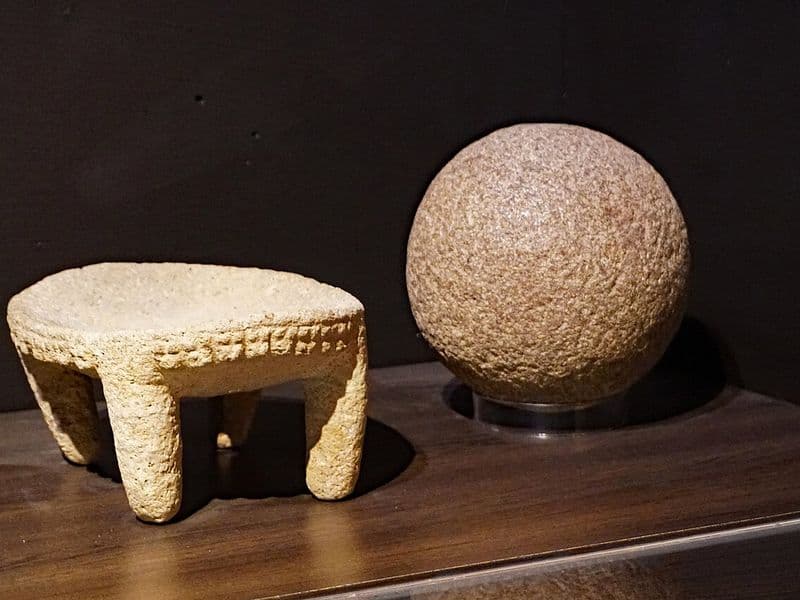
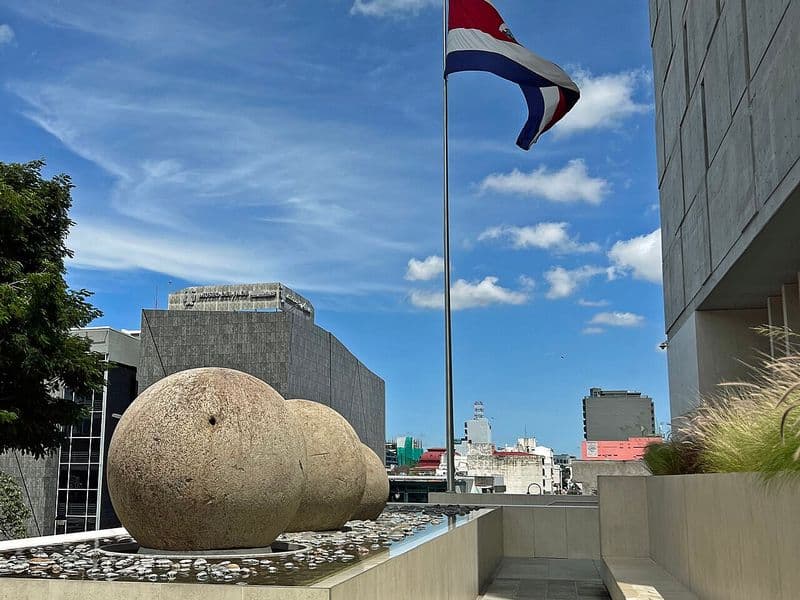
The most sophisticated pre-Columbian cultures in Costa Rica were concentrated in the Diquís Delta of the Southern Pacific, where the Diquís people created the famous polished stone spheres (Bolas de Granodiorita) that represent one of the most enigmatic archaeological phenomena in the Americas. These nearly perfectly spherical stones, ranging in size from a few centimeters to over two meters in diameter and weighing up to 16 tons, were carved with extraordinary precision using stone tools. Their purpose remains uncertain — theories include astronomical alignment, territorial markers, and symbols of chiefly status — but their craftsmanship demonstrates a sophisticated society with specialized artisanal capacity. The Diquís stone spheres were designated a UNESCO World Heritage Site in 2014.
The Bribri and Cabécar peoples of the Talamanca mountains, descendants of some of the region's earliest inhabitants, maintained complex societies based on cacao cultivation, forest management, and elaborate ceremonial traditions. The chiefdoms of the Pacific coast traded extensively with Mesoamerican cultures, as evidenced by jade artifacts, Olmec-style figurines, and ceramic styles found in archaeological sites across the country. Gold working was practiced in the southern regions, and gold artifacts from Costa Rica have been found in trade contexts as far away as Mexico.
The Diquís Stone Spheres
The stone spheres of the Diquís Delta — over 300 confirmed examples — are among the most remarkable pre-Columbian artifacts in the world. Carved from granodiorite, gabbro, and limestone, many achieve near-perfect spherical geometry with a tolerance measurable in millimeters, an achievement that puzzles modern engineers given that the Diquís people lacked metal tools or measuring instruments by modern definition. The spheres were being moved and rearranged by banana plantation workers in the early 20th century, and many were displaced from their original contexts. Those remaining in situ at the Finca 6 archaeological site provide important evidence of their original placement and possible ceremonial function.
Spanish Colonization (1502–1821)
Christopher Columbus reached the coast of present-day Costa Rica on his fourth and final voyage to the Americas in September 1502, landing near what is now Puerto Limón. The indigenous peoples he encountered offered gold ornaments in exchange for trade goods, leading the Spanish to name the region "Costa Rica" (Rich Coast), a name that would prove to be cruelly ironic given the colony's subsequent poverty. Despite Columbus's enthusiastic reports of gold wealth, systematic exploitation of the region's mineral resources proved elusive, and Costa Rica became one of Spain's most neglected and underdeveloped colonial territories.
The first permanent Spanish settlement was established in Cartago in 1563, approximately 60 years after Columbus's initial contact, reflecting the low priority placed on colonizing the region. Unlike the silver-rich mines of Mexico and Peru, Costa Rica offered few easily extractable resources and a relatively small indigenous labor force — further reduced by epidemic disease that killed the majority of the pre-Columbian population within decades of contact. The survivors were absorbed into the colonial system through the encomienda labor system, though the chronic shortage of exploitable indigenous labor meant that Spanish settlers in Costa Rica were forced to work their own land to a degree unusual in Latin American colonial society.
This circumstance of colonial poverty and frontier self-sufficiency had lasting effects on Costa Rican society. Without large haciendas worked by enslaved or coerced indigenous labor, a relatively egalitarian society of small landowners (pequeños propietarios) emerged in the Central Valley during the colonial period. Historians have argued that this demographic and economic equality — relative to other colonial societies — laid the groundwork for Costa Rica's later democratic political culture, though this "exceptionalism" narrative has also been critiqued for oversimplifying a more complex colonial reality that did include significant social stratification.
Cartago: The Colonial Capital
Cartago, established in 1563, served as the capital of colonial Costa Rica for its entire colonial period and into independence. The city experienced repeated devastation from indigenous raids, volcanic eruptions from nearby Irazú volcano, and earthquakes, giving it a turbulent history despite its administrative importance. The ruins of the Santiago Apóstol parish, known as "Las Ruinas," in the center of modern Cartago, remain as a reminder of the 1910 earthquake that destroyed the nearly completed church. Cartago lost its capital status to San José in 1823 following a brief civil conflict between the two cities.
Independence and the 19th Century
Costa Rica gained independence from Spain on September 15, 1821, along with the rest of Central America, in a declaration that Costa Rica's leaders learned about almost a month after it was issued in Guatemala City — a reflection of the region's isolation and poor communications. Independence was achieved without conflict, as the colonial administration peacefully transferred power in the context of Spain's weakening hold on its American colonies. Costa Rica briefly joined the Mexican Empire under Agustín de Iturbide and then the Federal Republic of Central America before withdrawing and declaring itself a fully sovereign republic in 1838.
The 19th century was shaped decisively by coffee, which was introduced in the early 1800s and became the country's primary export by the 1830s. Coffee generated unprecedented prosperity for the small farmer class of the Central Valley, funded public infrastructure including the Teatro Nacional, and created a coffee elite whose economic interests came to dominate politics. The Atlantic Railroad, built between 1871 and 1890 by contractor Minor Keith under extraordinarily difficult conditions through the jungle, connected the Central Valley to the Caribbean port of Limón, enabling efficient coffee export and transforming the eastern part of the country.
The Campaign of National Liberation in 1856–1857 against the American filibuster William Walker is celebrated as the foundational military achievement in Costa Rican history. Walker had seized control of Nicaragua and threatened to expand his slave-holding regime throughout Central America. President Juan Rafael Mora Porras organized a civilian army that fought alongside regional forces to defeat Walker's forces, culminating in the Battle of Rivas, where the young soldier Juan Santamaría died setting fire to Walker's fortified building. Walker was eventually captured and executed in Honduras in 1860, ending the threat he posed to Central American sovereignty.
The Coffee Boom and Social Change
Coffee's impact on 19th-century Costa Rica cannot be overstated. The crop created the economic surplus that funded the country's first public secondary school (the Colegio San Luis Gonzaga in Cartago, 1843), the first public primary school system (established by Mauro Fernández's 1886 education reforms), and the Teatro Nacional in San José (1897). The social consequences were mixed: coffee wealth democratized opportunity for Central Valley farmers while simultaneously creating economic pressure that marginalized subsistence farmers on the margins and brought large numbers of Jamaican and Chinese workers to build the railroad and work plantations under harsh conditions.
The 1948 Civil War and Abolition of the Army
The 1948 Costa Rican Civil War (Guerra del 48 or Revolución del 48) was a brief but consequential armed conflict that lasted 44 days and fundamentally reshaped the country's political trajectory. The conflict arose from a disputed 1948 presidential election in which Otilio Ulate Blanco had apparently defeated the incumbent government's candidate, but the Congress — controlled by the ruling party — annulled the election results. José Figueres Ferrer, a coffee farmer and politician who had been exiled for his opposition to the government, launched an armed uprising from his farm, La Lucha Sin Fin, in March 1948.
Figueres's Army of National Liberation defeated the government forces within six weeks, with approximately 2,000 lives lost — making it one of the shorter and less bloody civil conflicts in Latin American history, though not without genuine suffering. Rather than assuming the presidency himself immediately, Figueres established a governing junta that ruled for 18 months, during which it enacted a series of transformative reforms: the 1949 Constitution, nationalization of banking, universal suffrage including women and Black Costa Ricans (previously excluded), and the permanent abolition of the standing army — enshrined in Article 12 of the new constitution.
The abolition of the military, announced by Figueres on December 1, 1948, in a ceremony at the Bellavista Fortress (now the National Museum), is the single most internationally recognized act in Costa Rican history. Figueres symbolically handed the keys of the fortress to the Minister of Education, declaring that the military's budget would henceforth fund schools. The decision was both idealistic and pragmatic — the country lacked the resources for a meaningful military while maintaining expensive democratic institutions — but it has defined Costa Rica's identity ever since as a nation that resolves conflicts through law, diplomacy, and education rather than force.
José Figueres Ferrer: Don Pepe
José Figueres Ferrer, universally known as "Don Pepe," is the most important figure in modern Costa Rican history. He served as president three times (1948–1949, 1953–1958, and 1970–1974) and founded the Partido Liberación Nacional (PLN), which remains one of the two dominant political parties in Costa Rica. His decision to abolish the army, extend voting rights to women and Afro-Costa Ricans, nationalize the banking system, and establish an independent electoral authority (Tribunal Supremo de Elecciones) created the institutional foundations of modern Costa Rican democracy. His legacy is complex — his governments also carried out surveillance of political opponents and suppressed labor movements — but his foundational role in shaping democratic Costa Rica is undeniable.
Democratic Stability and Social Development
Following the 1948 civil war and the 1949 constitution, Costa Rica entered a period of remarkable political stability characterized by peaceful transitions of power between the two dominant political parties: the Partido Liberación Nacional (PLN), founded by Figueres, and the Partido Unidad Social Cristiana (PUSC). Elections held every four years since 1953 have been peaceful, with the losing party consistently accepting results — an achievement that stands in stark contrast to political violence that has periodically destabilized neighboring countries.
The economic model through the 1970s involved active state participation through nationalized banks, a national insurance monopoly (INS), and significant public investment in education, healthcare, and infrastructure. This social democratic model produced significant gains in human development: literacy rates rose to among the highest in Latin America, a universal public health system (Caja Costarricense de Seguro Social, or La Caja) extended medical care to the entire population, and life expectancy climbed to levels comparable with wealthy nations despite Costa Rica's middle-income status.
The 1980s brought severe economic crisis driven by collapsing commodity prices, the global debt crisis, and regional instability from civil wars in neighboring Nicaragua and El Salvador. Structural adjustment programs mandated by the IMF and World Bank pushed Costa Rica toward economic liberalization, reducing state enterprise and opening the economy to foreign investment. The arrival of Intel's semiconductor assembly plant in 1997 — attracted by the educated workforce and political stability — marked a turning point toward a high-value export model that would define economic development in the subsequent decades.
The Caja: Universal Healthcare
The Caja Costarricense de Seguro Social (CCSS), founded in 1941 and vastly expanded after 1948, is Costa Rica's universal public health insurance system and one of the country's proudest achievements. The Caja covers virtually the entire resident population for medical care, hospitalization, prescription drugs, and preventive services, funded through payroll contributions from employees, employers, and the state. Costa Rica's healthcare outcomes — life expectancy over 80 years, low infant mortality — rival those of much wealthier countries, demonstrating that well-organized public health investment can achieve results independent of per capita income.
Environmental Leadership in the Late 20th Century
Costa Rica's modern identity as a global leader in environmental conservation began taking shape in the 1970s and 1980s, as the government and civil society responded to alarming rates of deforestation that had eliminated most of the country's original forest cover by the mid-20th century. A series of policy decisions — establishing national parks, creating the National System of Conservation Areas (SINAC), passing strong environmental legislation, and developing innovative payment for ecosystem services (PES) programs — transformed Costa Rica from one of the most deforested countries in the Americas to one of the most successfully reforested.
President Óscar Arias Sánchez's administration (1986–1990) played a key role in elevating environmental protection alongside peace negotiations in Central America. The 1996 Forest Law established payments to private landowners who preserved forest on their property, creating economic incentives for conservation that reversed the trend of land clearing for cattle ranching. Forest cover, which had fallen to approximately 20% of the national territory in 1985, has recovered to over 50% by the 2020s — one of the most dramatic reforestation achievements in the world.
Ecotourism, which began as a niche market in the 1980s, grew into the country's most important industry by the early 21st century, creating economic value from intact natural ecosystems and aligning private economic incentives with conservation. Costa Rica's national parks — Corcovado, Manuel Antonio, Tortuguero, Arenal, and others — became internationally recognized destinations, drawing visitors from around the world and generating revenue that funded both conservation and local community development.
The Nobel Peace Prize and Arias Plan
Óscar Arias Sánchez won the 1987 Nobel Peace Prize for developing the Esquipulas II Accords, a peace framework that offered a pathway to end the civil wars simultaneously devastating El Salvador, Guatemala, and Nicaragua. The Arias Plan called for ceasefire, amnesty, democratization, and the halt of foreign support for guerrilla movements — all achieved without requiring military intervention. The Nobel award elevated Costa Rica's international standing as a peace-oriented democracy and reinforced the prestige of the army abolition, connecting it to a coherent foreign policy identity of peaceful conflict resolution.
Costa Rica in the 21st Century
The 21st century has seen Costa Rica navigate the challenges of a mature democracy confronting economic inequality, political corruption scandals, and the pressures of climate change, while maintaining its fundamental democratic institutions and its identity as an environmental and social model. The country's political landscape has diversified beyond the traditional PLN-PUSC duopoly, with evangelical-aligned parties, left-wing coalitions, and anti-establishment candidates gaining significance in presidential elections throughout the 2000s and 2010s.
Costa Rica legalized same-sex marriage on May 26, 2020, becoming the first country in Central America to do so. This milestone followed a 2018 ruling by the Inter-American Court of Human Rights — which is headquartered in San José — recognizing equal marriage rights, and a subsequent Constitutional Chamber (Sala IV) ruling that gave the Costa Rican legislature until May 2020 to amend the law or see it change automatically. The change was deeply controversial in a country with a significant and politically active evangelical population, but it ultimately occurred peacefully and within the democratic and legal framework.
The COVID-19 pandemic (2020–2022) severely damaged Costa Rica's tourism-dependent economy, with GDP contracting sharply and unemployment rising dramatically as international travel collapsed. The country's public health response, coordinated through the CCSS, was widely praised for its effectiveness relative to regional peers. Recovery has been gradual but sustained, with tourism rebounding strongly by 2022–2023 and tech sector employment continuing to grow. Costa Rica remains committed to its goal of becoming the world's first carbon-neutral economy, having already run its electrical grid on close to 100% renewable energy for multiple consecutive years.
Renewable Energy Achievement
Costa Rica has run its national electrical grid on 99–100% renewable energy for multiple consecutive years, drawing primarily on hydroelectric power, geothermal energy from its volcanic landscape, wind, and solar sources. This achievement, celebrated internationally, reflects decades of investment in public utility infrastructure (ICE — the Costa Rican Electricity Institute) and the fortunate geographic reality of a country with abundant rivers, active volcanoes, and consistent wind resources. The country has set targets to extend this decarbonization to the transportation sector, which remains largely fossil-fuel dependent, as the most significant remaining challenge in achieving true carbon neutrality.
Frequently Asked Questions
When did Costa Rica become independent?
Costa Rica gained independence on September 15, 1821, along with the rest of Central America, in a peaceful transfer of power from Spanish colonial administration. The news of independence reached Costa Rica nearly a month after it was declared in Guatemala City, reflecting the region's isolation at the time.
Why did Costa Rica abolish its military?
Following the 1948 Civil War, President José Figueres Ferrer abolished the army through Article 12 of the 1949 Constitution. His motivations included preventing future military coups, redirecting military spending to education and healthcare, and affirming a commitment to peaceful democracy. The decision was also pragmatic — Costa Rica lacked resources for a meaningful military while maintaining expensive democratic institutions.
What are the Diquís stone spheres?
The stone spheres of the Diquís Delta are pre-Columbian stone artifacts ranging from centimeters to over two meters in diameter, carved with near-perfect spherical geometry by the Diquís people of southern Costa Rica. Their purpose remains uncertain, with theories including territorial markers, astronomical alignment, and symbols of status. They were designated a UNESCO World Heritage Site in 2014.
Who was Juan Santamaría and why is he important in Costa Rica?
Juan Santamaría is Costa Rica's national hero, a young soldier from Alajuela who died in the 1856 Battle of Rivas while setting fire to a building fortified by American filibuster William Walker's forces. His self-sacrifice helped turn the battle in favor of Costa Rican and Central American forces. He is commemorated on April 11th (National Hero's Day) and represents the ideal of civilian courage in defense of democracy.
How did coffee shape Costa Rica's history?
Coffee, introduced in the early 1800s, became Costa Rica's primary export by the 1830s and served as the economic engine of national development throughout the 19th century. Coffee revenues funded public infrastructure, education reforms, and cultural institutions including the Teatro Nacional. The relatively egalitarian smallholder model of coffee cultivation in the Central Valley is also credited by historians with contributing to Costa Rica's more democratic political culture compared to neighboring countries.