

Costa Rica Hurricane Season: Risk, History & Traveler Guide
Costa Rica lies just south of the Atlantic hurricane belt, giving it a significantly lower hurricane risk than the Caribbean islands or Central American countries to the north. Direct hurricane strikes on Costa Rica are extremely rare—only a handful of major hurricanes have made landfall in the country's recorded history. However, Costa Rica does experience indirect effects from Atlantic and Pacific tropical systems, particularly affecting the Caribbean coast. Understanding Costa Rica's actual hurricane risk helps travelers make informed planning decisions.
Does Costa Rica Get Hurricanes?
Costa Rica is considered low-risk for direct hurricane strikes compared to most Caribbean island nations and some Central American neighbors. The country's position—approximately 8–11° north latitude—places it near the southern boundary of the Atlantic hurricane belt. Hurricanes require warm ocean water (at least 79°F/26°C), low wind shear, and favorable atmospheric conditions to develop and maintain strength. These conditions are typically found further north in the Caribbean.
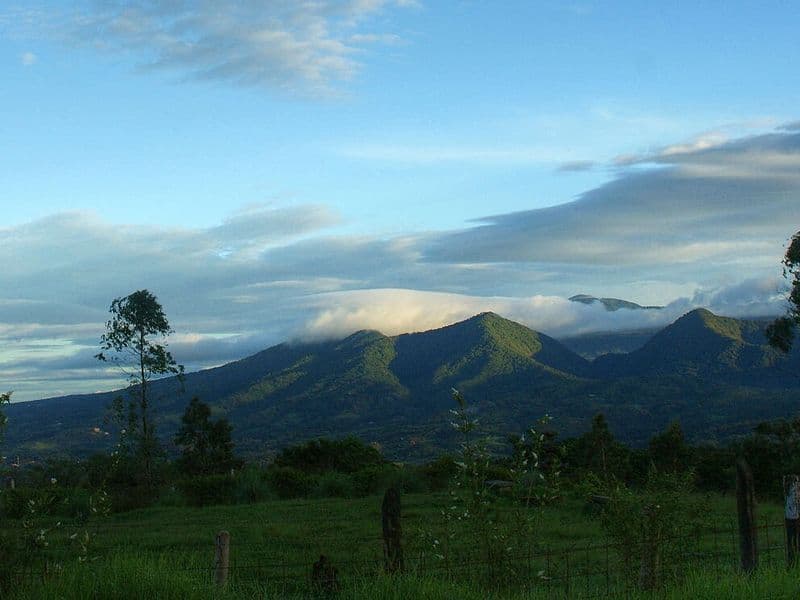
Direct major hurricane strikes on Costa Rica are extremely rare in recorded history. Most Atlantic hurricanes that develop in the Caribbean or Gulf of Mexico track northward or northwest, missing Costa Rica entirely. The country benefits from geographic protection provided by the mountainous terrain that deflects and weakens tropical systems that do approach from the Caribbean side.
Pacific Ocean hurricanes (technically called hurricanes east of the International Date Line and typhoons west of it) also rarely affect Costa Rica directly. The dominant Pacific tropical storm tracks take systems northward along Mexico's coast, rarely impacting Costa Rica's Pacific coast with sustained hurricane conditions.
Why Costa Rica Has Lower Hurricane Risk
Several factors reduce Costa Rica's hurricane risk: proximity to the equator (hurricanes rarely form or maintain strength below 10° north latitude), the Intertropical Convergence Zone creating atmospheric instability that disrupts storm organization, the Costa Rican mountain ranges that break up tropical systems crossing from the Caribbean, and the tendency for Atlantic hurricanes to track north or northwest before reaching Costa Rica's latitude. These factors combine to make Costa Rica's hurricane risk among the lowest in the Caribbean basin.
Hurricane Season Timing in Costa Rica
The Atlantic hurricane season officially runs from June 1 through November 30. The peak Atlantic hurricane months are August, September, and October. This timing overlaps significantly with Costa Rica's own rainy season on the Pacific coast (May–November), which can lead to confusion—the rainy season rainfall is caused by different atmospheric mechanisms than hurricanes, though both can intensify during the same general period.
The Eastern Pacific hurricane season is slightly longer, officially running from May 15 through November 30. Eastern Pacific tropical storms and hurricanes track primarily northward along Mexico's Pacific coast and rarely threaten Costa Rica directly, though very large Pacific systems can produce heavy rainfall in Costa Rica's Pacific watershed as they pass far offshore.
In practice, hurricane season in the context of Costa Rica travel planning means: the period from August through October when there is the highest probability that a tropical system in the Caribbean or Pacific might indirectly affect Costa Rica with enhanced rainfall, flooding, or road closures. The direct hurricane strike risk remains very low even during these peak months.
Official Season vs. Real Risk
Hurricane season spanning June–November is an official meteorological designation—not a prediction that Costa Rica will experience hurricane conditions. In most years, no tropical system significantly impacts Costa Rica despite falling within the technical hurricane season. Travelers should not avoid Costa Rica during hurricane season simply because of the dates. Instead, they should be aware of the small possibility of indirect tropical storm effects, particularly on the Caribbean coast, and have flexible travel insurance for their trips.
Historical Hurricanes Affecting Costa Rica
Costa Rica's recorded hurricane history is sparse, reflecting its genuinely low direct hurricane risk. The most notable tropical systems that directly affected Costa Rica in recent history include:
Hurricane César (1996) made landfall near Nicaragua and Costa Rica's Caribbean coast as a Category 1 system. It caused significant flooding and landslides, particularly on the Caribbean side. Damage included loss of life and major infrastructure damage, making César one of the most impactful tropical systems in Costa Rica's history.
Hurricane Joan (1988) tracked unusually far south before crossing Central America near Nicaragua and Costa Rica. It produced catastrophic flooding in Nicaragua and significant impacts in Costa Rica's Caribbean lowlands before exiting into the Pacific as Tropical Storm Miriam.
Tropical Storm Alma (2008) was notable because it was a Pacific system that crossed Central America and reformed as a Caribbean storm. It produced flooding in Costa Rica's Pacific watershed.
More recently, several Atlantic tropical storms have affected Costa Rica through enhanced moisture, contributing to flooding events on the Caribbean coast, without making direct landfall as hurricanes.
Flooding: The More Common Risk
For Costa Rica, tropical storms and even indirect effects from distant hurricanes pose a greater practical risk through heavy rainfall and flooding than through direct hurricane-force winds. The country's mountainous terrain, significant rivers, and high rainfall baseline mean that additional moisture from a tropical system can quickly cause river flooding, landslides, and road closures. September and October—the wettest months—combined with a nearby tropical system's additional moisture can produce Costa Rica's most significant weather events of the year.
Tropical Storm and Weather System Effects
While direct hurricane strikes are rare, Costa Rica does experience weather effects from tropical systems in the region. These effects include: enhanced rainfall across the Caribbean coast and sometimes the Pacific coast, stronger-than-usual ocean swells on both coasts (making beach swimming and boat activities dangerous), potential flooding on major rivers (particularly the Río Reventazón, Río Pacuare, and Río Tempisque), landslides on steep mountain roads, and temporary road closures in low-lying areas.
The Caribbean coast of Costa Rica (particularly the lowlands around Limón, Puerto Viejo, and Cahuita) is most directly affected by Atlantic tropical systems. Even storms tracking through the Caribbean far to the north of Costa Rica can produce sustained heavy rainfall on the Caribbean side due to moisture pumped by the circulation of the storm.
The Pacific coast's relationship to tropical systems is more indirect. Pacific tropical systems mostly track north-northwest along Mexico's coast. However, when Atlantic hurricanes cross Central America and reform in the Pacific (a relatively rare event), or when large Pacific systems are positioned offshore, Costa Rica's Pacific coast can see enhanced swells and rainfall.
Travel Disruptions from Tropical Systems
The most common travel disruptions in Costa Rica related to tropical systems are: road closures due to flooding or landslides (particularly on mountainous routes), delayed or cancelled domestic flights (Sansa and Green Airways cancel small plane flights when cloud ceilings are too low), increased river levels making crossings dangerous, and rough seas cancelling boat-based tours and water activities. These disruptions are most likely September–October and most affect the Caribbean coast and mountainous interior routes.
Caribbean Coast Hurricane Risk
The Caribbean coast of Costa Rica—including the Limón province, Puerto Viejo de Talamanca, Cahuita, and Tortuguero—carries a higher tropical storm risk than the Pacific coast. Atlantic hurricanes that track through the Caribbean to the north of Costa Rica can produce significant rainfall, coastal flooding, and dangerous marine conditions on this coast even when they don't make direct landfall.
The Caribbean coast is also Costa Rica's rainiest region year-round, with no true dry season. The base rainfall of 100–150 inches (2,540–3,810 mm) annually means that additional moisture from a tropical system can very quickly overwhelm drainage systems and cause significant flooding. The Río Sixaola on the border with Panama and the Río Reventazón near Limón are particularly prone to flooding during heavy rainfall events.
Hurricane season impacts on tourism to the Caribbean coast: some smaller tour operators may cancel activities due to rough sea conditions, Caribbean coastal accommodations may lose power temporarily during storm events, and road access to remote areas (like Tortuguero, which is only accessible by boat or small plane) may be more complicated during significant storm events.
Tortuguero During Hurricane Season
Tortuguero National Park operates year-round, and July through September is actually peak season for sea turtle nesting (the primary tourist attraction). This overlaps with peak hurricane season in the Atlantic. In practice, most years see the park operating normally throughout turtle season without significant hurricane impacts. In years when a tropical storm tracks close to Costa Rica's Caribbean coast, Tortuguero boat access from Limón may be suspended for 1–3 days. Travel insurance providing coverage for weather delays is highly recommended for Tortuguero turtle season visits.
Pacific Coast and Hurricane Season
Costa Rica's Pacific coast has minimal direct hurricane risk. Atlantic hurricanes must cross the Central American land mass—losing significant strength in the process—before reaching the Pacific. These systems, if they survive the crossing, emerge into the Pacific as weakened tropical depressions or tropical storms. The Pacific coast can then experience enhanced rainfall from these weakened systems.
Eastern Pacific tropical storms and hurricanes primarily affect Mexico's coast from the Gulf of Tehuantepec northward. Rare exceptions occur when Pacific systems track very close to Central America's Pacific coast, potentially producing heavy rainfall and rough seas in Costa Rica. The southern Pacific coast (near the Osa Peninsula and the Panama border) is somewhat more susceptible to Pacific system effects due to its southerly position.
In practical terms, Pacific coast beach destinations (Guanacaste, Jacó, Manuel Antonio) have extremely low hurricane risk. The rainy season weather that visitors experience in September and October at Pacific coast destinations is driven by seasonal atmospheric patterns, not by hurricanes or tropical storms directly.
El Niño and La Niña Effects
El Niño and La Niña climate cycles affect Costa Rica's rainfall patterns and hurricane activity. During El Niño years, the Pacific coast typically receives below-average rainfall (a drier rainy season) while the Caribbean may be wetter. Atlantic hurricane activity tends to decrease during El Niño. During La Niña, the Pacific coast sees above-average rainfall and the Atlantic hurricane season tends to be more active. These climate oscillations occur on 3–7 year cycles and affect Costa Rica's weather more significantly than direct hurricane activity in most years.
Travel Planning During Hurricane Season
Hurricane season coincides with Costa Rica's rainy season—which is when most travelers are already navigating higher rainfall and afternoon storms. The additional specific hurricane risk is very low for most Costa Rica destinations. Practical travel planning considerations for rainy/hurricane season travel:
Travel insurance: Purchase comprehensive travel insurance with trip cancellation, interruption, and weather-related delay coverage. This is smart practice for any Costa Rica trip but particularly valuable for rainy season travel that could be affected by unusual storm activity.
Flexibility: Build flexibility into your itinerary, particularly for activities that are weather-dependent (boat tours, outdoor adventures, flights between small regional airports). Having backup indoor activities and flexible booking policies reduces stress if a tropical system affects your destination.
Stay informed: Monitor weather through the Costa Rica meteorological service (IMN - Instituto Meteorológico Nacional) or international tropical weather services during hurricane season travel. The National Hurricane Center (NOAA) tracks all Atlantic and Pacific tropical systems in real time.
Travel Insurance for Hurricane Season
For travel to Costa Rica during hurricane season (June–November), comprehensive travel insurance should cover: trip cancellation due to a declared hurricane in your destination, trip interruption due to weather events, medical evacuation, and weather-related accommodation or activity changes. Cancel-for-any-reason (CFAR) policies provide the most flexibility but cost more (typically 40–50% premium over standard coverage). Standard travel insurance with hurricane clauses provides solid protection for most travelers at a lower premium.
Frequently Asked Questions
Does Costa Rica get hit by hurricanes?
Rarely. Costa Rica's position south of the main hurricane belt and the protective effect of its mountain ranges means direct major hurricane strikes are extremely uncommon. Most Atlantic hurricanes track north or northwest, bypassing Costa Rica. The Caribbean coast carries a higher risk than the Pacific coast of feeling indirect tropical storm effects, but major direct hurricane impacts are rare in recorded history.
When is hurricane season in Costa Rica?
The Atlantic hurricane season officially runs June 1–November 30, with peak activity in August–October. This overlaps with Costa Rica's Pacific rainy season. In practice, most years see no significant hurricane impact in Costa Rica. The Caribbean coast is most susceptible to indirect effects from tropical systems in the Caribbean during this period.
Is it safe to visit Costa Rica during hurricane season?
Yes, Costa Rica is generally safe to visit during hurricane season. The direct hurricane risk is very low. The main weather challenge is the rainy season itself—not hurricanes—which brings afternoon rains, potential flooding, and occasional road closures. Purchase comprehensive travel insurance, build itinerary flexibility, and monitor weather during your trip. Most visits during hurricane season proceed without significant disruption.
Which part of Costa Rica is most affected by hurricanes?
The Caribbean coast (Limón province, Puerto Viejo, Cahuita, Tortuguero) carries the highest risk of hurricane-related impacts in Costa Rica. Atlantic tropical systems tracking through the Caribbean can produce heavy rainfall and rough seas on this coast even without making landfall. The Pacific coast has minimal direct hurricane risk as Atlantic storms must cross the land mass to reach it.
What should I do if a hurricane threatens Costa Rica during my trip?
Monitor updates from the Costa Rica Meteorological Institute (IMN) and National Hurricane Center (NOAA). Follow guidance from your hotel—Costa Rican hotels have protocols for tropical weather events. Move away from low-lying coastal areas if instructed by local authorities. Avoid river crossings during heavy rainfall. Have your travel insurance documents accessible. Contact your airline early about rebooking options if significant storm impacts are likely.