
Costa Rica International Airports: SJO vs. LIR Compared
Costa Rica has two international airports handling commercial passenger traffic: Juan Santamaría International (SJO) near San José and Daniel Oduber Quirós International (LIR) near Liberia in Guanacaste. Choosing the right one for your itinerary is one of the most impactful decisions you'll make when planning a Costa Rica trip.
Overview of Costa Rica's International Airports
Costa Rica has two commercial international airports certified to handle scheduled international passenger flights. Both are operated by AERIS (Aeropuertos de Costa Rica S.A.) under a concession agreement with the Costa Rican government. The airports serve distinct geographic regions of the country and together accommodate the full range of international visitors arriving by air.
Juan Santamaría International Airport (SJO) is the primary hub, located in Alajuela near San José in the country's Central Valley. Daniel Oduber Quirós International Airport (LIR) is the secondary international gateway, located near Liberia in the Guanacaste province on Costa Rica's northern Pacific coast. A third airport, Tobías Bolaños International (SYQ) near San José, handles some charter and private aviation but does not receive scheduled international commercial flights.
Combined, SJO and LIR handle approximately 5–6 million international passengers per year. SJO accounts for roughly 75–80% of total international air traffic, while LIR handles the remainder, predominantly from North American leisure travelers visiting the Pacific beaches of Guanacaste.
Airport Operator: AERIS
Both international airports are operated by AERIS (Aeropuertos de Costa Rica S.A.) under a long-term concession from the Costa Rican government. AERIS has invested significantly in infrastructure upgrades at both airports in recent years, improving terminals, adding boarding bridges, and expanding capacity. Real-time flight information for both airports is available at the AERIS website and app.
Juan Santamaría Airport (SJO) – San José
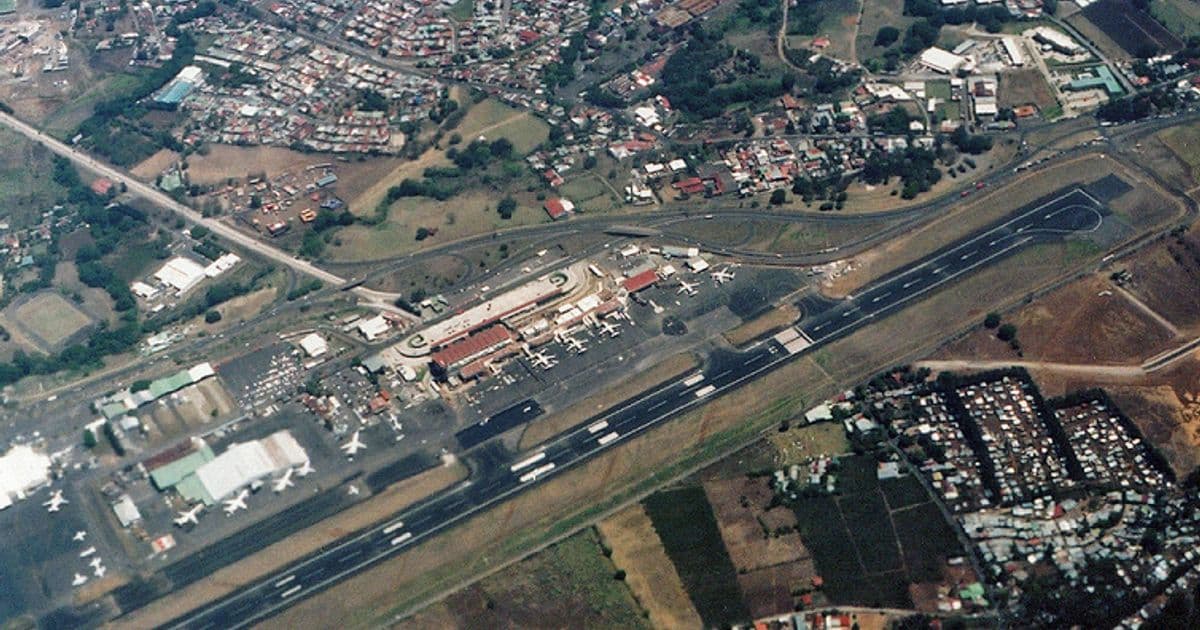
Juan Santamaría International Airport (IATA: SJO) is Costa Rica's primary international gateway and the largest airport in Central America by passenger volume. Located in Alajuela, approximately 17 kilometers northwest of San José's city center, it serves as the arrival and departure point for the majority of international visitors to the country.
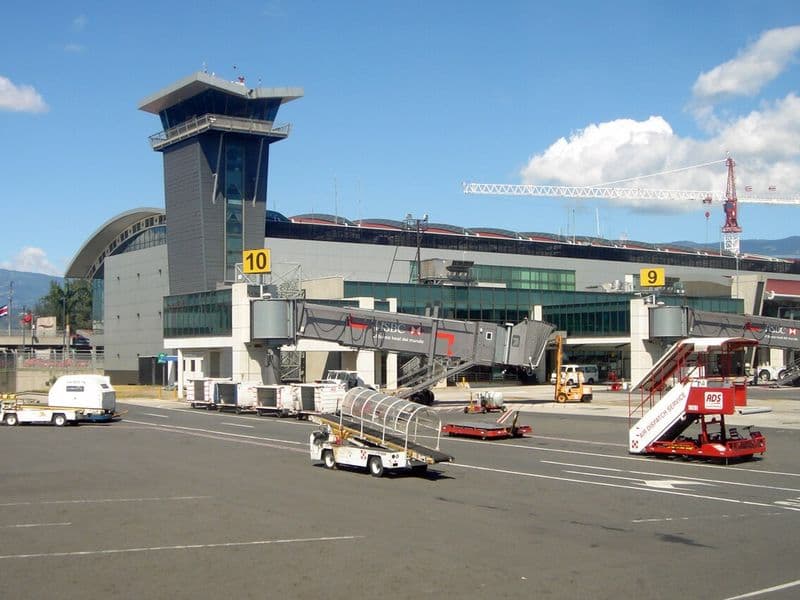
SJO has a single main international terminal with multiple boarding gates (A, B, and C areas) served by jetways. The terminal includes international check-in counters, security screening, duty-free shops, restaurants, cafes, ATMs, currency exchange, and car rental counters. A separate, smaller domestic terminal serves Sansa Airlines domestic routes.
The airport operates around the clock and handles a daily bank of arrivals from major US hubs typically concentrated in the early morning (flights arriving overnight from East Coast cities) and midday. The highest passenger volumes occur during December–January and March–April, when immigration lines can extend processing times significantly. The airport elevation of approximately 920 meters above sea level gives it a mild, comfortable temperature compared to the lowland coastal areas.
SJO Airport Facts
IATA code: SJO. ICAO code: MROC. Elevation: 920 meters (3,020 ft) ASL. Runways: Two (one primary international runway). Operating hours: 24/7. Location: Alajuela, 17 km northwest of San José. Distance to Arenal: ~3.5 hours. Distance to Manuel Antonio: ~3 hours. Distance to Tamarindo: ~4 hours.

Daniel Oduber Quirós Airport (LIR) – Liberia
Daniel Oduber Quirós International Airport (IATA: LIR) is named after a former Costa Rican president and is located approximately 12 kilometers from the city of Liberia in Guanacaste province. It serves as the primary entry point for visitors to Costa Rica's northern Pacific coast, including the beach towns of Tamarindo, Flamingo, Conchal, Playa del Coco, and the Nicoya Peninsula.
LIR is a smaller, more intimate airport than SJO, which many travelers find refreshingly efficient. The terminal is a single building handling both arrivals and departures. Immigration processing at LIR tends to be faster than at SJO due to lower absolute passenger volumes, and most arriving passengers clear customs and reach the exit within 45–75 minutes of landing.
The airport has undergone significant expansion to accommodate growing demand, adding international check-in counters, boarding bridges for large aircraft, and improved passenger facilities. A selection of shops, a restaurant, ATMs, and car rental counters are available. LIR does not currently handle domestic scheduled flights — it is a purely international gateway whose passengers disperse to coastal destinations by rental car, taxi, or shuttle.
LIR Airport Facts
IATA code: LIR. ICAO code: MRLB. Elevation: 88 meters (289 ft) ASL. Operating hours: Varies by season; concentrated daytime operations. Location: Liberia, Guanacaste, 12 km from city center. Distance to Tamarindo: ~1 hour. Distance to Flamingo: ~45 minutes. Distance to Arenal: ~3 hours. Distance to Nicoya Peninsula: ~2–3 hours (including ferry).
Airlines and International Routes
SJO offers the broadest range of international routes, with year-round service from US hubs including Miami (American), Houston (United), Atlanta (Delta), New York JFK/Newark (American, United), Los Angeles (United, Delta), Dallas (American), and others. Canadian carriers Air Canada and WestJet operate routes from Toronto, Montreal, Calgary, and Vancouver. Copa Airlines provides connections to Panama City (hub for connections throughout Latin America). Avianca connects to Bogotá and other South American gateways. Iberia offers European connectivity via Madrid.
LIR receives primarily North American leisure traffic, with the concentration of service during the peak tourist season (December–April). Year-round US service includes flights from Miami (American), Atlanta (Delta), and Houston (United). Seasonal and high-frequency service is added from New York, Boston, Chicago, Dallas, Los Angeles, Minneapolis, Charlotte, Philadelphia, and other US cities during peak winter months. WestJet and Sunwing serve Canadian markets. Southwest Airlines and JetBlue also operate seasonal LIR service.
Travelers from Europe typically fly into SJO, either via a US hub connection or on direct service from Madrid (Iberia). LIR is rarely the optimal gateway for European travelers due to limited direct service, though connections via Miami or Atlanta are operationally straightforward.
Comparing Flight Availability
SJO consistently offers more year-round flight options, more airlines, and more destination diversity than LIR. If your travel dates fall outside peak season (May through November), flight options into LIR may be significantly reduced or restricted to a few carriers. SJO maintains robust year-round international schedules regardless of season, making it more flexible for green season travel.
Which Airport Should You Choose?
The choice between SJO and LIR is primarily a geographic decision based on your Costa Rica itinerary. Use this simple framework: if your first or primary destination is in Guanacaste (Tamarindo, Flamingo, Conchal, Playa del Coco, Sámara, Nosara, Junquillal) or the northern Nicoya Peninsula (Mal País, Santa Teresa via ferry), fly into LIR. For everything else — Arenal, Monteverde, Manuel Antonio, the Caribbean coast, the Osa Peninsula, or San José itself — fly into SJO.
For itineraries that combine both coasts or multiple regions, consider an open-jaw routing: fly into LIR, travel south through Guanacaste and the Pacific coast, and depart from SJO (or vice versa). This eliminates backtracking and can be booked on most major carriers as a standard open-jaw itinerary for little or no additional fare.
Price comparison is also worth doing. SJO may offer lower fares due to higher route competition, even if LIR is theoretically closer to your first destination. The savings in airfare may outweigh the added driving time to your destination when routing through SJO, particularly for travelers on flexible budgets.
Open-Jaw Itinerary Strategy
A classic open-jaw route for a 10–14 day Costa Rica trip: arrive LIR, spend 3–4 nights in Guanacaste beaches, drive or shuttle to Arenal (3 hours), spend 2–3 nights in La Fortuna, continue to Monteverde (2 hours), then descend to Manuel Antonio or fly from SJO. This northto-south routing (or reverse) is the single most popular structure for first-time Costa Rica visitors combining beach and nature.
Immigration and Entry Process
The immigration and customs process is essentially the same at both SJO and LIR. Upon arrival, passengers complete the Costa Rica immigration entry form (available on paper during the flight or digitally at kiosks before reaching the immigration officer). Present your passport and form at immigration. Citizens of the US, Canada, EU, and most developed-country passport holders receive a tourist stamp for up to 90 days without a visa.
After immigration, collect checked baggage at the carousels and proceed through customs. Costa Rica operates a red/green lane system at SJO — passengers with nothing to declare may use the green lane, subject to random inspection. At LIR, customs processing is typically streamlined for the beach-going clientele who predominantly arrive without restricted items.
Food products (especially fresh fruits, vegetables, meat, and dairy) must be declared and may be confiscated. Plants and soil are prohibited. Prescription medications should be in original packaging with a doctor's note for controlled substances. Cash over $10,000 USD must be declared but is generally not an issue for leisure travelers.
Wait Times at Each Airport
Immigration wait times at SJO can range from 15 minutes to 2+ hours depending on the time of arrival and number of simultaneous flights. Morning arrival peaks (between 7 AM and 10 AM) when multiple international overnight flights land together produce the longest lines. LIR typically has shorter waits due to lower volume, but can also back up when multiple wide-body flights arrive within the same hour during peak season.
Airport Transportation Compared
Both SJO and LIR offer broadly similar transportation options: regulated taxis, Uber, car rentals, and pre-booked private or shared shuttles. The key difference is that SJO has far more transportation volume and options given its larger passenger base, while LIR has proportionally more rental cars and resort shuttles reflecting its beach-focused clientele.
At SJO, official orange metered taxis provide reliable service to San José and the greater Central Valley. Uber is widely available. Car rental agencies (all major international brands plus local agencies) have desks in the arrivals hall. Public bus service to San José exists for budget travelers. Shuttle services to Arenal, Monteverde, Tamarindo, and other destinations can be pre-booked and depart from the arrivals area on schedule.
At LIR, car rental is the dominant choice given that most destinations require an independent vehicle. Resort shuttles for all-inclusive guests are common, with pre-arranged hotel vans meeting guests at the arrivals exit. Taxis from LIR tend to be more expensive per kilometer than in San José due to the more tourist-oriented setting. Uber operates at LIR but availability is more limited than at SJO.
Car Rental at LIR vs. SJO
Car rental desks at both airports are staffed by the same major agencies (Hertz, Budget, Alamo, Avis, National, and local companies). Rates and vehicle availability are comparable. Book in advance for peak season travel regardless of which airport you use. A 4WD vehicle is particularly important when flying into LIR if your itinerary includes beach towns accessible via unpaved roads, which includes many Guanacaste and Nicoya Peninsula communities.
Frequently Asked Questions
How many international airports does Costa Rica have?
Costa Rica has two commercial international airports handling scheduled international passenger flights: Juan Santamaría International (SJO) near San José, and Daniel Oduber Quirós International (LIR) near Liberia in Guanacaste. Both are operated by AERIS under a government concession.
Is it better to fly into San José or Liberia for a Costa Rica vacation?
It depends on your itinerary. Fly into Liberia (LIR) for Guanacaste beaches, the Nicoya Peninsula, and northern Pacific destinations. Fly into San José (SJO) for Arenal, Monteverde, Manuel Antonio, the Caribbean coast, or the Osa Peninsula. For trips covering both regions, an open-jaw itinerary (fly into one, out of the other) is an efficient solution.
Does Liberia airport (LIR) have direct flights from the USA?
Yes. LIR receives direct flights from multiple US cities including Miami (American), Atlanta (Delta), Houston (United), New York, Chicago, Dallas, Los Angeles, and others — many operating seasonally with highest frequency during the December–April peak season. Year-round service is more limited than at SJO.
Which Costa Rica airport is less crowded?
Liberia (LIR) is significantly less crowded than San José (SJO). Immigration lines at LIR are typically shorter, baggage claim is faster, and the overall arrival experience is more relaxed. This is one of the reasons many experienced travelers prefer flying into LIR when Guanacaste is their primary destination, even if the schedule is less flexible.
Can I fly into one Costa Rica airport and out of the other?
Yes. An open-jaw itinerary — flying into SJO and out of LIR, or vice versa — is a popular and practical strategy for travelers covering multiple regions. Most major airlines offer open-jaw booking without a significant price premium. This eliminates backtracking and allows for a more efficient one-direction route through the country.