
Costa Rica Itinerary: How to Plan the Perfect Route
Planning a Costa Rica itinerary requires balancing the desire to see everything with the reality that distances take longer than maps suggest. The country's diverse regions — volcanoes, cloud forests, Pacific beaches, Caribbean coast — are all within a few hours of each other, making a thoughtful multi-region itinerary very achievable in 7–14 days.
How to Build a Costa Rica Itinerary
Building a Costa Rica itinerary requires understanding the country's geography and how distances translate to actual travel times. Costa Rica is small in area but large in travel time — a 150-kilometer straight-line distance can translate to 4–6 hours of driving on mountain roads with switchbacks, road construction, and occasional unpaved sections. Add time for wildlife stops, meals, and check-in procedures at lodges, and days fill up quickly.
The most common mistake in first-time Costa Rica itineraries is overpacking destinations. Trying to visit more than two or three distinct regions in a week leads to exhausting drives and too little time to appreciate each place. A more satisfying approach is to choose two or three regions, allow 2–3 nights at each, and leave some flexibility in the daily schedule for spontaneous encounters — a roadside sloth, a sudden rainbow over Arenal, an impromptu invitation to a local family's farm.
Decide early whether you'll rent a car or use a combination of shuttles and domestic flights. Car rentals give maximum flexibility but require confidence on challenging roads. Shared shuttles connect major tourist hubs on fixed schedules. Domestic flights cut multi-hour drives to under an hour for routes like San José to Quepos or San José to Tamarindo. Many itineraries combine all three methods — rental car for some legs, shuttle for others, and a domestic flight for the most time-consuming transfer.
Choosing Your Entry and Exit Points
Your itinerary's shape is influenced by whether you fly into San José (SJO), Liberia (LIR), or use an open-jaw routing between the two. Flying into LIR and out of SJO (or vice versa) allows a linear itinerary that moves in one direction through the country without backtracking. This is particularly effective for routes that move north-to-south along the Pacific coast or combine the Guanacaste coast with inland nature destinations before ending in San José.
Classic 7-Day Costa Rica Itinerary
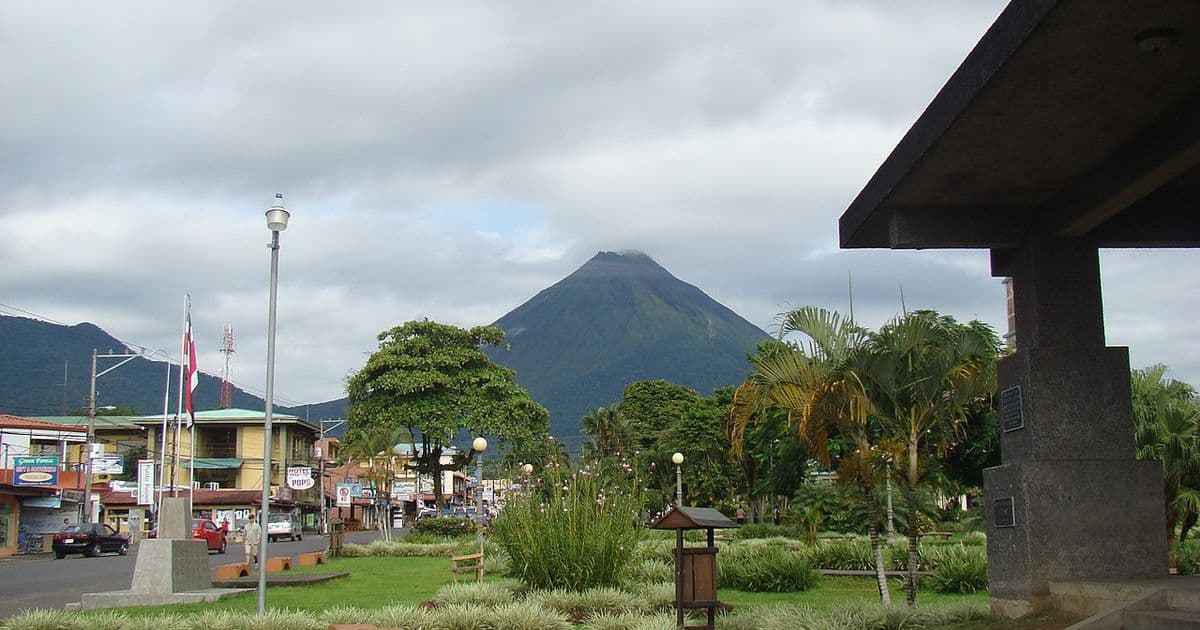
A 7-day Costa Rica itinerary works best when focused on two or three iconic destinations rather than trying to cover the entire country. The classic 7-day route combines Arenal Volcano, Monteverde Cloud Forest, and a Pacific beach destination, with most travelers flying into San José or Liberia.
Day 1: Arrive SJO, overnight in Alajuela near the airport. Day 2: Transfer to La Fortuna/Arenal (3.5 hours via car or shuttle); afternoon hanging bridges walk or waterfall tour. Day 3: Arenal Volcano National Park hiking, afternoon hot springs. Day 4: Transfer to Monteverde (2.5 hours via the lake crossing / boat-jeep-boat combo is the most scenic and fastest route); afternoon coffee or chocolate tour. Day 5: Full day in Monteverde — canopy zipline tour, cloud forest hike, and hummingbird garden. Day 6: Transfer to Pacific coast (Tamarindo or Manuel Antonio, depending on which airport you're departing from); afternoon beach and sunset. Day 7: Morning beach time, afternoon transfer to airport for departure.
This 7-day route showcases three distinct ecosystems — volcano zone, cloud forest, and Pacific coast — without rushing and with manageable travel days. It's the most commonly recommended structure for first-time visitors with limited time.
The Boat-Jeep-Boat Option
The classic transfer from La Fortuna to Monteverde involves a scenic boat crossing of Lake Arenal followed by a 4WD jeep transfer through the mountains — commonly called the 'jeep-boat-jeep' or 'boat-jeep-boat' combo. This route takes approximately 3 hours total and is far more scenic and often faster than the road alternatives. It costs $25–$35 per person through shuttle companies and can be booked through your hotel or online.
10-Day Itinerary: The Best of Nature and Beaches
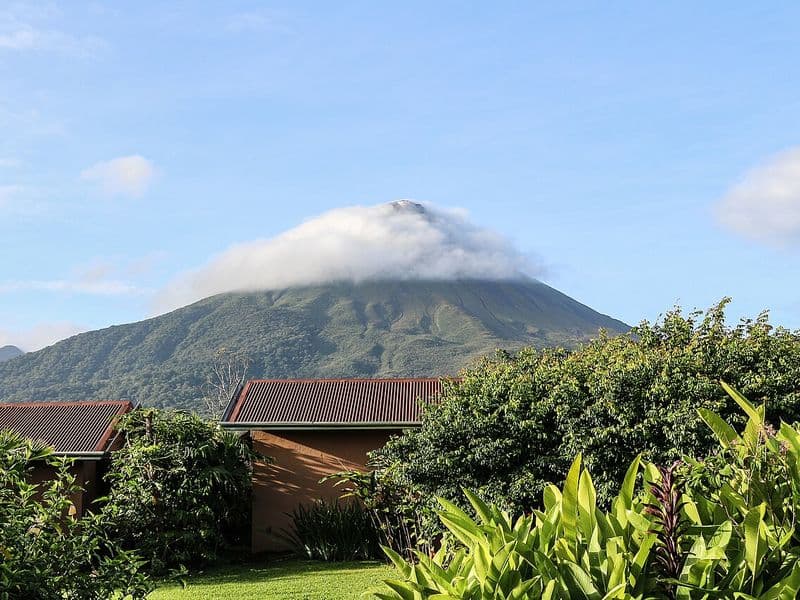
Ten days allows a significantly richer Costa Rica experience, adding the Caribbean coast, the Osa Peninsula, or additional beach time to the core volcano-cloud forest-Pacific route. A popular 10-day structure flies into Liberia (LIR) and out of San José (SJO) for a smooth, non-backtracking route.
Day 1: Arrive LIR, drive to Tamarindo (75 minutes), beach afternoon and sunset. Day 2: Full day Tamarindo — surfing lesson, wildlife boat tour at the estuary, afternoon beach. Day 3: Drive to Arenal/La Fortuna (3.5 hours); afternoon waterfall swim at Rio Celeste or La Fortuna Waterfall. Day 4: Full day Arenal — volcano park hike, afternoon hot springs at the base of the volcano. Day 5: Scenic transfer to Monteverde; afternoon coffee tour. Day 6: Full day Monteverde — canopy zipline, cloud forest reserve walk, night wildlife tour. Day 7: Drive or shuttle to Manuel Antonio (4 hours); check in, evening at Quepos. Day 8: Full day Manuel Antonio National Park — guided wildlife walk, beach swimming in the cove. Day 9: Manuel Antonio beach day or optional waterfall tour. Day 10: Transfer to SJO (3 hours), departure.
Adding the Caribbean to a 10-Day Trip
For travelers flying into and out of SJO who want to add the Caribbean coast, an alternative 10-day structure goes San José → Caribbean (Puerto Viejo, 4–5 hours drive via Route 32) → Arenal → Monteverde → Manuel Antonio → SJO. This adds the Afro-Caribbean culture, jungle wildlife, and calmer Caribbean waters, though Route 32 can be a challenging mountain drive in rainy conditions.
14-Day Complete Costa Rica Itinerary
Two weeks allows for a genuinely comprehensive Costa Rica experience, covering all major regions at a relaxed pace. A 14-day itinerary can comfortably include the Guanacaste coast, Arenal, Monteverde, Manuel Antonio, and the Caribbean coast — touching virtually every ecosystem the country offers.
The 14-day route typically structures as follows: 3 nights Guanacaste beach (Tamarindo or Flamingo, arriving via LIR). 3 nights Arenal Volcano/La Fortuna. 2 nights Monteverde Cloud Forest. 3 nights Manuel Antonio/Pacific coast. 3 nights Caribbean coast (Puerto Viejo or Tortuguero). Depart from SJO.
With 14 days, each destination gets adequate time to breathe. You can linger at a particularly rewarding wildlife trail, spend an extra morning at the hot springs, take an unplanned detour to a roadside waterfall, or simply rest in a hammock and listen to the monkeys without feeling rushed. Rest days are not wasted days in Costa Rica — the country delivers experiences even when you're not actively seeking them.
Adding the Osa Peninsula
For a 14-day itinerary that substitutes the Osa Peninsula for one of the other beach zones, replace the Manuel Antonio segment with the Osa Peninsula (Drake Bay or Puerto Jiménez / Corcovado). Getting there requires a domestic flight (San José to Puerto Jiménez or Drake Bay, ~50 minutes) or a combination of driving and boat. The Osa's wildlife density in Corcovado National Park is unmatched — but it's more physically demanding and logistically complex than Manuel Antonio.
Itinerary Planning by Interest
Different travel interests call for different itinerary structures. For wildlife and birding enthusiasts: prioritize Monteverde (quetzals, cloud forest birds), Corcovado / Osa Peninsula (tapirs, scarlet macaws, poison dart frogs), Tortuguero (green sea turtles, caimans, river birds), and Carara National Park (scarlet macaws). These destinations have higher guide-to-wildlife encounter ratios than more casually accessible parks.
For surfers: base yourself in Tamarindo (beginners and intermediates, consistent beach breaks), Nosara (intermediate, consistent beach break at Playa Guiones), Santa Teresa / Mal Pais (intermediate to advanced, powerful beach breaks), or Jacó (central Pacific, accessible, variety of breaks). The rainy season (May–November) generally produces more consistent Pacific swells for surfing. A dedicated surf trip can be structured around a single beach town with day trips to nearby breaks rather than the typical multi-destination nature route.
For adventure seekers: anchor in La Fortuna (white-water rafting, canyoning, ziplining, mountain biking), add Monteverde (world-class canopy zipline, bungee jumping), and the Turrialba area (Pacuare River rafting, class IV–V rivers). A 7-day adventure-focused itinerary based in La Fortuna with a Monteverde side trip provides an extremely activity-dense experience.
Beach vs. Nature Itinerary Structure
Many first-time visitors are torn between beach time and nature exploration. The good news is that Costa Rica rarely forces a choice — most beach destinations have accessible nature nearby. Manuel Antonio pairs world-class beaches with an excellent national park. Nosara has yoga retreats and wildlife tours alongside surf. The Nicoya Peninsula's remote beaches like Malpaís and Montezuma have waterfalls, reserve hiking, and wildlife. Plan 60-70% nature if that's your passion, 60-70% beach if that's yours, and accept some of both regardless.
Transportation Between Destinations
Transportation logistics are the backbone of any Costa Rica itinerary. For most multi-destination trips, a combination of methods works best: rental car for independent exploration in specific regions, shared shuttles for major hops between tourist hubs, and domestic flights for the most time-consuming or logistically challenging transfers.
Shared shuttle networks (Interbus, Caribe Shuttle, Tropical Tours Shuttles) connect virtually all major tourist destinations on regular schedules at prices of $40–$70 per person one way. They pick up at hotels, which is a major convenience. The trade-off is that you're locked into departure times and may share the van with strangers. For groups of 3+ people, private transfers often make more sense economically than multiple shuttle seats.
Domestic flights with Sansa Airlines dramatically reduce travel times for longer routes. San José to Quepos (Manuel Antonio) takes 3.5 hours by road — or 20 minutes by air for approximately $100–$150 each way. San José to Tamarindo is 4+ hours by road or 50 minutes by air. For travelers with limited time, domestic flight segments can reclaim hours that are better spent at the destination itself.
Realistic Drive Times
Key drive times to build into your Costa Rica itinerary planning: SJO to La Fortuna: 3–3.5 hours. La Fortuna to Monteverde (road): 3 hours. La Fortuna to Monteverde (jeep-boat-jeep): 2.5–3 hours. Monteverde to San José: 3 hours. San José to Manuel Antonio: 3–3.5 hours. San José to Puerto Viejo (Caribbean): 4–5 hours. Liberia to Tamarindo: 1–1.5 hours. SJO to Liberia: 4 hours. Add 20–30% buffer time for road conditions, stops, and unexpected delays.
Practical Itinerary Tips
Book your first and last night accommodations near your arrival and departure airports respectively — particularly your last night before a morning departure. Staying in Alajuela (near SJO) or Liberia city (near LIR) the night before a flight is far less stressful than attempting an early morning drive across Costa Rica. Many airport-area hotels offer free or low-cost shuttle service to the terminal.
Build flexibility into your itinerary, particularly during the rainy season when afternoon thunderstorms can close mountain roads, delay boat tours, or make ziplining inadvisable (for electrical storm safety). Having a Plan B for each activity day — a backup museum, waterfall, or hot springs that works regardless of weather — prevents disappointment when activities get cancelled.
Pack your daily activities into mornings whenever possible. Wildlife is most active in the early morning (6–10 AM). National parks are less crowded at opening time. Guides are fresher and more engaged on morning tours. Afternoons, particularly during the green season, often bring rain that makes outdoor activities less enjoyable. Planning this rhythm naturally optimizes your experience across the board.
Booking Activities in Advance
Some activities require advance booking, particularly during peak season. Guided hikes in Corcovado National Park require both a licensed guide and an advance permit from SINAC — both must be arranged weeks ahead during peak months. Nayara Springs hot springs resort has limited evening capacity that books up. White-water rafting on the Pacuare River has capacity limits during busy periods. Manuel Antonio National Park limits daily visitor numbers. For anything highly specific or at a premium property, booking 2–4 weeks ahead during peak season and 1–2 weeks ahead during green season provides adequate buffer.
Frequently Asked Questions
What is the most popular Costa Rica itinerary?
The most popular Costa Rica itinerary combines Arenal Volcano/La Fortuna, Monteverde Cloud Forest, and a Pacific beach destination (Tamarindo or Manuel Antonio) in 7–10 days. This classic route showcases the country's most iconic landscapes — active volcano zone, misty cloud forest, and Pacific coast — in a logical circuit that can start and end at San José or use a Liberia-to-San-José open-jaw routing.
Is 7 days enough for Costa Rica?
Seven days is enough to see two or three key destinations well. The classic 7-day route covering Arenal, Monteverde, and one Pacific beach destination provides a meaningful and satisfying introduction. However, seven days is too short to add the Caribbean coast, the Osa Peninsula, or multiple beach destinations. If you have the flexibility to extend to 10–14 days, the experience improves dramatically.
Should I rent a car for a Costa Rica itinerary?
A rental car maximizes flexibility and is ideal for travelers who want to explore at their own pace, make spontaneous stops, and access areas not on shuttle routes. However, it requires confidence on mountain and unpaved roads, 4WD capability for many routes, and daytime driving discipline. Shared shuttles between major tourist hubs are an excellent alternative if you prefer not to drive, with the trade-off of fixed schedules and less flexibility.
What is the best itinerary for first-time visitors to Costa Rica?
For first-time visitors, a 10-day itinerary entering via Liberia (LIR) and exiting via San José (SJO) works extremely well: 3 nights Tamarindo (beach and first-day acclimatization) → 3 nights La Fortuna/Arenal (volcano, hot springs, wildlife) → 2 nights Monteverde (cloud forest, zipline) → 2 nights Manuel Antonio (park wildlife and beach). This route is logical, avoids backtracking, and covers all the highlights without rushing.
How do I get from Arenal to Monteverde?
The fastest and most scenic route from La Fortuna (Arenal) to Monteverde is the 'jeep-boat-jeep' or 'boat-jeep-boat' combination: a shared van to the Lake Arenal boat dock, a 45-minute scenic lake crossing, then a 4WD jeep transfer up the mountain to Monteverde. Total time is 2.5–3 hours and costs $25–$35 per person. The alternative by road takes 3–4 hours and is less scenic. Most hotels in La Fortuna can arrange the boat-jeep transfer or direct you to shuttle companies.