
Costa Rica Jungle: Wildlife, Guided Hikes, and the Best Jungle Experiences
The word 'jungle' evokes exactly what Costa Rica delivers: dense, humid, living forest alive with the calls of howler monkeys, the flash of morpho butterflies, and the patient stillness of a hunting jaguar. Costa Rica's jungles span Pacific and Caribbean lowlands, volcanic foothills, and cloud forest ridges, creating an interconnected network of wild places that shelters an almost unimaginable diversity of life. Whether you are zip-lining through the canopy above Arenal, paddling a jungle canal in Tortuguero, or trekking to a remote waterfall in Corcovado, the Costa Rican jungle rewards exploration in ways few destinations on Earth can match.
What Makes Costa Rica's Jungle Unique
Costa Rica's jungle ecosystems are extraordinary for several reasons that set them apart from rainforests in larger tropical countries. First, the country's position as a land bridge between North and South America means that its jungles contain species from both continental faunas — a mixing zone where South American mammals, reptiles, and birds that colonized north after the Panamanian land bridge formed 3 million years ago coexist with North American species that moved south. This biological meeting point has generated some of the highest levels of species richness per square kilometer found anywhere on Earth.
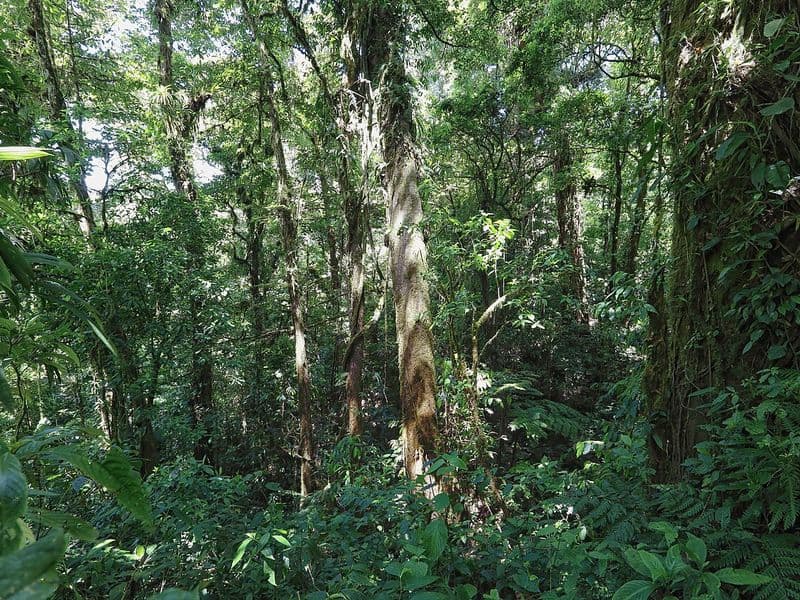
Second, Costa Rica has actively protected its jungle ecosystems since the 1970s and has reversed the catastrophic deforestation of the mid-twentieth century. Today, over 52% of the country is forested, and the national park system protects the most ecologically significant areas from development. This means that visitors to Costa Rica's jungle are frequently walking through genuinely old-growth forest — trees that are hundreds of years old, with buttressed roots the height of a person, understories filled with epiphytes, and canopies that have been unbroken for centuries.
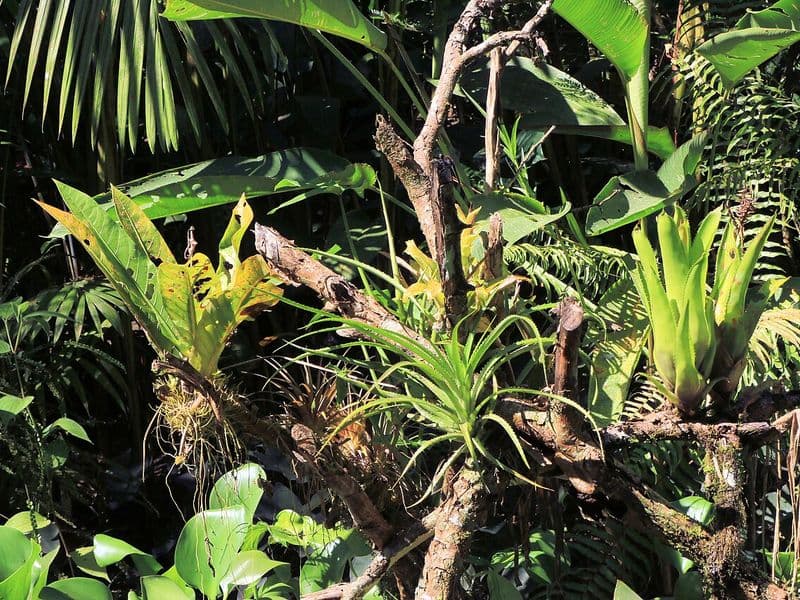
Third, the scale and variety of jungle types in Costa Rica is exceptional for a country its size. Within a few hours' drive, it is possible to move from a Pacific dry forest where trees shed their leaves in the dry season, through a transitional pre-montane forest dripping with bromeliads, to a Caribbean lowland rainforest receiving over 4,000 millimeters of rain per year. Each forest type has its own character, its own light quality, its own soundscape, and its own complement of species — making Costa Rica's jungle a genuinely diverse and inexhaustible subject for exploration.
The Jungle Soundscape
One of the most immediately striking aspects of the Costa Rican jungle is its sound. Before dawn, the jungle awakens with howler monkey calls — a deep, resonant roar that carries for kilometers and is often mistaken for wind or distant thunder by first-time visitors. As the day progresses, the calls of toucans, parrots, and hundreds of other bird species layer over the constant background of insects. At night, a completely different chorus takes over: tree frogs, katydids, cicadas, and nightjars produce a sound environment that is simultaneously alien and deeply calming to those who experience it from a jungle lodge porch or on a night walk.
Jungle Wildlife: Animals to Look For
The jungle canopy is home to Costa Rica's most charismatic mammals. All four monkey species — howler, white-faced capuchin, spider, and squirrel — inhabit the canopy of lowland and mid-elevation jungles. Howlers are usually heard before they are seen, their territorial calls carrying at dawn and dusk. Capuchins are active, curious, and remarkably dexterous, often watched for long periods as they investigate objects, crack open seeds, and interact socially. Spider monkeys, using their prehensile tails as a fifth limb, are among the most acrobatic and impressive mammals to observe in the canopy.
The sloth — Costa Rica's most beloved wildlife symbol — moves through the jungle canopy at a pace that can seem glacial but is perfectly adapted to its low-calorie leaf diet and metabolic strategy. Three-toed sloths are active both day and night, while two-toed sloths are primarily nocturnal. Both species are found throughout the Caribbean and Pacific lowland jungles, with particularly high densities in secondary forest where their preferred food trees — cecropia, guarumo — are abundant. A patient guide can usually spot sleeping or active sloths within the first hour of a jungle walk.
On the jungle floor, white-nosed coatis move in family groups led by females, rooting through leaf litter for insects, fruit, and lizards with their long mobile snouts. Northern tamanduas — terrestrial anteaters with striking black and tan markings — tear open termite mounds and ant columns with powerful claws. Baird's tapirs, the largest terrestrial mammal in Central America and a living relative of horses and rhinos, browse on forest vegetation in remote primary jungle, most reliably seen in Corcovado. Ocelots, pumas, and jaguars are present but extraordinarily difficult to see, moving silently through thick vegetation on hunting paths established over generations.
Frogs and Reptiles of the Jungle Floor
The jungle floor and lower vegetation support an extraordinary community of reptiles and amphibians. Red-eyed tree frogs — the iconic image of tropical rainforest — cling to leaves at night, their bulging orange eyes and vivid coloring creating one of nature's most surreal visual experiences. Poison dart frogs in brilliant red, blue, and green patterns hop across the leaf litter by day. Glass frogs with translucent abdomens cling to stream-side vegetation. Green basilisk lizards — commonly called Jesus Christ lizards for their ability to run across water on their hind legs — dash along jungle stream banks. The forest floor itself may conceal a fer-de-lance, invisible in the leaf litter pattern, reminding visitors to watch each step carefully.
Jungle Birds: A Cacophony of Color
Jungle birding in Costa Rica rewards patience and a good guide. In the lowland Caribbean jungle, great green macaws, chestnut-mandibled toucans, and keel-billed toucans animate the canopy. Manakins — small, brilliantly colored birds of the forest understory — perform elaborate courtship dances on traditional display grounds called leks that guides can locate with expert knowledge. Antbirds, which follow army ant swarms to feed on flushed prey, represent some of the most dramatic jungle birding encounters available. The mixed-species flocks that move through jungle understory, containing dozens of warbler, tanager, and flycatcher species simultaneously, provide remarkable birding opportunities for those who can move with them.
Top Jungle Experiences and Activities
White-water rafting on jungle rivers is among the most exhilarating adventure activities Costa Rica offers. The Pacuare River, which descends from the Talamanca highlands to the Caribbean lowlands through a deep jungle gorge, is consistently rated among the top 10 white-water rivers in the world. Multi-day Pacuare trips include riverside jungle camping, guided wildlife walks along the gorge walls, and the experience of being completely enclosed in primary jungle for one to three days — an experience increasingly rare in a world of road networks and instant connectivity. The Reventazón and Sarapiquí rivers offer similar jungle rafting experiences at different difficulty levels.
Zip lining through the jungle canopy originated as a scientific research access tool before becoming one of Costa Rica's most popular tourist activities. Modern zip line operations carry passengers between platforms in the forest canopy at high speed, with views into the upper canopy and occasional wildlife encounters at tree platform height. Monteverde's Original Canopy Tour is the most historically significant, while the Arenal and Manuel Antonio areas have the most numerous operations. The Titi Canopy Tour in the Manuel Antonio area specifically routes its lines through primary forest rather than secondary vegetation, resulting in better wildlife encounters along the way.
Jungle waterfall hikes combine the physical satisfaction of a forest trek with the reward of a natural waterfall destination. The Catarata La Paz near Poás Volcano, the Nauyaca Waterfalls accessible by horseback near Dominical, and the La Fortuna Waterfall adjacent to Arenal are among the most dramatic. Many lodge properties have their own jungle trails leading to smaller, private waterfall pools — often the most rewarding experiences precisely because they are less visited and more intimate. Hiring a local guide for waterfall hikes adds significant value through wildlife identification and safety on unmarked trails.
Jungle Kayaking and Canoe Tours
Exploring jungle waterways by kayak or canoe provides a quiet, low-impact approach to wildlife observation that is impossible on foot. The canals of Tortuguero, the mangrove channels of the Gulf of Nicoya, and the river systems of Sarapiquí and the Osa Peninsula all offer paddling experiences through intact jungle ecosystems. Moving silently by paddle rather than motor allows approach to wildlife at distances impossible from a motorized boat — kingfishers perched on low branches, caimans sunning on logs, and great blue herons stalking in the shallows are all approachable with careful paddling technique. Most jungle lodges in waterway-rich areas offer kayaks or canoes as standard guest amenities.
Best Jungle Regions and Destinations
The Osa Peninsula in southwestern Costa Rica is the preeminent jungle destination for serious nature enthusiasts. The peninsula's remote location has preserved an intact lowland rainforest landscape within Corcovado National Park that represents the last significant fragment of Pacific Central American lowland forest. The peninsula is accessible by small plane or a long overland journey, and most visitors stay at one of the lodges in Drake Bay on the Pacific coast or in Puerto Jiménez on the Golfo Dulce, venturing into the park with certified guides for day hikes or multi-day Sirena station expeditions.
The Sarapiquí region of the northern Caribbean lowlands is the most accessible dense jungle area from San José, reachable in approximately 2 hours by road. The area contains La Selva Biological Station, Tirimbina Biological Reserve, and several excellent jungle lodges including Selva Verde Lodge and La Quinta de Sarapiquí. The combination of primary and secondary lowland rainforest, the Sarapiquí River, and well-developed trail networks with expert local guides makes this region ideal for multi-day jungle immersion without the logistical demands of the Osa. The Sarapiquí also has a strong cultural tradition of local naturalist guiding, with many guides having worked in the area for decades.
The Caribbean coast south of Puerto Limón, from the town of Cahuita to Manzanillo near the Panamanian border, offers a distinct Caribbean jungle experience characterized by Afro-Caribbean cultural influences, cacao plantations blending with forest, and coastal rainforest rich in birds, sloths, and marine life. The Gandoca-Manzanillo Wildlife Refuge at the southern end of the coast protects a mosaic of jungle, wetlands, coral reefs, and sea turtle nesting beaches in a single coastal wilderness. This region is less visited than the Pacific coast and Arenal areas and offers a more genuine off-the-beaten-path jungle experience for independent travelers.
The Pacuare River Jungle Corridor
The Pacuare River corridor between Turrialba and the Caribbean lowlands protects one of the most intact jungle riparian ecosystems remaining in Central America. The river gorge, cut through the foothills of the Talamanca Mountains, is lined with primary forest on steep slopes that have been impossible to farm. A multi-day rafting and camping expedition on the Pacuare is genuinely immersive jungle travel — with no roads accessing the gorge, visitors are completely surrounded by forest for the duration. Jaguar tracks have been recorded on sandbanks in the gorge, and the birdlife along the river is exceptional.
Night in the Jungle: What to Expect
The Costa Rican jungle transforms completely after dark. The daytime cast of birds, diurnal mammals, and butterflies retreats to sleeping positions, replaced by an entirely different community of nocturnal species that most daytime visitors never encounter. Night walks, offered at virtually every jungle lodge and guided by naturalists with red-filtered flashlights, reveal the forest in a completely new light — literally and figuratively. The experience of walking a familiar daytime trail after dark, when the same path feels entirely unfamiliar and potentially harbors a kinkajou in the branches overhead or a red-eyed tree frog on a leaf at elbow height, is one of the most memorable aspects of a Costa Rica jungle visit.
Insects are the primary visual entertainment of a jungle night walk. The beams of headlamps pick out the iridescent eyes of wolf spiders on the leaf litter — dozens of pairs of tiny green reflections across the forest floor. Dung beetles roll their spheres across the path. Enormous walking sticks cling motionless to branches. Katydids and crickets produce the continuous wall of sound that is the jungle night's audio backdrop. Fireflies create drifting points of bioluminescent light along forest edges and in clearings, their synchronous flash patterns used to attract mates.
Larger animals are the dramatic highlights of a night walk. Sleeping parrots and toucans can be spotted roosting in cavities or on exposed branches. Kinkajous — honeybear-like frugivores with prehensile tails — move through the canopy above, occasionally visible in a flashlight beam. Olingos and olinguitos, smaller relatives of the kinkajou, forage in fruiting trees. In the lowland Caribbean jungle, great tinamou calls echo through the darkness — a hauntingly beautiful descending whistle. On particularly fortunate nights, the beam of a guide's flashlight catches the tapetum lucidum of a large cat's eyes in the darkness, a heart-stopping moment that reminds visitors exactly where they are.
Safety on Jungle Night Walks
Jungle night walks are safe when conducted with a qualified guide who knows the trail, carries appropriate light, and can identify hazards. The primary concern is venomous snakes, which are more active at night in warm lowland environments. Guides illuminate the trail ahead carefully and point out any snakes encountered from a safe distance. Wearing closed-toe shoes or boots is essential, and a personal headlamp provides supplementary lighting in addition to the guide's. Stay close to the guide, follow their light, and resist the temptation to wander off the path to investigate sounds or movements in the vegetation.
Staying in the Jungle: Lodges and Camps
Accommodation options within and immediately adjacent to Costa Rica's jungle range from bare-bones research station bunks to ultra-luxury eco-lodges with private plunge pools and butler service. What they all have in common is proximity to intact or recovering forest and access to guided nature experiences that simply cannot be replicated from a beach resort or city hotel. Choosing a jungle lodge rather than a coastal or urban hotel is, in many ways, the decision that defines a Costa Rica trip as a genuine nature experience.
The best jungle lodges are those built within or immediately adjacent to large tracts of primary or well-managed secondary forest, with their own trail networks, on-site certified naturalist guides, and a demonstrated commitment to environmental management and community benefit. The Costa Rican Certification for Sustainable Tourism (CST) provides a rating system for tourism businesses based on their environmental and social practices — lodges with CST Level 4 or 5 certification have demonstrated significant commitment to genuine sustainability beyond marketing claims. Guides employed at quality lodges are typically certified by the ICT (Instituto Costarricense de Turismo) and have many years of local field experience.
Tented camp experiences, while less common in Costa Rica than in Africa, exist at a handful of locations including within the Corcovado area, where some operators offer jungle camping near the Sirena station with lightweight canvas accommodation and guide-led walks. These experiences are the most immersive jungle lodging available and are best suited to physically prepared visitors comfortable with basic facilities in exchange for maximum proximity to the natural environment. For most visitors, a well-chosen jungle lodge offers the optimal balance of comfort, nature access, and authentic jungle atmosphere.
What to Expect at a Jungle Lodge
Jungle lodges in Costa Rica typically offer open-air common areas to allow air circulation in the heat and humidity, screened windows and doors to exclude insects while allowing natural ventilation, and natural materials in construction to minimize visual impact. Most lodges provide guided morning walks at 5:30 to 6:30 a.m. — the best wildlife time — and evening night walks. Many operate their own butterfly gardens, frog exhibits, or medicinal plant gardens to provide educational context. Food is typically a combination of Costa Rican traditional cuisine and international options, often incorporating locally grown produce. Internet connectivity varies widely — from nonexistent in remote areas to reliable WiFi in more accessible lodges.
Frequently Asked Questions
Is it safe to explore the jungle in Costa Rica?
Yes, with appropriate precautions. The primary risks are from venomous snakes (avoided by wearing boots and staying on trails), getting lost in remote areas (avoided by hiking with a guide), dehydration (carry ample water), and sun exposure in open areas. Costa Rica's jungle parks are well-managed and most trails are clearly marked. Hiring a certified naturalist guide dramatically reduces risk while dramatically improving the quality of the experience.
What animals can I see in the Costa Rica jungle?
In Costa Rica's jungle you can realistically expect to see multiple monkey species, sloths, coatis, toucans, and numerous bird species on most guided walks. Night walks add red-eyed tree frogs, kinkajous, insects, and potentially snakes. More elusive jungle animals including tapirs, ocelots, and jaguars require time in remote areas like Corcovado and significant luck. Poison dart frogs, morpho butterflies, and leaf-cutter ants are reliably observed on most jungle walks.
Which part of Costa Rica has the best jungle?
The Osa Peninsula (Corcovado National Park) has the most intact and wildlife-rich jungle. The Sarapiquí region offers excellent accessible jungle on the Caribbean slope. Tortuguero's canals and surrounding lowland forest are exceptional for waterway jungle wildlife. Monteverde and Santa Elena have the best cloud forest jungle. For most visitors' first trip, choosing between Arenal (accessible, excellent wildlife), Sarapiquí (excellent lowland birding), or the Osa (most remote, highest biodiversity) defines the character of the jungle experience.
When is the best time to visit Costa Rica's jungle?
The jungle is accessible and rewarding year-round, but the dry season from December through April offers easier hiking conditions with lower trail mud, more reliable weather for day activities, and better visibility through less-dense vegetation. The wet season from May through November brings spectacular green lushness, more active frogs and insects, and significantly reduced visitor crowds — making wildlife encounters more personal and guides more attentive. Many wildlife biologists prefer rainy season jungle visits for the abundance of amphibian and insect activity.
Do I need a guide to explore the Costa Rica jungle?
A guide is legally required only in Corcovado National Park. At other destinations, guides are optional but strongly recommended. A knowledgeable local guide will spot species invisible to an untrained eye, know the behavioral patterns of local wildlife, and can navigate safely in complex forest environments. The difference in wildlife encounter quality between a guided and self-guided jungle walk is dramatic. For first-time visitors to a jungle environment, a guide is genuinely transformative rather than just convenient.