
Costa Rica Kayaking: Rivers, Mangroves, and Ocean Adventures
Costa Rica kayaking offers an extraordinary range of environments to explore by paddle, from tranquil mangrove estuaries where sloths and crocodiles share the waterways to whitewater rivers cascading through volcanic gorges and calm ocean bays where sea turtles surface beside your hull. The country's diverse hydrographic network and extensive coastal geography make it one of the most varied kayaking destinations in the Americas. Both sea kayaking and river kayaking deliver rich wildlife encounters and intimate access to landscapes inaccessible by other means.
Overview of Kayaking in Costa Rica
Costa Rica's geography creates ideal conditions for diverse kayaking experiences. The country receives exceptional rainfall—averaging over 3,500 millimeters annually in many areas—that feeds a network of rivers ranging from calm lowland waterways to steep, technical whitewater cascades. The Pacific and Caribbean coastlines offer protected bays, river mouths, mangrove lagoons, and open-ocean channels for sea kayaking. This variety means that kayakers of all skill levels and stylistic preferences—from those seeking meditative flatwater exploration to those chasing adrenaline on Class IV rapids—find compelling options throughout the country.
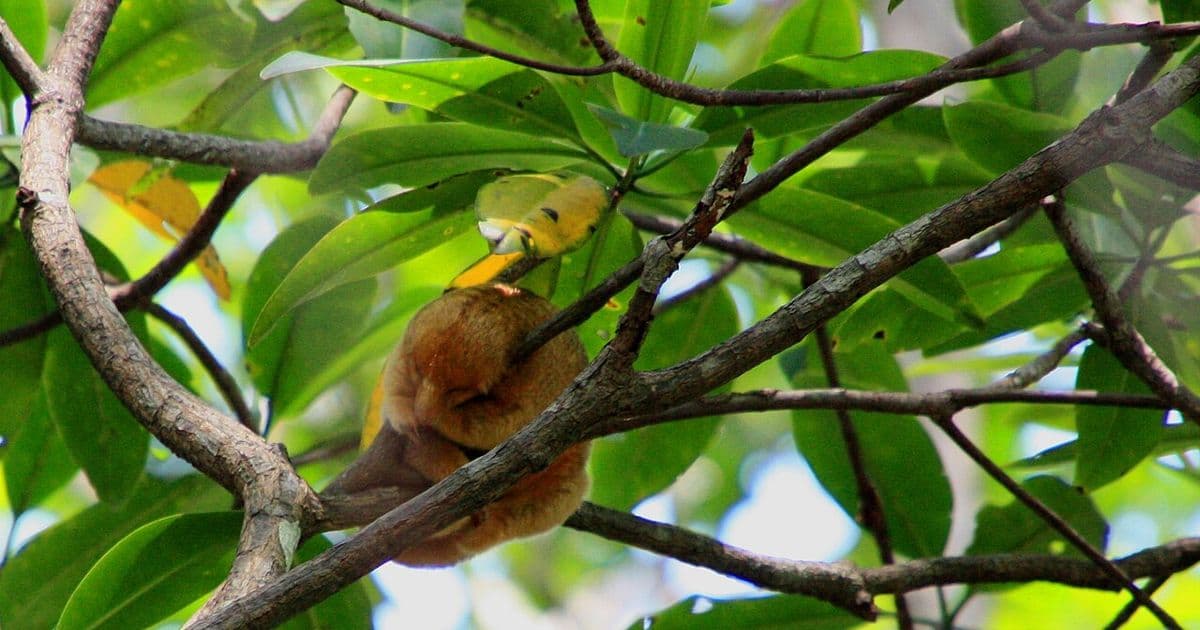
Kayaking in Costa Rica provides a uniquely intimate perspective on the country's renowned biodiversity. Unlike motorized boat tours that disturb wildlife with engine noise, kayaks allow silent approach that enables closer observation of animals in their natural behavior. Crocodiles resting on river banks, monkeys moving through the mangrove canopy, river otters fishing in jungle pools, herons stalking the water's edge, and manatees surfacing in lagoons are all encounters that kayaks facilitate with minimal disturbance. This wildlife access dimension elevates Costa Rican kayaking beyond simple recreation into naturalist exploration.
The kayaking sector in Costa Rica is served by numerous licensed tour operators across the country, particularly in regions like the Nicoya Peninsula, Tortuguero, Quepos, and La Fortuna that have developed strong outdoor adventure tourism infrastructure. Equipment quality at reputable operators is generally good, with modern sit-on-top kayaks most commonly used for sea and flatwater kayaking (easily re-enterable if capsized, ideal for warm water) and sit-inside whitewater kayaks for river use. Stand-up paddleboarding (SUP) has been added to the offering of many kayak operators, providing an alternative paddle experience on calm waterways.
Types of Kayaks Used in Costa Rica
Sit-on-top kayaks are standard for sea kayaking, bay exploration, and flatwater mangrove tours in Costa Rica. Their open design allows easy entry and exit from the water, is self-draining, and functions well in warm conditions without spray skirts. Tandem sit-on-top models are widely available for couples or those who prefer paddling with a partner. Inflatable kayaks are occasionally used for some river tours and are highly portable. Traditional closed-deck whitewater kayaks and creek boats are used by serious river kayakers and at specialized whitewater training centers.
Sea and Ocean Kayaking Destinations
The Nicoya Peninsula Gulf coast provides some of Costa Rica's most scenic sea kayaking, with protected water in the Gulf of Nicoya and numerous small islands, mangrove channels, and rocky headlands to explore. The Gulf of Nicoya is home to one of the largest populations of bottlenose dolphins in the Eastern Pacific, and kayakers frequently encounter dolphin pods during morning paddles. Tambor Bay and the waters around Montezuma and Mal País offer excellent coastal kayaking with opportunities to reach sea caves, secluded beaches, and offshore rocks with pelicans and frigate birds roosting overhead.
Manuel Antonio National Park on the central Pacific coast offers remarkable sea kayaking directly from Playa Biesanz and adjacent coves. The national park's marine zone protects water around the coastline, maintaining exceptional clarity and fish populations. Sea kayakers in this area frequently encounter white-faced capuchin monkeys on the rocky shoreline and in coastal trees, along with frigate birds, brown boobies, and the occasional Pacific green turtle surfacing nearby. The calm, sheltered nature of the Manuel Antonio coastline makes it appropriate for beginner sea kayakers when ocean swells are small.
The Osa Peninsula and Golfo Dulce (Sweet Gulf) on the southern Pacific coast offer extraordinary sea kayaking in a highly protected gulf environment. The Golfo Dulce is one of only three tropical fjords in the world and maintains exceptionally calm water conditions year-round, making it ideal for multi-day sea kayaking expeditions. The gulf's shores are bordered by primary rainforest, and marine life includes humpback whales (seasonal), dolphins, sea turtles, and the endangered scalloped hammerhead shark. Several eco-lodges on the Osa Peninsula offer sea kayaking as a daily activity for guests.
Kayaking in Tortuguero
Tortuguero National Park on the Caribbean coast is traversed by a network of canals and lagoons that are explored almost exclusively by boat. Kayaks provide the quietest and most wildlife-focused means of exploring these waterways, where green sea turtles, freshwater turtles, caimans, river otters, manatees, and an extraordinary array of waterbirds including anhingas, tiger herons, and kingfishers inhabit the calm tropical waters. Tortuguero village rents kayaks, and several lodges within the park area offer kayaking as part of their guided natural history programming.
River Kayaking and Whitewater Options
The Pacuare River is Costa Rica's most celebrated whitewater river and is considered one of the top 10 whitewater rivers in the world by various international adventure travel publications. Rising in the Talamanca Mountains and descending to the Caribbean lowlands, the Pacuare features Class III and IV rapids through a spectacular gorge of primary tropical rainforest that remains largely inaccessible by road. The 28-kilometer main section includes over 50 named rapids, jungle waterfalls, hidden swimming holes, and indigenous Cabecar community lands. Multi-day kayaking and rafting expeditions on the Pacuare, including overnight camping at mid-river lodges, are available through specialized outfitters.
The Reventazon River near Turrialba, once one of Costa Rica's premier whitewater venues, experienced significant changes following the construction of the Reventazon hydroelectric dam in 2015, which reduced water flow in the main whitewater sections. However, the upper sections above the dam and tributary rivers in the Turrialba area continue to offer quality kayaking. The Turrialba region has a strong whitewater kayaking culture, with the town hosting several international kayaking events over the years and maintaining a community of experienced local paddlers and instructors.
The Balsa River near Arenal is popular for beginner to intermediate whitewater kayaking, offering Class II to III rapids in a scenic tropical setting accessible from La Fortuna. The Sarapiqui River in the northern lowlands combines Class II to III rapids with exceptional rainforest scenery and wildlife, including river otters, basilisk lizards, and numerous bird species along the banks. Day-trip kayaking on the Sarapiqui is available from the town of La Virgen, which has established itself as a whitewater sport center on the Caribbean slope.
Whitewater Kayaking Training
Several outfitters in the Turrialba area and on the Sarapiqui River offer formal whitewater kayaking instruction for beginners and improvers. These programs typically run over 2 to 5 days and cover basic stroke technique, eddy turns, ferrying, reading whitewater, and self-rescue. The warm water and accessible rivers of Costa Rica make it an excellent environment for developing whitewater skills, with immediate application in genuine river conditions following classroom and pool sessions.
Mangrove Kayaking: Ecosystems and Wildlife
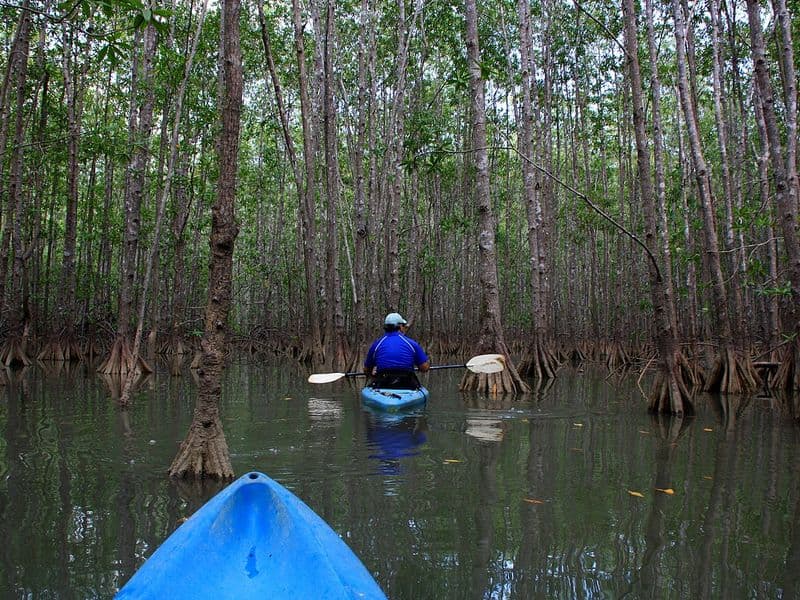
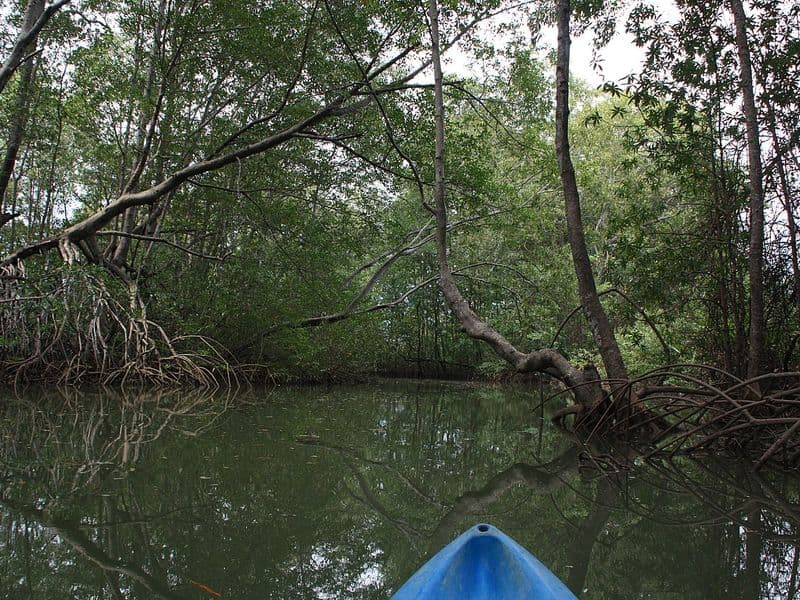
Mangrove kayaking is one of Costa Rica's most unique and wildlife-rich outdoor experiences. Mangrove forests—coastal wetlands dominated by salt-tolerant trees with complex root systems—provide critical nursery habitat for fish, crustaceans, and countless invertebrates, while simultaneously supporting populations of reptiles, mammals, and waterbirds that depend on the sheltered, food-rich environment. Kayaking through mangrove channels provides an intimate perspective on this ecosystem that boat tours of larger vessels cannot replicate.
The Damas Estuary near Quepos is one of the most accessible and biodiverse mangrove kayaking destinations in Costa Rica. Guided kayaking tours in the Damas mangroves regularly produce sightings of three-toed sloths hanging in canopy trees over the water, American crocodiles resting on exposed roots, white-faced capuchin and mantled howler monkeys moving through the mangrove canopy, and green kingfishers, mangrove rails, and numerous heron species hunting along the channels. The tidal nature of the estuary means conditions and wildlife visibility change throughout the day, with early morning sessions typically offering the richest wildlife activity.
The Sierpe River mangroves near Drake Bay on the Osa Peninsula are broader and less touristed than those at Damas, providing a more remote and immersive mangrove kayaking experience. The Sierpe system includes extensive mangrove forests that transition into primary rainforest, with the entire ecosystem protected as part of the Térraba-Sierpe National Wetland, the largest mangrove system in Central America. American crocodiles, Jesus Christ lizards (basilisks), boat-billed herons, and roseate spoonbills are among the distinctive species encountered in this area.
Mangrove Ecology Explained
Mangrove forests serve multiple ecological functions critical to coastal health. Their complex root systems stabilize shorelines against erosion and storm surge. The forest canopy sequester significant quantities of carbon. The sheltered waters beneath mangrove roots provide essential nursery habitat for juvenile fish and shrimp that later populate offshore reef and open water ecosystems. Understanding this ecological context deepens the appreciation of mangrove kayaking beyond pure wildlife viewing into an understanding of ecosystem interdependence.
Guided Tours vs. Independent Kayaking
Guided kayaking tours provide significant advantages in Costa Rica for most visitors. Local guides carry deep knowledge of specific waterways, wildlife behavior, and ecological features that transforms an ordinary paddle into a rich naturalist experience. Guides know where specific species are most reliably found, how to read wildlife behavior signals, and how to position the kayak for optimal observation without disturbing animals. This expertise is particularly valuable in complex mangrove systems where navigation without local knowledge can lead to dead-end channels or missed encounters.
Guided tours also provide safety benefits, particularly on whitewater rivers and open ocean routes where currents, tidal patterns, and weather can create hazards for unfamiliar paddlers. Reputable operators conduct safety briefings, provide appropriate personal flotation equipment, carry first aid kits, and maintain communication with shore-based support. For inexperienced kayakers or those unfamiliar with tropical ocean or river conditions, guided tours represent a significantly safer option than independent exploration.
Independent kayaking is viable and rewarding for experienced paddlers who conduct appropriate research and preparation. Several areas—including the Golfo Dulce, parts of the Nicoya Peninsula coast, and flatwater river sections—are suitable for self-guided exploration by capable kayakers with appropriate equipment and navigation knowledge. Kayak rentals are available in towns like Montezuma, Samara, Quepos, Tortuguero, and Pavones for varying day rates. Checking local conditions with operators and fishermen before launching independently is always recommended in a dynamic tropical marine environment.
Multi-Day Kayaking Expeditions
For experienced paddlers seeking extended Costa Rican kayaking adventures, multi-day expeditions along the Osa Peninsula coast, through the Golfo Dulce, or along the Nicoya Peninsula Gulf coast can be arranged through specialized adventure outfitters. These expeditions typically involve 4 to 7 days of paddling with camping on beaches and river banks or nights at small eco-lodges accessible only by water. Logistical support including food drops and safety kayakers is provided by experienced outfitters for longer expeditions.
Planning and Safety for Costa Rica Kayaking
Safety preparation for kayaking in Costa Rica begins with honest assessment of personal paddling skills relative to the chosen activity. Flatwater mangrove kayaking requires minimal prior experience and is appropriate for complete beginners with basic swimming ability. Ocean sea kayaking in exposed conditions requires intermediate open-water experience and comfort with wave landings and surf zones. Whitewater kayaking on Class III and above rivers requires certified instruction and prior river experience. Attempting conditions beyond one's skill level in a tropical environment with limited emergency services is a significant safety risk.
Essential safety equipment for all Costa Rica kayaking includes a properly fitted personal flotation device (PFD), sun protection including hat, polarized sunglasses, and high-SPF reef-safe sunscreen, hydration—the tropical sun depletes fluid rapidly—and a whistle or other sound-signaling device. For sea kayaking, a waterproof GPS or compass and knowledge of local tidal and current patterns is advisable. Whitewater kayakers should wear appropriate helmets and paddling jackets.
Tide and weather awareness is critical for sea kayaking in Costa Rica. The Pacific coast experiences significant tidal fluctuations—up to 3 meters in some areas—that can dramatically change channel depths, current strength, and accessibility in mangrove systems. Morning conditions are typically calmer on both coasts before sea breezes build. Pacific afternoon winds can create substantial surface chop that makes paddling more strenuous and increases capsize risk for inexperienced paddlers. Checking tide charts and local weather forecasts before any sea kayaking departure is non-negotiable for safe independent paddling.
Crocodile Safety in Mangroves
American crocodiles are present in Costa Rica's mangrove estuaries and river mouths and can reach lengths of 4 to 5 meters. While attacks on kayakers are extremely rare and crocodiles generally avoid human contact, maintaining awareness of their presence is important. Do not swim in mangrove channels or areas known to host crocodiles. Keep hands and feet inside the kayak at all times when paddling in crocodile habitat. Guide-led tours provide expertise in identifying and safely navigating areas with crocodile activity.
Frequently Asked Questions
Do I need prior kayaking experience to kayak in Costa Rica?
Not for most activities. Flatwater mangrove tours and calm bay kayaking are suitable for complete beginners on guided tours. Open-ocean sea kayaking and whitewater rivers require varying levels of prior experience depending on conditions. Always choose activities matched to your skill level and opt for guided tours if inexperienced.
Where is the best place to go kayaking in Costa Rica?
For wildlife, the Damas Estuary near Quepos and Tortuguero canals are exceptional. For ocean scenery, the Golfo Dulce and Nicoya Peninsula coast are top choices. For whitewater, the Pacuare River is world-class. The best choice depends on your preferred experience type—wildlife, scenery, or adrenaline.
Can I see wildlife while kayaking in Costa Rica?
Absolutely. Wildlife encounters are one of the defining highlights of kayaking in Costa Rica. Sloths, monkeys, crocodiles, river otters, sea turtles, dolphins, manatees, and hundreds of bird species are regularly encountered during guided kayaking tours. The silence of kayaks allows closer approach to wildlife than motorized boat tours.
Is kayaking in Costa Rica safe?
Kayaking with reputable operators following established safety protocols is safe. Ocean and river conditions require appropriate skill and preparation. Safety risks include currents, tides, and wildlife (primarily crocodiles in estuaries). Guided tours with experienced local operators provide the safest and most rewarding kayaking experiences for most visitors.
What is the best time of year for kayaking in Costa Rica?
Kayaking is available year-round in Costa Rica. Dry season conditions (December through April) offer calmer seas and more predictable weather on the Pacific coast. Green season (May through November) brings higher river flows for better whitewater conditions. Morning sessions are consistently better than afternoons due to calmer winds and higher wildlife activity.