
Costa Rica Military: The Story Behind Abolishing the Armed Forces
Costa Rica is one of the few countries in the world without a standing military. In 1948, President José Figueres Ferrer made a historic decision to abolish the armed forces and redirect defense spending to education and healthcare. This commitment to peaceful governance is enshrined in Article 12 of the Costa Rican Constitution and remains one of the country's most celebrated national values — a source of genuine pride for Costa Ricans, known as Ticos.
The 1948 Civil War and Abolition of the Military
The abolition of Costa Rica's military was a direct consequence of the country's brief but significant civil war of 1948. The conflict, lasting 44 days, arose from a disputed presidential election. When the Costa Rican Congress annulled the February 1948 election result — which had been won by Otilio Ulate Blanco against government-backed candidate Rafael Ángel Calderón Guardia — José Figueres Ferrer led an armed uprising against the ruling government.
Figueres' National Liberation Army defeated the government forces after 44 days of fighting that cost approximately 2,000 lives. Following victory, Figueres formed a transitional junta government (Junta Fundadora de la Segunda República) with himself as head of state. Rather than consolidating military power as most victorious revolutionary leaders do, Figueres took the extraordinary step of abolishing the military entirely on December 1, 1948 — a date that is now a national holiday in Costa Rica known as Army Abolition Day (Día de la Abolición del Ejército).
In a famous symbolic ceremony, Figueres handed the keys of the Cuartel Bellavista military barracks in San José to the Minister of Education, declaring that it would be converted into a museum. The building is now the National Museum of Costa Rica (Museo Nacional), and the event is commemorated annually on December 1 with national celebrations.
December 1, 1948 — Army Abolition Day
December 1 is celebrated as Army Abolition Day in Costa Rica, a national holiday marking the formal dissolution of the armed forces. The day is celebrated with cultural events, educational programs, and civic ceremonies across the country. The Cuartel Bellavista — the former military barracks where the symbolic ceremony took place — is now the National Museum and receives visitors who can see the historic building alongside pre-Columbian gold artifacts and natural history exhibits.
Constitutional Prohibition of Armed Forces
The abolition of the military was formalized in Costa Rica's Constitution of 1949. Article 12 states: "El Ejército como institución permanente queda proscrito. Para la vigilancia y conservación del orden público, habrá las fuerzas de policía necesarias. Sólo por convenio continental o para la defensa nacional podrán organizarse fuerzas militares; unas y otras estarán siempre subordinadas al poder civil y no podrán hacer deliberaciones, ni manifestaciones o declaraciones, ni dictar proclamas ni suscribir actas o peticiones." (The Army as a permanent institution is proscribed. For the vigilance and conservation of public order, there will be the necessary police forces...)
This constitutional provision makes Costa Rica one of a small number of countries in the world where the abolition of a standing military is embedded in the national constitution. Other countries without standing armies include Iceland, Panama (which abolished its military in 1990 following the U.S. invasion), and several small island nations. However, Costa Rica's prohibition is among the most celebrated and internationally recognized, tied as it is to the country's broader identity as a peace-loving democracy.
The constitution does allow for military organization in two specific circumstances: by continental agreement (such as obligations under a regional defense pact) or for national defense in an emergency. However, Costa Rica has consistently declined to invoke these exceptions, maintaining its demilitarized status through seven decades of peace despite regional conflicts in Nicaragua and Panama during the Cold War era.
Police Forces as Substitute Security
While Costa Rica has no military, it does maintain a national police force (Fuerza Pública) under civilian control, as well as specialized units including the OIJ (Organismo de Investigación Judicial, the judicial investigation body equivalent to an FBI), border police, coast guard, and an airborne police unit. These forces handle domestic public order, border management, drug enforcement, and coastal patrol. Their equipment and training are oriented toward law enforcement rather than warfare.
How Costa Rica Maintains Security Without an Army
Without a standing military, Costa Rica's security relies on several mechanisms. The national police force (Fuerza Pública) is the primary domestic security body, with approximately 13,000–15,000 officers responsible for public order, crime prevention, and emergency response. The Policía de Control de Drogas handles drug enforcement, and the Policía de Fronteras manages border crossings with Nicaragua and Panama.
Costa Rica has also relied on a combination of diplomacy, international treaties, and geographic good fortune for external security. The country declared permanent neutrality in 1983 under President Luis Alberto Monge, during a period of intense regional conflict in Central America. This neutrality declaration, while not enshrined in the constitution, reinforced the principle of non-involvement in armed conflicts and military alliances.
The Inter-American Treaty of Reciprocal Assistance (Rio Treaty), signed in 1947 and including most Western Hemisphere nations including the United States, theoretically provides collective defense protection for Costa Rica in the event of external aggression. In practice, the most likely security guarantor remains the informal relationship with the United States, which has historically shown interest in preventing destabilization of Costa Rican democracy.
Drug Trafficking Challenges
Costa Rica's long Pacific coastline and geographic position between Colombia and the United States have made it an important drug trafficking corridor. Without military resources to patrol hundreds of kilometers of coastline, the country depends on its coast guard and police units, along with significant U.S. cooperation through the Drug Enforcement Administration and naval assistance agreements, to intercept drug shipments. This remains one of the most significant security challenges arising from the lack of a military.
International Relations and Neutrality
Costa Rica's demilitarized status has shaped its foreign policy approach, emphasizing diplomacy, multilateralism, and international law over power projection. The country has been an active supporter of the United Nations system, the Inter-American Court of Human Rights (based in San José), and international arms control agreements. Costa Rica was a strong advocate for the creation of the International Criminal Court and has ratified most international humanitarian law conventions.
Costa Rica's neutrality declaration of 1983 was controversial at the time, as it was partly motivated by U.S. pressure to allow the use of Costa Rican territory for operations against the Sandinista government in Nicaragua (part of the broader Iran-Contra affair). President Monge's neutrality declaration was a way of resisting this pressure while maintaining U.S. support. The country has generally avoided entangling defense alliances while maintaining cooperative relationships with democratic partners.
Costa Rica has also used its peaceful identity as a basis for international engagement and hosting of peace negotiations. The country hosted the Arias Peace Plan negotiations (1987) which helped end the Central American conflicts, for which President Óscar Arias Sánchez received the Nobel Peace Prize. San José is home to the Inter-American Court of Human Rights, the Peace University (Universidad para la Paz, affiliated with the United Nations), and various international organizations, reinforcing the country's identity as a center of peaceful governance.
The Nobel Peace Prize and the Arias Plan
In 1987, President Óscar Arias Sánchez was awarded the Nobel Peace Prize for his role in developing the Central American Peace Accords (Arias Plan or Esquipulas II). The agreement helped bring an end to the armed conflicts in Nicaragua, El Salvador, and Guatemala that had devastated the region throughout the 1980s. Arias's ability to mediate as a leader of a demilitarized country gave him a credibility and neutrality that was central to the negotiations' success.
The Legacy of José Figueres Ferrer
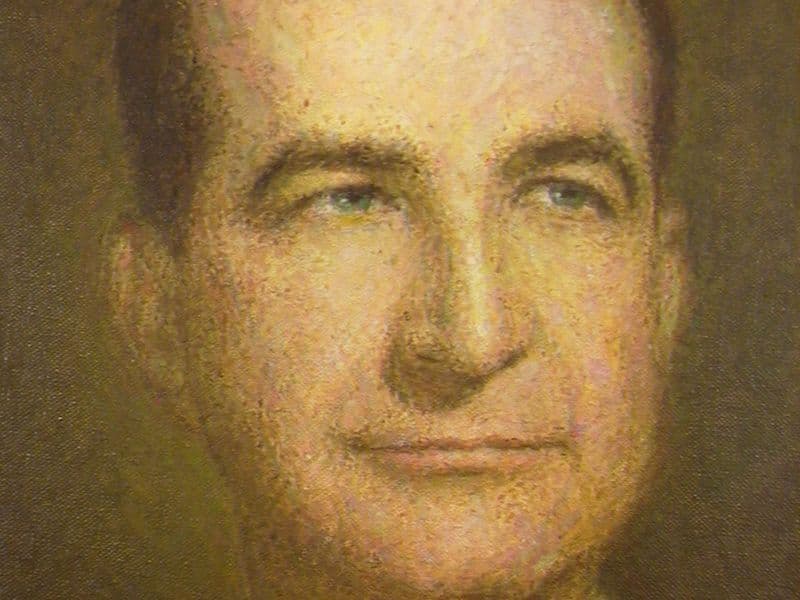
José Figueres Ferrer (1906–1990), known popularly as "Don Pepe," is revered as one of the founding fathers of modern Costa Rica. His decision to abolish the military after winning the 1948 civil war was not simply pragmatic — it was a principled statement about what kind of country Costa Rica intended to be. By redirecting funds from defense to education and healthcare, Figueres helped build one of the most literate and healthy populations in Latin America.
Figueres served as President of Costa Rica three times: as leader of the Founding Junta (1948–1949) and as elected president (1953–1958 and 1970–1974). He founded the Partido Liberación Nacional (National Liberation Party), which has been one of the two dominant political parties in Costa Rica's democratic system since the 1950s. His legacy is complicated by controversies including business dealings and Cold War-era political maneuvers, but his role in establishing the demilitarized constitutional order is universally celebrated in Costa Rica.
A statue of Figueres stands in the Plaza de la Democracia in San José, adjacent to the National Museum — the converted military barracks that symbolize his most famous decision. The museum's butterfly garden and historical exhibits occupy what was once the headquarters of Costa Rica's armed forces, a transformation that has come to represent the entire arc of Costa Rican national identity.
Figueres and Women's Suffrage
Alongside abolishing the military, the 1949 constitution overseen by the post-civil war junta also extended full voting rights to women and to Black Costa Ricans — two groups previously excluded from democratic participation. These reforms, implemented simultaneously, created the foundation for Costa Rica's modern inclusive democratic system. Women voted for the first time in the 1953 election.
Costa Rica Military History Before 1948
Prior to 1948, Costa Rica did maintain a military establishment, though it was relatively small by regional standards. The country's geographic isolation — surrounded by mountains and jungle with poor road connections — meant that it had less need for large standing forces than some of its neighbors. Costa Rica's military history includes several notable episodes that shaped the national character.
The most celebrated military figure in Costa Rican history is Juan Santamaría, a young drummer boy who became a national hero during the 1856 Battle of Rivas in Nicaragua. Costa Rican and other Central American forces were fighting against William Walker, an American filibuster who had seized control of Nicaragua and was attempting to expand slavery into Central America. Santamaría reportedly burned down the building where Walker's forces were sheltered, dying in the act. His sacrifice is commemorated on April 11, a national holiday.
Costa Rica also experienced earlier armed conflicts including the 1823 annexation battle when the Nicoya region voted to join Costa Rica rather than Nicaragua, and various 19th century internal political conflicts. The country generally avoided the large-scale military dictatorships that characterized many Latin American nations in the 19th and early 20th centuries, partly due to its small population, relative poverty, and lack of the mineral wealth that attracted powerful regional caudillos elsewhere.
The 1856 Campaign Against William Walker
The National Campaign of 1856–1857 against William Walker's filibuster army is the proudest military episode in Costa Rican history. President Juan Rafael Mora Porras led a volunteer army of Costa Ricans into Nicaragua to repel Walker's forces, achieving decisive victories at the Battle of Santa Rosa and the Battle of Rivas. The campaign is celebrated as a defense of Central American sovereignty against foreign intervention and is taught in Costa Rican schools as a founding moment of national identity.
Global Impact and Recognition
Costa Rica's peaceful status and demilitarized constitution have earned the country significant international recognition and goodwill. The country consistently ranks among the top performers in global happiness indices, the Human Development Index, and environmental sustainability rankings. Its approach to governance — investing in education and healthcare rather than military capability — is frequently cited in international development literature as a model for small nations.
The Global Peace Index, produced annually by the Institute for Economics and Peace, consistently rates Costa Rica among the most peaceful countries in Latin America and among the top 35–50 most peaceful countries globally. The absence of a military is a key factor in this ranking. Costa Rica has not been involved in any armed international conflict since 1948.
International organizations that have chosen Costa Rica as their headquarters or base of operations include the Inter-American Court of Human Rights, the United Nations University for Peace, the Latin American Faculty of Social Sciences (FLACSO), and numerous NGOs working on environmental conservation, human rights, and sustainable development. This concentration of international organizations reflects the country's reputation as a stable, democratic, and peaceful environment.
Education and Healthcare as Peace Dividends
The resources that would have gone to military spending in Costa Rica have instead funded one of the strongest public education and healthcare systems in Latin America. Costa Rica achieves a literacy rate of approximately 97–98%, one of the highest in the Western Hemisphere. The Caja Costarricense de Seguro Social (CCSS) provides universal healthcare to citizens and legal residents, and Costa Ricans enjoy life expectancy of approximately 79–80 years — higher than in the United States. These outcomes are frequently cited as concrete benefits of the military abolition decision.
Frequently Asked Questions
Does Costa Rica have a military?
No. Costa Rica abolished its military on December 1, 1948, and this prohibition is enshrined in Article 12 of the 1949 Constitution. The country has maintained no standing army, navy, or air force since that date. Security is provided by civilian police forces under the Ministry of Public Security.
Why did Costa Rica get rid of its military?
After winning the 1948 civil war, President José Figueres Ferrer chose to abolish the military and redirect funds to education and healthcare. He viewed a standing army as a threat to democracy and believed investment in social services was a better path to national development and stability. The decision has since become a cornerstone of Costa Rican national identity.
How does Costa Rica defend itself without a military?
Costa Rica relies on civilian police forces, the Inter-American Treaty of Reciprocal Assistance (which provides collective regional defense), declared neutrality in international conflicts, diplomacy, and its close relationship with the United States. The country has not faced a military threat requiring national defense since 1948.
When is Costa Rica's Army Abolition Day?
Army Abolition Day (Día de la Abolición del Ejército) is celebrated on December 1 each year, commemorating the date in 1948 when President Figueres formally dissolved the armed forces. The day is marked with cultural events, educational programs, and ceremonies at the National Museum — the former military barracks where the symbolic handover took place.
Is Costa Rica safe to visit given it has no military?
Yes. Costa Rica is considered one of the safest countries in Latin America for international travelers. The absence of a military does not mean an absence of security — civilian police forces maintain public order effectively. The most common security concerns for tourists are petty theft and opportunistic crime in urban areas, not organized violence or political instability.