
Costa Rica Politics: Democracy, Parties, and Political Culture
Costa Rica's politics are distinguished in Latin America by their stability, the strength of democratic institutions, and the country's long tradition of peaceful transfers of power. Since abolishing its military in 1948 and adopting a new constitution in 1949, Costa Rica has held uninterrupted competitive elections, maintained judicial independence, and built a multi-party political culture that reflects genuine ideological diversity. Understanding Costa Rican politics reveals how a small country without natural resource wealth built one of the region's most prosperous and equitable societies through democratic governance and sustained public investment.
History and Development of Costa Rican Democracy
Costa Rica's modern democratic system traces its origins to the 1948 civil war (Guerra del 48), a 44-day armed conflict triggered by a disputed presidential election. The victorious National Liberation Army, led by José Figueres Ferrer, established a governing junta that then convened a constituent assembly to draft a new constitution. The constitution, adopted on November 7, 1949, introduced universal suffrage including women's voting rights, abolished the standing army, nationalized commercial banks, and established an independent electoral authority — the Tribunal Supremo de Elecciones (TSE).
The decision to abolish the military — embedded in Article 12 of the constitution — is the most internationally celebrated aspect of Costa Rica's political development. Figueres argued that eliminating the army removed the primary instrument of political violence and freed resources for social investment. The ensuing decades proved his analysis correct: while neighboring countries experienced military coups, civil wars, and authoritarian rule, Costa Rica maintained competitive elections and civilian governance through an era of regional instability.
The political system from the 1950s through the 1990s was dominated by two parties — the center-left Partido Liberación Nacional (PLN) founded by Figueres and the center-right Partido Unidad Social Cristiana (PUSC) — alternating in power in a functional bipartisan system. From the 2000s onward, political fragmentation accelerated as voter disenchantment with both traditional parties created space for new political forces, dramatically reshaping the legislative and presidential landscape.
The 1948 Civil War and Its Legacy
The 1948 civil war lasted only 44 days and resulted in approximately 2,000 casualties — modest by regional standards but nonetheless a defining national trauma. Figueres's decision to hand power to the constitutionally elected Otilio Ulate rather than consolidating his own rule demonstrated a commitment to democratic norms that established a template for future transitions. The war is commemorated annually and its lessons about civilian governance remain a touchstone of Costa Rican political identity.
Major Political Parties
The Partido Liberación Nacional (PLN) was founded by José Figueres Ferrer following the 1948 civil war and remains the largest political party by historical vote share and institutional strength. The PLN is associated with the social-democratic tradition — supporting an active state role in the economy, universal public services (healthcare, education, pensions), and environmental protection. Multiple PLN presidents have won re-election to second terms, and the party maintains a strong organizational base throughout the country. Notable PLN presidents include José Figueres Ferrer (three times), Oscar Arias Sánchez (twice), Laura Chinchilla, and others.
The Partido Unidad Social Cristiana (PUSC) served as the principal center-right opposition to the PLN from the 1970s through the early 2000s. The PUSC drew on Christian democratic tradition and Catholic social teaching, emphasizing free market principles while maintaining support for social programs. Two major corruption scandals in the early 2000s involving former presidents Rafael Ángel Calderón Fournier and Miguel Ángel Rodríguez severely damaged the PUSC's credibility and significantly reduced its electoral strength, from which it has never fully recovered.
The Partido Acción Ciudadana (PAC) emerged as a major force in the 2000s, founded by academic and social reformer Ottón Solís as an anti-corruption, center-left alternative to the traditional parties. The PAC won two consecutive presidencies — Luis Guillermo Solís (2014–2018) and Carlos Alvarado Quesada (2018–2022) — marking the first time a third party consecutively held the presidency. The Partido Progreso Social Democrático (PPSD) won the 2022 presidency with Rodrigo Chaves Robles on an outsider, anti-establishment platform. Other parties including the Frente Amplio (progressive left) and various smaller center and regional parties hold legislative seats.
Political Fragmentation Since 2014
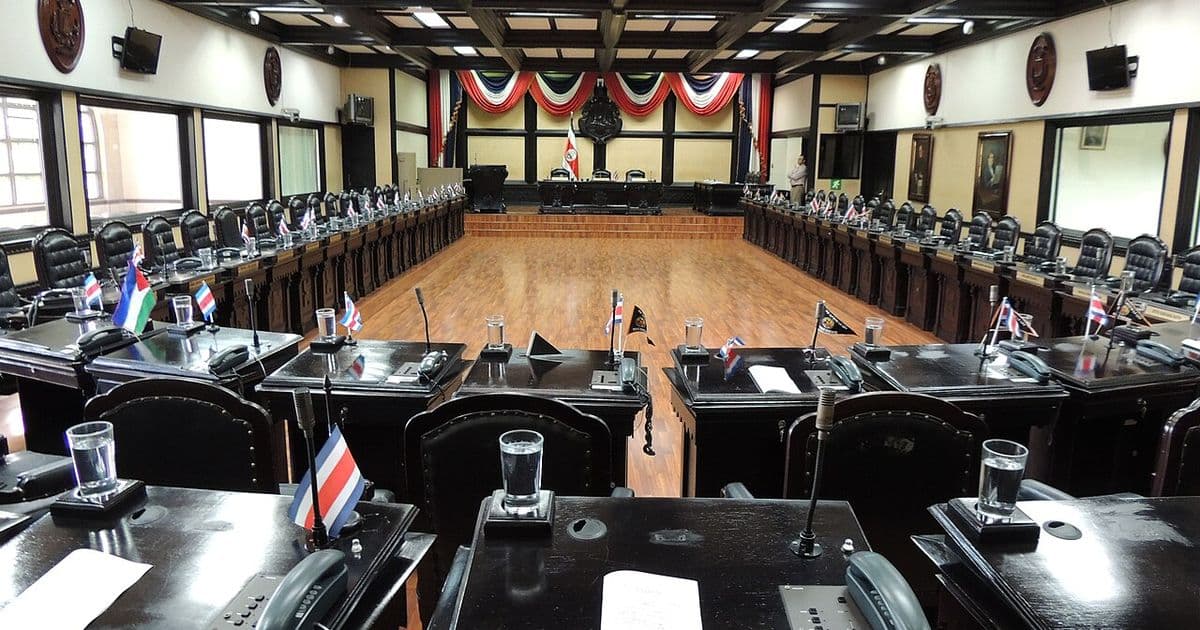
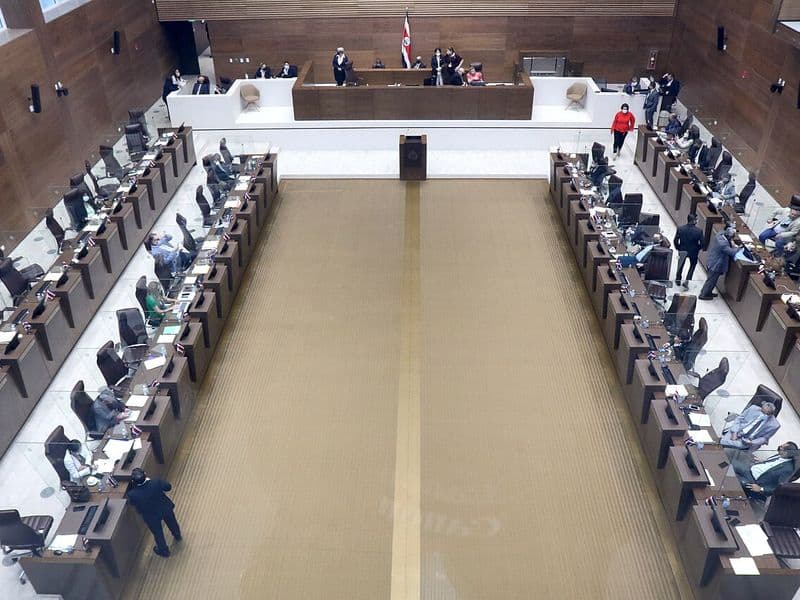
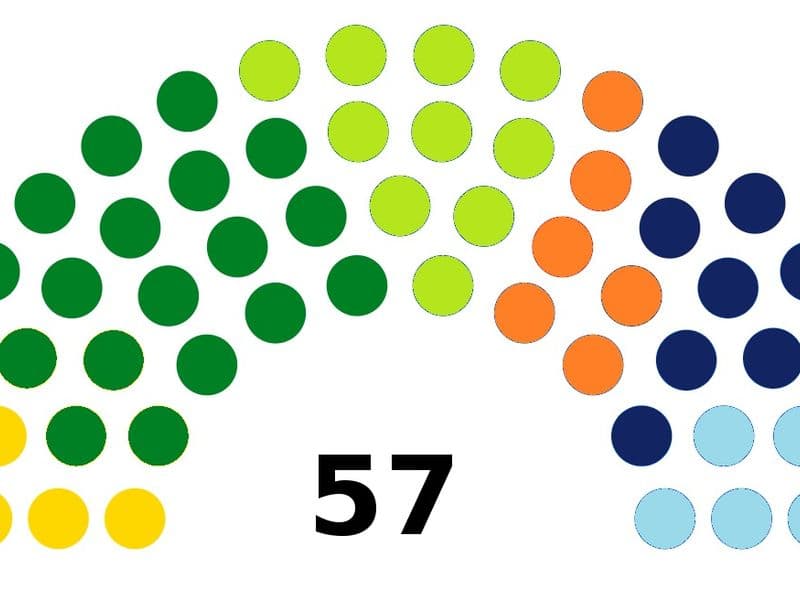
Costa Rica's legislative landscape has become increasingly fragmented since 2014. No single party consistently holds more than 15–20 of the 57 legislative seats, making multi-party coalitions essential for passing legislation. This fragmentation reflects broader voter disenchantment with traditional parties, the rise of social media-driven political communication, and the increased capacity of smaller parties to run viable national campaigns. Governing coalitions must be negotiated anew after each election.
Recent Elections and Presidential Politics
The 2022 presidential election produced a result that surprised many political observers. Rodrigo Chaves Robles of the newly formed PPSD (Partido Progreso Social Democrático) defeated former president José María Figueres Olsen (PLN) in the runoff with approximately 53% of the vote. Chaves, a former World Bank economist who had served briefly as finance minister under Alvarado, ran on an anti-establishment, populist platform emphasizing economic reform and government efficiency. His confrontational political style generated significant controversy throughout his term.
The 2018 election that brought Carlos Alvarado Quesada of the PAC to power was shaped significantly by debates over same-sex marriage — an Inter-American Court of Human Rights ruling required Costa Rica to legalize same-sex unions, triggering intense political mobilization. Evangelical pastor Fabricio Alvarado Muñoz surged to front-runner status in the first round on a platform opposing same-sex marriage before losing the runoff. Carlos Alvarado subsequently oversaw the legalization of same-sex marriage in May 2020 as Sala IV's ruling came into effect.
The 2014 election represented a historic break from the two-party system when Luis Guillermo Solís of the PAC defeated PLN candidate Johnny Araya in a landslide runoff after Araya controversially withdrew from active campaigning, an act widely interpreted as conceding defeat. Solís's election marked the first time since 1949 that neither the PLN nor the PUSC held the presidency. Presidential election dates are set for the first Sunday of February every four years, with runoffs in April if no first-round winner emerges.
Women in Costa Rican Politics
Costa Rica has been a regional leader in political gender parity. A constitutional parity law requires that candidate lists for the Legislative Assembly alternate men and women (the 'zipper' system), resulting in roughly equal male and female representation in recent assemblies. Laura Chinchilla Miranda (PLN) served as the country's first female president from 2010 to 2014. Several women have held key cabinet positions and Supreme Court magistracies, reflecting structural commitments to gender representation in politics.
Key Political Issues in Costa Rica
Fiscal policy and public debt have been among the most persistent and contentious issues in Costa Rican politics for decades. The country carries a public debt burden that exceeded 60% of GDP in recent years, generating ongoing debate about government spending, tax reform, and the sustainability of universal social programs. A major fiscal reform law (Ley de Fortalecimiento de las Finanzas Públicas) was passed in 2018 amid street protests, introducing VAT and restructuring public sector salary rules. The International Monetary Fund has periodically engaged Costa Rica over fiscal management concerns.
Environmental policy generates strong consensus across most of the political spectrum. Costa Rica's environmental leadership — renewable energy, conservation areas, reforestation — enjoys broad public support and cross-party endorsement. The National Decarbonization Plan targeting net-zero emissions by 2050, introduced by Carlos Alvarado's administration, was embraced as a point of national pride. Mining and extractive industry proposals occasionally generate political controversy, generally meeting strong opposition from environmental advocates and citizen groups.
Immigration policy has become a more prominent political issue as Costa Rica has received increasing numbers of migrants — particularly from Nicaragua — as well as transit migrants moving toward North America. The country hosts one of the region's largest refugee populations from Nicaragua following the 2018 political crisis there. Policy debates balance humanitarian commitments with resource constraints on public services including healthcare and education. Border security, irregular migration management, and integration policy feature regularly in legislative debate.
Corruption and Accountability
Political corruption scandals have periodically shaken Costa Rica despite its relatively strong institutions. Two former presidents (Calderón Fournier and Rodríguez) faced corruption investigations in the early 2000s related to telecommunications contracts. The 'Cochinilla' corruption case, involving road construction contracts, resulted in multiple arrests including of a sitting legislative deputy. Despite these cases, Costa Rica's anti-corruption mechanisms — the Ministerio Público, OIJ, and Contraloría — have demonstrated genuine accountability function.
Political Culture and Civic Engagement
Costa Rican political culture places high value on democratic participation, rule of law, and peaceful resolution of disputes. The 'pura vida' national ethos — an ethos of ease, optimism, and social harmony — permeates political discourse, contributing to a generally less polarized climate than many neighboring countries. Political violence is rare; public protests are usually peaceful, and security forces maintain professional standards by regional measures.
Voter turnout has declined from historical highs — the 1974 election saw over 82% turnout — to approximately 56–67% in recent elections. Political scientists attribute this to growing distrust of established parties, perceptions that elections do not produce meaningful change, and the emergence of a significant non-voting youth demographic. The TSE and civil society organizations run voter education and engagement campaigns, particularly targeting first-time and young voters.
Civil society is robust in Costa Rica, with active unions, environmental organizations, business associations, university student movements, and community groups all participating in political discourse. The Federación de Estudiantes Universitarios de Costa Rica (FEUCR) at the University of Costa Rica is a historically significant political actor. Media organizations, academic researchers, and think tanks contribute analysis that enriches public political debate. Freedom of expression and assembly protections in the constitution enable this active civil society environment.
Social Movements and Protest
Costa Rica has a tradition of organized civic protest that has influenced political outcomes. The 2018 protests against fiscal reform — involving teachers, public sector unions, and students blocking the Inter-American Highway — were among the largest in modern Costa Rican history. Environmental protests against open-pit mining proposals have successfully influenced policy in multiple instances. Public sector strikes are a regular feature of labor-management negotiations with the government.
Costa Rica's Role in Regional and International Politics
Costa Rica punches above its weight in regional and international politics, leveraging its democratic credentials, environmental leadership, and neutralist foreign policy to maintain a prominent diplomatic profile. The country has historically positioned itself as a mediator in regional conflicts — most famously when President Oscar Arias Sánchez won the Nobel Peace Prize in 1987 for brokering the Esquipulas II Accords that helped end the Central American civil wars of the 1980s.
Costa Rica is an active member of the United Nations, the Organization of American States (OAS), the Central American Integration System (SICA), and CELAC. The country hosted the Inter-American Court of Human Rights in San José — an institution whose rulings have direct impact on legal frameworks across the hemisphere, including the ruling that required Costa Rica to legalize same-sex marriage. Costa Rica generally aligns with multilateral, rules-based international order positions and has been an active voice on climate change, human rights, and disarmament.
Relations with the United States are generally strong, grounded in bilateral trade, security cooperation, and shared democratic values. The CAFTA-DR free trade agreement (effective 2009) significantly shaped economic relations. Regional relations with Nicaragua are periodically tense — border demarcation disputes, migration flows, and political differences between Costa Rica's liberal democracy and Nicaragua's increasingly authoritarian government under Daniel Ortega have created friction in recent years. Relations with Panama are cooperative, reflecting shared interests in the inter-oceanic trade corridor and shared environmental conservation priorities in the La Amistad Biosphere Reserve.
International Human Rights Leadership
Costa Rica has been a vocal advocate for human rights in international forums. The country supported the creation of the Inter-American Court of Human Rights, which is headquartered in San José, and regularly raises human rights concerns about neighboring authoritarian governments at the OAS and UN. Costa Rica's foreign policy explicitly links democratic governance, human rights, and sustainable development as inseparable pillars, giving it a distinctive voice in multilateral settings.
Frequently Asked Questions
Is Costa Rica a politically stable country?
Yes. Costa Rica is consistently rated one of the most politically stable countries in Latin America and the Western Hemisphere. The country has maintained uninterrupted democratic governance since 1949, holds competitive elections every four years, and has strong independent institutions including the judiciary, the electoral authority (TSE), and anti-corruption bodies. Freedom House rates Costa Rica as 'Free.'
Who is the current president of Costa Rica?
As of 2022, Rodrigo Chaves Robles of the Partido Progreso Social Democrático (PPSD) is serving as president of Costa Rica for the 2022–2026 term. Presidential terms last four years with no immediate re-election. The next presidential election is scheduled for February 2026.
Why does Costa Rica have no army?
Costa Rica abolished its military in 1948 following the civil war led by José Figueres Ferrer. The decision was enshrined in Article 12 of the 1949 constitution. Figueres argued that a standing army was the primary threat to democratic civilian governance and that defense resources were better invested in education and healthcare. The policy has been maintained for over 75 years.
What are the main political parties in Costa Rica?
The major parties are the Partido Liberación Nacional (PLN, center-left), the Partido Unidad Social Cristiana (PUSC, center-right), the Partido Acción Ciudadana (PAC, center-left), the Partido Progreso Social Democrático (PPSD, populist), and the Frente Amplio (progressive left). The legislature has become increasingly fragmented with multiple smaller parties holding seats since 2014.
When is the next Costa Rica election?
Presidential and legislative elections in Costa Rica are held every four years on the first Sunday of February. Based on the 2022 election cycle, the next general election is scheduled for February 2026. If no presidential candidate receives more than 40% of valid votes, a runoff is held in April between the top two candidates.