
Is Costa Rica Safe to Travel Right Now? 2026 Assessment
Costa Rica remains one of the more safe and welcoming travel destinations in Latin America in 2026, continuing to attract millions of international visitors. Understanding current conditions — crime patterns, health status, natural disaster risks, and regional safety — helps you travel with appropriate awareness and confidence.
Current Travel Conditions in Costa Rica 2026
As of 2026, Costa Rica maintains broadly safe travel conditions for international tourists. The US State Department's Level 2 advisory (Exercise Increased Caution) for Costa Rica has been consistent for several years, reflecting general crime concerns rather than any acute crisis, conflict, or imminent threat. The vast majority of Costa Rica's popular tourist destinations — Arenal, Monteverde, the Guanacaste coast, Manuel Antonio, and the Caribbean coast communities — have not experienced significant changes in their safety profile for visitors.
The Costa Rican economy remains heavily dependent on international tourism, which creates a structural incentive for the government and local communities to maintain a safe environment for visitors. The ICT (Instituto Costarricense de Turismo) actively monitors tourism safety and coordinates with law enforcement to address issues in tourist areas. Tourist Police (Policía Turística) maintain a presence in major visitor destinations and are trained to assist foreign nationals.
Property crime — particularly vehicle break-ins and pickpocketing — remains the most consistent concern for tourists in 2026, unchanged from previous years. Travelers who take the standard precautions (never leaving valuables in rental cars, securing belongings in crowds, using hotel safes for passports) dramatically reduce their risk exposure. The country has not experienced any significant political instability, epidemic disease outbreaks, or major security events affecting tourism in the recent period.
Latest State Department Advisory Status
Always verify the current US State Department advisory status immediately before travel at travel.state.gov. Advisories can change due to political events, natural disasters, disease outbreaks, or security incidents. The Level 2 designation that has been in place for Costa Rica indicates ongoing caution due to crime, not any immediate or acute threat. For UK travelers, check gov.uk/foreign-travel-advice/costa-rica. For Canadians, travel.gc.ca provides the most current Canadian government assessment.
Safe Destinations Within Costa Rica
While Costa Rica is broadly safe, security varies significantly by location. The following destinations are considered very safe for tourists and have strong records of visitor security: La Fortuna and the Arenal Volcano area — a well-organized tourist hub with visible infrastructure and low crime. Monteverde and Santa Elena — a small, community-oriented mountain town with extremely low tourist crime. Tamarindo, Flamingo, Conchal, and other organized Guanacaste beach communities — generally safe with standard urban precautions. Nosara, Samara, and the Nicoya Peninsula beach communities — relaxed, low-crime coastal areas. Manuel Antonio and the Quepos area — well-organized tourist zone with active local services. Puerto Viejo de Talamanca — safe in the main town with standard awareness. Tortuguero and remote national park lodges — typically very safe given the self-contained eco-lodge environment.
Areas requiring more caution include the downtown core of San José (particularly after dark and away from hotel districts and major cultural sites), the city of Limón on the Caribbean coast (higher crime rate; most visitors have no reason to visit the city itself vs. the beach towns further south), and border zones with Nicaragua and Panama. These caution areas are not destinations most tourists visit intentionally, and being aware of them simply means avoiding unnecessary visits to those specific zones.
Safe vs. Risky Neighborhoods in San José
San José's safe neighborhoods for tourists include Barrio Amon (colonial houses, boutique hotels, restaurants), Escazú (upscale suburb with malls, international restaurants, and hotels), Santa Ana, Rohrmoser, and the La Sabana park area. Neighborhoods to avoid, particularly after dark, include areas around the Coca-Cola bus terminal, La Merced market, and some streets south of the Parque Central. Your hotel in San José can provide current, specific guidance on which areas are appropriate for walking.
Current Health and Medical Safety
Costa Rica's health status in 2026 is generally favorable for tourists. No unusual disease outbreaks affecting tourists have been reported in the recent period beyond the endemic concerns that always apply to tropical travel. The main health considerations are consistent with any tropical destination: mosquito-borne illnesses (dengue fever primarily; Zika and chikungunya at lower levels), sun exposure, and gastrointestinal illness from food or water in specific circumstances.
Dengue fever continues to circulate in Costa Rica, particularly in lowland coastal and urban areas during the rainy season (May–November). Cases have increased in some years due to favorable mosquito breeding conditions during above-average rainfall periods. Effective prevention — consistent use of DEET-based insect repellent, long clothing at dusk, and staying in air-conditioned or well-screened accommodations — provides strong protection. If you develop high fever, severe joint pain, headache, or rash within 2 weeks of travel, seek medical attention and inform the provider of your Costa Rica travel history.
Costa Rica's tap water is safe to drink throughout most tourist areas — San José, La Fortuna, Monteverde, Quepos, Tamarindo, and other standard tourist destinations. This is better than most Central American countries and means ice, salads, and fresh fruits at established restaurants carry minimal water-borne illness risk. In very remote areas, use bottled or filtered water as a precaution. No yellow fever vaccination is required for travelers from non-endemic countries.
Finding Medical Care in Costa Rica
Private hospitals in San José provide international-standard medical care: Clínica Bíblica (+506 2522-1000), Clínica Católica (+506 2246-3000), and Hospital CIMA (in Escazú, +506 2208-1000) are the primary private hospitals used by tourists. In tourist areas outside San José, CAJA (public health system) clinics and private medical offices provide care for routine issues. For serious emergencies or conditions requiring specialist care, evacuation to San José may be recommended. Travel insurance with medical evacuation coverage is essential for any traveler going to remote areas.
Natural Hazards and Environmental Safety
Costa Rica is a geologically active country and natural hazards are a genuine consideration, though they rarely affect tourist safety in acute ways. The country sits on the Pacific Ring of Fire and has approximately 60 volcanoes, of which several are classified as active. The most significant active volcanic threats to visitor safety include Poás, Turrialba, and Rincón de la Vieja volcanoes, all of which have had recent eruptive activity.
Poás Volcano has experienced periodic eruptive activity including significant events in 2017. The national park has a monitoring system and closes when volcanic activity poses visitor risk. Always check OVSICORI (Costa Rica's Volcano Observatory) and the SINAC park website for current status before visiting any volcano park. Turrialba Volcano near Cartago has had ash eruptions affecting San José on several occasions, temporarily closing the international airport. These events are monitored and publicly communicated.
Earthquakes are common in Costa Rica — the country experiences numerous small to moderate quakes that are imperceptible or barely noticeable. Major earthquakes (M6.0+) occur periodically and can cause infrastructure damage. The Nicoya earthquake of 2012 (M7.6) and Limón earthquake of 1991 (M7.6) are examples of significant recent events. Modern hotels and eco-lodges are built to local seismic standards. In the event of an earthquake, follow standard earthquake safety protocols: drop, cover, and hold on; move away from buildings after the shaking stops; heed any tsunami warnings if near the coast (move to higher ground immediately).
Hurricane and Tropical Storm Risk
Costa Rica lies south of the main Caribbean hurricane belt and is rarely subject to direct hurricane impacts. Tropical storms can, however, bring heavy rainfall and flooding, particularly to the Caribbean coast and northern lowlands. During La Niña years, rainfall patterns across Costa Rica intensify. Flash floods and landslides on mountain roads are occasional hazards during the rainy season. Monitor weather forecasts during green season travel (May–November) and be prepared to alter plans if severe weather warnings are issued for your route.

Safe Transportation in Costa Rica
Transportation safety is one of the most significant practical concerns for travelers in Costa Rica. Road conditions vary widely — major highways like Route 27 (San José to Caldera) and Route 1 (Pan-American Highway north) are well-maintained and comparable to US standards. Secondary roads range from adequate paved surfaces to deeply rutted dirt tracks with river crossings that require serious 4WD capability. Driving standards and road conditions in Costa Rica are consistently flagged as higher risk than in developed countries.
Official taxis (red with yellow rooftop light in San José, licensed taxis in other areas) and Uber provide safe, accountable transportation. Always verify driver identity and vehicle details match the app before entering an Uber. Licensed shuttle services (Interbus, Caribe Shuttle, Gray Line) are safety-vetted and well-organized for inter-destination travel. Public buses are safe but best avoided for night travel and do not accommodate large luggage comfortably.
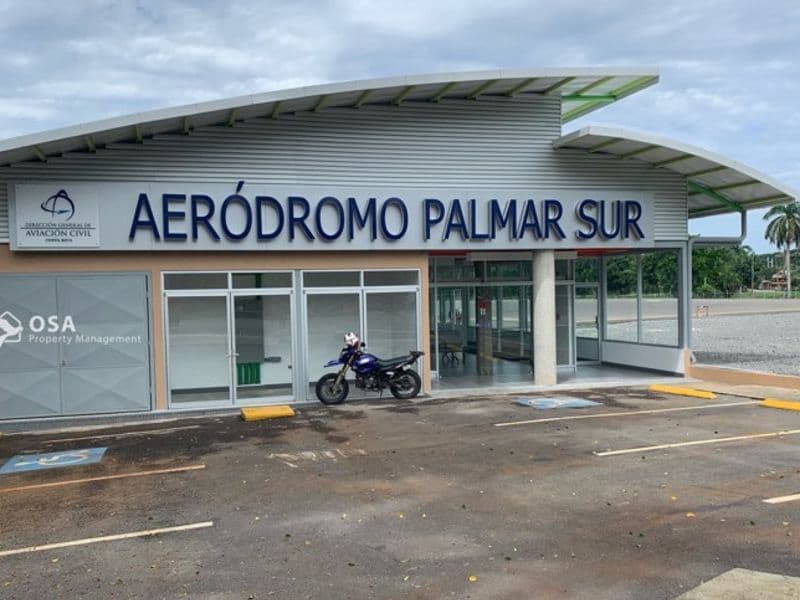
Domestic flights on Sansa Airlines are a safe and practical option for reaching remote destinations like the Osa Peninsula, Tortuguero, or Nosara. Small propeller aircraft (typically Cessna Caravans) are the norm for domestic routes. These aircraft and their pilots are certified by the DGAC (Dirección General de Aviación Civil, Costa Rica's aviation authority). Weather cancellations occur during particularly severe weather — build a buffer day before critical connections if flying domestically.
Night Driving Warning
Night driving is the single transportation activity that most consistently results in accidents among tourists in Costa Rica. After dark, roads lose visual cues that help navigate safely: edges of unpaved roads become invisible, speed bumps (muertos) appear without warning, livestock stand in the road unlit, and oncoming vehicles may have poor lighting. Plan all driving to complete before dark. If unavoidably driving at night, reduce speed to 30–40% below daytime pace and use high-beam headlights where oncoming traffic allows.
Safe Accommodation Practices
Choosing accommodations with good security practices is one of the most impactful decisions for travel safety in Costa Rica. Reputable hotels, eco-lodges, and hostels all have baseline security measures: 24-hour reception or security, room safes or front desk safes for valuables, and established protocols for guest assistance. Reading recent reviews on TripAdvisor, Booking.com, and Google specifically for mentions of security incidents (or the absence thereof) provides useful pre-booking intelligence.
Upon arriving at any accommodation, store your passport, backup credit card, and large amounts of cash in the room safe or front desk safe immediately. Only carry what you need for the day — one credit card, some local cash, your phone, and a photocopy of your passport data page (the copy is sufficient for most daily ID purposes). Keep your room locked even when inside, particularly at ground-floor rooms in beach areas where windows may be open for ventilation.
Vacation rentals (Airbnb and VRBO) are available throughout Costa Rica and can offer good value for groups. When booking vacation rentals, apply the same due diligence as anywhere — read reviews carefully, verify the host's identity and response history, and ensure the property has secure locks and is in a neighborhood consistent with your safety expectations. Well-reviewed Airbnb properties in established tourist neighborhoods have generally positive safety records.
Hotel Safety Features to Look For
When evaluating accommodations, look for: in-room or front desk safe (essential for passports and valuables); secure parking if renting a car (garage or gated lot preferred over street parking); 24-hour reception or night security; good external lighting around the property; location in a recognized tourist or residential neighborhood rather than isolated or industrial areas; and recent positive guest reviews mentioning safety, staff helpfulness, and the neighborhood character. These features reduce the main property-related risks effectively.
Planning a Safe Trip to Costa Rica
Pre-trip preparation is the most effective safety investment for Costa Rica travel. Before departure: enroll in your government's traveler registration system (STEP for US citizens at step.state.gov — this registers your travel with the nearest US Embassy and enables emergency contact). Purchase comprehensive travel insurance including medical coverage and evacuation. Share your detailed itinerary — accommodations, contact numbers, estimated drive days — with a trusted person at home. Schedule regular check-in calls or messages during the trip.
Research current conditions at each destination you plan to visit, including any recent news about crime patterns, weather events, or volcanic activity. Your hotel is an excellent real-time intelligence source when you arrive — ask the front desk about current conditions, safe areas for evening walks, which beaches are safe to swim, and any specific local concerns. This ground-level, current-moment guidance is more valuable than any pre-trip research.
Keep a list of emergency numbers easily accessible: 911 for all emergencies, your travel insurance emergency line, your country's embassy emergency number, the rental car agency's 24-hour line (if driving), and your next accommodation's phone number for each night. Have a color copy of your passport stored separately from the original. These simple preparations address almost every foreseeable emergency scenario a tourist might face in Costa Rica and cost almost nothing in time or money to execute.
Emergency Preparedness Checklist
Pre-travel checklist for a safe Costa Rica trip: Buy travel insurance (medical + evacuation). Register with STEP (step.state.gov for US citizens). Download offline maps for all Costa Rica regions you'll visit. Save emergency numbers (911, embassy, travel insurance). Photograph your passport and store the image in email. Share itinerary with a contact at home. Buy a local SIM card at the airport for connectivity. Confirm rental car agency 24-hour emergency number. Check current volcano and beach conditions for each destination. Pack a basic first aid kit. Completing these steps takes about 2 hours and dramatically increases your ability to handle anything Costa Rica sends your way.
Frequently Asked Questions
Is Costa Rica currently safe to visit in 2026?
Yes, Costa Rica is generally safe to visit in 2026. The US State Department maintains a Level 2 advisory (Exercise Increased Caution) due to crime, which is the same level as many popular tourist destinations globally. No acute crises, epidemic disease outbreaks, or political instability currently affect tourism. Main risks remain petty theft and ocean hazards — both highly manageable with standard precautions.
Do I need any vaccinations to travel to Costa Rica right now?
No mandatory vaccinations are required for entry to Costa Rica for most nationalities. The CDC recommends hepatitis A and typhoid vaccines for most travelers. Yellow fever vaccination is required only if arriving from a country with yellow fever transmission risk. Dengue fever is present (no vaccine widely available) — use insect repellent. Check travel.cdc.gov for the most current vaccine recommendations before your trip.
What should I do if I have a medical emergency in Costa Rica?
Call 911 for emergency ambulance service (Red Cross / Cruz Roja). The main private hospitals used by tourists in San José are Clínica Bíblica (+506 2522-1000) and Hospital CIMA in Escazú (+506 2208-1000). Contact your travel insurance emergency line immediately — they can help coordinate care and authorize treatment. For medical evacuation from remote areas, travel insurance with air evacuation coverage is essential and must be arranged through your insurance provider.
Are there any active travel warnings for specific Costa Rica destinations?
As of 2026, the US State Department does not issue destination-specific 'do not travel' warnings within Costa Rica (the overall country is Level 2). The advisory narrative highlights elevated risk in some parts of San José (particularly downtown at night), the city of Limón, and border zones. Popular tourist destinations — Arenal, Monteverde, Guanacaste beaches, Manuel Antonio, Caribbean coast communities — are not subject to specific targeted warnings.
How do I stay safe at Costa Rica beaches?
Swim only at beaches with lifeguards on duty or where local expertise confirms the conditions are safe. Learn to identify rip current channels (discolored, choppy water moving seaward). If caught in a rip current, swim parallel to shore rather than directly against the current. Never swim alone at unguarded beaches. Check beach conditions each day — Pacific coast conditions can change significantly. Crocodiles inhabit some river mouths on the Pacific coast; ask locally before swimming near river outlets.