
Is Costa Rica a US Territory? Understanding Costa Rican Sovereignty
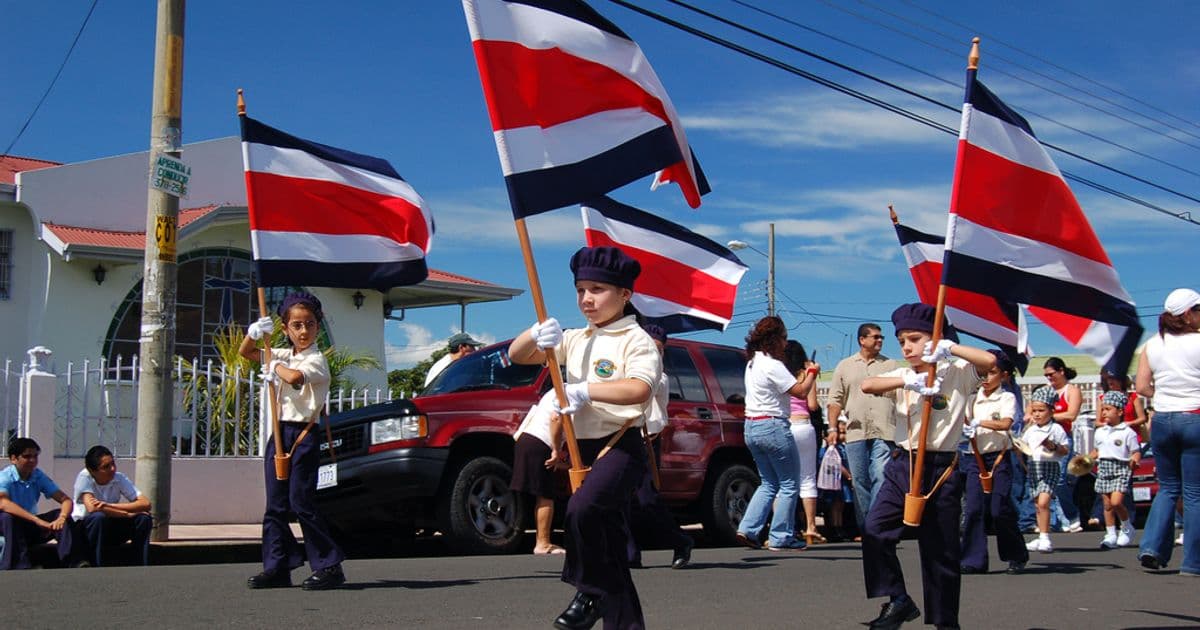
Costa Rica is not a United States territory. It is a fully independent, sovereign republic with its own democratically elected government, constitution, currency, and foreign policy. Costa Rica has been independent since 1821 and is a member of the United Nations, the Organization of American States, and numerous other international bodies as a sovereign nation. The question arises partly because of the significant US cultural and economic influence in Costa Rica, but the two countries are entirely separate nations with a diplomatic relationship between equals.
Costa Rica Is an Independent Country
Costa Rica is a fully independent and sovereign nation, not a US territory, commonwealth, or protectorate of any kind. The country has its own constitution (adopted in 1949), elected government, legal system, military-free defense posture, national currency (the Costa Rican colón), and entirely independent foreign policy. Costa Rica's independence from Spain was declared in 1821, and the country has governed itself as a sovereign entity ever since — more than 200 years of national independence.
The confusion about whether Costa Rica is a US territory may stem from several sources: the widespread use of US dollars alongside the colón in tourist transactions, the significant American expatriate and tourist presence, the close cultural and economic ties between the two countries, and the fact that US citizens do not need a visa to enter Costa Rica for up to 90 days (a common feature of US relations with many allied nations, not an indicator of territorial status). None of these factors change Costa Rica's status as an independent nation.
Actual US territories — such as Puerto Rico, Guam, the US Virgin Islands, and the Northern Mariana Islands — are under the sovereignty of the United States. Residents of these territories (most of whom are US citizens by birth) do not elect members of Congress with full voting rights and cannot vote for US president in federal elections. Costa Rican citizens have no relationship with the US government other than that which exists between any two sovereign nations — they vote in Costa Rican elections, hold Costa Rican passports, and are subject only to Costa Rican law on Costa Rican territory.
What Countries Are US Territories?
The current US territories include Puerto Rico (an unincorporated territory with significant self-government as a Commonwealth), Guam, the US Virgin Islands, the Northern Mariana Islands, and American Samoa. Additionally, the US has several uninhabited island territories. None of these are independent countries, and their residents have a fundamentally different relationship with the US government than citizens of independent nations like Costa Rica, Mexico, or Canada.
A Brief History of Costa Rican Independence
Costa Rica was a Spanish colonial territory from the arrival of Spanish explorers in the early 16th century until 1821. As part of the Captaincy General of Guatemala (which governed most of Central America under Spanish colonial rule), Costa Rica was a relatively poor and isolated backwater of the empire — there were no large indigenous labor pools or significant mineral wealth to attract Spanish settlement, so the colony developed slowly with a small European settler population.
Independence from Spain came peacefully in 1821 — different from many other Latin American independence struggles, Costa Rica's separation from Spain occurred largely without armed conflict. The news of Mexican independence (which prompted Central American independence from Spain) reached Cartago, Costa Rica's colonial capital, on October 13, 1821. Following independence, Costa Rica briefly joined the Mexican Empire (1822–1823) and then the Federal Republic of Central America (1823–1838). Costa Rica separated from the Central American Federation and became definitively independent as the Republic of Costa Rica in 1838.
Throughout the 19th century, Costa Rica established itself as a stable republic with a developing coffee economy. The country escaped many of the caudillo dictatorships and civil conflicts that characterized its Central American neighbors. A significant milestone was the 1889 election, sometimes cited as the first free and fair presidential election in Central American history, where the incumbent party accepted defeat and peacefully transferred power — an event that cemented Costa Rica's democratic tradition and set it apart from the regional norm.
The 1948 Revolution and Second Republic
Costa Rica's modern democratic system was definitively established after the brief 1948 civil war, when José Figueres Ferrer's forces defeated the government, established a transitional junta, and promulgated the 1949 Constitution. This constitution, still in force today, abolished the military, established universal suffrage (including for women and Afro-Costa Ricans), and created the independent Supreme Electoral Tribunal that oversees elections. The 1949 Constitution forms the basis of Costa Rica's current democratic system.
Costa Rica's Government and Political System
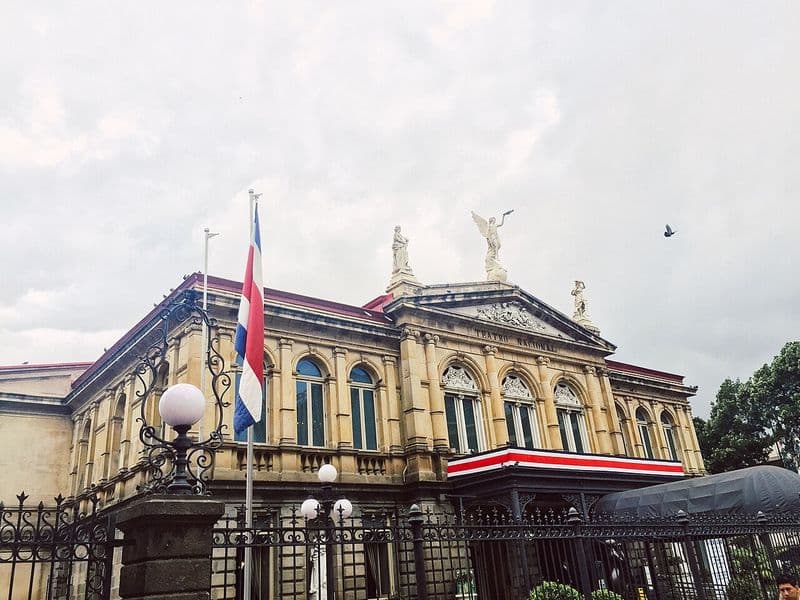
Costa Rica is a representative democratic republic with a presidential system of government. The President of Costa Rica is both head of state and head of government, elected by popular vote to a four-year term. Re-election is not permitted for consecutive terms — a president must wait at least one full term (eight years) before running again. This prohibition on consecutive re-election was enshrined in the constitution to prevent the concentration of executive power.
The Legislative Assembly (Asamblea Legislativa) is a unicameral legislature with 57 deputies (diputados) elected from the seven provinces on a proportional representation basis for four-year terms. The Judicial Branch is headed by the Supreme Court of Justice (Corte Suprema de Justicia), and the country has an independent Constitutional Chamber (Sala Cuarta) that reviews the constitutionality of laws — a powerful institution that has struck down government actions on human rights grounds on multiple occasions.
The Supreme Electoral Tribunal (Tribunal Supremo de Elecciones, TSE) is a fourth independent branch of government that manages, organizes, and certifies all electoral processes. The TSE's independence is constitutionally guaranteed, and it is empowered to investigate electoral fraud and enforce campaign finance laws. Costa Rica has regularly been cited by international observers including the United Nations and the Carter Center as having free, fair, and transparent elections, contributing to its reputation as one of the most stable democracies in Latin America.
Political Parties in Costa Rica
Costa Rica has historically been dominated by two major parties: the Partido Liberación Nacional (PLN, social democrat) founded by José Figueres in 1951, and the Partido Unidad Social Cristiana (PUSC, Christian democrat, center-right). However, since the 2000s, Costa Rica's party system has fragmented significantly, with newer parties including Partido Acción Ciudadana (PAC) and Partido Progreso Social Democrático gaining prominence. This multiparty evolution reflects increasing voter disillusionment with traditional parties amid corruption scandals.
Costa Rica's Relationship with the United States
Costa Rica and the United States maintain close and generally positive diplomatic, economic, and cultural relations — but these are the relations between two sovereign, independent nations, not a metropole and its territory. The US has been Costa Rica's most important trading partner and foreign investor since at least the early 20th century, when the United Fruit Company (now Chiquita Brands International) dominated banana production on the Caribbean coast. US influence — cultural, economic, and political — has been profound and sometimes controversial, but Costa Rica has maintained its independence throughout.
The US-Costa Rica relationship today is anchored by significant economic links. The United States-Dominican Republic-Central America Free Trade Agreement (CAFTA-DR), which Costa Rica joined in 2009 after a contentious national referendum, governs much of the bilateral trade relationship. US companies are major investors in Costa Rica's growing high-technology manufacturing sector (medical devices, software, advanced manufacturing) and in tourism. Approximately 1 million American citizens visit Costa Rica annually, making the US the largest source of international tourism by nationality.
Diplomatically, Costa Rica and the United States cooperate closely on counter-narcotics efforts (Costa Rica serves as a significant drug transit corridor due to its Pacific coastline), environmental conservation, and democratic governance promotion in the region. The US Embassy in San José is one of the larger American diplomatic missions in Central America. Despite this close relationship, Costa Rica has sometimes adopted independent positions on international matters, including its historically friendly relationship with Cuba and its vocal support for international law in disputes involving powerful states.
US Citizens in Costa Rica
Approximately 60,000–80,000 US citizens live in Costa Rica as permanent or long-term residents, one of the largest American expatriate communities in Latin America relative to the host country's size. Many are retirees attracted by the country's affordable healthcare, pleasant climate, and relaxed pace of life. US tourists do not need a visa for stays of up to 90 days. Despite the large American presence, US citizens living in Costa Rica are subject to Costa Rican law, cannot vote in US presidential elections while abroad (unless they maintain a US domicile), and are treated as foreign nationals under Costa Rican law.

US Territories vs. Independent Nations Like Costa Rica
Understanding the distinction between US territories and independent nations is important for correctly categorizing Costa Rica's status. US territories are areas under the sovereignty and jurisdiction of the United States that are not states. The major US territories are Puerto Rico, Guam, the US Virgin Islands, the Commonwealth of the Northern Mariana Islands, and American Samoa. Residents of most US territories (except American Samoa) are US citizens by birth, but they cannot vote in federal elections and are not represented by voting members of Congress.
Independent nations that have a close relationship with the United States — like Costa Rica, Canada, Mexico, the United Kingdom, Japan, and dozens of others — are completely separate sovereign entities. Their citizens hold their own national passports, vote in their own national elections, are governed by their own laws and courts, and interact with the US government only through the standard mechanisms of international diplomacy and treaty. The fact that US dollars are widely accepted in Costa Rica's tourist economy, or that US culture has significantly influenced Costa Rican popular culture, does not make Costa Rica anything other than an independent nation.
Panama, Costa Rica's southern neighbor, sometimes comes into discussion because the US once controlled the Panama Canal Zone — a zone of US territorial jurisdiction in Panama — from 1903 until 1999 when control was fully transferred to Panama. This historical US colonial-style presence in Panama, combined with a military intervention in 1989, has created more complex perceptions of US influence in the region. Costa Rica itself was never under US sovereignty in any form.
Do US Citizens Need a Passport for Costa Rica?
Yes. Because Costa Rica is an independent country, US citizens must carry a valid US passport to enter Costa Rica. A driver's license or other domestic ID is not sufficient. US citizens do not need a tourist visa for stays of up to 90 days (this limit is strictly enforced at border crossings). Those wishing to stay longer must apply for residency or a long-stay visa through Costa Rican immigration authorities.
Costa Rica's International Status and Alliances
Costa Rica participates fully in the international community as a sovereign state. The country is a founding member of the United Nations (1945), a member of the Organization of American States (OAS), the World Trade Organization, the International Monetary Fund, and numerous other international bodies. Costa Rica has ratified most major international human rights treaties and is a signatory to the Rome Statute of the International Criminal Court.
One of Costa Rica's most distinctive international positions is its self-declared permanent neutrality, announced by President Monge in 1983 during the height of Cold War tensions in Central America. This neutrality declaration is not constitutionally enshrined but represents a long-standing foreign policy principle. Costa Rica does not participate in military alliances and has no bilateral mutual defense treaty with the United States — unlike NATO allies or formal US security partners in Asia. This independence in security matters further underlines Costa Rica's status as a fully sovereign nation making its own foreign policy choices.
San José hosts several important international institutions that reflect Costa Rica's standing as a center of regional governance and peace: the Inter-American Court of Human Rights (IACHR), the University for Peace (UPEACE, affiliated with the United Nations), the Inter-American Institute for Agricultural Cooperation (IICA), and numerous regional and international NGOs. The hosting of the IACHR — the primary human rights court for the Americas — is a particular point of national pride and reflects the country's commitment to international human rights law.
Costa Rica's Nobel Peace Prize
Former Costa Rican President Óscar Arias Sánchez received the Nobel Peace Prize in 1987 for his role in developing the Esquipulas II Peace Accords, which helped end the devastating civil wars in Nicaragua, El Salvador, and Guatemala. This award brought significant international recognition to Costa Rica as a country committed to peaceful resolution of conflicts. Arias served two presidential terms (1986–1990 and 2006–2010). The peace prize is a source of enduring national pride and reinforces Costa Rica's independent, peace-oriented international identity.
Frequently Asked Questions
Is Costa Rica a US territory?
No. Costa Rica is a fully independent sovereign republic, not a US territory. The country has been independent since 1821 and has its own constitution, elected government, legal system, currency, and foreign policy. It is a member of the United Nations and other international bodies as an independent nation. The significant US cultural and economic influence in Costa Rica does not change its status as an independent country.
Do US citizens need a passport to visit Costa Rica?
Yes. Because Costa Rica is an independent country, US citizens must present a valid US passport to enter. A driver's license is not sufficient for international travel. US citizens can visit Costa Rica for up to 90 days without a tourist visa. Those wishing to stay longer must apply for appropriate residency or long-stay visa status through Costa Rican immigration.
When did Costa Rica become independent?
Costa Rica declared independence from Spain on September 15, 1821, along with the rest of Central America. After a brief period within the Mexican Empire (1822–1823) and the Federal Republic of Central America (1823–1838), Costa Rica became definitively independent as the Republic of Costa Rica in 1838. The modern democratic republic was established by the 1949 Constitution.
What are actual US territories?
Current US territories include Puerto Rico, Guam, the US Virgin Islands, the Northern Mariana Islands, and American Samoa. These are areas under US sovereignty that are not US states. Costa Rica has never been a US territory and has no political relationship with the US beyond the normal diplomatic relations between two independent sovereign nations.
Why do people think Costa Rica might be a US territory?
The misconception may arise from several factors: the widespread acceptance of US dollars in Costa Rica's tourist economy, the large American expatriate and tourist presence, close cultural ties to the US, and the ease of entry for US citizens (no visa required for 90 days). None of these factors indicate territorial status — they reflect a friendly diplomatic relationship between two independent countries, similar to US relations with many allied nations.