
Costa Rica Yearly Weather: Complete Annual Climate Guide
Costa Rica's yearly weather is shaped by two primary forces: the annual cycle of dry and rainy seasons, and the dramatic effect of elevation on temperature. Understanding the country's annual weather patterns across its diverse regions—from hot Pacific beaches to cool cloud forests to rain-soaked Caribbean lowlands—helps travelers plan for exactly the experience they're seeking in any month of the year.
Costa Rica's Annual Climate Overview
Costa Rica has a tropical climate with distinct seasonal patterns that vary significantly by region. Unlike temperate countries with four seasons, Costa Rica's annual weather cycle is defined primarily by the alternation of dry and rainy seasons, modified by elevation and position relative to mountain ranges.
The Pacific coast and Central Valley experience a clear dry season (December–April) and rainy season (May–November). The Caribbean coast operates on a different schedule, receiving rainfall year-round with two relatively drier windows (February–April and September–October). These two climate patterns—Pacific/Central and Caribbean—result from Costa Rica's position straddling the continental divide that separates Atlantic and Pacific moisture systems.
Temperatures in Costa Rica don't vary dramatically throughout the year at sea level—the difference between the warmest and coolest months is only about 5–8°F (3–4°C) at coastal locations. Seasonal temperature variation is far greater with elevation. The Central Valley experiences its warmest temperatures in March–April and its coolest in December–January, but even this variation is modest by global standards.
Annual averages: Caribbean coast 80°F (27°C) average temperature, 130–200 inches (3,302–5,080 mm) rainfall. Pacific coast 83°F (28°C) average, 60–160 inches (1,524–4,064 mm) rainfall (more in south). Central Valley 70°F (21°C) average, 60–75 inches (1,524–1,905 mm) rainfall. Highlands above 6,000 ft: 55–65°F (13–18°C) average, 100–200 inches (2,540–5,080 mm) rainfall.
What Makes Costa Rica's Climate Unique
Several factors make Costa Rica's annual weather patterns distinctive: its position near the equator ensures warm temperatures year-round with minimal seasonal temperature variation; the presence of continental dividing mountain ranges creates radically different climates on each side; its small size means travelers can experience multiple distinct climates in a single day; and the country's extraordinary biodiversity is directly tied to these climate patterns, with each climatic zone supporting unique plant and animal communities.
Pacific Coast Yearly Weather Patterns
The Pacific coast follows the most predictable annual cycle in Costa Rica. The year divides clearly into two seasons: a sunny dry season (December–April) and a rainy season (May–November) with afternoon thunderstorms. This pattern applies to the entire Pacific coast from the Nicoya Peninsula in the north through the Osa Peninsula in the south, though the intensity and timing vary by location.
Annual rainfall on the Pacific coast ranges from about 60 inches (1,524 mm) in Guanacaste to over 200 inches (5,080 mm) near the Osa Peninsula. This gradient occurs because the southern Pacific receives more Caribbean moisture that crosses the mountains from the east and because the Osa Peninsula sits within the Inter-Tropical Convergence Zone for a longer portion of the year.
The annual temperature pattern on the Pacific coast is relatively flat: highs of 85–88°F (29–31°C) most of the year, peaking at 90–95°F (32–35°C) in March–April, and cooling slightly to 82–86°F (28–30°C) during the rainy season when cloud cover reduces solar heating. Nighttime lows range from 73–77°F (23–25°C) throughout the year—always warm enough to sleep comfortably without a blanket at beach level.
Annual Surf Patterns on the Pacific
Surf on Costa Rica's Pacific coast follows an annual pattern driven by swell direction. The dry season (December–April) brings occasional north swells from North Pacific winter storms. The rainy season (May–October) delivers the most consistent and powerful surfing conditions from south swells generated by Southern Ocean winter storms. The veranillo (July–August) in Guanacaste brings a temporary reduction in rain but surf conditions remain active from south swells. The best annual surfing conditions at most Pacific breaks occur July through October.
Central Valley Annual Weather
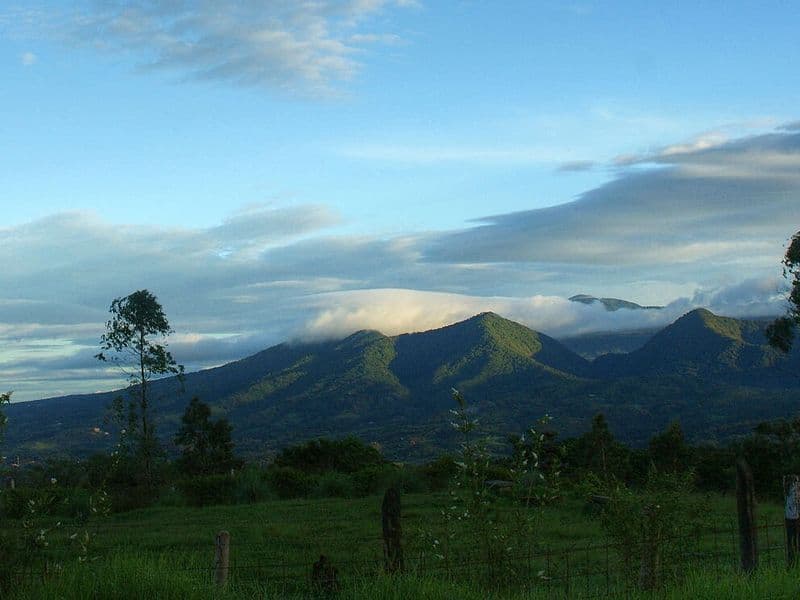
The Central Valley—home to San José and approximately 3 million of Costa Rica's 5 million people—experiences some of the world's most consistently pleasant weather due to its 3,000–4,500 foot (914–1,372 m) elevation. The annual temperature range is remarkably narrow: highs of 77–84°F (25–29°C) in the warmest months and 75–79°F (24–26°C) in the coolest, and lows of 60–67°F (15–19°C) year-round.
The Central Valley follows the Pacific coast's seasonal pattern: dry season December through April with 0.2–2 inches monthly, and rainy season May through November with 5–14 inches monthly. The rainy season pattern is generally milder in the Central Valley than at sea level—the altitude moderates rainfall intensity and the afternoon thunderstorms that drench the coast are often less severe in the highland areas.
Annually, the Central Valley receives 60–75 inches (1,524–1,905 mm) of rainfall, with over 90% concentrated in the May–November rainy season. San José specifically averages about 74 inches (1,880 mm) annually. The surrounding higher-elevation areas like Cartago receive more—about 90 inches (2,286 mm) annually—due to greater orographic lifting effect.
Coffee Growing Calendar
The Central Valley's annual weather pattern has shaped its famous coffee industry. Coffee plants flower during the dry season (January–March), when reduced rainfall triggers the flowering response. The rainy season (May–November) provides the moisture for cherry development and maturation. The harvest (cosecha) runs from November through February, creating a November–March window when coffee farms are buzzing with activity and offer the most educational tour experiences. The beneficio (processing) season corresponds with harvest, typically November through March.
Caribbean Coast Yearly Weather
The Caribbean coast's annual weather pattern is distinctly different from the Pacific side. The Caribbean receives moisture year-round from trade winds blowing across the warm Atlantic, creating a climate with no true dry season. Annual rainfall ranges from 130 inches (3,302 mm) at Puerto Viejo to over 200 inches (5,080 mm) at some locations in the Talamanca foothills—among the highest annual rainfall totals in the Americas.
Rather than a single dry and wet season, the Caribbean coast has two relatively drier periods: February through April and September through October. These drier windows occur when the Inter-Tropical Convergence Zone shifts north (in northern hemisphere summer) or when Caribbean trade wind patterns temporarily reduce moisture delivery. Neither drier period is truly dry—rainfall of 6–8 inches per month still occurs—but both represent a significant reduction from the 15–20 inch monthly totals of the wetter periods (November–January and May–August).
Temperatures on the Caribbean coast are remarkably consistent year-round: 80–86°F (27–30°C) for daily highs and 72–74°F (22–23°C) for overnight lows throughout the year. The Caribbean is notably more humid than the Pacific—relative humidity stays at 85–90% year-round, making the heat feel more intense despite similar actual temperatures. The Caribbean's consistently warm, moist air creates the ideal conditions for the region's extraordinary tropical biodiversity.
Caribbean Annual Wildlife Calendar
Sea turtle nesting drives the Caribbean's annual wildlife calendar. Leatherback turtles nest at various Caribbean beaches February–April (beginning of their season). Green sea turtles nest at Tortuguero July–October (peak August). Hawksbill turtles are present year-round on Caribbean reefs. Migratory birds from North America arrive November–March. The Caribbean's consistent warm, wet climate means wildlife is abundant and active year-round—the seasonal variations are less dramatic than on the Pacific side.
Annual Rainfall Across Costa Rica
Annual rainfall varies dramatically across Costa Rica's regions, creating one of the world's highest levels of biodiversity per unit area. The country's mountain ranges act as massive rainfall dividers, producing extremely wet conditions on their windward slopes and drier conditions in the rain shadow on the leeward side.
Driest areas annually: Guanacaste Pacific coast (60–70 inches/1,524–1,778 mm), concentrated almost entirely in the May–November rainy season. These areas experience genuine drought conditions during the 6-7 month dry season.
Moderate annual rainfall: Central Valley (60–80 inches/1,524–2,032 mm), Central Pacific coast (100–140 inches/2,540–3,556 mm), northern Caribbean lowlands (100–120 inches/2,540–3,048 mm).
Highest annual rainfall: Caribbean Talamanca slopes (180–200+ inches/4,572–5,080+ mm), Southern Pacific near Osa Peninsula (150–200 inches/3,810–5,080 mm), and the highest elevation Caribbean slopes of the Talamanca mountains that may receive 300+ inches (7,620+ mm) annually—among the highest precipitation zones on Earth.
How Rainfall Drives Biodiversity
Costa Rica's extraordinary biodiversity—over 500,000 species estimated in a country the size of West Virginia—is directly tied to the variety of rainfall patterns across its territory. The gradient from Guanacaste's seasonal dry forest (60 inches of seasonal rain) to the Osa Peninsula's year-round rainforest (200 inches evenly distributed) creates dozens of distinct habitat types, each supporting unique species assemblages. The coffee industry, banana plantations, pineapple farms, and ecotourism operations are all dependent on understanding and working within these annual rainfall patterns.
Temperature Variation Throughout the Year
At sea level, Costa Rica's annual temperature variation is modest by global standards. The warmest months (March–April) see coastal highs of 90–95°F (32–35°C), while the coolest months (December–January) see highs of 85–88°F (29–31°C)—a difference of only 5–7°F (3–4°C). This near-constant warmth is characteristic of tropical low-latitude locations near the equator.
The Central Valley's annual temperature range is slightly larger due to the moderating effect of elevation on the warm season. San José's warmest month (March–April) averages 82–84°F (28–29°C), while the coolest months (December–January) average 77–79°F (25–26°C)—still only a 5–7°F (3–4°C) difference. Overnight temperatures range from 62–67°F (17–19°C) throughout the year.
In the highlands above 6,000 feet (1,829 meters), the annual temperature variation is more noticeable. The Cerro de la Muerte region on the Pan-American Highway (elevation 10,000 feet/3,048 meters) can see overnight temperatures below 40°F (4°C) in December and January during cold front passages from North America. These same cold fronts (temporales) can bring overcast, rainy conditions to the Pacific side for 2–5 days at a time during December through February.
North American Cold Fronts (Temporales del Norte)
During December through February, North American cold fronts occasionally penetrate deep enough into the tropics to affect Costa Rica. When these 'temporales del norte' (northern weather fronts) arrive, they can bring overcast skies, cooler temperatures, and persistent rain to the Pacific coast and Central Valley for 2–5 days at a time. Temperatures during these events may drop 10–15°F (6–8°C) below normal in the Central Valley. These events are unpredictable and relatively rare, occurring perhaps 3–6 times per dry season year, but they're worth noting when planning dry season trips as they can temporarily interrupt otherwise sunny conditions.
Planning Around Costa Rica's Annual Weather Cycle
Understanding the annual weather cycle helps optimize trip timing for specific goals. Rather than viewing the rainy and dry seasons as good and bad periods, experienced Costa Rica travelers recognize that each season offers distinct advantages that can be matched to traveler preferences.
For a structured annual planning guide: December–February offers the best dry season conditions, wildlife events (leatherbacks, beginning of macaw nesting), and pleasant cool-season temperatures. March–April are the hottest and driest months—ideal for sun worshippers who handle heat, but challenging for those sensitive to extreme temperatures. May–June marks the green season's beginning—prices drop, landscapes green up beautifully, and the country becomes less crowded. July–August brings veranillo to Guanacaste, peak turtle nesting at Tortuguero, and excellent surf. September–October are the wettest months—best value but most challenging weather. November is a transitional gem—rains tapering on Pacific, prices still reasonable, wildlife season culminating.
The annual pattern also has investment implications for the tourism industry: infrastructure improvements, renovations, and staff training often happen in the September–October off-season. Many high-end ecolodges and resorts use this period for renovation and upgrades, reopening refreshed for the December dry season.
Annual Events Tied to Weather
Several annual events and seasons in Costa Rica are directly tied to the weather cycle: Coffee harvest season (November–February), sea turtle nesting cycles (Caribbean green turtles July–October; Pacific leatherbacks October–February; Pacific olive ridleys July–November), whale watching season in the Southern Pacific (July–October for humpbacks), Semana Santa beach migration (late March or April depending on Easter), Festival de la Luz holiday parade in San José (mid-December), and the Fiestas de Palmares festival (mid-January). Planning around these predictable annual events—either to attend or to avoid their crowds—is one of the key elements of smart Costa Rica trip planning.
Frequently Asked Questions
What is Costa Rica's weather like year-round?
Costa Rica is warm and tropical year-round. Coastal temperatures stay in the 82–90°F (28–32°C) range throughout the year, varying only 5–7°F (3–4°C) between seasons. The main year-round variation is rainfall: the Pacific coast has a clear dry season (December–April) and rainy season (May–November), while the Caribbean coast receives rainfall year-round with two drier windows in February–April and September–October.
What is the rainiest time of year in Costa Rica?
September and October are the rainiest months on the Pacific coast and Central Valley, with some areas receiving 20–25 inches (508–635 mm) per month. The Caribbean coast receives its heaviest rainfall in December–January and May–August, with 15–20 inches monthly during these periods. The Southern Pacific near the Osa Peninsula receives heavy rainfall nearly year-round.
How much does it rain in Costa Rica per year?
Annual rainfall varies dramatically: Guanacaste receives 60–70 inches (1,524–1,778 mm), the Central Valley gets 60–80 inches (1,524–2,032 mm), the Central Pacific receives 100–140 inches (2,540–3,556 mm), and the Osa Peninsula can exceed 200 inches (5,080 mm) annually. The Caribbean coast averages 130–200 inches (3,302–5,080 mm) per year.
Does Costa Rica have four seasons?
No. Costa Rica has two seasons: the dry season (verano) and the rainy season (invierno). On the Pacific coast, the dry season runs December–April and the rainy season May–November. The Caribbean coast has a more complex pattern with rainfall year-round and two drier windows. Temperature variation throughout the year is minimal at sea level—only 5–8°F (3–4°C) between the warmest and coolest months.
Is Costa Rica's weather consistent year-round?
Temperature is very consistent year-round at sea level—coastal highs stay in the 82–92°F (28–33°C) range throughout the year. Rainfall is much less consistent: the Pacific coast alternates between a very dry season (December–April) and a very wet season (May–November). The Central Valley and highlands are more moderate year-round. Only the Caribbean coast receives consistent rainfall in every month.