
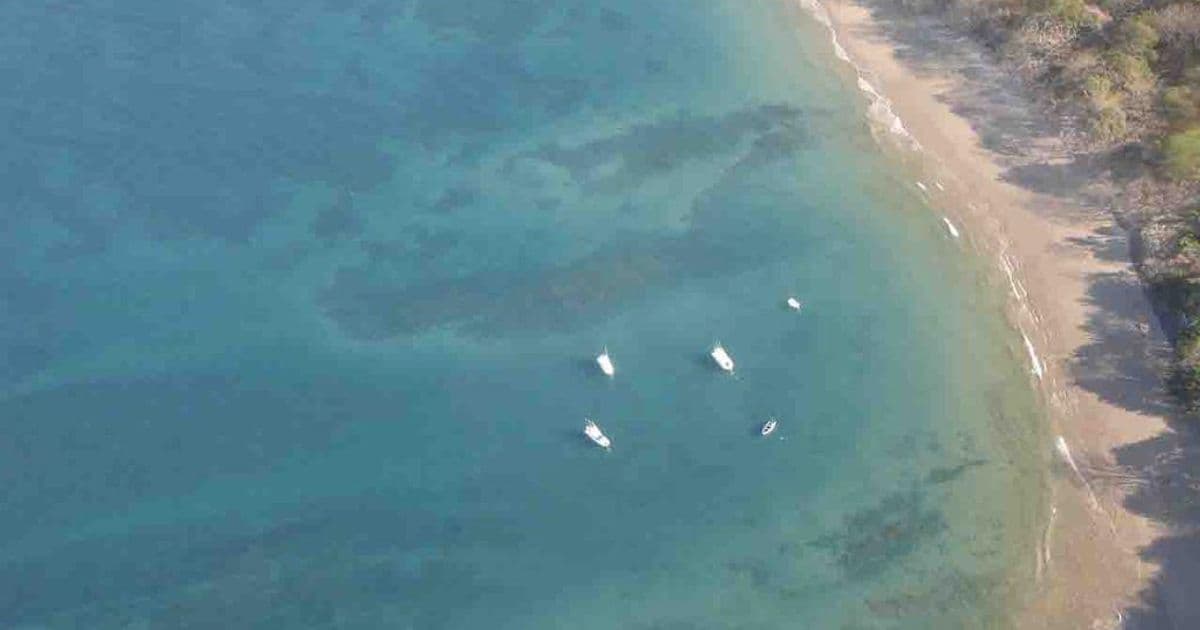
Guanacaste Costa Rica: The Sun-Drenched Pacific Province
Guanacaste is Costa Rica's northwesternmost province, stretching along the Pacific coast from the Nicaraguan border south to the Nicoya Peninsula. Named after the guanacaste tree (Enterolobium cyclocarpum), Costa Rica's national tree, the province is the driest and hottest in the country, experiencing the most pronounced dry season and the most reliably sunny weather for beach tourism. Guanacaste is home to some of Costa Rica's most famous beach towns, stunning national parks protecting dry tropical forest and marine ecosystems, and a distinctive regional culture rooted in centuries of cattle ranching and indigenous Chorotega heritage.
Guanacaste's Geography and Climate
Guanacaste covers approximately 10,140 square kilometers in the northwestern corner of Costa Rica, bordered by Nicaragua to the north, the Pacific Ocean to the west, and the mountain ranges of the Cordillera de Guanacaste to the east. The province encompasses a wide variety of landscapes within its boundaries: the dry Pacific coastal lowlands with their seasonal forests, the Gulf of Nicoya to the south, the volcanic peaks of the Cordillera de Guanacaste (including Rincón de la Vieja, Miravalles, and Tenorio volcanoes), and the northern section of the Nicoya Peninsula.
The climate of Guanacaste is what makes it Costa Rica's premier beach tourism destination for North Americans and Europeans. The dry season (December through April) is the most pronounced in the country, with many areas receiving virtually no rainfall for four to five consecutive months. During these months, the landscape turns golden-brown as deciduous trees shed their leaves, rivers run low, and the dust on unpaved roads becomes a constant companion. The abundant sunshine, warm Pacific water, and reliable weather create ideal conditions for beach tourism, water sports, and outdoor activities.
The rainy season (May through November) transforms Guanacaste dramatically. Within days of the first rains, the vegetation erupts in brilliant green, rivers fill rapidly, and the savanna and dry forest landscapes regain their verdant character. Rainfall during the wet season typically falls in concentrated afternoon and evening showers rather than all-day rain, leaving mornings clear for activities. The wet season in Guanacaste, while rainier than the dry season, is far less rainy than other parts of Costa Rica — the Caribbean coast and southern Pacific receive three to four times as much annual rainfall as Guanacaste.
The Guanacaste Tree
The guanacaste tree (Enterolobium cyclocarpum), designated as Costa Rica's national tree in 1959, is iconic in the Guanacaste landscape. These massive trees can reach 40 meters in height with extraordinary spreading crowns providing shade over large areas. The distinctive ear-shaped seed pods give the tree its common name in many languages ("ear tree" in English). Guanacaste trees are one of the most important dry-season shade trees on Costa Rica's cattle ranches and are protected from cutting in many areas. Ancient specimens can be found throughout the province shading ranches, roadsides, and community parks.
Top Beach Destinations in Guanacaste
Guanacaste hosts the greatest concentration of Pacific beach destinations in Costa Rica. The northern beaches — from the Nicaraguan border south to the Papagayo Peninsula — include Playa Copal, La Cruz beaches, and the beaches of the Santa Rosa Marine Area. The Papagayo Gulf area has become a significant luxury resort zone, with the Four Seasons Costa Rica, Andaz, and several major all-inclusive resorts clustered on the sheltered beaches of the peninsula. The calm Gulf of Papagayo waters and reliable dry-season sunshine make this area ideal for families and those seeking resort-style comfort.
South of Papagayo, a series of well-developed beach towns serve the bulk of Guanacaste's tourism. Playas del Coco and Playa Hermosa (Guanacaste) are close to Liberia and serve as diving and snorkeling bases with easy airport access. Playa Flamingo offers an upscale beach atmosphere with a marina and some of the finest white-sand beaches in the country. Playa Conchal, accessible through resort property or by boat from nearby beaches, is famous for its shore composed of millions of small shells rather than sand — one of the most distinctive beaches in Costa Rica. Playa Brasilito, adjacent to Conchal, is more accessible and popular with local families.
Further south on the Nicoya Peninsula side of Guanacaste, Tamarindo is the province's largest and most developed beach town. South of Tamarindo, the beaches of Playa Grande, Playa Avellanas (popular with surfers for its consistent beach break), Playa Negra (a revered right-hand reef break), and Playa Junquillal (quiet and undeveloped) follow in succession down the coast before the Nicoya Peninsula road becomes more challenging. Sámara and Nosara, on the central Nicoya Peninsula coast, are beloved for their calmer waves, excellent surf instruction, and natural surroundings.
Playa Conchal and the Shell Beach
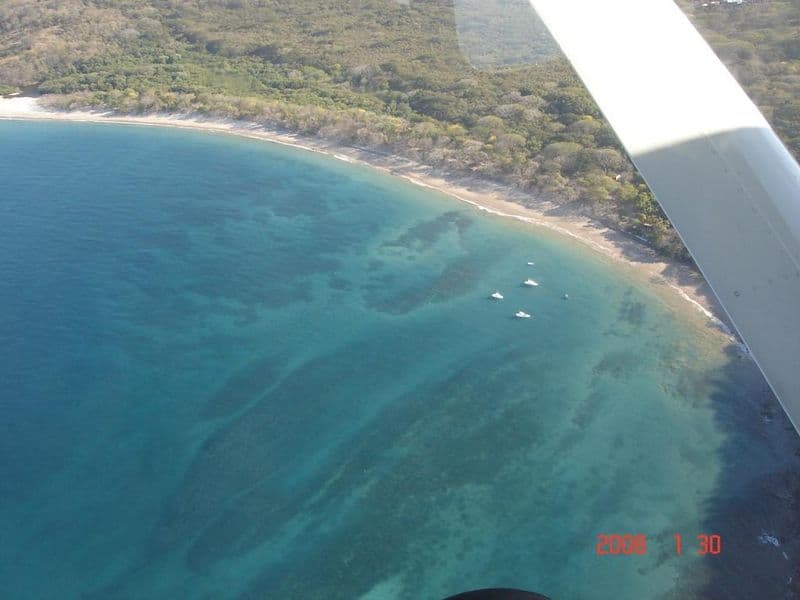
Playa Conchal, accessible from the town of Brasilito, is one of the most photographed beaches in Guanacaste. The beach's white color comes not from sand but from billions of tiny shell fragments ground by wave action into fine particles that feel similar to sand. The water at Conchal is turquoise and exceptionally clear, and the snorkeling around the rocky points at each end of the bay is among the best accessible from any Guanacaste beach town. The beach is technically public but the easiest pedestrian access (from Brasilito, a 20-minute walk) avoids the Westin Playa Conchal resort's private access road.
National Parks and Protected Areas
Guanacaste has the most extensive network of national parks and protected areas of any province in Costa Rica, and many of these parks protect ecosystems — particularly tropical dry forest — found nowhere else in the country at the same scale. The Área de Conservación Guanacaste (ACG, Guanacaste Conservation Area) is a UNESCO World Heritage Site covering approximately 163,000 hectares of protected land in the northern part of the province. The ACG protects the largest remaining expanse of tropical dry forest in the Americas, from Pacific coast marine ecosystems up through cloud forests on the volcano peaks.
Santa Rosa National Park (Parque Nacional Santa Rosa) is the oldest and most historically significant park in Costa Rica, established in 1971 to protect the La Casona hacienda — the site where Costa Rican forces defeated the U.S. filibuster William Walker's army in 1856 (in what is called the Battle of Santa Rosa) and where forces from the Caribbean coast were repelled again in 1919. The park protects excellent examples of tropical dry forest and the Playa Nancite, one of the most important olive ridley turtle mass nesting beaches in the Pacific. Rincón de la Vieja National Park protects the active Rincón de la Vieja Volcano with its geothermal features, hot springs, waterfalls, and cloud forest.
Barra Honda National Park near Nicoya protects a system of limestone caves with spectacular stalactite and stalagmite formations and unusual cave-adapted species. Playa Grande Marine National Park (Las Baulas) near Tamarindo protects critical leatherback sea turtle nesting habitat. The Ostional Wildlife Refuge protects the most important olive ridley turtle nesting site on the Pacific coast, where massive synchronized arrivals (arribadas) of thousands of turtles occur from July through December. The Cabo Blanco Absolute Nature Reserve at the southern tip of the Nicoya Peninsula completes the chain of protected coastal habitats stretching from the Nicaraguan border to the Gulf of Nicoya.
Tropical Dry Forest
Tropical dry forest is among the most endangered forest types in the world, with over 98% of the original dry forest that once stretched from Mexico to Panama having been converted to cattle pasture and agriculture. Guanacaste's national park system protects the last significant remnants of this ecosystem. Dry forest is dramatically different from the rainforest imagery most people associate with Costa Rica — during the dry season it appears almost leafless and savanna-like, while during the wet season it transforms into lush green forest. The dry forest supports unique endemic species adapted to the extreme seasonality, including the brilliant reddish-orange flowers of the cortez amarillo tree (Tabebuia ochracea) that bloom before the leaves appear in March.
Sabanero Culture and Regional Identity
Guanacaste has a regional identity distinctly different from the rest of Costa Rica, rooted in its history as an independent territory that was part of Nicaragua before voluntarily joining Costa Rica in 1824 (an event celebrated annually on July 25 as the Annexation of Guanacaste, a national holiday). The province's culture reflects this separate history, with the Chorotega indigenous people providing the deepest cultural roots and the Spanish ranching tradition layered on top during the colonial era.
The sabanero (cowboy) is the cultural icon of Guanacaste. Mounted on horseback and working the extensive cattle ranches (haciendas) that still dominate much of the provincial interior, the sabanero represents an older way of life that persists despite modernization. Traditional sabanero skills including roping, cattle driving, and horse training are demonstrated at annual fiestas and topes (horse parades) held in towns throughout Guanacaste. The Tope Nacional (National Horse Parade) in San José in December draws sabaneros from across Guanacaste who ride their finest horses through the capital's streets.
The Chorotega indigenous heritage is preserved most visibly in the village of Guaitil near Santa Cruz, where artisans continue pre-Columbian pottery traditions using local clay, hand-coiling techniques, and natural mineral pigments to produce distinctively decorated vessels with geometric designs derived from ancestral patterns. The Chorotega were the most numerous and sophisticated pre-Columbian people in Costa Rica, with a hierarchical social structure, ritual calendars, and long-distance trade networks. The Museo del Sabanero in Liberia and the Museo Regional de Guanacaste also document this indigenous heritage alongside the colonial and agricultural history of the province.
Guanacaste Cuisine
Guanacastecan traditional food differs from the standard Costa Rican diet in ways reflecting the region's agricultural abundance and indigenous heritage. Corn plays a particularly important role — corn tortillas made from masa (nixtamalized corn dough) are a daily staple prepared fresh, unlike the flour tortillas more common in other parts of the country. Ayote en miel (squash cooked in sugar cane syrup), vigorón (yuca with chicharrones and curtido), and rosquillas (corn and cheese cookies baked in a wood-fired clay oven) are distinctive Guanacastecan foods. Tiste, a traditional drink made from corn, cacao, and achiote, is a Chorotega heritage beverage still consumed in traditional communities.
Adventure Activities in Guanacaste
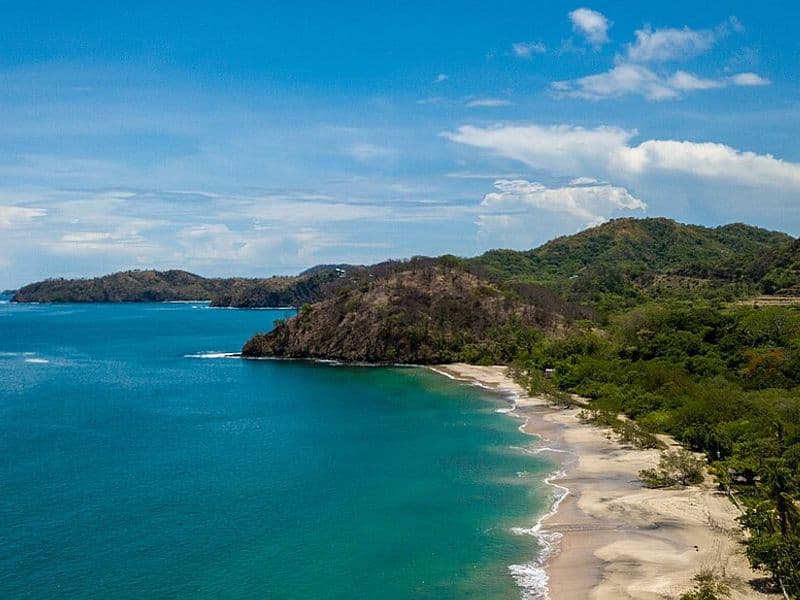
Guanacaste's combination of dry forest national parks, active volcanic terrain, Pacific Ocean, Gulf of Nicoya, and extensive developed tourism infrastructure creates an outstanding adventure activity menu. The volcanic area around Rincón de la Vieja northeast of Liberia offers white-water tubing through volcanic canyon sections (unique to this region), waterfall rappelling (canyoning), zip-lining with views of the Pacific, horseback riding on ranch lands, and soaking in naturally heated volcanic hot springs. The Hacienda Guachipelín adjacent to the national park is a well-known operator combining ranch life experiences with adventure activities.
Along the coast, the diving and snorkeling destination of Isla Murcielago (Bat Islands) inside the Santa Rosa Marine Protected Area is famous for bull shark diving — one of the few places in the world where large numbers of bull sharks (Carcharhinus leucas) can be reliably encountered by divers in clear, warm water. The conditions are challenging (strong currents, deep water) and this dive is for experienced divers only, but it ranks among the most thrilling shark diving experiences in the Americas. The Catalina Islands, accessible from Playas del Coco, are more accessible for recreational divers and snorkelers with eagle ray schools and diverse reef fish.
Sport fishing from Playas del Coco and Tamarindo targets Pacific sailfish, marlin, and tuna in waters that are among the most productive in the Eastern Pacific. Windsurfing and kiteboarding at Lake Arenal (on the eastern border of Guanacaste province) utilize consistent trade winds that funnel through the gap between the Tilarán mountains — a world-class windsurfing location particularly during the dry season. Surf schools at Tamarindo, Nosara, Sámara, and numerous smaller breaks along the coast serve all levels from complete beginners to experienced wave riders seeking more challenging conditions.
Surfing the Nicoya Peninsula
The Nicoya Peninsula's Pacific coast hosts some of Costa Rica's most renowned surf breaks in close proximity. The Witch's Rock and Ollie's Point breaks inside Santa Rosa National Park (accessible only by boat from Playas del Coco or Tamarindo) are world-famous for consistent, high-quality waves in a pristine wilderness setting. Playa Grande (near Tamarindo) is a powerful beach break. Playa Avellanas and Playa Negra south of Tamarindo are revered right-handers. Nosara's Guiones is the premier beginners' and intermediate beach. Sámara offers the gentlest surf conditions on the Nicoya coast, suitable for families and beginner lessons.
Getting to and Around Guanacaste
Guanacaste is the most accessible province in Costa Rica for international air travelers, with Daniel Oduber Quirós International Airport (IATA: LIR) in Liberia receiving direct flights from dozens of North American cities year-round and with expanded seasonal service from November through April. Airlines serving LIR include American, Delta, United, Southwest, JetBlue, Alaska, Air Canada, WestJet, and several charter carriers. Flying into LIR rather than San José (SJO) saves three to four hours of ground travel for most Guanacaste beach destinations.
Within the province, rental cars provide the most flexibility. A 4WD vehicle is recommended for accessing the Nicoya Peninsula beaches, Rincón de la Vieja National Park, and any destination requiring unpaved road travel. The main Interamerican Highway (Route 1) connects Liberia with San José (about 3.5 hours) and with the Nicaraguan border at Peñas Blancas (45 minutes). Secondary roads branch off to the coast and beach towns, varying considerably in quality. The Tempisque Bridge and ferry crossing to the Nicoya Peninsula are major routing decisions that can save or cost considerable travel time depending on the destination.
Public bus services connect major Guanacaste towns with San José and with each other. Pulmitan de Liberia operates the main Liberia–San José express service. Local buses from Liberia serve Playas del Coco, Tamarindo, Nicoya, and La Cruz. Shuttle van services from Interbus and Gray Line connect Guanacaste beach towns with San José, La Fortuna, Monteverde, and other tourist destinations on a door-to-door basis at moderate cost. Domestic flights on Sansa Airlines connect Liberia, Tamarindo, Nosara, and Sámara with San José for rapid inter-provincial travel.
The Liberia Airport Advantage
The growth of Daniel Oduber International Airport in Liberia has been a transformative development for Guanacaste tourism. What was once a small regional airstrip now handles over one million international passengers annually and receives service from more than a dozen airlines. For travelers from the US East Coast, direct flights to LIR are typically the same length or shorter than flights to San José, while eliminating four hours of additional ground travel to reach beach destinations. The airport's expansion continues, with new gates and passenger facilities opening in recent years to accommodate demand.
Frequently Asked Questions
What is Guanacaste known for?
Guanacaste is best known for its Pacific beaches (Tamarindo, Nosara, Sámara, Flamingo, and many others), its excellent surf conditions, reliable dry-season sunshine, important national parks protecting tropical dry forest and active volcanoes (Santa Rosa, Rincón de la Vieja), and its distinctive sabanero (cowboy) culture. The province's international airport in Liberia receives direct flights from North American cities, making it the most directly accessible region of Costa Rica for beach-focused travelers.
What is the best beach in Guanacaste?
The answer depends on what you are looking for. Playa Conchal is widely considered the most beautiful beach for swimming, with brilliant turquoise water and shell-sand. Tamarindo is the most developed and social beach with the best infrastructure. Nosara is the best for surfing lessons and yoga. Playa Flamingo offers upscale sophistication. Sámara is the most family-friendly with calm water. The Papagayo Gulf beaches near Liberia are best for resort-style luxury. Each beach town has a different personality, so choosing based on your travel style is more important than any objective ranking.
When is the best time to visit Guanacaste?
The dry season (December through April) is the most popular time, offering reliably sunny weather with virtually no rain, ideal for beach tourism. January through March is particularly dry and pleasant. The rainy season (May through November) brings afternoon showers, lower prices, fewer tourists, and the arrival of humpback whales (July through October). October and November are the wettest months but also have some of the lowest prices. The shoulder months of late November and late April offer a good balance of decent weather and lower prices.
Is Guanacaste the right destination for families?
Yes, Guanacaste is an excellent family destination. The protected Gulf of Papagayo provides calm, safe swimming conditions. Sámara is particularly family-friendly with gentle waves and a laid-back atmosphere. The all-inclusive resorts on the Papagayo Peninsula are designed for family comfort. Wildlife encounters with monkeys, iguanas, and sea turtles delight children. Rincón de la Vieja National Park offers manageable hikes with geothermal features that fascinate kids. The main consideration for families is the heat — temperatures can be extreme during the dry season, and shade, hydration, and sun protection are important.
Do I need a 4WD vehicle in Guanacaste?
It depends on your destinations. The main highway (Route 1) between Liberia and San José is fully paved and fine in a 2WD vehicle. Most of the main beach towns (Tamarindo, Playas del Coco, Playa Hermosa) are accessible on paved roads. However, reaching Nosara, the interior of the Nicoya Peninsula, Rincón de la Vieja National Park, and many of the quieter beaches requires 4WD, particularly during or after rain. If you plan to explore beyond the main tourist corridors, a 4WD is strongly recommended.