
Jaguar Costa Rica: Habitat, Conservation, and Where They Roam
The jaguar is the largest cat in the Americas and one of the most powerful symbols of wilderness in the natural world. In Costa Rica, jaguars occupy the most remote and intact rainforest ecosystems — from the ancient forests of the Osa Peninsula to the mountain rainforests of the Talamanca highlands. With fewer than 60 individuals estimated to remain in the country, the Costa Rican jaguar population is critically small and faces ongoing threats from habitat loss and fragmentation. Understanding jaguars — their ecology, behavior, and conservation status — deepens appreciation for the extraordinary natural landscapes that support them.
Jaguar Biology and Behavior
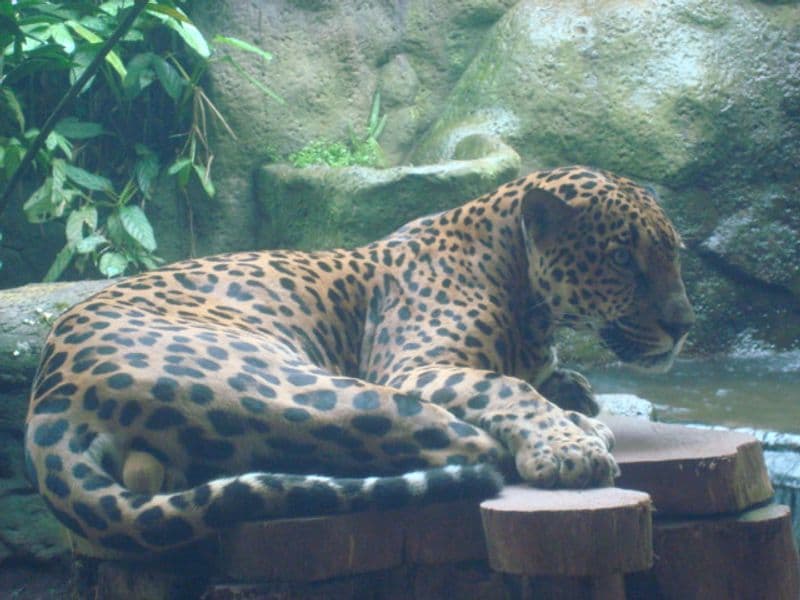
The jaguar (Panthera onca) is the third largest cat in the world after the lion and tiger, and the largest in the Americas. Adult males in Central America typically weigh between 60 and 120 kilograms and measure up to 1.8 meters in body length, with a thick, muscular build and a distinctively broad head housing the most powerful bite of any cat relative to body size. This jaw strength allows jaguars to pierce the skulls of prey and to consume armadillos, giant river otters, and caimans in addition to the deer, peccaries, tapirs, and monkeys that form the bulk of their diet in Costa Rica.
Jaguars are largely solitary and primarily nocturnal, though dawn and dusk activity is common. Each individual maintains a home range that varies enormously depending on prey density, habitat quality, and the presence of other jaguars. Male home ranges, which overlap with those of several females but rarely with other males, can extend from 25 to over 500 square kilometers. This need for large, connected territories is one of the primary reasons that jaguar conservation requires landscape-scale thinking rather than protection of isolated forest patches.
Unlike many large cat species, jaguars are comfortable in water and are strong swimmers. They frequently hunt in riparian habitats — river edges, wetlands, and swamp forest — where caimans, river turtles, and large fish are accessible. The Tárcoles River and the rivers of Corcovado and the Osa Peninsula provide this type of habitat. Jaguars have been photographed by research camera traps wading in rivers and even swimming across wide waterways in Costa Rica, confirming their affinity for aquatic environments that distinguishes them from other large felids.
Rosette Patterning and Melanistic Jaguars
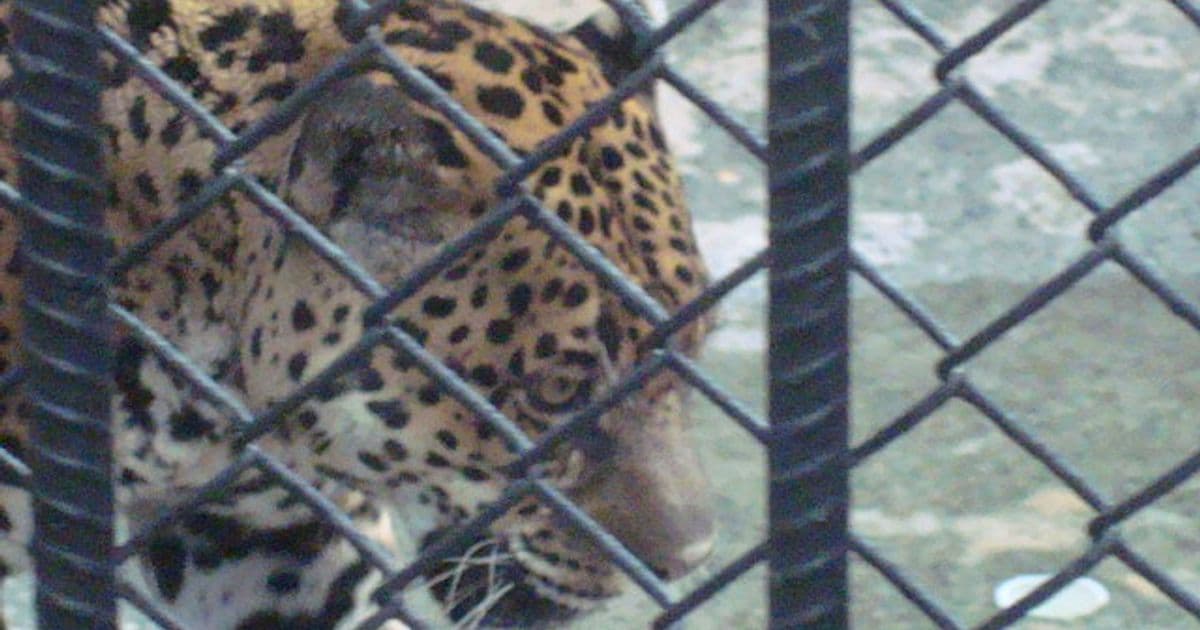
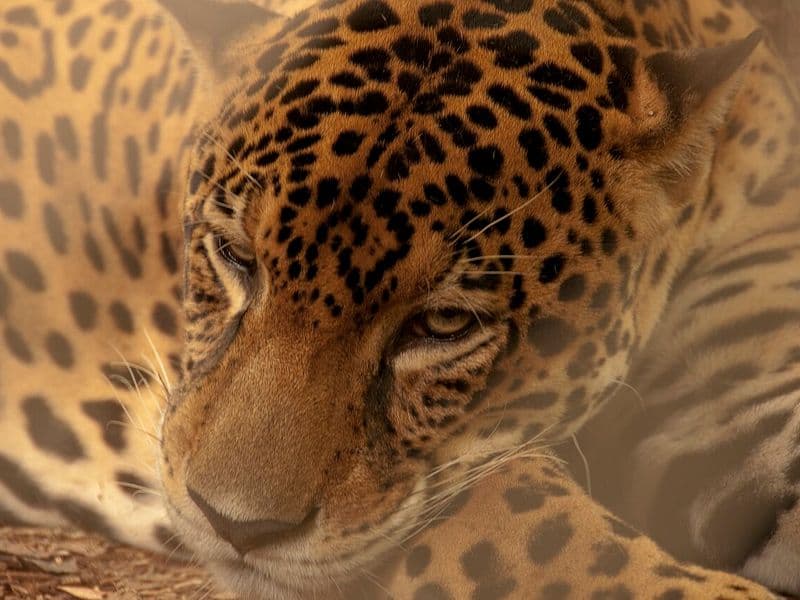
The jaguar's coat pattern — dark rosettes on a tawny background — serves as camouflage in the dappled light of the rainforest understory. Unlike the similar-looking leopard of Africa and Asia, each jaguar rosette contains one or more small spots inside it, a diagnostic difference. Melanistic individuals — commonly called black panthers — occur in jaguar populations due to a dominant gene that causes excessive melanin production. Even in melanistic jaguars, the rosette pattern is visible in oblique light. Black jaguars have been photographed by camera traps in several Costa Rican conservation areas.
Jaguar Population and Range in Costa Rica
Costa Rica's jaguar population is estimated at between 45 and 60 individuals based on camera trap surveys and population modeling — one of the smallest national jaguar populations in all of Latin America. This figure represents a dramatic decline from the historical population that once inhabited lowland forests across both coasts, volcanic foothills, and well into the highlands. By the late twentieth century, hunting, habitat loss to cattle ranching and agriculture, and the near-total conversion of lowland forests outside national parks had restricted jaguars to a few remaining forest strongholds.
The current range of jaguars in Costa Rica is concentrated in three primary areas: the Osa Peninsula and surrounding Osa Conservation Area in the south Pacific, the Talamanca highlands and their Pacific and Caribbean slopes, and a connectivity corridor running from the Talamanca mountains northward toward the Rincón de la Vieja and Guanacaste highlands. The Osa Peninsula's Corcovado National Park is the single most important jaguar habitat in Costa Rica, with the highest documented density of individuals relative to area in the country.
Camera trap monitoring by researchers from the Wildlife Conservation Society, Panthera, and Corcovado Foundation has been invaluable in tracking individual jaguars by their unique rosette patterns. Each jaguar can be identified by photographing both sides of the body, as rosette patterns are unique to each individual — analogous to a human fingerprint. Long-term camera trap programs in Corcovado have documented individual jaguars over multiple years, revealing home range boundaries, breeding behavior, and occasionally the presence of cubs, confirming active reproduction in the park's population.
Historical Range vs. Current Distribution
Historically, jaguars ranged throughout all of Costa Rica's lowland forests and foothills on both the Pacific and Caribbean sides, extending into the highlands to at least 2,000 meters in suitable habitat. They were present in the forests of what is now the Guanacaste dry zone, the Nicoya Peninsula, the Sarapiquí lowlands, and the Caribbean coastal plain. Today, they are functionally absent from most of these former range areas, with the exception of occasional dispersing individuals detected by camera traps as they move through remaining forest fragments. Restoring connectivity between remaining jaguar subpopulations is the central challenge of jaguar conservation in Costa Rica.
Threats to Jaguars in Costa Rica
Habitat loss and fragmentation remain the most significant long-term threats to jaguars in Costa Rica. While the country's overall forest cover has recovered remarkably since the deforestation crisis of the 1970s and 1980s, much of the regrown forest is secondary vegetation on agricultural land that lacks the structural complexity and prey density of primary rainforest. Jaguars require large blocks of high-quality primary forest to sustain viable populations, and most of Costa Rica's remaining primary forest is concentrated in national parks surrounded by agricultural land and human settlement.
Human-jaguar conflict poses an immediate threat to individual animals. Jaguars that leave the safety of protected areas and enter cattle-ranching landscapes occasionally kill livestock — a behavior that can elicit retaliatory killing by ranchers. Despite legal protection for jaguars in Costa Rica since 1995, such killings still occur and represent a significant source of jaguar mortality for a population with so few individuals. Conservation programs work with ranchers adjacent to jaguar habitat to develop conflict prevention strategies including improved fencing, livestock guardian animals, and compensation programs for livestock losses.
Road mortality is an increasing threat as road networks expand into previously remote areas. Jaguars and other large cats must cross roads to move between forest fragments, and vehicle strikes are responsible for documented deaths in several locations. The expanding road network on the Osa Peninsula — historically one of the most road-free landscapes in Central America — presents a particularly concerning trend as development pressure increases in this critical jaguar stronghold. Wildlife crossing structures and reduced speed limits in high-risk corridors are among the mitigation strategies being advocated by conservation organizations.
Illegal Wildlife Trade
Jaguars are occasionally targeted for illegal wildlife trade, with skins, teeth, and claws selling in underground markets. The threat from direct poaching is lower in Costa Rica than in some other range countries, due to relatively strong law enforcement and the absence of large organized poaching networks. However, the combination of a small population and any level of additional mortality from hunting or trade is extremely concerning — when fewer than 60 individuals constitute the entire national population, the loss of even one or two breeding adults can have measurable impacts on population viability.
Conservation Efforts: Corridors and Camera Traps
The Mesoamerican Biological Corridor is an ambitious international initiative to maintain or restore forest connectivity from Mexico through Panama, allowing large mammals including jaguars to move between the core protected areas of Central America. Within Costa Rica, the corridor is managed through a combination of private land conservation incentives, reforestation payments, and biological corridor management plans developed by SINAC. The Talamanca-Caribbean Biological Corridor, connecting the Talamanca highlands to the Caribbean coast through the Sarapiquí and Braulio Carrillo zones, is one of the most important corridor sections for jaguar connectivity in the country.
Panthera's Jaguar Corridor Initiative maps jaguar connectivity across the entire range of the species from Mexico to Argentina and identifies critical bottleneck points where connectivity is most at risk. Costa Rica's western Osa-Corcovado population and its potential connection northward through the Talamanca mountains are both flagged as conservation priorities. Panthera works with local partners and the Costa Rican government to maintain and restore connectivity at these key points through advocacy, research, and direct collaboration with private landowners.
Camera trap surveys are the primary tool for monitoring jaguar populations in Costa Rica. Grids of automatically triggered cameras placed at intervals through jungle habitat record images of any animal that passes in front of the sensor, day or night. Over long-term deployments, these cameras build up catalogs of individual jaguars identified by their unique rosette patterns. Population estimates derived from camera trap data using mark-recapture statistical methods provide the most rigorous available data on jaguar numbers and distribution in Costa Rica. Researchers at Corcovado and in the Talamanca system have been running camera trap programs for over a decade, producing the most comprehensive jaguar population data available for Costa Rica.
Community Conservation Programs
Several community-based conservation programs engage local residents in jaguar monitoring and protection in Costa Rica. The Osa Conservation organization trains local community members as jungle guides and citizen scientists who contribute jaguar sightings and camera trap data. The Corcovado Foundation works with former hunters and subsistence farmers on the Osa Peninsula to build livelihoods from ecotourism that depend on jaguar conservation rather than working against it. These community conservation models, which create economic incentives for coexistence with large cats, are increasingly recognized as essential for long-term jaguar survival outside strict protected area boundaries.
Where Jaguars Live: Best Habitats in Costa Rica
Corcovado National Park on the Osa Peninsula is the heart of jaguar conservation in Costa Rica. The park's 424 square kilometers of intact lowland rainforest, interspersed with rivers, wetlands, and beaches, provides the prey base, cover, and connectivity that jaguars require. The highest confirmed jaguar density in Costa Rica occurs in the area around the Sirena research station, where rivers and forest edge habitats concentrate prey species. Researchers working at Sirena regularly record fresh jaguar tracks on the station's airstrip and along river beaches after high tide.
The Talamanca Mountains and their associated conservation areas, including La Amistad International Park (shared with Panama and the largest protected area in Central America), provide high-altitude jaguar habitat up to at least 2,000 meters. The slopes descending from the Talamanca highlands on both the Pacific and Caribbean sides are critical connectivity zones linking the highland jaguar population to the Osa and to the Caribbean corridor. La Amistad is rarely visited by tourists due to difficult access and extremely challenging terrain, but it protects some of the wildest and most intact mountain rainforest in Costa Rica.
The Osa Conservation Biological Corridor, connecting Corcovado to the smaller Piedras Blancas National Park across the Golfo Dulce, represents an important local-scale connectivity initiative that aims to provide a forest bridge for jaguars and tapirs moving between the two parks. Private landowners within the corridor receive incentives to maintain forest cover and participate in wildlife monitoring. Sightings of jaguars and their tracks in the corridor zone provide evidence that the animals are using the connected landscape, validating the conservation investment in corridor management.
Caño Negro and the Northern Lowlands
The wetlands and flooded forests of the Caño Negro Wildlife Refuge and the northern border zone near Nicaragua harbor a small but important jaguar population connected to the larger Nicaraguan jaguar population across the border. The Rio San Juan corridor along the Costa Rica-Nicaragua border is one of the few remaining lowland connectivity zones between the jaguar populations of the Osa and those of northern Nicaragua and Mesoamerica. Camera trap surveys in this area have documented jaguars moving through the wetland corridor, providing hope for a functional connection between national populations.
Can Tourists See a Jaguar in Costa Rica?
The honest answer is: it is extremely unlikely, but not impossible. With fewer than 60 jaguars in the entire country, and given their nocturnal habits and use of remote primary forest, the probability of a daytime tourist encounter is very low even for experienced researchers spending months in the field. However, the experience of being in an ecosystem where jaguars exist — where every broken branch might be a tapir fleeing from an apex predator, where the footprint in riverside mud might belong to the cat itself — creates a quality of wildness and aliveness in the landscape that cannot be replicated anywhere else in Central America.
The best place to maximize the admittedly small chance of a jaguar encounter in Costa Rica is the Sirena area of Corcovado National Park, where jaguars are most consistently detected by camera traps and where extended multi-day stays with experienced local guides increase exposure time. Dawn and dusk walks along river beaches, where jaguars are known to patrol at low tide for river turtles and fish, offer the highest probability of a daylight sighting. Even jaguar tracks in fresh mud or riverside sand — unmistakable large, round impressions from those enormous paws — are a powerful and moving reminder of a jaguar's recent presence.
For visitors who specifically wish to maximize their chance of seeing a jaguar, several specialized wildlife tour operators offer multi-day Corcovado expeditions with experienced trackers who know the current territories and movement patterns of identifiable individual jaguars in the park. These tours represent the highest-end, most focused jaguar observation opportunities available in Costa Rica. Camera trap monitoring stations in the park occasionally provide near-real-time data on jaguar locations that guides can use to position groups in productive areas. Even without a direct sighting, encountering evidence of jaguars — tracks, claw marks on trees, prey remains — provides an unforgettable connection to this extraordinary animal.
Responsible Jaguar Tourism
Any jaguar sighting should be observed from a respectful distance without approaching, making loud sounds, or attempting to attract the animal's attention. Jaguars are wild apex predators and should be treated as such — they are not dangerous to humans who behave appropriately, but they can be harmed by repeated disturbance to their natural behavior. Never share precise jaguar location information publicly on social media in real time, as this can attract crowds that stress individual animals. Reputable tour operators follow strict protocols developed in consultation with wildlife researchers and conservation organizations for jaguar encounter management.
Frequently Asked Questions
Are there jaguars in Costa Rica?
Yes, but in very small numbers. Costa Rica has an estimated 45 to 60 jaguars, concentrated primarily in the Osa Peninsula's Corcovado National Park and the Talamanca Mountain range. The population is critically small and faces ongoing threats from habitat loss and fragmentation. Conservation organizations are actively working to protect and connect remaining jaguar habitat.
Where is the best place to see a jaguar in Costa Rica?
Corcovado National Park on the Osa Peninsula offers the best chance of a jaguar encounter in Costa Rica, though sightings remain rare. The area around the Sirena research station has the highest documented jaguar density. Multi-day expeditions with experienced local guides, including dawn and dusk patrols along river beaches, maximize the admittedly small probability of a sighting. Even without a visual encounter, jaguar tracks and signs are commonly found by guides in the Sirena area.
How big is a jaguar compared to other Costa Rican cats?
The jaguar is by far the largest of Costa Rica's five wild cat species. Adult males can weigh up to 120 kg and exceed 1.8 meters in body length. The second largest is the puma, which can reach 80 kg but is generally smaller and more slender than the jaguar. The other three Costa Rican cat species — ocelot, margay, and oncilla — are all substantially smaller. The jaguar's broad head, thick neck, and powerful build distinguish it immediately from pumas at a distance.
Is the jaguar endangered in Costa Rica?
Yes, the jaguar is critically endangered in Costa Rica. With an estimated population of fewer than 60 individuals, the Costa Rican jaguar population is one of the smallest and most vulnerable national populations in the species' range. The jaguar is legally protected from hunting or capture in Costa Rica, but ongoing threats including habitat destruction, road mortality, and occasional livestock-related conflict killings continue to put pressure on this tiny population.
What do jaguars eat in Costa Rica?
Jaguars in Costa Rica eat a diverse range of prey including peccaries (their most important prey species), deer, tapirs, monkeys, armadillos, giant river otters, caimans, river turtles, large fish, and land crabs. Their uniquely powerful jaws allow them to consume prey with heavily armored shells or thick skulls that other cats cannot. Tapirs, the largest land mammal in Central America, are occasional prey items and require the full strength of an adult jaguar to subdue.