
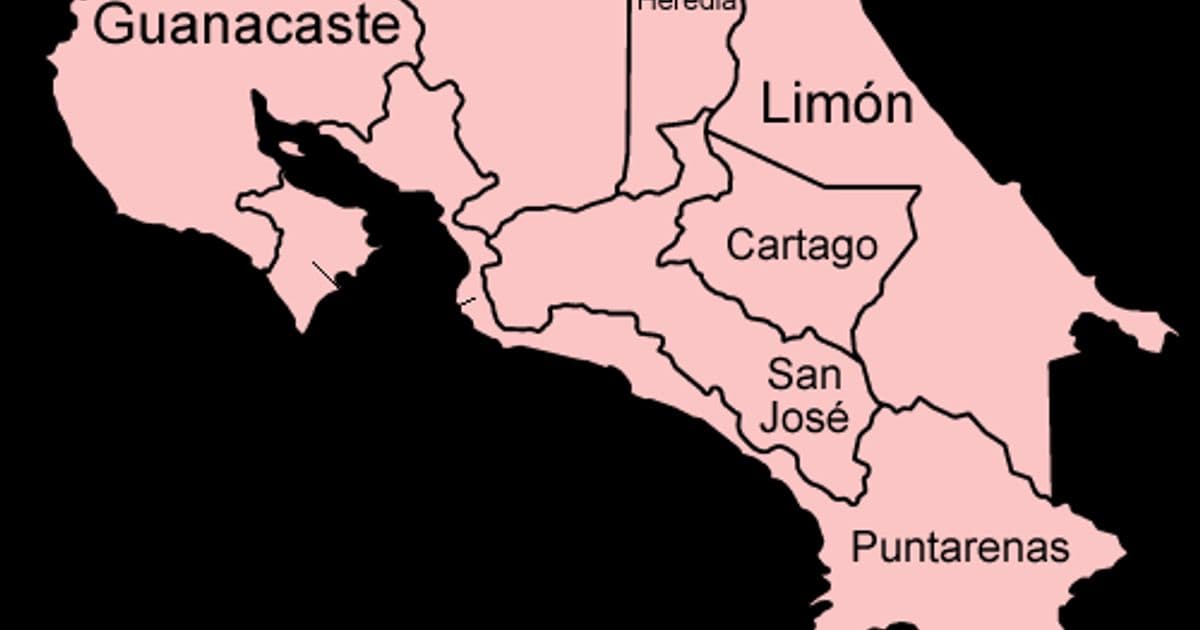
Mapa de Costa Rica: Guía Geográfica de Provincias y Destinos
Costa Rica is a small but geographically diverse country located in Central America, bordered by Nicaragua to the north and Panama to the southeast. Understanding the map of Costa Rica — its provinces, regions, and key destinations — is essential for planning an efficient trip through the country's dramatically varied landscapes. From Caribbean lowlands to Pacific beaches, volcanic mountain ranges to tropical dry forests, the country packs extraordinary geographic diversity into an area of just 51,100 square kilometers.
Costa Rica's Geographic Overview
Costa Rica occupies a narrow land bridge connecting North and South America, a position that gives it extraordinary biodiversity as species from both continents intermingle. The country is bounded by the Caribbean Sea (Atlantic Ocean) to the east and the Pacific Ocean to the west, giving it two distinct coastlines with different climates, cultures, and ecosystems.
The central spine of the country consists of several mountain ranges running northwest to southeast. The highest point is Cerro Chirripó at 3,821 meters above sea level, located in the Talamanca Mountain Range in the south. The Central Valley, home to the capital San José and roughly half the national population, sits at 1,000–1,500 meters elevation, giving it a comfortable year-round temperature of 18–24°C (64–75°F).
The Pacific coast runs approximately 1,016 kilometers and includes the dry Guanacaste region in the northwest, the Central Pacific zone near Jacó and Manuel Antonio, and the wetter Southern Pacific around Dominical and the Osa Peninsula. The Caribbean coast runs about 212 kilometers and is characterized by flat lowlands, heavy rainfall, diverse Afro-Caribbean and indigenous cultures, and the unique ecosystems of the Tortuguero canals.
Borders and Neighboring Countries
Costa Rica shares a 309-kilometer border with Nicaragua to the north and a 330-kilometer border with Panama to the southeast. The country has no border disputes with Panama, but has had historical boundary tensions with Nicaragua, particularly regarding the San Juan River that forms much of the northern border. Costa Rica has no military forces and relies on diplomacy and international law for border management.
The Seven Provinces of Costa Rica
Costa Rica is divided into seven provinces, each with a capital city. The provinces are: San José (capital: San José), Alajuela (capital: Alajuela), Cartago (capital: Cartago), Heredia (capital: Heredia), Guanacaste (capital: Liberia), Puntarenas (capital: Puntarenas), and Limón (capital: Limón).
The four Central Valley provinces — San José, Alajuela, Cartago, and Heredia — form the densely populated heartland of the country. San José province is the political, commercial, and cultural center. Alajuela is home to the international airport and the historic coffee highlands around Poás Volcano. Cartago contains the revered Basílica de Nuestra Señora de los Ángeles and the Irazú Volcano. Heredia is known as the City of Flowers and is home to the National University.
Guanacaste province in the northwest is the driest region, corresponding to the Pacific dry forest ecosystem. Its beaches — including Tamarindo, Flamingo, Nosara, and Sámara — are some of the most visited in the country. Puntarenas province is the largest, stretching along most of the Pacific coast and including the entire Nicoya Peninsula and the southern zone down to the Osa Peninsula. Limón province encompasses the entire Caribbean coast.
Cantons and Districts
Below the provincial level, Costa Rica is divided into 82 cantons and 473 districts. Cantons are the primary administrative units, governed by elected municipal councils. Tourist destinations like La Fortuna, Monteverde, and Jacó are towns within cantons rather than cantons themselves. Understanding this hierarchy helps when reading addresses or maps, as locations are often described by canton and district rather than just town name.
Tourism Regions and Zones
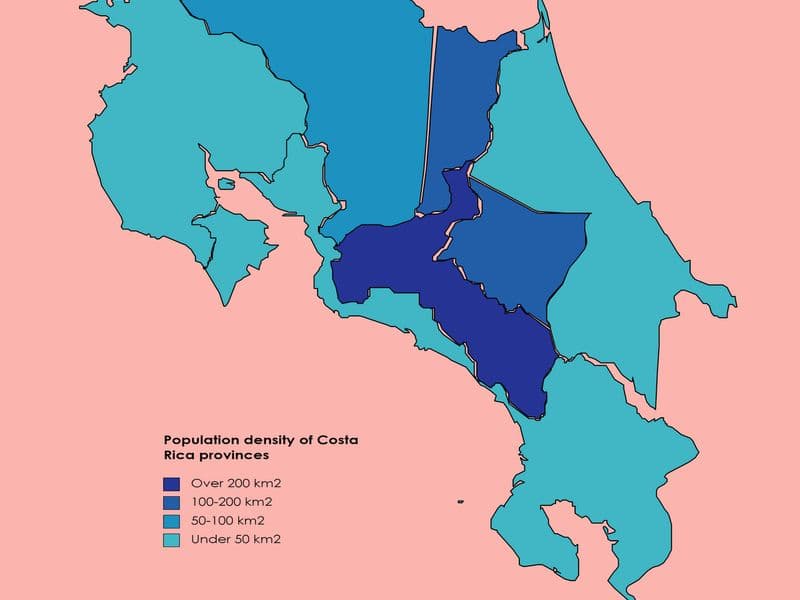
For tourism purposes, Costa Rica is commonly divided into distinct travel zones that reflect geographic and experiential characteristics. The Central Valley and Central Highlands region encompasses San José and the surrounding volcanoes and coffee farms. This is the gateway for most international visitors and home to cultural museums, the National Theater, and day-trip destinations like Poás and Irazú volcanoes.
The Northern Zone (Zona Norte) covers the lowlands around La Fortuna, Arenal Volcano, Lake Arenal, and the cloud forests of Monteverde. This region is the most visited inland destination in the country, offering volcano hiking, hot springs, zip-lining, and hanging bridge walks through cloud forest canopies.
The Caribbean Coast encompasses Tortuguero (accessible only by boat or small plane), the town of Cahuita and its national park, Puerto Viejo de Talamanca, and the indigenous Bribri territory. The Southern Zone, sometimes called the South Pacific or Zona Sur, includes Dominical, Uvita and the Marino Ballena National Park, the Osa Peninsula, and the town of Puerto Jiménez as a gateway to Corcovado National Park.
Nicoya Peninsula
The Nicoya Peninsula in the northwest is technically part of Guanacaste and northern Puntarenas provinces but functions as a distinct tourism zone. Accessible by ferry from Puntarenas or by road via Nicoya city, the peninsula's remote Pacific coast beaches — Santa Teresa, Mal País, Nosara, Sámara — attract surf travelers, yoga practitioners, and those seeking quieter alternatives to the more crowded Guanacaste resort beaches.
Major Mountain Ranges and Volcanoes
Costa Rica's central spine is formed by four major mountain ranges. The Guanacaste Volcanic Mountain Range in the northwest contains several active and dormant volcanoes including Rincón de la Vieja (most active), Miravalles, and Tenorio. The Tilarán Mountain Range connects Guanacaste to the Central Ranges and is home to the Monteverde cloud forests.
The Central Volcanic Mountain Range contains the country's most visited volcanoes: Poás (with an accessible summit crater), Irazú (highest accessible crater in Central America at 3,432 m), Barva (in Braulio Carrillo National Park), and Turrialba (periodically active and closed to visitors). Arenal Volcano, technically separate, is the country's most iconic — a near-perfect conical stratovolcano that was highly active from 1968 to 2010 and remains geologically active today.
The Talamanca Mountain Range in the south is the longest in Central America, forming a continuous ridge from central Costa Rica into Panama. Cerro Chirripó, the highest peak at 3,821 m, requires a permit and multi-day trek to summit. The Talamancas are a UNESCO World Heritage Site shared with Panama.
Rincón de la Vieja Volcano
Rincón de la Vieja is the most active volcano in Costa Rica, located in the northwest Guanacaste province. The national park surrounding it protects bubbling mud pots (volcancitos), hot sulfurous springs, fumaroles, waterfalls, and dry tropical forest. The volcano last had significant activity in 2023, periodically closing access to summit trails. The area is a popular day trip from the Guanacaste beach resorts.
National Parks on the Map
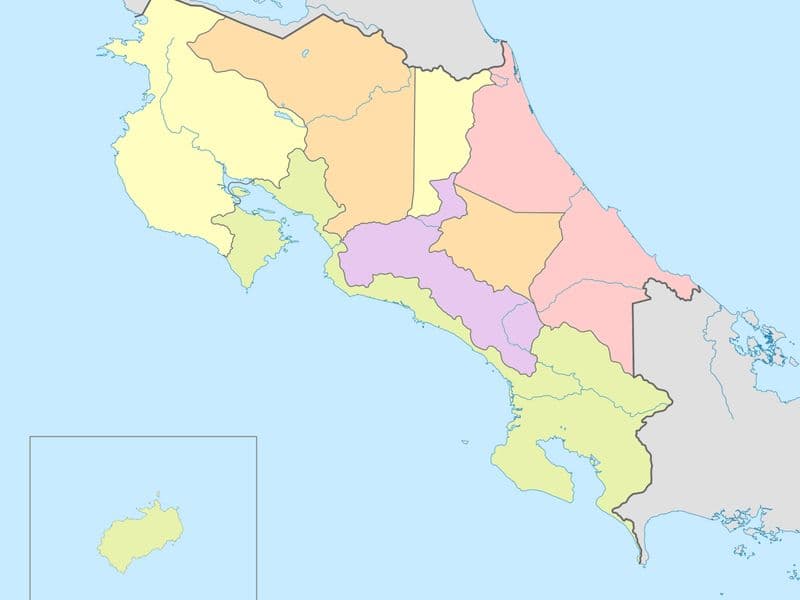
Costa Rica has 28 national parks plus numerous wildlife refuges, biological reserves, and wetland conservation areas, collectively protecting approximately 26% of the national territory. The parks are administered by SINAC (Sistema Nacional de Áreas de Conservación) and are distributed across 11 conservation areas covering the entire country.
The most visited national parks are Manuel Antonio (Central Pacific), Arenal (Northern Zone), Poás Volcano (Central Highlands), Tortuguero (Caribbean), and Rincón de la Vieja (Guanacaste). The most biodiverse but remote park is Corcovado, on the Osa Peninsula, which National Geographic has called the most biologically intense place on Earth.
On the Pacific coast, Marino Ballena National Park near Uvita protects a unique whale-tail-shaped sandbar visible from the air, plus offshore marine zones where humpback whales congregate. Cahuita National Park on the Caribbean coast protects the country's most significant coral reef. La Amistad International Park, shared with Panama and a UNESCO World Heritage Site, is the largest protected area in Central America at over 400,000 hectares.
Marine Conservation Areas
Costa Rica's conservation areas extend into the Pacific Ocean. Cocos Island National Park, located 550 kilometers offshore in the Pacific, is one of the world's premier shark diving destinations and a UNESCO World Heritage Site. The island is accessible only by liveaboard dive vessel and is home to massive schools of scalloped hammerhead sharks, whale sharks, manta rays, and abundant pelagic life.
Key Cities and Towns
San José, the capital, is Costa Rica's largest city with a metropolitan population of approximately 1.4 million. Located in the Central Valley at 1,170 meters elevation, it is the country's commercial, political, and transportation hub. Key cultural landmarks include the Teatro Nacional (National Theater), the Mercado Central, the Jade Museum, and the Gold Museum (Museo del Oro Precolombino).
Liberia, capital of Guanacaste province, is the second most important gateway city, served by the Daniel Oduber International Airport. It serves as the launch point for the Guanacaste beach resorts and the Rincón de la Vieja volcano. The historic colonial center around the central park and the Casa de la Cultura museum reflect Guanacaste's distinct cowboy (sabanero) culture.
Other important towns include La Fortuna (base for Arenal Volcano tourism), Quepos (gateway to Manuel Antonio), Puerto Jiménez (gateway to Corcovado and the Osa Peninsula), Limón (Caribbean port city), and Ciudad Neily in the southern zone. Smaller but significant tourism towns include Monteverde, Tamarindo, Santa Teresa, Puerto Viejo de Talamanca, and Nosara.
San José as a Hub
While many travelers minimize time in San José in favor of beaches and national parks, the capital merits at least a day or two. The historic Barrio Amón district has beautifully restored Victorian and Art Nouveau mansions converted into boutique hotels and cafés. The eastern suburb of Escazú is the upscale restaurant and shopping hub. The Mercado Central offers an authentic local market experience with produce, spices, and sodas serving traditional Costa Rican food.
Frequently Asked Questions
How big is Costa Rica compared to a US state?
Costa Rica (51,100 sq km) is roughly the size of West Virginia (62,756 sq km), making it smaller than most US states but remarkably biodiverse for its size. Its position as a land bridge between North and South America, combined with its two coastlines and mountain ranges, gives it extraordinary habitat diversity.
What are the main regions of Costa Rica for tourists?
The main tourism regions are: the Central Valley (San José, volcanoes, coffee farms), the Northern Zone (Arenal, Monteverde), Guanacaste (Pacific dry forest beaches, Tamarindo, Flamingo), the Nicoya Peninsula (Santa Teresa, Nosara, Sámara), the Central Pacific (Jacó, Manuel Antonio), the Southern Zone (Uvita, Osa Peninsula, Corcovado), and the Caribbean Coast (Tortuguero, Cahuita, Puerto Viejo).
What are the seven provinces of Costa Rica?
The seven provinces are San José, Alajuela, Cartago, Heredia (all in the Central Valley), plus Guanacaste (northwest Pacific), Puntarenas (Pacific coast and southern zone), and Limón (Caribbean coast). Each province is named after its capital city.
How long does it take to drive across Costa Rica?
Driving from the Caribbean coast at Limón to the Pacific coast at Puntarenas takes approximately 3–4 hours under normal conditions, covering roughly 200 km via San José. However, mountain roads, construction, and traffic in the San José metro area can significantly extend travel times. Roads in rural areas are often unpaved and require 4WD vehicles.
Does Costa Rica have an Atlantic coast?
Yes, Costa Rica's eastern coast borders the Caribbean Sea, which is technically part of the Atlantic Ocean. This Caribbean coast is very different from the Pacific side — it receives much higher annual rainfall, has a predominantly flat landscape with canals and lagoons, and features a culturally distinct Afro-Caribbean population descended from Jamaican workers who came to build the banana railroad in the late 1800s.