
Nicoya, Costa Rica: The Blue Zone Peninsula of the Pacific
The Nicoya Peninsula is one of Costa Rica's most rewarding and diverse destinations, stretching 130 kilometers along the Pacific coast and encompassing everything from dry tropical forest and colonial-era towns to surf meccas and serene beach villages. Famous internationally as one of the world's five Blue Zones — regions where residents live measurably longer, healthier lives — Nicoya combines natural beauty, cultural richness, and a quality of life that has been drawing visitors and long-term residents for decades.
The Nicoya Peninsula Overview
The Nicoya Peninsula is a large landmass in northwestern Costa Rica, bounded by the Gulf of Nicoya to the east and the Pacific Ocean to the west. Administratively, the peninsula is divided between Guanacaste province in the north and Puntarenas province in the south. The total area of the peninsula is approximately 3,360 square kilometers, making it a substantial geographic feature with dramatically varied landscapes.
The eastern shore of the peninsula, facing the Gulf of Nicoya, is calmer and less exposed than the open Pacific coast, with fishing villages, mangrove estuaries, and the ferry terminals at Paquera and Playa Naranjo that connect to the mainland at Puntarenas. The interior of the peninsula is agricultural, with cattle ranches, rice paddies, and small towns linked by a network of roads that range from well-paved highways to rough dirt tracks requiring 4WD vehicles.
The Pacific-facing coast of the peninsula is the main tourist draw, with a series of beach towns each having its own distinct character: Tamarindo (lively, international surf town), Nosara and Guiones (yoga-focused, restricted development), Sámara (calm, family-friendly bay), Santa Teresa and Mal País (surf and wellness hotspot), and Montezuma (bohemian village at the peninsula's tip). The peninsula has seen significant real estate development from international buyers, particularly in the beach areas.
Nicoya Peninsula Geography
The Nicoya Peninsula's topography varies from flat coastal lowlands to forested hills reaching 600–700 meters in the interior. Rivers draining the central hills form important mangrove estuaries along the coast. The Santa Rosa National Park and Guanacaste National Park to the north protect the dry tropical forest ecosystem that characterizes much of the peninsula's natural vegetation, characterized by deciduous trees that lose their leaves during the dry season.
Nicoya City: Colonial Capital of Guanacaste
Nicoya city (officially Villa de Nicoya) is the canton capital of the Nicoya canton in Guanacaste province. The town, with approximately 15,000 residents, is one of the oldest continuously inhabited settlements in Costa Rica, predating Spanish colonization as an indigenous Chorotega center. Today it serves as the main inland service town for the northern Nicoya Peninsula, with markets, banks, government offices, hospitals, and bus connections to the coast.
The Iglesia Colonial de Nicoya (Nicoya Church), also known as the Parroquia de San Blas, is the most significant historical monument in the region. Built in the 16th century and repeatedly restored, the church features an unusual mix of Spanish colonial and Chorotega artistic influences. The adjacent town square has the traditional character of a provincial Costa Rican plaza, with a kiosk for community events, shaded benches, and the everyday life of a market town going on around it.
The Casa de la Cultura in Nicoya houses historical artifacts, pre-Columbian ceramics, and rotating exhibitions related to Chorotega and colonial history. The Chorotega indigenous people, the original inhabitants of the Nicoya Peninsula, had a sophisticated civilization with advanced ceramics, astronomy, and agricultural practices. Examples of their jade-green ceremonial bowls and figurines are among the most prized pieces in Costa Rican museum collections.
Chorotega Cultural Heritage
The Chorotega were one of the most advanced indigenous civilizations in pre-Columbian Costa Rica, with a complex society featuring a written calendar, formal schooling, and a class system. The Nicoya Peninsula was central to their territory, and the town of Nicoya was an important religious and commercial center. After Spanish colonization, the Chorotega population declined dramatically from disease and displacement. Their cultural legacy survives in regional food traditions, ceramics, and some community customs in areas like Matambú, the last recognized indigenous Chorotega reserve on the peninsula.
The Blue Zone and Longevity Secrets
The Nicoya Peninsula is one of the world's five officially recognized Blue Zones, regions identified by researcher Dan Buettner and studied by demographers for their unusually high concentrations of people who live past age 90 and 100 in good health. The other Blue Zones are Sardinia (Italy), Okinawa (Japan), Ikaria (Greece), and Loma Linda (California, USA). Costa Rica's Nicoya Peninsula Blue Zone is particularly notable because it has the highest concentration of centenarians of any region in the world for men.
Researchers have identified several lifestyle factors contributing to Nicoya Peninsula longevity. Diet plays a central role: the traditional Nicoyan diet is based on corn tortillas (providing niacin and amino acids not present in raw corn), black beans (a complete protein source with antioxidants), squash, and fresh tropical fruits. This diet is low in processed foods and rich in fiber and antioxidants. Nicoyan centenarians typically drink hard mineral-rich water from local wells, which researchers believe contributes to bone health and cardiovascular function.
Social and behavioral factors are equally important. Strong family bonds and multigenerational households are the norm in traditional Nicoyan communities. Active physical lifestyles — farming, walking, manual labor — continue into old age. The concept of 'plan de vida' (reason to live), a sense of purpose and meaning, is cited by researchers as a psychological factor in longevity. Religious faith, community social networks, and moderate alcohol consumption (typically fermented drinks) round out the longevity equation.
Blue Zone Tourism
Interest in the Blue Zone has spawned a wellness tourism industry on the Nicoya Peninsula. Yoga retreats, wellness centers, and health-focused resorts have proliferated, particularly in Nosara. The town of Nosara has actively embraced the Blue Zone identity, marketing itself as a wellness destination with restrictions on high-rise development and a community culture that values health and sustainability over mass tourism. Several tour operators offer Blue Zone-themed tours visiting centenarian communities and traditional farms.
Beach Destinations on the Peninsula
Tamarindo, in the northern part of the peninsula (technically in Guanacaste), is the most developed and internationally recognized beach town on the Nicoya coast. The town has a wide crescent bay with consistent surf, a diverse restaurant and bar scene, real estate offices, souvenir shops, and a lively nightlife. It is the most convenient peninsula beach from Liberia Airport (1.5 hours) and popular with first-time visitors to the region.
Nosara, accessible via a long dirt road (4WD recommended) or small plane, is the peninsula's wellness capital. The town has deliberately restricted development to preserve its natural beauty and tranquility, maintaining unpaved roads partly to discourage mass tourism and partly for practical environmental reasons. The yoga and wellness infrastructure here is world-class, attracting celebrities, entrepreneurs, and serious practitioners. Playa Guiones, Nosara's main surfing beach, has consistent left and right-hand beach break waves suitable for intermediate surfers.
Sámara is a calm, family-friendly bay with protected swimming conditions and a mix of Tico families and international tourists. The bay's geography blocks most significant swell, making it the calmest swimming beach on the west coast of the peninsula. The town is more low-key than Tamarindo, with a local Costa Rican community presence balanced with tourism services.
Santa Teresa and Mal País
Santa Teresa and the adjacent community of Mal País at the southern tip of the Pacific coast of the peninsula (north of Montezuma) have transformed from a backpacker outpost into one of Costa Rica's most fashionable beach destinations. The area attracts a style-conscious crowd of surfers, models, yoga practitioners, and digital nomads. The surf at Santa Teresa is consistent and high-quality, attracting surfers of all levels. The restaurant and accommodation scene, while still casual in character, has become increasingly sophisticated.
Surfing on the Nicoya Peninsula
The Nicoya Peninsula is Costa Rica's premier surfing region, offering an extraordinary variety of breaks suited to all skill levels. The Pacific swell hits the peninsula's coast from multiple directions throughout the year, with the north and northwest swells of the dry season (November–April) being particularly powerful and consistent. Southern hemisphere swells from May through October keep conditions lively during the green season.
Tamarindo and Playa Grande (adjacent to Tamarindo and within a national park) offer consistent beach break waves for beginners and intermediates. Playa Avellanas and Playa Negra, a short drive south of Tamarindo, are renowned for more powerful reef breaks. Playa Avellanas is a beautiful beach with a reliable left-hand break; Playa Negra features a fast, barreling right-hand reef break that has hosted professional surf contests.
The southern peninsula's Santa Teresa has the most consistent conditions on the Nicoya coast, with a powerful beach break producing both lefts and rights suitable for intermediate to advanced surfers. Mal País just south offers a rockier, more challenging option. The entire Nicoya Peninsula has a mature surf industry with board shapers, surf camps, repair shops, and rental operations throughout the beach towns.
Witch's Rock and Ollie's Point
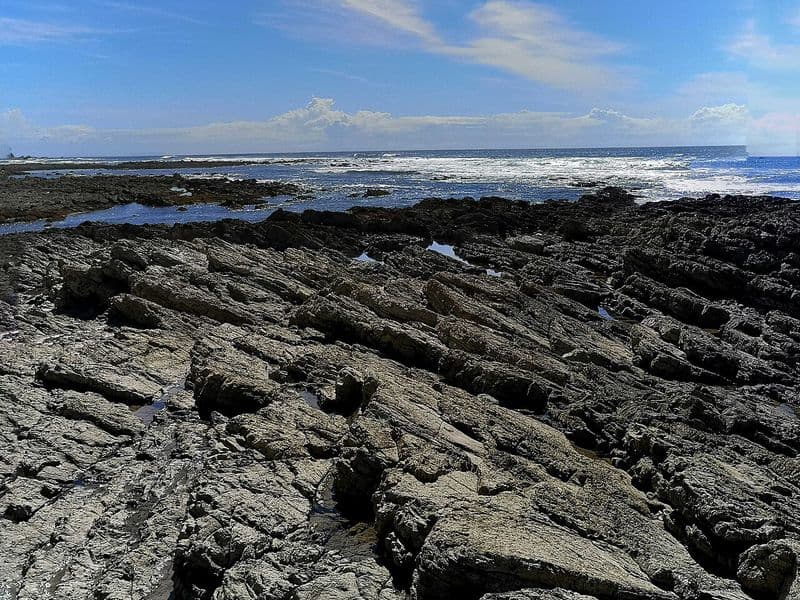
Two of Costa Rica's most famous surf breaks are located within Santa Rosa National Park at the northern end of the Nicoya Peninsula: Witch's Rock (Roca Bruja) and Ollie's Point (Punta Descartes). Both breaks are accessible only by boat from Tamarindo or Playa del Coco, a 1.5–2 hour ride. Witch's Rock is a powerful beach break with a dramatic backdrop of volcanic rocks. Ollie's Point is a famous right-hand point break that peels for hundreds of meters. Both were featured in the surf film "Endless Summer II" in 1994.
Getting to and Around Nicoya
The Nicoya Peninsula is accessible by several routes. From San José, travelers can drive north to Liberia (4 hours) and then south into the peninsula's northern beaches via the Guanacaste Interior Road or the Tempisque Bridge crossing. Alternatively, the Puntarenas-Paquera ferry (90 minutes) provides access to the southern peninsula. Domestic flights from San José reach Tamarindo, Nosara, and Tambor (near Montezuma) in 45–60 minutes, a practical time-saver for the more distant destinations.
Within the peninsula, the road network is partially paved and partially gravel or dirt. The main paved roads connect Liberia to Tamarindo, and Nicoya city to Sámara and Nosara via a recently paved road that has dramatically improved access. The southern peninsula roads from Cobano to Santa Teresa and Montezuma are mostly paved. However, numerous secondary roads — particularly to remote beaches — require 4WD vehicles and high clearance, especially during the rainy season.
Car rental is the most flexible option for exploring the peninsula. Renting at Liberia Airport (LIR) for the northern beaches or at Tambor Airport (TMU) for the southern area saves time. Shared shuttles connect major beach towns, and local buses provide affordable (if slow) service between Nicoya city, Sámara, Nosara, and Tamarindo. Water taxis in the Gulf of Nicoya provide scenic connections between some coastal communities.
Tempisque Bridge
The Puente de la Amistad sobre el Río Tempisque (Friendship Bridge over the Tempisque River), inaugurated in 2003 with funding from Taiwan, transformed access to the Nicoya Peninsula by eliminating the previous ferry crossing over the Tempisque River. The bridge carries Route 18 across the river between the mainland and the peninsula's eastern shore, reducing travel time to the northern peninsula beaches by approximately 1–1.5 hours. The bridge is a major piece of infrastructure that has accelerated development on the Nicoya Peninsula.
Frequently Asked Questions
What is the Nicoya Peninsula famous for?
The Nicoya Peninsula is famous as one of the world's five Blue Zones where people live unusually long and healthy lives, as a world-class surfing destination (Tamarindo, Santa Teresa, Nosara), for its yoga and wellness retreat culture, and for its variety of Pacific beach towns ranging from lively Tamarindo to tranquil Sámara and bohemian Montezuma.
Is Nicoya Peninsula good for families?
Yes, the Nicoya Peninsula is excellent for families. Sámara has the calmest, most protected swimming beach on the peninsula and a relaxed, local-friendly atmosphere. Tamarindo offers more amenities and activities. The wildlife, beaches, and outdoor activities appeal to children of all ages. The main challenge is the road network — a 4WD rental vehicle is essential for many areas.
How do I get to Nosara?
Nosara is accessible by driving from Nicoya city via a recently paved road (about 1.5 hours from Nicoya, 4.5 hours from San José), by domestic flight from San José's Tobías Bolaños Airport to Nosara's small airstrip (45 minutes), or via shared shuttle services. The airstrip option is expensive but saves hours of road travel, particularly useful during the rainy season when some roads can be challenging.
What is the best beach on the Nicoya Peninsula?
The answer depends on your priorities. For swimming: Sámara (calmest, most protected waters). For surfing: Santa Teresa or Playa Avellanas. For atmosphere and amenities: Tamarindo. For wellness and yoga: Nosara. For off-the-beaten-path beauty: Playa Carrillo (south of Sámara), Playa Barrigona, or Playa San Miguel. For the most dramatic waterfall-and-beach combination: Montezuma at the peninsula's tip.
Do I need a 4WD vehicle on the Nicoya Peninsula?
A 4WD vehicle is strongly recommended for the Nicoya Peninsula, especially during the rainy season (May–November). The main paved roads to Tamarindo, Sámara, and Nosara are manageable in 2WD during dry season, but beach access roads, secondary jungle tracks, and river crossings in rural areas require 4WD. In rainy season, even some paved routes can have washed-out sections. Renting 4WD provides peace of mind throughout the peninsula.