
The Capital of Costa Rica: San José Complete Travel Guide
San José is the capital and largest city of Costa Rica, home to approximately 350,000 people in the city proper and over 2 million in the greater metropolitan area. Situated in the Central Valley at an elevation of about 1,170 meters (3,840 feet) above sea level, San José enjoys a mild, spring-like climate year-round. Often used primarily as a transit point by visitors flying in and out, San José rewards those who spend extra time exploring its world-class museums, vibrant markets, colonial architecture, and the remarkable day-trip destinations that surround it.
San José — Capital City of Costa Rica
San José has been the capital of Costa Rica since 1823, when it replaced Cartago — the original Spanish colonial capital — as the center of Costa Rican governance. The city is located at approximately 9°56'N, 84°5'W in the Central Valley (Meseta Central), a high-altitude intermontane basin that has been the demographic and economic core of Costa Rica throughout recorded history. The Central Valley's fertile volcanic soils, mild climate, and central geographic position made it the natural center of Costa Rican civilization from the colonial period through the present day.
The metropolitan area of San José, known as the Gran Área Metropolitana (GAM), encompasses the cities of Alajuela, Heredia, Cartago, and numerous suburban municipalities, creating a contiguous urban region with a population exceeding 2 million — roughly 40% of Costa Rica's total population of approximately 5.2 million. Juan Santamaría International Airport, Costa Rica's primary international gateway, is located in Alajuela, approximately 18 kilometers northwest of downtown San José.
San José's urban character is that of a mid-sized Latin American capital — a mix of colonial-era buildings and modern commercial development, with vibrant street life, a growing cultural scene, significant traffic congestion, and urban challenges including homelessness and petty crime in some areas. It is not a picture-postcard colonial city like Antigua, Guatemala, or Cartagena, Colombia, but it has genuine urban character and cultural assets that distinguish it from generic Central American cities. The Barrio Amón and Barrio Otoya neighborhoods preserve some of the finest examples of early 20th-century architecture in Costa Rica.
Why Is San José the Capital?
San José replaced Cartago as the Costa Rican capital in 1823 following internal conflicts after Central American independence from Spain. The tobacco economy based in San José had grown influential, and after the Battle of Ochomogo (April 1823) between conservative forces from Cartago and liberal forces from San José and Alajuela, San José's faction prevailed and established itself as the new seat of government. Cartago, founded in 1563, had been the Spanish colonial capital but San José's economic momentum carried it to permanent capital status.
Key Neighborhoods and Districts
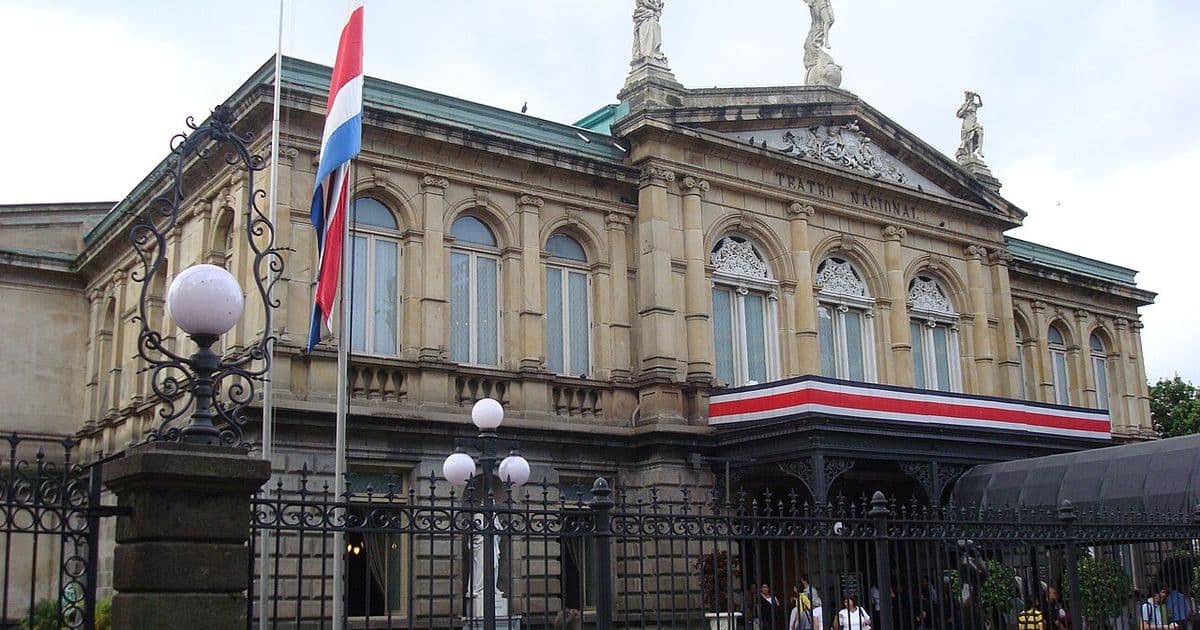
Downtown San José (Centro) is the historic core of the city, centered on the Parque Central and the adjacent Parque Morazán. This area contains the Metropolitan Cathedral, the National Theater (Teatro Nacional), the Central Post Office, and the Mercado Central. While the downtown has seen some urban decay and redevelopment, it remains the administrative center of the city and country, housing government buildings, embassies, banks, and commercial establishments.
Barrio Amón and Barrio Otoya, immediately north of the downtown core, are the most architecturally interesting neighborhoods in San José. These late 19th and early 20th-century residential districts preserve Victorian-influenced mansions, art nouveau facades, and ornate iron and wood detailing that reflects the coffee wealth era of Costa Rican history. Many of these mansions have been converted to boutique hotels, restaurants, art galleries, and cultural centers, making Barrio Amón a pleasant walking district for history and architecture enthusiasts.
Escazú and Santa Ana, western suburban municipalities of San José, are the preferred residential areas for Costa Rica's upper-middle class, wealthy professionals, and a large proportion of the international expatriate community. These areas have the country's best selection of upscale restaurants, international supermarkets (Auto Mercado), multinational retail, English-language services, and modern commercial infrastructure. Many international visitors who need lodging near the airport base themselves in Escazú or the nearby La Sabana and Rohrmoser neighborhoods rather than in downtown San José proper. La Sabana is home to Parque La Sabana, the city's largest park and the site of the National Stadium.
San Pedro and Universidad de Costa Rica
San Pedro, east of downtown, is the university district anchored by the main campus of the Universidad de Costa Rica (UCR). The area has a youthful, intellectually active character with numerous bookshops, cafes, affordable restaurants, and nightlife. The Avenida Central pedestrian zone through San Pedro connects to the downtown walking street. The Barrio Escalante district, neighboring San Pedro, has evolved into San José's most fashionable dining and nightlife neighborhood, with upscale restaurants, craft cocktail bars, and food trucks along the famous Calle 33.
Top Attractions and Museums
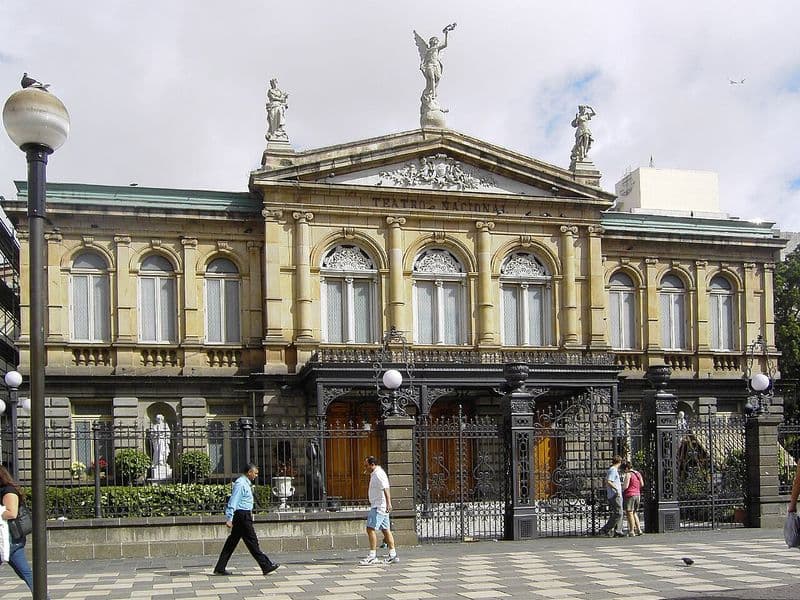
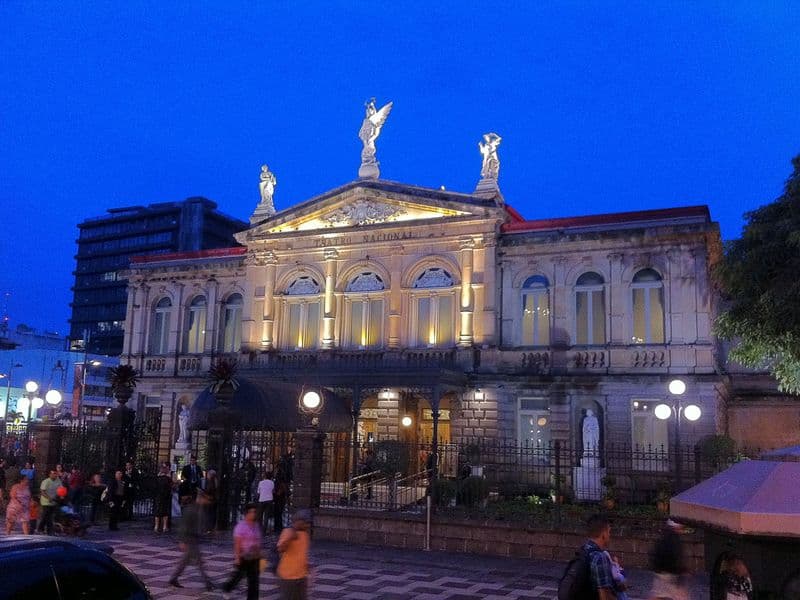
The National Theater (Teatro Nacional) is the most celebrated building in Costa Rica and a symbol of San José and of the nation. Built between 1891 and 1897, the theater was funded by a tax on coffee exports levied by the Costa Rican coffee growers after a famous European soprano (Adelina Patti) bypassed Costa Rica on a tour because the country lacked a suitable performance venue. The resulting neo-baroque structure, with its Venetian marble floors, Italian frescoes, French furnishings, and grand staircase, remains one of the finest examples of late 19th century neoclassical architecture in Central America. Daily guided tours are available, and performances by the National Symphony Orchestra and visiting international companies take place throughout the year.
The Pre-Columbian Gold Museum (Museo del Oro Precolombino), located beneath the Plaza de la Cultura in downtown San José, houses the largest collection of pre-Columbian gold artifacts in Costa Rica and one of the finest in the Americas. The museum is operated by the Banco Central de Costa Rica and contains approximately 1,600 gold pieces created by indigenous Costa Rican cultures between 500 BCE and 1500 CE. The collection includes spectacular ceremonial objects, pendants, figurines, and decorative items that demonstrate extraordinary goldsmithing skill. Admission is charged; the museum is open daily.
The Jade Museum (Museo del Jade) relocated to a stunning new facility adjacent to the Plaza de la Democracia in 2014. It houses the world's largest collection of American jade artifacts — pre-Columbian jade objects made from Costa Rican jadeite deposits that were highly prized in Mesoamerican cultures. The museum's five floors also include significant ceramic, stone, and bone artifact collections, with excellent interpretive displays in Spanish and English explaining indigenous Costa Rican cultures. The National Museum of Costa Rica (Museo Nacional), housed in the former Cuartel Bellavista military barracks, provides comprehensive coverage of Costa Rican natural and human history.
Plaza de la Cultura and Central Park
The Plaza de la Cultura is the social heart of downtown San José, a wide pedestrian plaza fronting the National Theater and above the Gold Museum. Street musicians, artisan vendors, and locals enjoying outdoor life give the plaza its animated character. The Parque Central, a block away, has a central bandstand (quiosco) that hosts free Sunday concerts and is surrounded by the Metropolitan Cathedral. Both plazas are excellent people-watching spots and a starting point for downtown walks.
Simón Bolívar Zoological Garden and Spirogyra Butterfly Garden
The Simón Bolívar National Zoo in Barrio Amón is a modest city zoo with Costa Rican wildlife including tapirs, jaguars, spider monkeys, and numerous bird species. The Spirogyra Butterfly Garden in Barrio Amón is a small but delightful private butterfly garden with native Costa Rican butterfly species in a naturalistic enclosed habitat, offering close encounters with dozens of colorful species.
Markets and Food Culture
The Mercado Central (Central Market) in downtown San José is one of the best urban markets in Central America and a living institution of Costa Rican daily life since its founding in 1880. The market occupies an entire city block with hundreds of small stalls selling fresh produce, spices, medicinal herbs, flowers, meat, fish, leather goods, traditional crafts, and — most importantly — food. The mercado's interior sodas (small restaurants) serve typical Costa Rican food including gallo pinto, casado (a plate of rice, beans, meat, salad, and plantains), ceviche, and arroz con leche at prices far below tourist restaurant rates. The market is busiest on weekday mornings and worth an extended visit.
The Feria del Agricultor (Farmers' Market) is held in various neighborhoods around San José on weekday mornings and is the best place to experience Costa Rica's extraordinary agricultural diversity. Dozens of varieties of tropical and highland vegetables, fruits, flowers, coffee, cheese, and prepared foods are available directly from the farmers who grow them. The Feria in Coronado, Desamparados, and other suburbs attracts both local shoppers and adventurous tourists. Buying directly from farmers also supports sustainable local agriculture.
San José's restaurant scene has evolved dramatically over the past decade, moving from a predominantly traditional Costa Rican cuisine base to a diverse, sophisticated food culture. Barrio Escalante has become the epicenter of San José's dining scene, with restaurants offering Costa Rican fusion, Italian, Japanese, Middle Eastern, and creative international cuisine. Traditional sodas serving full casado meals for $5–$8 remain common throughout the city and represent the most authentic and affordable dining experience. Marisquerías (seafood restaurants) serving fresh ceviche and grilled fish are popular throughout the metropolitan area.
Costa Rican Coffee Culture in San José
Costa Rica is one of the world's great coffee-producing nations, and San José has a developing specialty coffee culture alongside the traditional pulperías and hotel lobbies where Café Rey or Café Britt are the standard offerings. Third-wave coffee shops in Barrio Escalante, San Pedro, and Escazú serve single-origin Costa Rican coffees from Tarrazú, Naranjo, Orosi, and other microclimates with pour-over, aeropress, and espresso methods. The Coffee Museum (Museo del Café) is located at the historic Tournón estate within the city and offers tastings and history of Costa Rica's coffee legacy.
Day Trips from San José
San José's location in the Central Valley places it within relatively short driving distance of an extraordinary range of day-trip destinations. Poás Volcano National Park is approximately 45–60 minutes northwest of San José, featuring one of the world's largest active volcanic craters with an acid lake at its bottom. On clear mornings (most common in dry season), the views into the crater are dramatic and the surrounding cloud forest is beautiful. The road to Poás passes through the coffee-growing highlands of Alajuela province, and a stop at one of the coffee farm restaurants for breakfast on the way up is a popular combination.
Irazú Volcano National Park, the highest active volcano in Costa Rica at 3,432 meters, is approximately 45–60 minutes east of San José toward Cartago. On exceptionally clear days, both the Pacific Ocean and the Caribbean Sea are reportedly visible from the summit — though such perfect visibility is rare. The lunar-looking summit craters and the surrounding highland farmland create a distinctive landscape unlike anywhere else in Costa Rica. The colonial city of Cartago and its famous Basílica de Nuestra Señora de Los Ángeles (a major Catholic pilgrimage site housing the Black Madonna or La Negrita) are en route.
La Paz Waterfall Gardens near Poasito is one of the most visited attractions near San José, offering a combination of wildlife sanctuary (rescued big cats, monkeys, birds), hummingbird garden, butterfly observatory, and a trail system through cloud forest to five dramatic waterfalls on the La Paz River. The park is commercial and well-organized, suitable for families and visitors with limited time. The Sarapiquí lowlands north of the Central Valley, reachable in about 1.5 hours, offer white-water rafting, river wildlife tours, and access to biological research stations.
Sarchí — Oxcart Capital of Costa Rica
Sarchí, approximately 45 minutes northwest of San José in Alajuela province, is famous as the birthplace of the traditional decorated Costa Rican oxcart (carreta), a UNESCO Intangible Cultural Heritage. The town's workshops produce hand-painted oxcarts of various sizes — from full-size working carts to tiny decorative versions suitable as souvenirs — alongside other traditional crafts including leather goods, furniture, and ceramics. A visit to one of Sarchí's operating workshops to see artisans at work is one of the best cultural experiences available in Costa Rica's Central Valley.
Getting Around and Practical Information
San José's urban traffic is notoriously congested during morning (7–9 AM) and evening (4–7 PM) rush hours, when the city's road infrastructure struggles with the volume of commuting vehicles from the greater metropolitan area. Visitors staying downtown or in Barrio Amón can walk to most central attractions. The city has a limited public bus system and a commuter train (Tren Interurbano) connecting San José to Heredia, Alajuela, and Cartago — the train is a pleasant and affordable alternative to driving on the Beltway during rush hours.
Taxis in Costa Rica are regulated, red, and metered (use of the taxímetro meter is legally required). Authorized taxis can be hailed on the street or called. The UBER and InDriver ride-share apps operate in San José and are popular alternatives, often somewhat cheaper than taxis. Always use registered red cabs or reputable apps rather than unlicensed piratas (illegal taxis), which operate informally and have been associated with tourist-targeting crimes.
Currency exchange is available at banks and some hotels, but using ATMs associated with major banks (Banco Nacional, Banco de Costa Rica, BCR, BAC Credomatic) is typically the most cost-effective way to access colones. The US dollar is widely accepted throughout tourist-facing businesses, hotels, and tour operators in San José, often at competitive rates. Carry small-denomination colones for local sodas, buses, and street vendors. Emergency services in San José are accessed via 9-1-1. The national hospital system (Hospital México, Hospital San Juan de Dios, Hospital Calderón Guardia) provides public healthcare, while private hospitals including Clínica Bíblica and Hospital CIMA in Escazú offer international-standard private care for visitors with travel insurance.
Safety in San José
San José is a safe city for visitors who apply common-sense urban precautions. The most frequent crimes affecting tourists are petty theft — pickpocketing in crowded markets and bus areas, and phone or bag snatching on busy streets. The Mercado Central area, the bus terminal zones at Terminal 7-10 and Terminal del Caribe, and some downtown side streets deserve extra vigilance. Barrio Amón, Escazú, and tourist-facing areas are generally safe for daytime walking. Avoid wearing expensive jewelry or prominently displaying cameras or phones. Nighttime walking in unfamiliar downtown areas is best done with company or by taxi.
Climate and Best Time to Visit San José
San José's climate is remarkably consistent year-round due to its elevation of approximately 1,170 meters. Temperatures range from about 15°C (59°F) at night to 28°C (82°F) during the day, with minimal seasonal variation. December through April is the dry season with minimal rain and abundant sunshine. May through November is the green season with afternoon showers, but mornings are typically clear. The city is pleasant to visit any time of year, and its museums and cultural attractions are entirely independent of weather conditions.
Frequently Asked Questions
What is the capital of Costa Rica?
San José is the capital and largest city of Costa Rica. It has been the capital since 1823, when it replaced Cartago, the Spanish colonial capital. San José is located in the Central Valley at approximately 1,170 meters elevation and is home to about 350,000 people in the city proper and over 2 million in the greater metropolitan area.
What is San José known for?
San José is known for its world-class pre-Columbian museums (the Gold Museum and Jade Museum), the magnificent 19th-century National Theater, the Mercado Central, proximity to volcanoes and coffee farms for day trips, a growing restaurant and nightlife scene (especially in Barrio Escalante), and as the main transit hub for international arrivals into Costa Rica.
How far is San José from the airport?
Juan Santamaría International Airport is located in Alajuela, approximately 18 kilometers (11 miles) northwest of downtown San José. The drive takes 20–40 minutes depending on traffic — considerably longer during morning and evening rush hours. Taxis, shuttles, Uber, and a public bus service (Tuasa) connect the airport to the city.
Is San José safe for tourists?
San José is generally safe for tourists who exercise standard urban precautions. The main risks are petty theft — pickpocketing in crowded markets, bus terminals, and busy streets. Tourist-facing areas including Barrio Amón, the museum district, Escazú, and the downtown Plaza de la Cultura area are generally safe during daylight hours. Avoid displaying expensive items and use taxis or rideshare apps at night.
What are the best day trips from San José?
Top day trips from San José include Poás Volcano National Park (45–60 min), Irazú Volcano (45–60 min), La Paz Waterfall Gardens (60 min), the colonial city of Cartago and its Basílica (30 min), the oxcart-making town of Sarchí (45 min), white-water rafting on the Pacuare River (90 min), and the coffee region of Tarrazú (90 min). With a full day and a car, Manuel Antonio National Park is also reachable.