
USD to Costa Rica Currency: Converting US Dollars to Colones
Converting USD to Costa Rica's currency, the colón (CRC), is one of the first practical tasks for any visitor heading to Costa Rica. The exchange rate determines how many colones your dollars are worth, and choosing the right exchange method can save you a meaningful percentage of your travel budget. This guide covers everything from the current USD to CRC rate to the best places to exchange money and how to avoid common costly mistakes.
Costa Rica's Currency: The Colón (CRC)
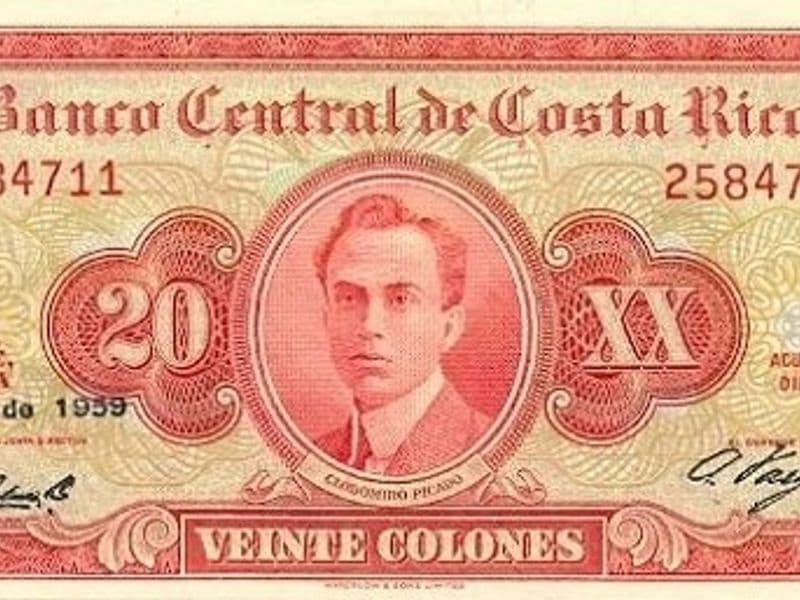
The Costa Rican colón (symbol: ₡, code: CRC) is the official national currency of Costa Rica. Named after Christopher Columbus (Cristóbal Colón in Spanish), it has been in continuous use since 1896. The Banco Central de Costa Rica is solely responsible for issuing colones and managing the country's monetary policy.
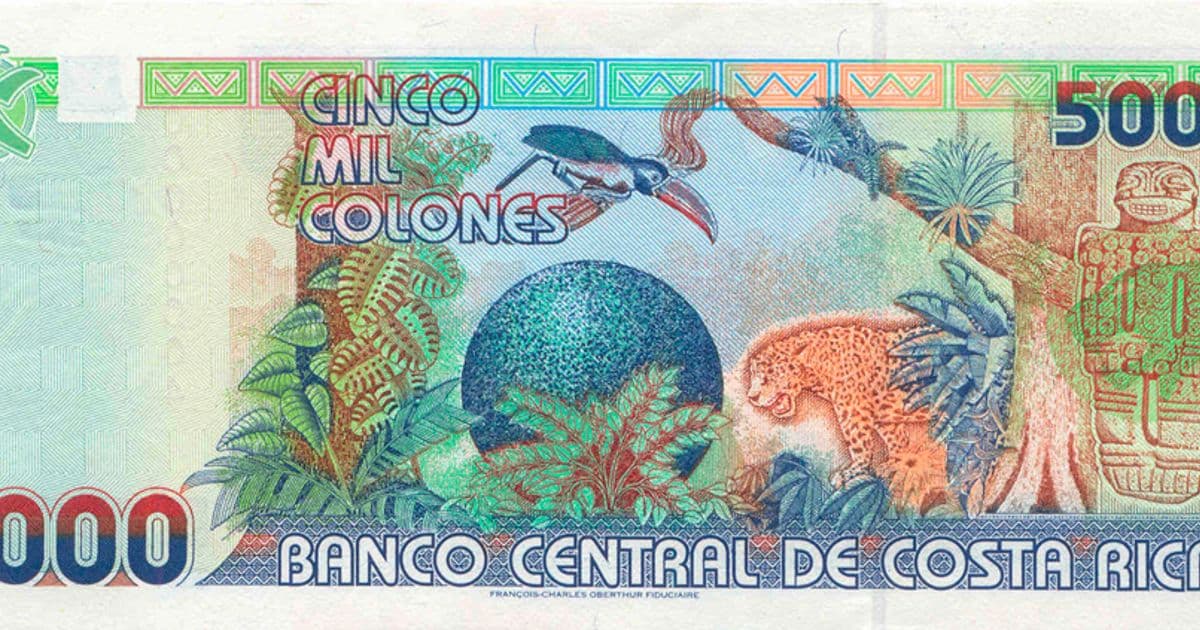
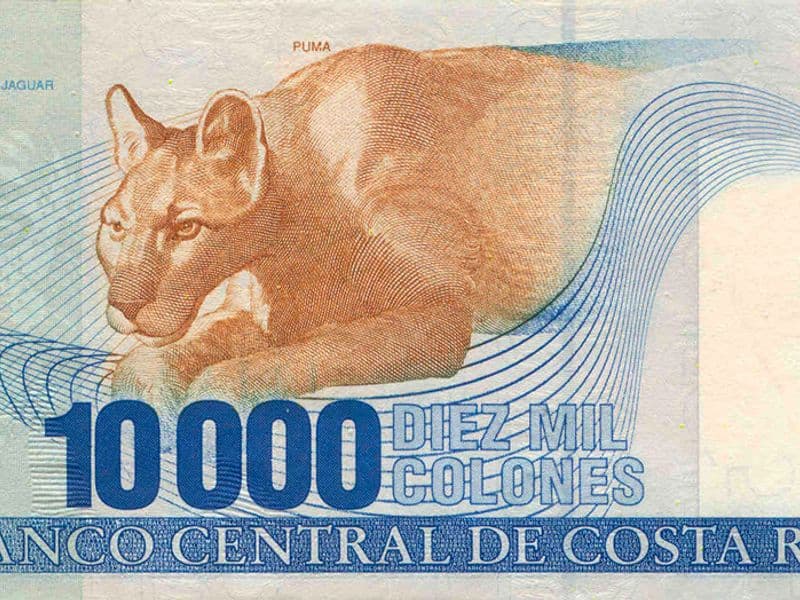
Colón banknotes are issued in denominations of ₡1,000, ₡2,000, ₡5,000, ₡10,000, ₡20,000, and ₡50,000. Coins circulate in ₡5, ₡10, ₡25, ₡50, ₡100, and ₡500 values. For everyday practical purposes, the most useful coin is the ₡500 piece (roughly equivalent to $1 USD) and the most common small banknote is the ₡1,000 note (roughly equivalent to $2 USD).
While USD is not legal tender in Costa Rica, it circulates widely in the tourist economy. Many hotels, tour operators, and tourist-area restaurants price their services in USD or accept payment in dollars. However, paying in colones is almost always the more precise and cost-effective approach for transactions where prices are listed in the local currency.
CRC Denominations at a Glance
At an exchange rate of approximately 530 CRC/USD: ₡1,000 ≈ $1.89; ₡2,000 ≈ $3.77; ₡5,000 ≈ $9.43; ₡10,000 ≈ $18.87; ₡20,000 ≈ $37.74; ₡50,000 ≈ $94.34. Keep these rough equivalents in mind when budgeting and assessing prices in colones. Prices in Costa Rica for everyday items range from ₡500-₡2,000 for a coffee or snack to ₡8,000-₡15,000 for a meal at a mid-range restaurant.
Current USD to CRC Exchange Rate
The USD to CRC exchange rate is not fixed and changes every business day based on market forces. The Banco Central de Costa Rica publishes its official reference rates each weekday at bccr.fi.cr. In recent years, 1 US dollar has consistently bought between 490 and 570 colones, with the mid-range around 520-540 CRC/USD being the most common territory.
The rate you actually receive at any exchange point will differ from the published reference rate. Banks and exchange houses add a margin (spread) that represents their profit on the transaction. Institutions with lower operating costs, like state bank ATMs, tend to offer rates closer to the official reference. Tourist-area exchanges and airport kiosks have higher costs and offer proportionally worse rates.
For real-time conversion, Google's currency tool (search 'USD to CRC') and the XE Currency app both display the mid-market rate, which is the best theoretical rate and serves as your benchmark for comparison. Any rate offered to you by an exchange service will be somewhat less favorable than this mid-market rate; the question is how much less.
Conversion Table: USD to CRC
At approximately 530 CRC/USD: $1 = ₡530; $5 = ₡2,650; $10 = ₡5,300; $20 = ₡10,600; $50 = ₡26,500; $100 = ₡53,000; $200 = ₡106,000; $500 = ₡265,000; $1,000 = ₡530,000. These values shift with the daily exchange rate, so always verify before transacting for large amounts.
Best Ways to Convert USD to Colones
The three main methods for converting USD to Costa Rica's colón currency each have distinct trade-offs in terms of rate quality, convenience, and accessibility. Understanding these trade-offs helps you choose the right approach for different situations during your trip.
Method 1 — ATM withdrawal: Use your US debit card at a Costa Rican bank ATM to withdraw colones. The ATM converts at or near the interbank rate, minus your home bank's foreign transaction and withdrawal fees. This is generally the cheapest effective method and the most convenient, with ATMs available throughout the country at any hour.
Method 2 — Bank exchange (bill exchange): Walk into a bank branch and exchange physical USD bills for colones. Rates are competitive (though slightly below ATM rates because you are exchanging paper), but hours are limited and lines can be long. You need your passport. Best for exchanging a specific larger amount of USD cash you brought from home.
Method 3 — Exchange house: Faster than banks, more flexible hours, but typically with wider spreads on the exchange rate. Useful when banks are closed or lines are too long. Stick to authorized, licensed exchange houses. Always ask the rate before initiating the transaction and compare with at least one other source.
Methods to Avoid
Avoid exchanging currency with unlicensed street changers (buhoneros), particularly in downtown San José and near major tourist sites. These individuals frequently use sleight of hand, counterfeit bills, or manipulated counting to shortchange tourists. Airport exchange kiosks are legitimate but expensive due to poor rates; use them only for immediate small needs. Hotel front desks and tour operator offices typically offer convenience rather than competitive rates.
Exchanging Dollars at Costa Rican Banks
Costa Rica's banking system offers excellent currency exchange services through both state-owned and private commercial banks. The two largest state banks—Banco Nacional de Costa Rica (www.bncr.fi.cr) and Banco de Costa Rica (www.bancobcr.com)—have branches throughout the country and offer the most competitive exchange rates for physical currency exchange.
To exchange USD at a Costa Rican bank, you will need to present your original passport (photocopies are generally not accepted), complete a simple exchange form, and wait for the teller to process the transaction. The entire process typically takes 10-30 minutes, though during busy periods (lunch hour, end of month, payday periods) waits can extend significantly longer. Taking a queue number (número) immediately upon entering is essential at busy branches.
Private banks including BAC Credomatic, Scotiabank, and Promerica also exchange currency and tend to have shorter lines and sometimes slightly extended hours compared to state banks. Their exchange rates are competitive, though state banks may edge them out marginally. BAC Credomatic is particularly popular with international travelers and has extensive ATM networks.
Bank Hours in Costa Rica
Most Costa Rican bank branches operate Monday through Friday from 9:00 a.m. to 3:00 p.m. or 4:00 p.m. Some branches in major commercial centers have extended hours until 5:00 or 6:00 p.m. Saturday hours are available at some locations, particularly in shopping malls, typically from 9:00 a.m. to 12:00 p.m. or 1:00 p.m. Banks are closed on Sundays and Costa Rican public holidays. ATMs remain accessible 24 hours a day regardless of branch hours.
ATMs: The Most Practical USD to CRC Option
For most travelers, using ATMs is the optimal method to convert USD purchasing power into Costa Rican colones. When you use a US debit card at a Costa Rican ATM, your account is debited in USD and you receive colones at a rate determined by your bank and the card network (Visa or Mastercard), which is typically very close to the mid-market rate.
The main cost of ATM withdrawals is your home bank's fees: a foreign transaction fee (typically 1-3% of the withdrawal amount) and possibly a fixed international ATM withdrawal fee ($3-5 USD). You may also be charged a local ATM usage fee by the Costa Rican bank operating the machine. Despite these fees, ATM withdrawals typically beat in-person exchange for mid-sized amounts ($100-500 USD equivalent) due to the better rate applied.
Major reliable ATM networks in Costa Rica include Banco Nacional (dark blue), Banco de Costa Rica (red and yellow), BAC Credomatic (green), and Scotiabank (red). These machines reliably accept US debit cards on the Cirrus, Plus, Visa, and Mastercard networks. Standalone ATMs in smaller shops or tourist areas may have higher fees and less reliable connectivity.
ATM Withdrawal Limits
Costa Rican ATMs typically limit individual withdrawals to between ₡200,000 and ₡400,000 per transaction (approximately $375-750 USD). Your US bank's daily withdrawal limit also applies. To minimize fixed fees, withdraw the maximum useful amount per transaction rather than making multiple small withdrawals. If you need more than the per-transaction limit, you can typically make a second transaction immediately after, though some machines impose daily limits.
Exchange Houses and Other Options
Casas de cambio (exchange houses) are licensed currency exchange businesses that operate independently of the banking system. In Costa Rica, they are authorized and regulated but not subject to all the same constraints as banks, allowing them to offer faster service and more flexible hours. You can find them concentrated in downtown San José (particularly along Avenida Central and in the financial district), in major shopping malls, and in some tourist towns.
Exchange rates at casas de cambio are generally competitive with private banks, though state banks may offer marginally better rates. The advantage of exchange houses is speed (transactions often take under 5 minutes), extended hours (some open until 7 or 8 p.m. and on weekends), and no requirement to have a bank account. Always ask the rate before proceeding and request a receipt after the transaction.
Some hotels, particularly resort properties and large international chains, offer currency exchange as a guest service. Rates are consistently less favorable than banks or exchange houses due to the convenience premium, but the service is useful for small amounts when other options are not accessible. Avoid exchanging large sums at hotel desks.
Identifying Legitimate Exchange Houses
Legitimate casas de cambio in Costa Rica will display their SUGEF (Superintendencia General de Entidades Financieras) license number prominently, maintain a fixed business location, provide receipts for all transactions, and have clearly posted exchange rates. If an exchange house cannot show its license, has no fixed address, or a representative approaches you on the street, it is not a legitimate licensed business and should be avoided entirely.
Practical Money Tips for Costa Rica
Managing USD to Costa Rica currency conversions efficiently requires a few practical habits. First, use a no-foreign-transaction-fee debit card for ATM withdrawals and a no-foreign-transaction-fee credit card for purchases. These two cards eliminate most of the currency conversion costs that standard bank cards impose. Charles Schwab's investor checking account is particularly popular among experienced travelers for its worldwide ATM fee reimbursement.
Second, always decline dynamic currency conversion (DCC) at POS terminals and ATMs. When a Costa Rican machine offers to complete your transaction in US dollars, decline and choose colones. DCC applies a merchant-set exchange rate that consistently costs you 3-7% more than your card network's rate. The option may be phrased as 'pay in USD' or 'pay in your home currency'; always reject it.
Third, plan your cash needs for remote areas in advance. If your itinerary includes destinations in the Osa Peninsula, Barra del Colorado, Tortuguero, remote Caribbean communities, or small mountain towns, confirm whether ATMs are available nearby before departing urban areas. Running out of cash in a remote area can be a significant inconvenience, and improvised solutions (like paying tour guides with larger bills and trying to get change from small local stores) are stressful and inefficient.
Keeping Track of Your Spending in Colones
Keeping mental track of your spending is easier if you establish a simple conversion reference point at the start of your trip. If the current rate is 530 CRC/USD, remember: ₡1,000 is about $1.90 and ₡10,000 is about $18.87. Write the conversion on a small card or save it in your phone notes. Knowing roughly what things cost in dollar terms helps prevent overspending, particularly at markets and with vendors who may test whether tourists know local prices.
Frequently Asked Questions
What is the current USD to Costa Rica currency (CRC) exchange rate?
The USD to CRC rate changes daily. In recent years it has ranged between approximately 490 and 570 colones per US dollar, with a recent range around 500-560 CRC/USD. Check the current official rate at bccr.fi.cr or by searching 'USD to CRC' on Google for a real-time conversion.
Where is the best place to exchange USD to colones in Costa Rica?
State-owned bank ATMs offer the best effective rate for withdrawing colones using a US debit card. For physical USD bill exchange, Banco Nacional and Banco de Costa Rica branches offer the most competitive rates. Avoid airport exchange kiosks and hotel desks for large amounts as their rates are significantly less favorable.
How much of my USD should I exchange to colones before arriving in Costa Rica?
You do not need to exchange USD to colones before arriving in Costa Rica. The colón is not widely available at US banks, and those that do offer it charge poor rates. Bring some USD cash for tips and immediate needs, and use Costa Rican ATMs or bank branches to obtain colones once you arrive in the country.
Can I use my US debit card to withdraw colones from ATMs in Costa Rica?
Yes. US debit cards on the Visa, Mastercard, Cirrus, or Plus networks work at ATMs throughout Costa Rica. Banco Nacional, BAC Credomatic, and Scotiabank ATMs are reliable for international cards. Check what fees your home bank charges for international ATM withdrawals, and consider using a card like Charles Schwab that reimburses ATM fees worldwide.
Is it safe to exchange currency on the street in Costa Rica?
No. Exchanging money with informal street changers is not safe and is strongly discouraged. These individuals frequently use counterfeit bills, manipulated counting, or distraction tactics to defraud tourists. Always use licensed banks, ATMs, or authorized exchange houses for all currency conversions in Costa Rica.