
Where Is Costa Rica? Geography, Location, and Regional Context
Costa Rica is a small country in Central America, located on the isthmus connecting North and South America. It sits between Nicaragua to the north and Panama to the south, with the Pacific Ocean forming its western coast and the Caribbean Sea touching its eastern shore. Despite occupying just 51,100 square kilometers — roughly the size of the US state of West Virginia — Costa Rica's geographic position and diverse topography make it one of the most ecologically rich and geographically varied countries on Earth.
Where Exactly Is Costa Rica on the Globe?
Costa Rica is located in Central America between approximately 8° and 11° North latitude and between 82° and 86° West longitude. These coordinates place it firmly in the tropics, north of the equator but well within the tropical zone where temperatures are warm year-round and seasonal changes are driven by rainfall rather than temperature. The country's latitudinal range means it never experiences the extreme day-length variations seen at higher latitudes — the difference between the longest and shortest days of the year is less than one hour.
In terms of continental position, Costa Rica is part of Central America — the narrow landmass (the Mesoamerican land bridge or Mesoamerican Isthmus) connecting the North American and South American continents. Central America is technically part of North America geographically, though it has its own distinct regional identity. Costa Rica is the southernmost of the Central American nations except for Panama, which forms the final link before South America begins. The country occupies a strategically important position at the junction of major migratory bird routes (the major Atlantic and Pacific flyways converge in Central America) and sits atop a subduction zone where the Cocos tectonic plate dives beneath the Caribbean plate, producing the volcanic activity that creates Costa Rica's dramatic mountain ranges and geothermal features.
If you're orienting on a world map, Costa Rica is approximately 1,000 kilometers due south of the southern tip of Mexico's Yucatan Peninsula, about 2,700 kilometers south of Miami, Florida, and roughly 800 kilometers north of the equator. Looking north from Costa Rica, Central America stretches through Nicaragua, Honduras, El Salvador, Guatemala, Belize, and Mexico's southern states. Looking south, Panama leads within a few hundred kilometers to the Colombian border and the beginning of South America.
Coordinates and Dimensions
Costa Rica spans approximately 464 kilometers from the Nicaraguan border in the north to the Panamanian border in the south, and about 274 kilometers from the Pacific coast to the Caribbean coast at its widest point. The country's narrowest point is approximately 120 kilometers wide. The national territory of 51,100 square kilometers does not include territorial waters; Costa Rica also claims a 200-nautical-mile exclusive economic zone in both the Pacific and Caribbean, which includes the ecologically significant Cocos Island National Park approximately 550 kilometers southwest of the Costa Rican mainland in the Pacific Ocean.
Costa Rica's Borders and Neighbors
Costa Rica shares its northern border with Nicaragua, a land border approximately 309 kilometers long that runs roughly east-west through the northern lowlands. The border follows several river systems including the Río San Juan, which forms the boundary along much of the northern Caribbean region and has been the subject of ongoing territorial discussions between the two countries. The main border crossing between Costa Rica and Nicaragua is at Peñas Blancas on the Interamerican Highway in the northwestern Guanacaste province, used by both commercial truck traffic and travelers.
The southern border with Panama is approximately 330 kilometers long and runs southeast to northwest through the Talamanca mountain range and the southern lowlands. The border is less actively crossed than the Nicaraguan border, reflecting the smaller volume of overland trade and travel between the two countries. The main crossing at Paso Canoas on the Interamerican Highway is used primarily by commercial vehicles and travelers moving between Panama City and Costa Rica. Other crossings exist at Sixaola/Guabito on the Caribbean coast, the only crossing point for the Caribbean border region.
The Pacific Ocean forms Costa Rica's western coast for approximately 1,016 kilometers, while the Caribbean Sea touches the eastern coast for approximately 212 kilometers. Costa Rica's exclusive economic zones in both oceans are extremely rich in marine life — the Pacific EEZ includes the Cocos Island National Park, a UNESCO World Heritage Site and one of the world's premier dive destinations, famous for schooling hammerhead sharks, whale sharks, manta rays, and extraordinary marine biodiversity. The Caribbean marine zone, while less extensively protected, includes coral reef systems at Cahuita National Park.
Central American Regional Context
Costa Rica is the third-smallest country in Central America by area (larger than El Salvador and Belize, smaller than the others) but has the highest GDP per capita and Human Development Index in the region. Its political stability, democratic traditions, and commitment to education and environmental conservation distinguish it from several of its neighbors and have attracted significant international investment and tourism. Relations with Panama to the south are generally excellent; relations with Nicaragua to the north are more complicated, with periodic disputes over border rivers and migration flows.
Distance from Major Countries and Cities
Costa Rica's location in Central America places it at moderate distances from major population centers throughout the Americas. From the United States, the closest major city is Miami, Florida, approximately 2,650 kilometers from San José. Direct flight times from Miami to San José Juan Santamaría Airport run approximately 2.5 to 3 hours. New York City is approximately 3,600 kilometers distant, with direct flights taking around 4.5 to 5 hours. Los Angeles is approximately 4,600 kilometers away with direct flights of about 5.5 to 6 hours.
From Canada, Toronto is approximately 4,100 kilometers from San José (roughly 5.5 to 6 hours by air), and Vancouver approximately 5,600 kilometers (about 6.5 to 7 hours). From Europe, Costa Rica is approximately 9,000–9,500 kilometers from major cities like Madrid, London, and Paris, with direct transatlantic flights taking 10 to 12 hours. Delta Air Lines operated direct Miami–San José service; Iberia flies direct from Madrid. From South America, Costa Rica's neighbors are relatively close — Bogotá, Colombia is approximately 1,800 kilometers to the south and southeast; Lima, Peru is about 3,000 kilometers; São Paulo, Brazil is approximately 5,000 kilometers distant.
Within Central America, distances from Costa Rica are relatively modest. The Nicaraguan capital Managua is approximately 400 kilometers north of San José by road. Guatemala City is about 1,100 kilometers to the northwest. Panama City is approximately 700 kilometers southeast. Mexico City is roughly 2,800 kilometers to the northwest via the Interamerican Highway. The geographic position of Costa Rica at the southeastern corner of the Central American isthmus means it serves as both a gateway to South America and a southern terminus for travelers traversing Central America by land from North America.
Flight Times from Key Hubs
Direct flight times to San José (SJO) or Liberia (LIR) from major North American cities: Atlanta 3.5 hrs; Chicago 4.5 hrs; Dallas/Fort Worth 3.5 hrs; Houston 3 hrs; Los Angeles 5.5 hrs; Miami 2.5 hrs; New York (JFK) 5 hrs; Toronto 5.5 hrs; Vancouver 7 hrs. From Europe: Madrid 11 hrs (Iberia direct); London 11–12 hrs (usually connecting); Amsterdam 12–13 hrs (connecting). These flight times make Costa Rica one of the most conveniently reached tropical destinations from North America.
Costa Rica's Two Coastlines
One of the most distinctive geographic features of Costa Rica is its dual coastline — the country is one of only a small number of nations that borders both the Pacific Ocean and a body of water directly connected to the Atlantic Ocean (the Caribbean Sea). The Pacific coast stretches approximately 1,016 kilometers along the western shore, from the Nicaraguan border in the north (near Peñas Blancas) to the Panamanian border in the south near Punta Burica. The Caribbean coast runs about 212 kilometers along the eastern shore from Barra del Colorado to the Panamanian border near Sixaola.
The two coasts are dramatically different in character. The Pacific coast faces the open Pacific Ocean and experiences distinct wet and dry seasons, with the strongest surf and largest waves arriving from Northwest Pacific and Southern Pacific swells. Beach sand is typically grey-brown to dark volcanic; water temperatures hover around 26–28°C year-round. The northern Pacific (Guanacaste) is the driest region of the country; the southern Pacific (Osa Peninsula, Corcovado) receives some of the heaviest rainfall in the Americas — over 5,000 mm annually in some locations.
The Caribbean coast faces the enclosed Caribbean Sea and experiences a different weather pattern — more evenly distributed rainfall throughout the year with peaks in December–January and July, and no pronounced dry season comparable to the Pacific. The Caribbean has calmer surf conditions (though it can produce waves from northeast swells), a slightly different suite of marine species, and a fundamentally different cultural character influenced by Afro-Caribbean communities of Jamaican descent whose ancestors came to work on the railroad and banana plantations in the 19th century. The reef ecosystems at Cahuita National Park on the Caribbean coast represent the only significant coral reefs accessible from Costa Rica's mainland.
The Continental Divide
A mountain spine running roughly northwest to southeast divides Costa Rica's Pacific and Caribbean watersheds. All rivers on the Pacific side of this divide flow west into the Pacific; all rivers on the Caribbean side flow east into the Caribbean Sea. This continental divide also creates a dramatic climatic boundary — the Pacific slopes receive rainfall from the Pacific-derived moist air masses that are blocked and forced upward by the mountains, while the Caribbean slopes receive moisture from Atlantic (Caribbean) trade winds. The divide is most clearly marked by the cloud forests of Monteverde and the highland peaks of the Talamanca Range.
Geographic Features: Mountains, Valleys, and Volcanoes
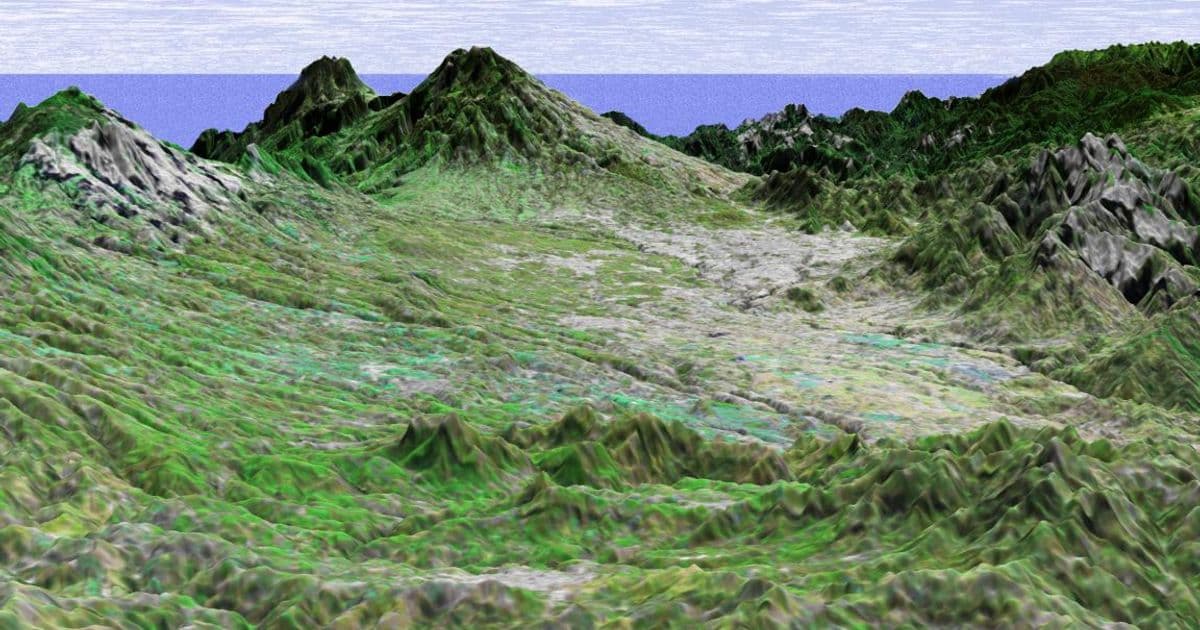
Despite its small size, Costa Rica contains remarkable geographic diversity generated by its position above the subduction boundary of the Cocos and Caribbean tectonic plates. The country's four main mountain ranges — the Cordillera de Guanacaste in the northwest, the Cordillera de Tilarán in the center-north, the Cordillera Central in the center, and the Cordillera de Talamanca in the center-south and southeast — create a dramatic backbone of peaks and ridges running through the country from northwest to southeast.
The Cordillera Central contains four of Costa Rica's most significant volcanoes: Poás (2,708 m), Barva (2,906 m), Irazú (3,432 m, the highest volcano in Costa Rica), and Turrialba (3,340 m). Irazú and Turrialba are both considered active; Poás is also active and has shown periods of intense activity. The Cordillera de Guanacaste contains the active Rincón de la Vieja (1,916 m) and the dormant Miravalles (2,028 m) and Tenorio (1,916 m, near Río Celeste). In the Northern Lowlands, Arenal (1,670 m) stands as an isolated stratovolcano, one of the most perfectly conical in the world.
The Valle Central (Central Valley) between the Cordillera Central and the Talamanca foothills is the most populated and economically productive region, sitting at 900–1,500 meters elevation with a mild, stable climate ideal for human settlement and agriculture. The Meseta Central (Central Plateau) within the Valle Central contains the cities of San José, Heredia, Alajuela, and Cartago, which together house the majority of Costa Rica's population. The Osa Peninsula in the far south, while at low elevation, is geographically isolated by the Golfo Dulce and is one of the most pristine and biodiverse areas in the country, home to Corcovado National Park.
Cerro Chirripó: The Highest Point
The highest point in Costa Rica and all of Central America (excluding southern Mexico) is Cerro Chirripó at 3,821 meters in the Talamanca Range. On clear days (rare, as the summit is frequently in cloud), both the Pacific Ocean and the Caribbean Sea can be simultaneously visible from the summit. The ascent of Chirripó is a multi-day undertaking requiring advance reservation through the park permit system, which strictly limits the number of hikers to protect the sensitive páramo (high-altitude grassland) and cloud forest ecosystems. The mountain is the centerpiece of Chirripó National Park.
Why Costa Rica's Location Matters for Travel and Ecology
Costa Rica's geographic position has profound implications for both its extraordinary ecology and its practicality as a travel destination. The country's location at the junction of the North and South American landmasses — which were separated for most of their evolutionary history before the Isthmus of Panama formed approximately 3 million years ago — means it sits at the meeting point of two vast evolutionary lineages. Species from the north (jaguars, tapirs, deer, and thousands of plant families) meet species from the south (South American animals including monkeys, sloths, and armadillos that expanded northward after the land bridge formed) in Costa Rica, creating the extraordinary biodiversity the country is famous for.
The dual ocean exposure creates entirely different marine ecosystems on each coast. Pacific upwelling zones rich in nutrients support spectacular productivity, concentrating whale sharks, humpback whales, dolphins, and enormous fish populations. Caribbean coral reefs support different species communities adapted to warmer, calmer waters. The country's position within the Intertropical Convergence Zone (ITCZ) and the influence of trade winds from both Atlantic and Pacific directions create the complex pattern of microclimates that produce cloud forests, tropical dry forests, rainforests, and mangroves within a tiny geographic area.
For travelers, Costa Rica's location in the Central American isthmus offers major practical advantages. Direct flights from the continental United States are 3–6 hours depending on the departure city — shorter than flights to Europe or most of Asia — making Costa Rica one of the most time-efficiently reached tropical destinations for North Americans. The single time zone (UTC-6) means jet lag from US cities is minimal. The country's relatively small size means that in a two-week vacation, a traveler can experience Pacific beaches, cloud forests, active volcanoes, Caribbean coast, wildlife reserves, and cultural city life without excessive transit time — an experience that would require a much larger country to replicate.
The Great American Biotic Interchange
When the Isthmus of Panama formed approximately 3 million years ago, it triggered one of the most significant events in evolutionary history — the Great American Biotic Interchange (GABI). Animals that had evolved separately on North and South America for tens of millions of years could suddenly cross between the continents. Costa Rica, as the narrowest part of the land bridge, was a critical corridor for this migration. Horses, tapirs, mastodons, and ground sloths moved south; armadillos, opossums, sloths, anteaters, and capybaras moved north. This mixing of evolutionary lineages is why Costa Rica contains such an unusual combination of species — it is literally the meeting point where two continental faunas came together.
Frequently Asked Questions
What country is Costa Rica in?
Costa Rica is an independent country (a sovereign republic) in Central America. It is not part of any other country. Costa Rica is bordered by Nicaragua to the north and Panama to the south, with the Pacific Ocean to the west and the Caribbean Sea to the east. The country has been an independent republic since 1821, when it declared independence from Spain along with the rest of Central America.
Is Costa Rica in North America or South America?
Geographically, Costa Rica is in Central America, which is considered part of North America (along with Mexico, the United States, Canada, and the other Central American countries). Costa Rica is not part of South America. The border with Panama marks the beginning of the transition toward South America, and Colombia (the first South American country) is approximately 1,800 kilometers southeast of Costa Rica.
How far is Costa Rica from the United States?
The distance from the United States to Costa Rica depends on the departure point. Miami, the closest major US city, is approximately 2,650 kilometers from San José, with direct flights taking about 2.5 to 3 hours. Houston is about 2,800 km away (3 hours flying); Dallas about 3,100 km (3.5 hours); New York about 3,600 km (4.5–5 hours); Los Angeles about 4,600 km (5.5–6 hours). Multiple airlines offer direct flights from Miami, Atlanta, New York, Chicago, Dallas, Houston, Los Angeles, and other US cities to San José and Liberia airports.
Does Costa Rica touch the Pacific and Atlantic/Caribbean?
Yes. Costa Rica is one of a small number of countries that touches both the Pacific Ocean and a body of water connected to the Atlantic Ocean. The Pacific coast stretches approximately 1,016 kilometers along the western shore. The Caribbean Sea (an extension of the Atlantic) touches the eastern shore for approximately 212 kilometers. The two coasts have very different characters — the Pacific experiences distinct wet and dry seasons, while the Caribbean coast receives more year-round rainfall and has a different cultural character influenced by Afro-Caribbean communities.
What is the capital of Costa Rica and where is it located?
The capital of Costa Rica is San José, located in the Valle Central (Central Valley) in the geographic center of the country at approximately 9.9° North latitude and 84.1° West longitude. San José sits at an elevation of 1,172 meters (3,845 feet) above sea level, giving it a mild, year-round climate despite its tropical location. The city is approximately 18 kilometers from Juan Santamaría International Airport in Alajuela and roughly equidistant between the Pacific and Caribbean coasts.