
Zarcero, Costa Rica: The Cloud Town with the Extraordinary Topiary Garden
Zarcero is a small highland town in Alajuela Province that has become one of Costa Rica's most distinctive and photographed destinations, thanks to a remarkable central park filled with elaborately sculpted cypress hedges shaped into animals, archways, and abstract forms by a single local gardener over many decades. Set at 1,736 meters above sea level in the misty Tilará Mountains, Zarcero is also known for its artisan dairy products, organic farming traditions, and refreshing mountain climate.
Overview of Zarcero
Zarcero is the canton capital of the Zarcero canton in Alajuela Province, located in the northern Central Mountain Range (Cordillera Central) at 1,736 meters elevation. The town is small, with approximately 5,000 permanent residents in the urban center, and maintains the character of a traditional Costa Rican highland community — quiet, agricultural, and deeply rooted in local culture and Catholic tradition.
The town's economy is anchored in agricultural production, particularly dairy farming and the artisan food products derived from it: cheese (including the local quesillo, a mild fresh cheese), white cheese, natilla (sour cream), chiverre (fig leaf gourd used in a traditional candy), and peach palm (pejibaye) products. The cool, humid climate at this elevation is ideal for these highland crops and gives Zarcero's dairy products a distinctive character appreciated across Costa Rica.
Zarcero's location on the Inter-American Highway (Route 1) between San José and Ciudad Quesada (San Carlos) has historically made it a rest stop and market town for travelers between the Central Valley and the Northern Zone. Today, its famous topiary garden has elevated it to a tourist destination in its own right, attracting visitors from across Costa Rica and internationally on day trips from San José.
Location and Access
Zarcero is approximately 80 kilometers northwest of San José, about 1.5–2 hours by car depending on traffic. The Route 1 Inter-American Highway passes through the Tilará Mountains, offering dramatic views of the volcanic landscape before descending to the Caribbean lowlands toward La Fortuna and Arenal. The road is a major arterial route and is generally in good condition, though the mountain section can be foggy and requires careful driving, especially at night.
The Topiary Garden of Parque Francisco Alvardo
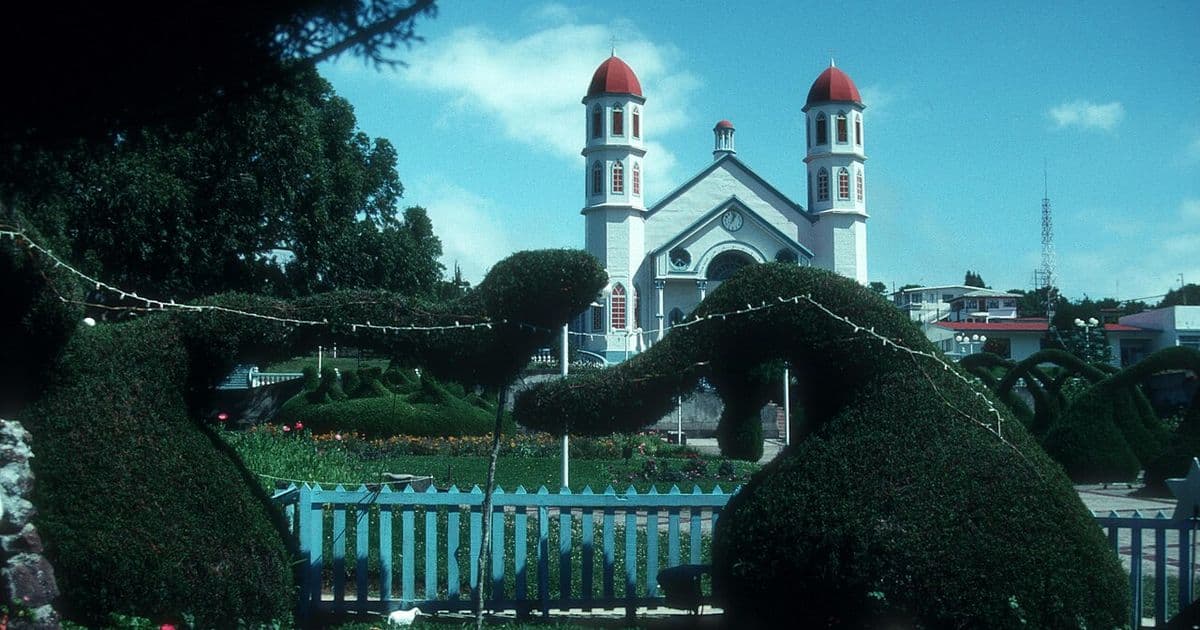
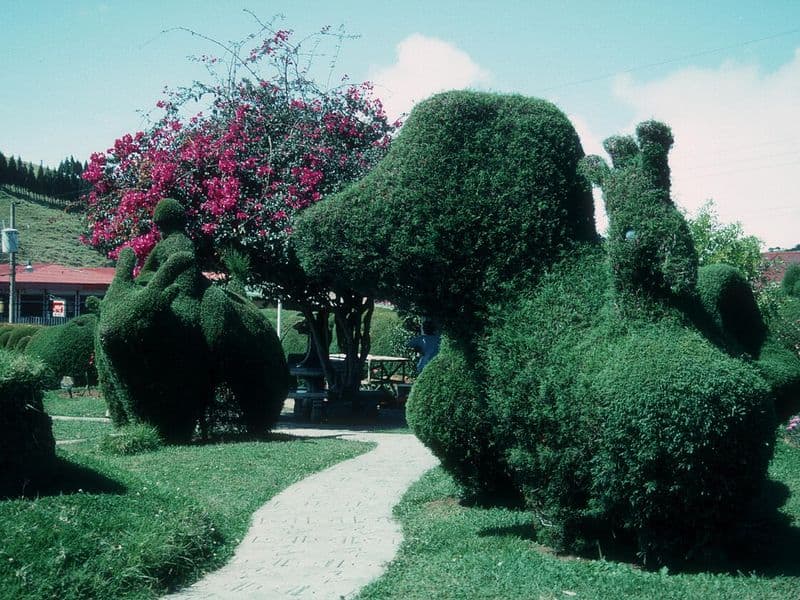
The central park of Zarcero, officially named Parque Francisco Alvardo after the town's patron saint, is the reason most visitors make the journey to this mountain town. The park contains a remarkable collection of cypress hedges sculpted into an extraordinary array of shapes: elephants, bulls, monkeys, horses, a helicopter, a small car, tunnel archways, and dozens of abstract geometric and figurative forms — all growing and living as permanent green sculptures in the central plaza.
The garden is the life's work of Evangelisto Blanco, a local gardener who began sculpting the park's cypress hedges in 1964 and maintained them continuously for decades until his passing. Blanco used simple hand tools — primarily large scissors and pruning shears — to coax the slow-growing cypress into his remarkable visions. Each sculpture requires years of patient cultivation and maintenance; the mature pieces represent decades of committed artistry.
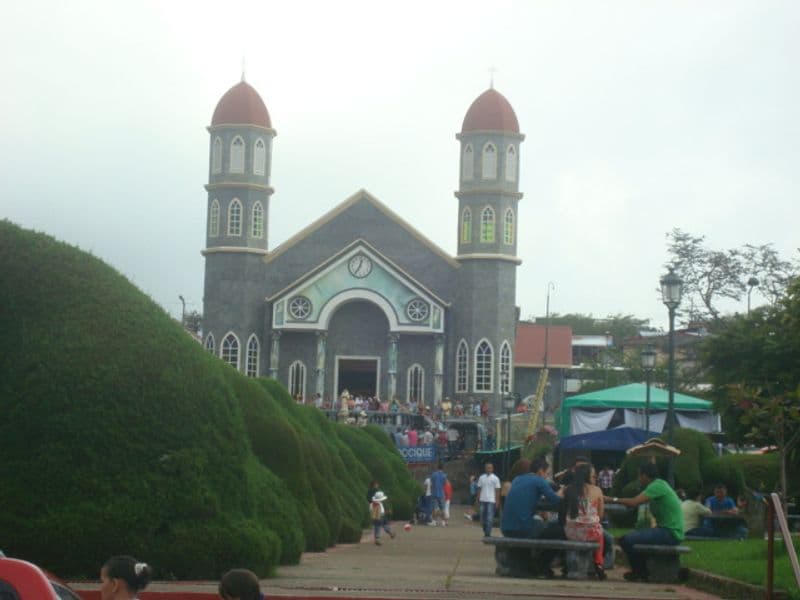
The garden is free and open to the public at all times, surrounding the Iglesia de San Rafael, a white-painted Catholic church that serves as the backdrop for many photographs of the topiaries. The combination of the vivid green sculptures, colorful flowering plants between them, the white church, and the misty mountain sky creates a storybook visual scene that photographs beautifully. The garden is best visited on clear mornings before the typical afternoon cloud and mist descend over the mountains.
Evangelisto Blanco's Legacy
Evangelisto Blanco began his work in Parque Francisco Alvarado in 1964 and continued shaping and maintaining the topiaries for over five decades, becoming an iconic figure in Costa Rican popular culture. His patient, self-taught artistry transformed an ordinary town square into one of the most extraordinary public gardens in Central America. After his passing, the municipality of Zarcero has maintained the garden in his tradition with trained municipal gardeners continuing the meticulous work of pruning and shaping the living sculptures.
Artisan Products and Local Economy
Zarcero is famous throughout Costa Rica for its artisan dairy products, available for purchase at roadside stands, the central market, and small shops throughout town. The local quesillo (fresh string cheese), palmito (heart of palm), chiverre jam (made from the fig-leaf gourd, a traditional ingredient in Easter tamales across the country), and natilla are among the most sought-after products that travelers bring back to San José.
The chiverre gourd deserves special mention as a uniquely Costa Rican product with deep cultural roots. The large gourd, when candied, produces a fibrous, sweet preserve used as a filling in traditional empanadas de chiverre eaten during Holy Week (Semana Santa). Zarcero is one of the main production centers for chiverre products, and the roadside stands leading into town are stacked with the gourd-derived preserves, pickled vegetables, and other highland agricultural products during peak harvest periods.
Blackberries (moras), strawberries, and peach palm (pejibaye) are grown in the area's cool highland climate and sold fresh or processed into jams, liquors, and other products. Local honey from highland beekeepers is also available. The combination of artisan food products and the topiary garden makes Zarcero an excellent stop for purchasing authentic Costa Rican food souvenirs.
Pejibaye Palm
The peach palm (pejibaye, Bactris gasipaes) is a native Neotropical palm cultivated for its nutritious fruit and the edible heart of palm (palmito). In the Zarcero highlands, fresh pejibaye fruits are boiled and sold as street food, with a dense, starchy texture and mild flavor often compared to chestnut. Canned palmito (heart of palm) from Zarcero-area farms is a Costa Rican export staple. The fruit is rich in beta-carotene, vitamin C, and carbohydrates, making it an important traditional food source for highland communities.
Climate and Mountain Landscapes
Zarcero's elevation of 1,736 meters gives it a markedly cooler and more humid climate than the Central Valley cities below. Average temperatures range from 12–20°C (54–68°F), feeling distinctly cool or cold after the warmth of San José or the lowland beaches. The town experiences frequent mist and fog, particularly in the afternoons and evenings, giving it an atmospheric, otherworldly quality that locals and visitors find enchanting.
The surrounding landscape is a mosaic of highland forest, pasture, vegetable farms, and dairy operations covering the rolling mountain terrain. The Tilará Mountains here are part of the transition zone between the drier Guanacaste region and the wetter Northern Zone, creating a dramatic landscape that shifts visibly from the road as you ascend from the Central Valley. Cloud formations rolling over the mountains are a constant visual feature, and rainbows are frequent in the afternoon light.
The native vegetation of this elevation includes highland oak forests, tree ferns, epiphytes (orchids, bromeliads, mosses), and the cloud forest species that thrive in persistent moisture. Birdwatchers find the highland zone around Zarcero productive for species including the resplendent quetzal (rare but present in the higher elevation forests), black-faced solitaire, highland tinamou, and numerous hummingbird species attracted to the abundant flowering plants.
Quetzal Sightings
The resplendent quetzal (Pharomachrus mocinno), one of the world's most spectacular birds, inhabits cloud forests at elevations above 1,200 meters in Costa Rica. While Monteverde and San Gerardo de Dota are the most famous quetzal destinations, the highland forests around Zarcero provide potential habitat. The quetzal nesting season (March–May) offers the best viewing opportunities. Local guides can direct birding enthusiasts to areas with recent sightings in the forests above the town.
Day Trip to Zarcero from San José
Zarcero makes an excellent half-day or full-day trip from San José, particularly when combined with a visit to the nearby town of Sarchí (the artisan crafts center famous for colorfully painted oxcarts) or as part of a journey toward La Fortuna and Arenal Volcano. The drive from San José takes 1.5–2 hours via Route 1 (through Naranjo) or via Route 141 through San Ramón.
A typical Zarcero day trip itinerary from San José includes: morning departure to beat the traffic, arrival in Zarcero before the afternoon mist, exploration of the topiary garden and church, lunch at a local soda trying authentic highland food, shopping for artisan cheeses and chiverre preserves at roadside stands, and return to San José in the afternoon. Alternatively, continue north to La Fortuna for an overnight that includes Arenal Volcano and hot springs.
Public buses from San José's Terminal Atlántico Norte serve Zarcero and the broader Grecia-Naranjo-Zarcero route, making a car-free day trip feasible at very low cost. The bus journey takes approximately 2 hours and provides an authentic local travel experience. Return buses run throughout the afternoon and evening.
Combining with Sarchí
Sarchí, approximately 50 kilometers from San José via the Inter-American highway, is Costa Rica's artisan crafts capital, famous for the hand-painted wooden oxcarts (carretas) that are a UNESCO-recognized intangible cultural heritage. The Fábrica de Carretas Joaquín Chaverri in Sarchí allows visitors to watch artisans at work and purchase miniature and full-size painted oxcarts, wooden furniture, leather goods, and other crafts. Combining Sarchí and Zarcero in a single day trip (approximately 30–40 km apart) creates an enriching cultural and agricultural highland experience.
Nearby Attractions and Activities
Juan Castro Blanco National Park, located north of Zarcero in the Tilará Mountains, protects one of the largest remaining cloud forest areas in Costa Rica outside of dedicated cloud forest reserves. The park covers 14,258 hectares of primary and secondary forest at elevations between 700 and 2,267 meters. Access to the park is via trails from the communities of Pueblo Nuevo and Bajos del Toro on the park's flanks. The park is little-visited and offers a genuine wilderness experience for prepared hikers with good fitness and appropriate equipment.
The Bajos del Toro Amarillo area, accessible by road from Zarcero heading north, is a hidden gem of the Central Mountain Range featuring a series of impressive waterfalls, highland forest, bird watching (including quetzal sightings), and small eco-lodges catering to nature enthusiasts. The Catarata del Toro waterfall in this area drops approximately 70 meters into a collapsed volcanic crater, making it one of the most dramatic waterfall settings in Costa Rica.
Catarata del Toro
The Catarata del Toro (Bull Waterfall) is one of Costa Rica's most spectacular and least-visited waterfalls, located in the Bajos del Toro area north of Zarcero. The waterfall plunges approximately 70 meters into a circular volcanic crater pool — the collapsed walls of the crater surround the falls on three sides, creating a dramatic amphitheater effect. A private reserve manages access, with an entrance fee of approximately $15 including a guided walk to the viewpoints. The drive from Zarcero to Bajos del Toro takes about 45 minutes on a partially unpaved road.
Frequently Asked Questions
What is Zarcero Costa Rica famous for?
Zarcero is famous for its extraordinary central park filled with cypress hedges sculpted into animals, tunnels, and abstract shapes — the life's work of local gardener Evangelisto Blanco, who began shaping them in 1964. The town is also renowned for artisan dairy products (cheese, natilla, quesillo), chiverre jam, and a cool, misty mountain atmosphere at 1,736 meters elevation.
Is it worth visiting Zarcero on a day trip?
Yes, Zarcero is an excellent half-day trip from San José, taking about 1.5–2 hours each way. The topiary garden is free, the artisan food shopping is unique, and the mountain scenery is beautiful. Most visitors combine Zarcero with nearby Sarchí (painted oxcart workshops) or use it as a rest stop on the route to La Fortuna and Arenal Volcano. A full day allows time to explore the surrounding mountain landscape.
How long does it take to see Zarcero's park?
The topiary park itself can be explored in 30–45 minutes at a leisurely pace with time for photos from multiple angles. Visiting the church interior, browsing the surrounding market stalls, and having lunch at a local soda extends the Zarcero experience to 2–3 hours total. Budget-conscious travelers on public buses can realistically do Zarcero as a half-day trip from San José.
What food should I try or buy in Zarcero?
Try quesillo (fresh string cheese) eaten freshly made, natilla (sour cream similar to crème fraîche), and if visiting near Easter, chiverre-filled empanadas. For take-home purchases, the packaged chiverre jam, artisan white cheese, fresh pejibaye (in season), blackberry jam, and local honey from roadside stands along Route 1 make authentic and affordable Costa Rican souvenirs.
Can I visit Zarcero without a car?
Yes, public buses from San José's Terminal Atlántico Norte run regularly to Zarcero via the Grecia-Naranjo-Zarcero route, with a journey time of approximately 2 hours and very affordable fares. The bus drops off near the central park, putting you steps from the topiary garden. Return buses run throughout the day. The town itself is compact and entirely walkable, making a car unnecessary for the Zarcero stop itself.